
New Voices
On observation, systems of measurement, and productive uncertainty
Aly Ogasian
Aly Ogasian is spotlighted in the New Voices series, which highlights emerging artists who showcase their art on ArtConnect.
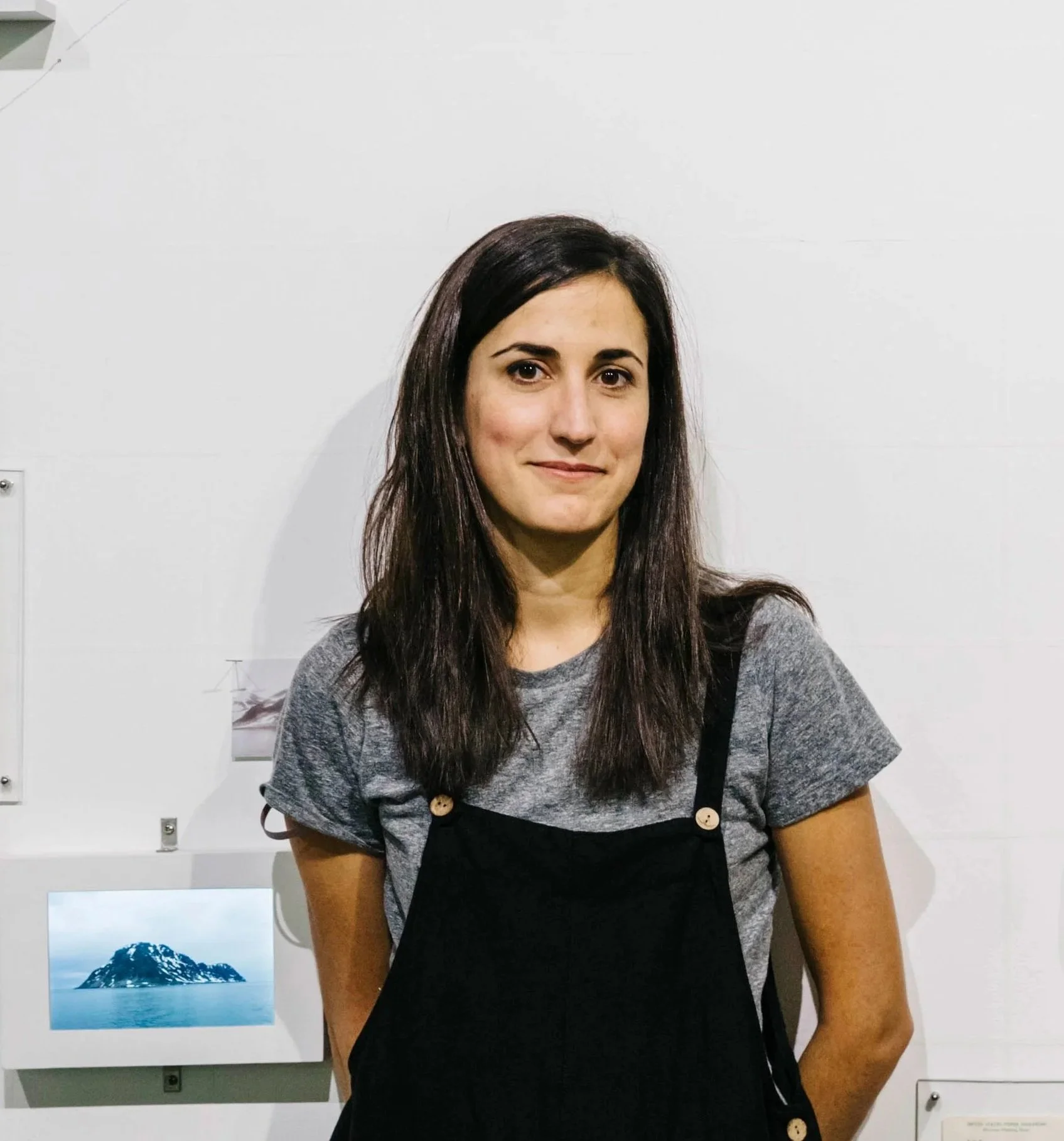
Aly Ogasian is an interdisciplinary artist based in Los Angeles. Her practice is research driven and typically site responsive, sparking conversations about everyday life and survival in a rapidly changing environment.
Recent projects critique notions of expedition in the 21st century and play with the idea of an island as a metaphor, exploring notions of adaptation and survival, community and individualism, terrestrial and extraterrestrial, nature and technology. She has two separate longstanding collaborative practices with artist, designer and educator Shona Kitchen and artist and educator Claudia O'Steen.
Curious to gain more insight into her artistic approach, we asked Aly a few questions about her practice.
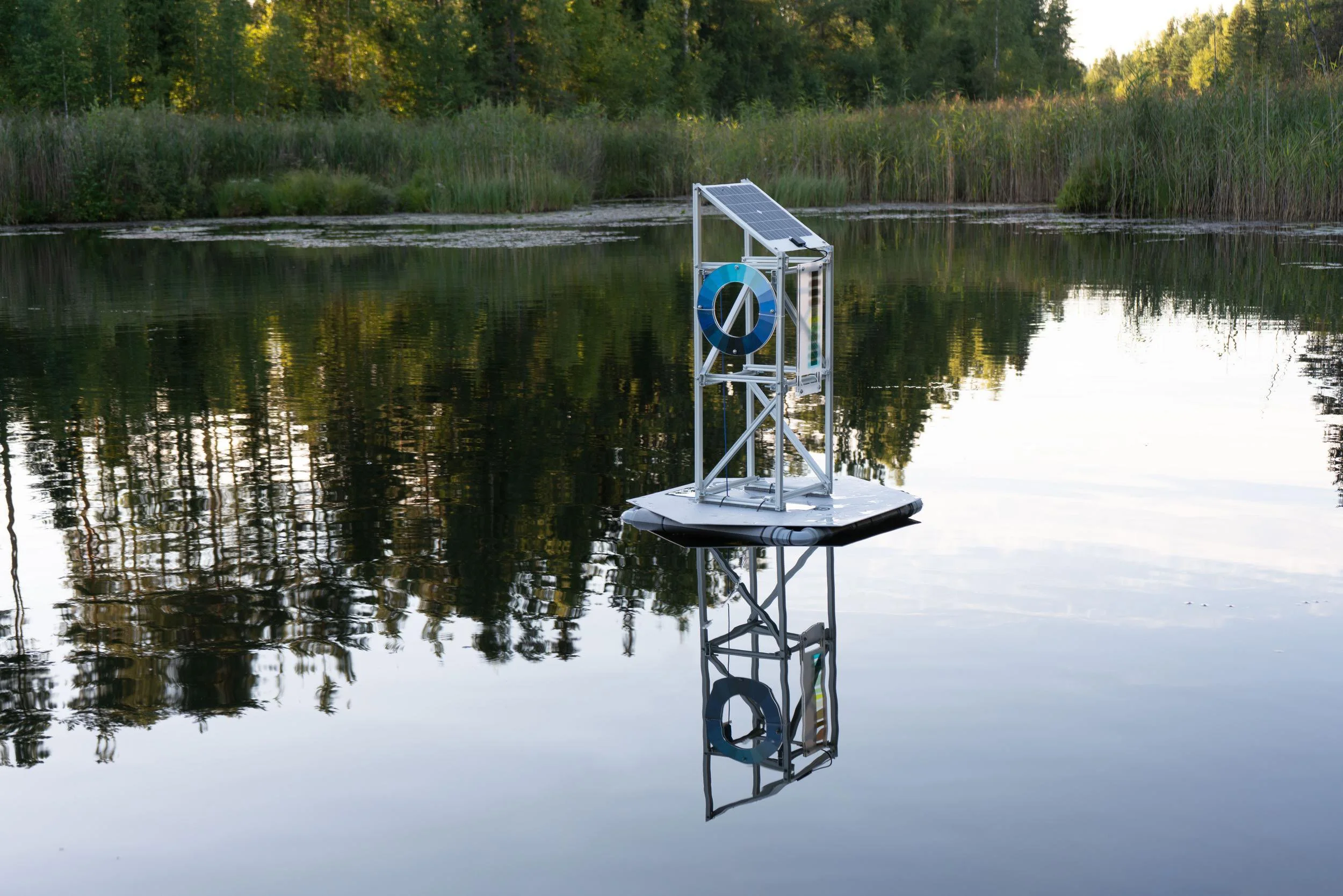
Living Water (2024) is a collaborative, site responsive project produced with Claudia O’Steen. It is a public artwork, commissioned by Maajaam Farm for Art and Technology for their Wildbits 2024 exhibition. The work responds to the Estonian bog landscape and functions as an observation station, equipped with a solar panel and underwater camera. It engages with the historic draining and current remediation of bog landscapes, recognizing that peat restoration in bogs is key to Estonia’s climate action plan.
Observation, whether conducted by yourself or through something you’ve made, is a throughline in much of your recent work. Does observation serve as a starting point, or is it something that remains essential throughout the entire artistic process?
Observation usually serves as both the starting point and is an essential part of my process. Typically my projects have a long arc, and begin in a specific location where I spend time trying to deeply observe that place or a particular condition of that place. Oftentimes, I don’t know where the process of observing will lead me artistically. In a lot of my work with O’Steen we develop instruments or devices to observe through as well, as a complimentary mode of understanding. These devices are often based upon scientific instrumentation.
Your work Limnologies, created in collaboration with Claudia O’Steen, is a large-scale installation and the culmination of two years of fieldwork on an island in Lake Superior, where you lived and worked off grid for two subsequent summers. Can you tell us about those summers? How did your approach or relationship to the island change over that time?
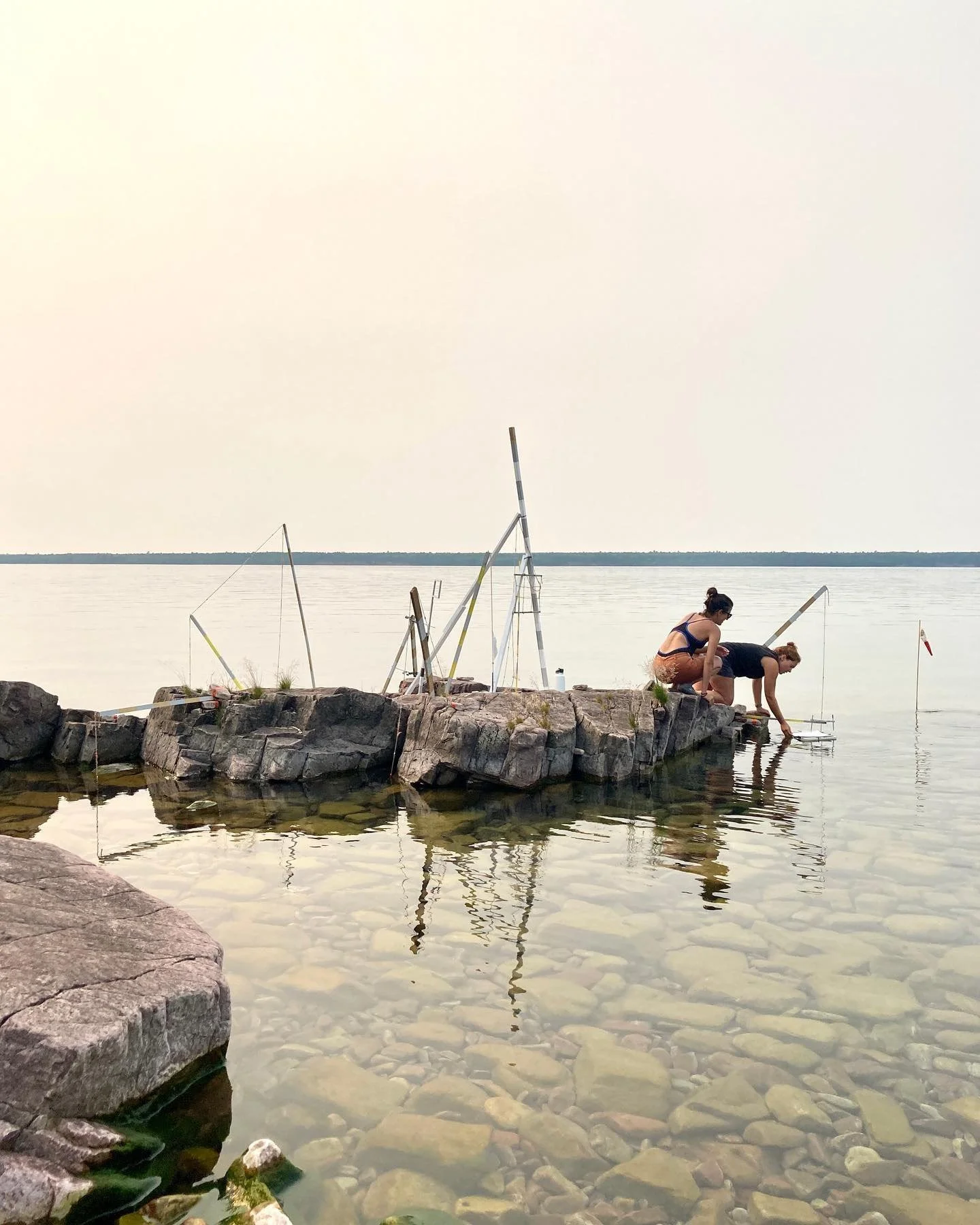
Keweenaw Observing Station (2022) photography by Andrew Ranville. Documentation of Ogasian and O’Steen calibrating Keweenaw Observing Station.
Claudia and I were awarded the Rabbit Island Residency, which is an off-grid residency where you live and work on a 94-acre island in Lake Superior. We knew that we were most interested in making a project that engaged with the ecological or environmental conditions of this place, but we weren’t entirely sure what that might consist of.
While in residence, you live in a three-sided structure, which means you’re never fully sheltered from the weather. And because the island is in the middle of a huge lake, the weather conditions vary significantly, and this really dictates how you’re able to function each day. We noticed that when it was really windy, for example, the sound of the waves was so loud that it was difficult to concentrate. I think we’re so used to moving through the world via architecture or cars that we often don’t notice the weather systems around us.
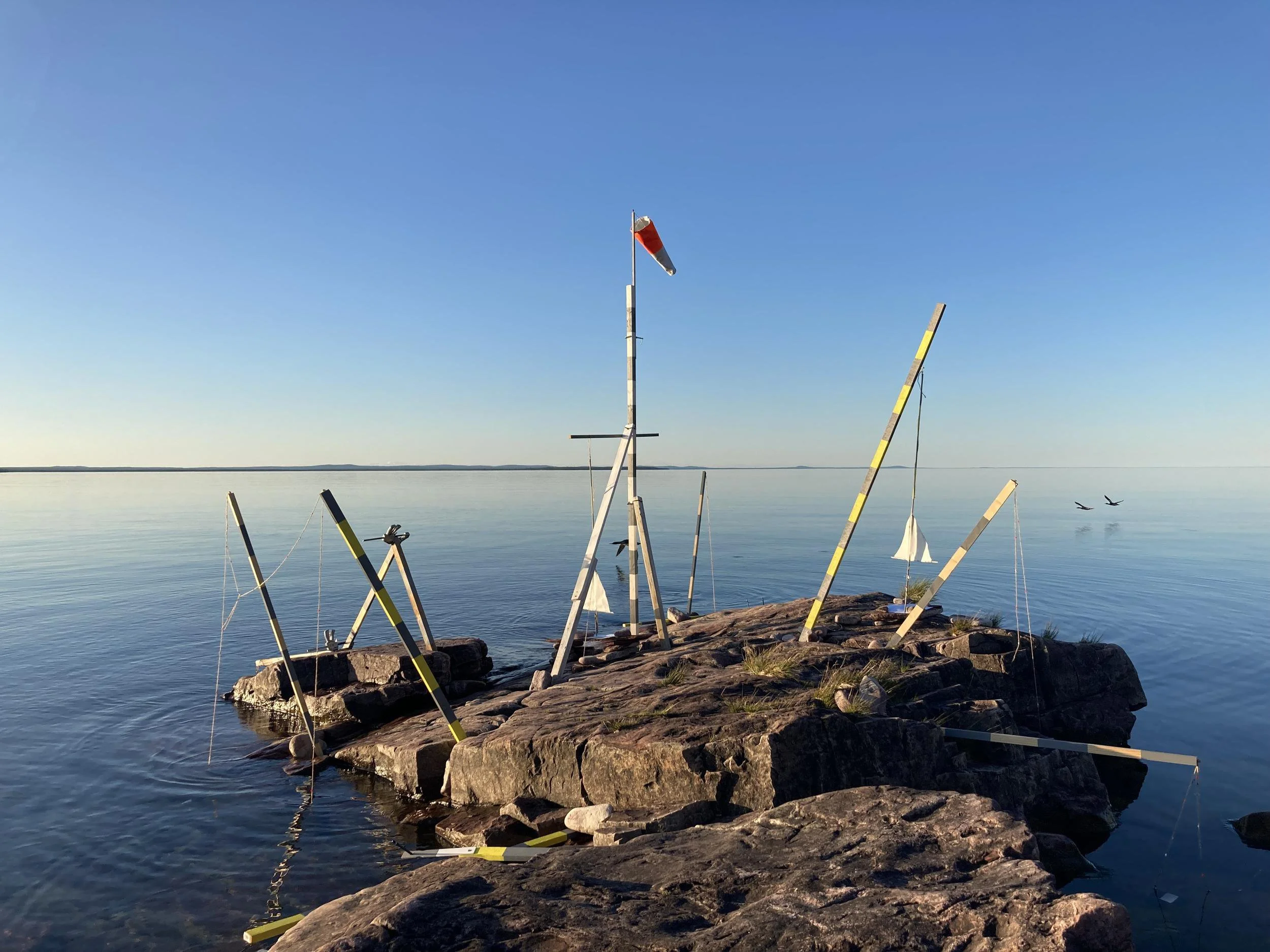
While in residence, we became obsessed with trying to understand the weather patterns on the island, both by listening to the nearshore marine weather forecast on a walkie-radio and by developing our own systems for observing changes and patterns in the wind, waves, water temperature, water depth, and atmospheric color.
“We were interested in what happens when an attempt to measure or describe an environment becomes a translation rather than a direct record.”
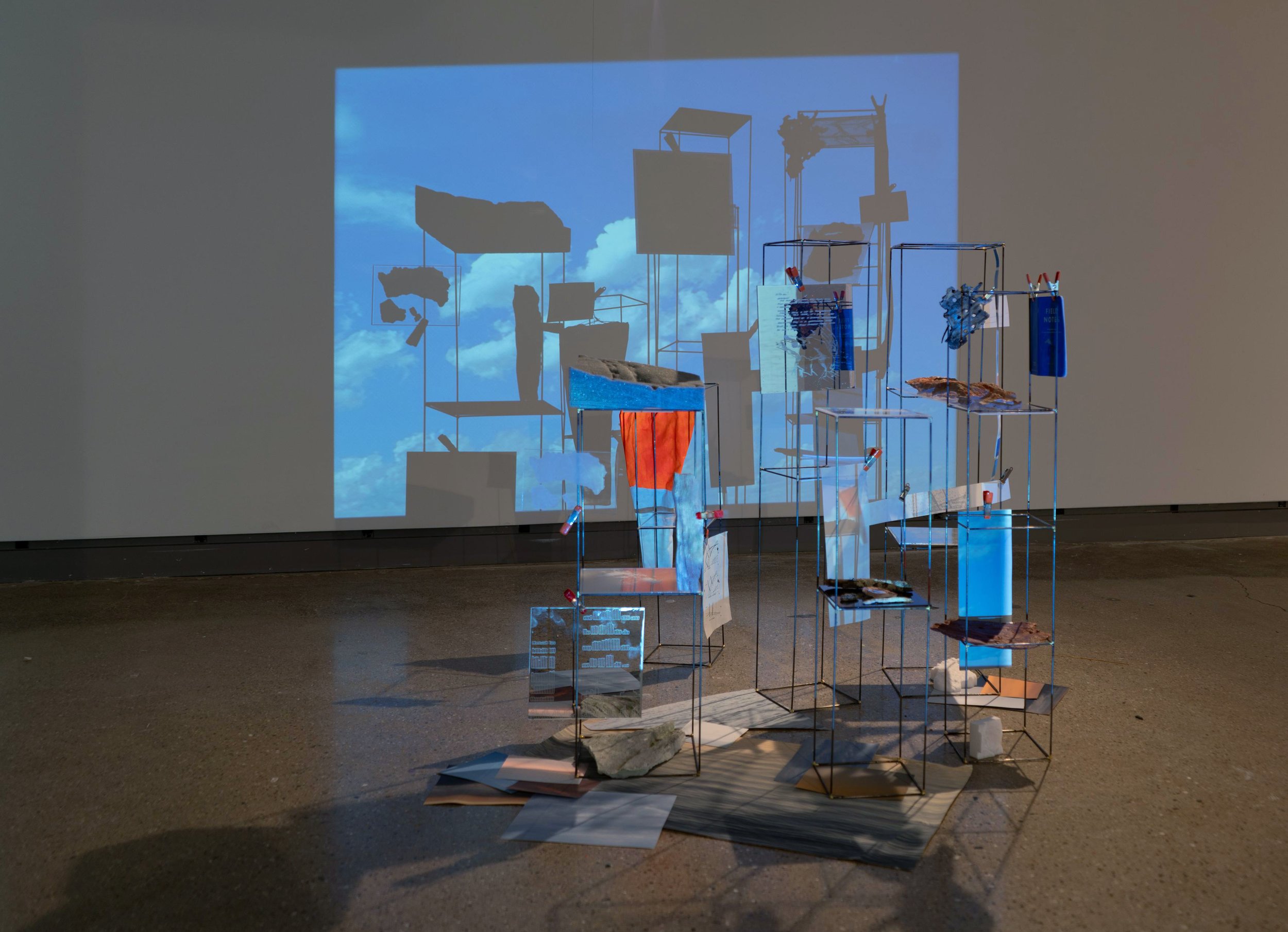
Limnologies, (2025) - With Claudia O’Steen; a 2,000 sf installation that synthesizes the fieldwork collected on Rabbit Island via Keweenaw Observing Station. Combining research and work on the island with countless hours of studio and material experiments, the installation explores the interplay of water, weather and geology. The title ‘Limnologies’ refers to our varied and extensive attempts to observe and understand weather patterns occurring on the lake, ranging from systematic to absurd to poetic. Simultaneously, the project explores the effect of weather conditions and changing climate on human psychology.
The artwork was developed using documentation created by portable sculptures that you’ve described as “observational mechanisms”. How do these work, and what do they allow you to observe or document?
The instruments worked in a variety of ways. Some used waves or wind to generate drawings on waterproof paper, while others were submerged underwater, using small flags tied to ropes to register current direction and water depth. Alongside these instruments, we developed systems for translating our observations into other forms: mixing paint to match the horizon, water, and sky; writing descriptions to accompany these colors; and drawing our instruments in relation to the direction of the water.
These processes were deliberately imperfect. We were interested in what happens when an attempt to measure or describe an environment becomes a translation rather than a direct record. Each system could capture something, but none could adequately contain the complexity of what we were observing. In this sense, the instruments also became records of our attempts—and failures—to understand the place.
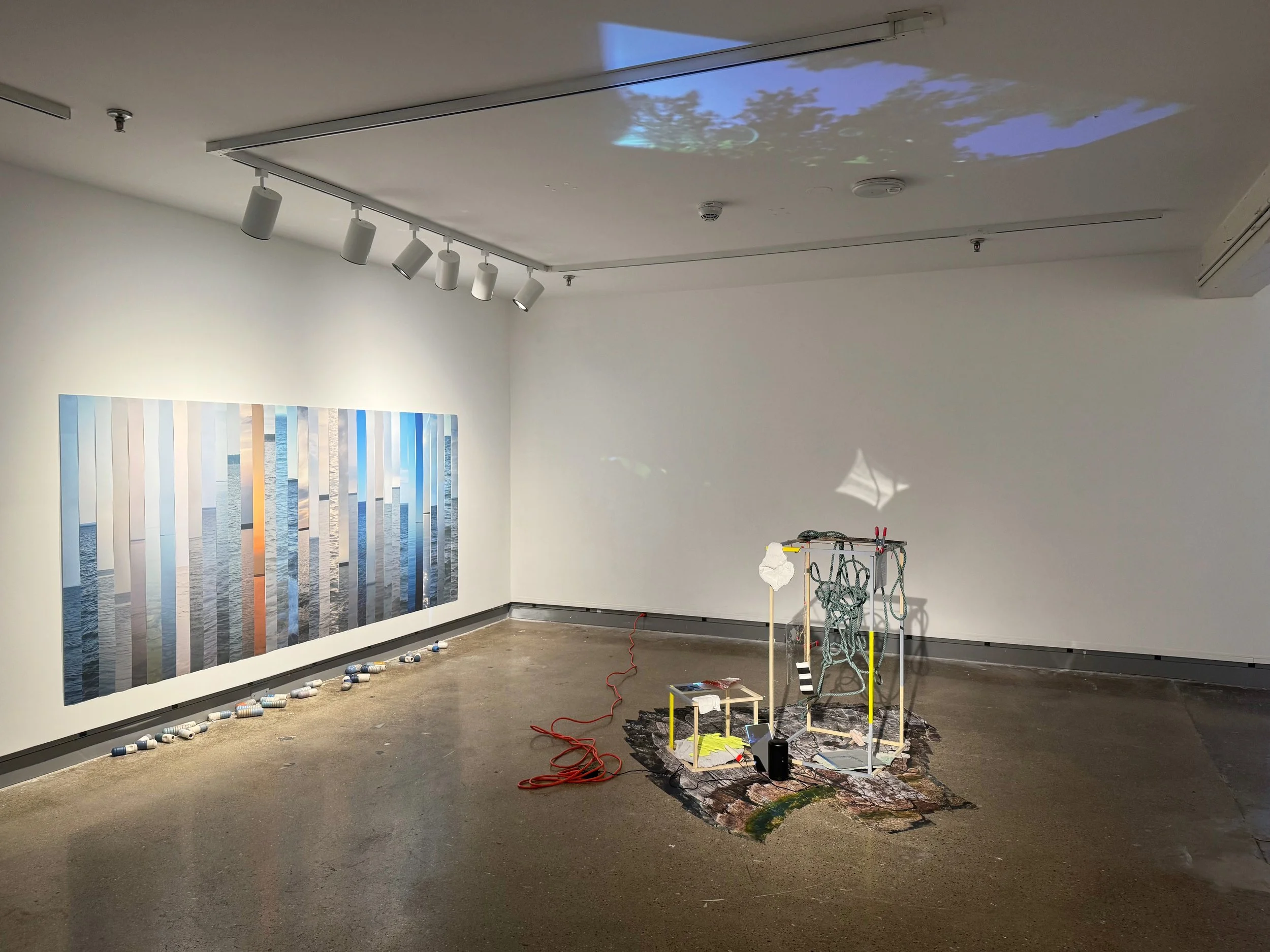
Limnologies, (2025) - With Claudia O’Steen. Photographic prints of the horizon each day at the same time, porcelain cast net buoys painted to match the color at the horizon, extension cord, wood, found rope, 3D printed slumped rocks, porcelain cast buoy, engraved journal entry on mirrored acrylic, projection of the sky as seen through a wildlife camera triggered by tree movement, mirror, projector
The work is presented as a series of very intricate sculptures, involving various mediums, including projections, objects, text, and much more. How did you approach translating all of this research into an artwork?
We were interested in thinking about everything we collected not as discrete forms of data, but in relation to a larger, interconnected system. We interviewed researchers working throughout the region who were studying Lake Superior climatologically and geologically, and these conversations reinforced the complexity of what we were observing. Rather than finding straightforward relationships—for example, between rising water levels and erosion—we encountered systems in which multiple factors were continually interacting and influencing one another. Our attempts to understand these relationships repeatedly revealed the limits of our own ability to understand them.
We wanted to present our observations as a grid, evoking the structures through which scientific data is often organized and compared, while also thinking about the grid as a three-dimensional space. As the viewer moves around the work, relationships that might initially appear legible become increasingly difficult to isolate or untangle. The installation therefore becomes both an attempt to organize information and an acknowledgment of our failure to fully comprehend the systems we were observing.
We were also thinking about the relationship between local weather systems and larger global processes. During our time in the region, major wildfires in British Columbia dramatically altered the color and quality of the sky around Lake Superior. This became an important reminder that what appeared to be a local observation could be shaped by events occurring hundreds or thousands of miles away. We became increasingly interested in these constantly shifting baselines: how the environmental conditions against which we measure change are themselves continually changing, and how our attempts to understand those changes are necessarily partial.
“The installation therefore becomes both an attempt to organize information and an acknowledgment of our failure to fully comprehend the systems we were observing.”
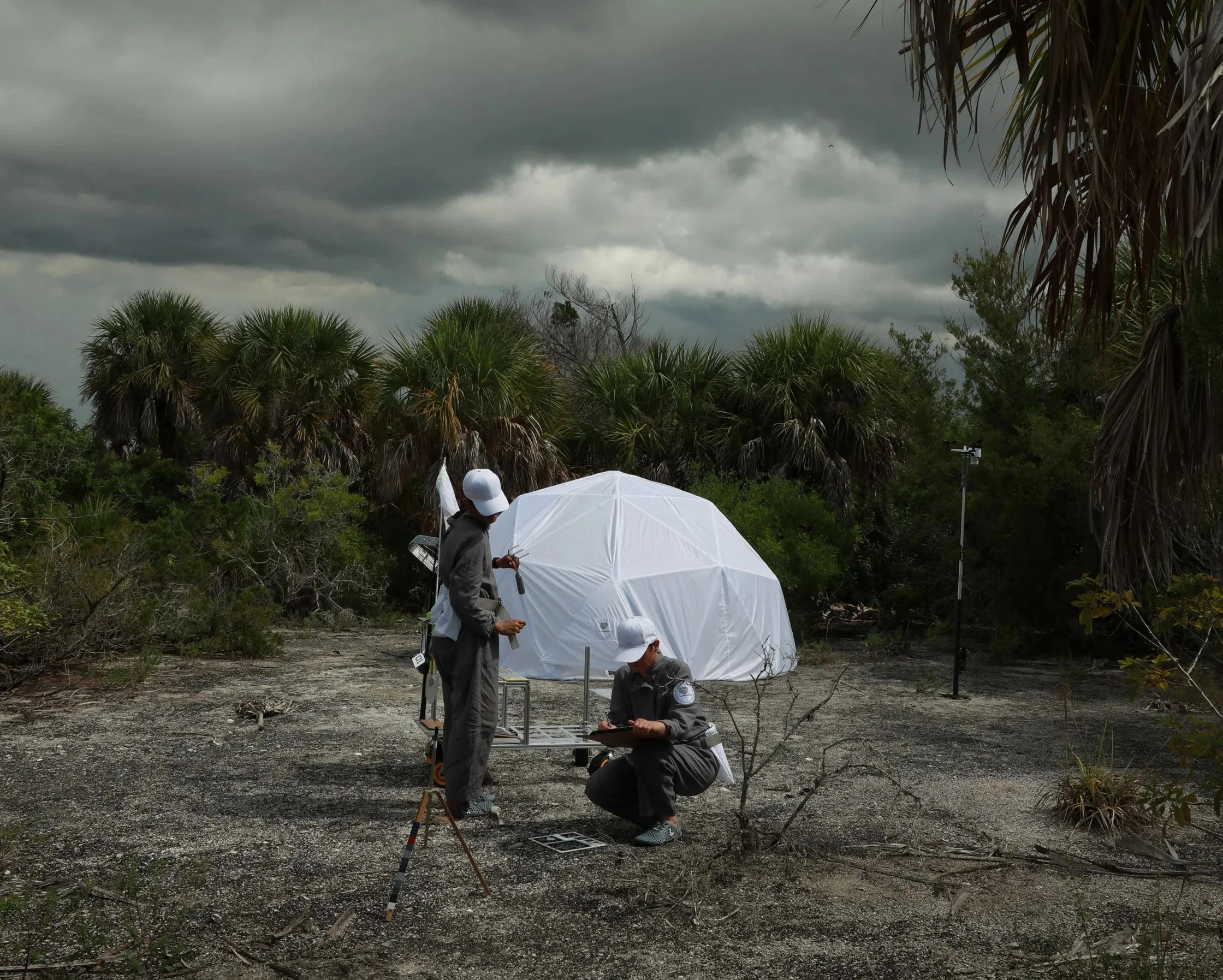
Another Final Frontier (2020) - Photography by Jessina Leonard. Collaboration with Shona Kitchen. The project focuses on a single artificial island within the Space Center which formed in approximately 1950 when the Intracoastal Waterway was dredged by the US Army Corps of Engineers (USACE). We lived on one such island in a habitat of our own design modelled after astronaut training analogs
Conversations about our rapidly changing environment are threaded throughout your work. Are there particular questions or responses that you hope to provoke in the viewer?
I don’t think I necessarily want to tell viewers what to think about the rapidly changing environment, or even give them a particular answer. I think I’m more interested in creating a space for people to recognize how difficult it is to fully understand the systems we are part of.
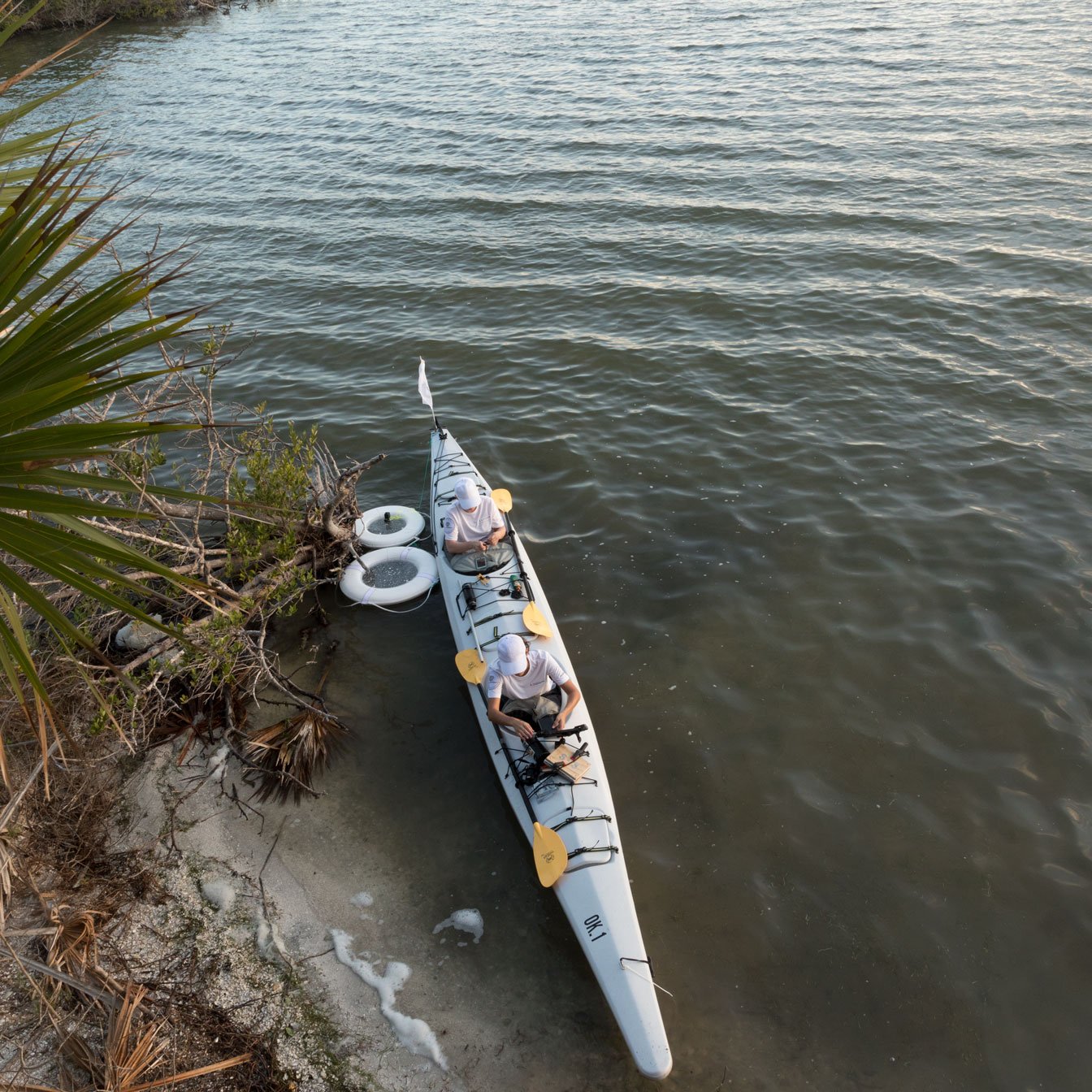
Another Final Frontier (2020) - Photography by Jessina Leonard. Collaboration with Shona Kitchen. Performance documentation
A lot of my work with Claudia begins with observation and attempts at measurement. We make instruments, collect data, interview researchers, and develop different systems for translating what we encounter. But the more we observe, the more complicated the relationships become. A change in water level, for example, isn’t necessarily attributable to a single cause; it is connected to weather, geology, human intervention, larger climate systems, and things happening far beyond the place we are observing. Our own systems of measurement inevitably leave things out.
So I think we hope the work produces a kind of productive uncertainty. Rather than feeling that you have arrived at an understanding of an environment, you become aware of how partial your understanding is. We’re interested in that tension between our desire to measure, categorize, and make sense of the world and the reality that the systems we inhabit are constantly shifting and exceeding our ability to fully comprehend them. Ideally, the viewer becomes a little more attentive to their own position within those systems—to what they can see, what they cannot see, and what they might otherwise take for granted.
What are you working on at the moment?
I’m currently working on several projects, amongst these is Networked Gyres, with my other collaborator Shona Kitchen. This multi-channel video installation will explore themes of ecological transformation, technological infrastructure, and nonhuman entanglement through the lens of a fictional island. The work was initiated during a residency at Cape Cod National Seashore and is informed by the region’s rapidly shifting geology and ecology—where rising seas, coastal erosion, and species migration contribute to palpable changes within the Upper Cape.
The concept of the “net” operates as a central metaphor: a tool of measurement and containment, but also a source of entanglement, distortion, and collision. Networked Gyres engages with various human and more-than-human networks—fishing nets, radio towers (as the site of the original Marconi Station), seal communication systems, starlink satellite constellations, underwater cabling, and wildlife telemetry systems. The project draws from ongoing research into seal and shark migration, remote sensing, and aerial surveillance, placing these technologies in dialogue with the movement of endemic coastal wildlife.
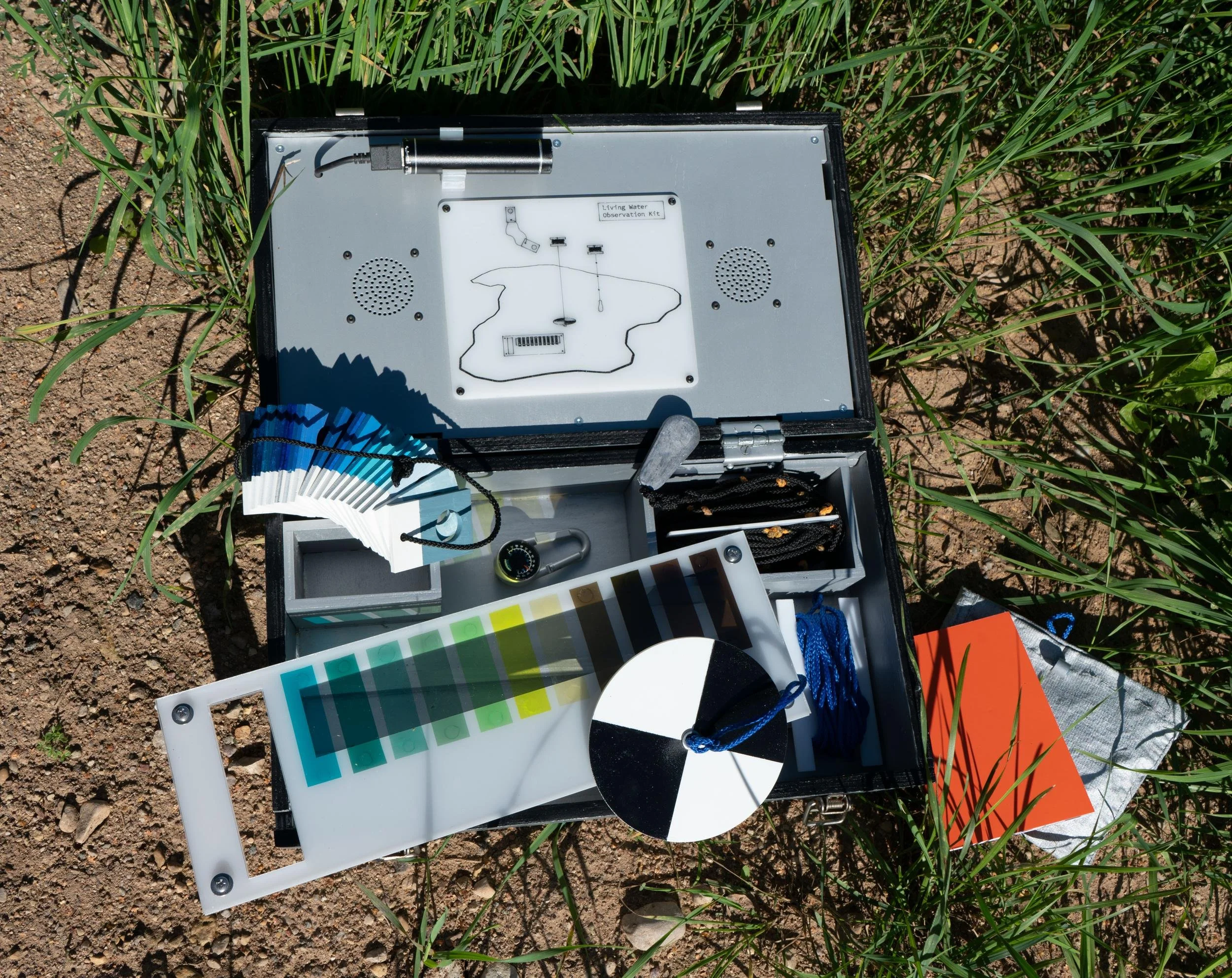
Living Water, 2024. The station uses scientific observational tools and methodologies such as a secchi disk, cyanometer, and a Forel Ule Scale in order to document the shifting ecotone. These tools were housed in a custom case that played a soundscape of underwater audio recorded in situ. Members of the public were encouraged to use these tools to collect measurements about the landscape and contribute to an ongoing archive.
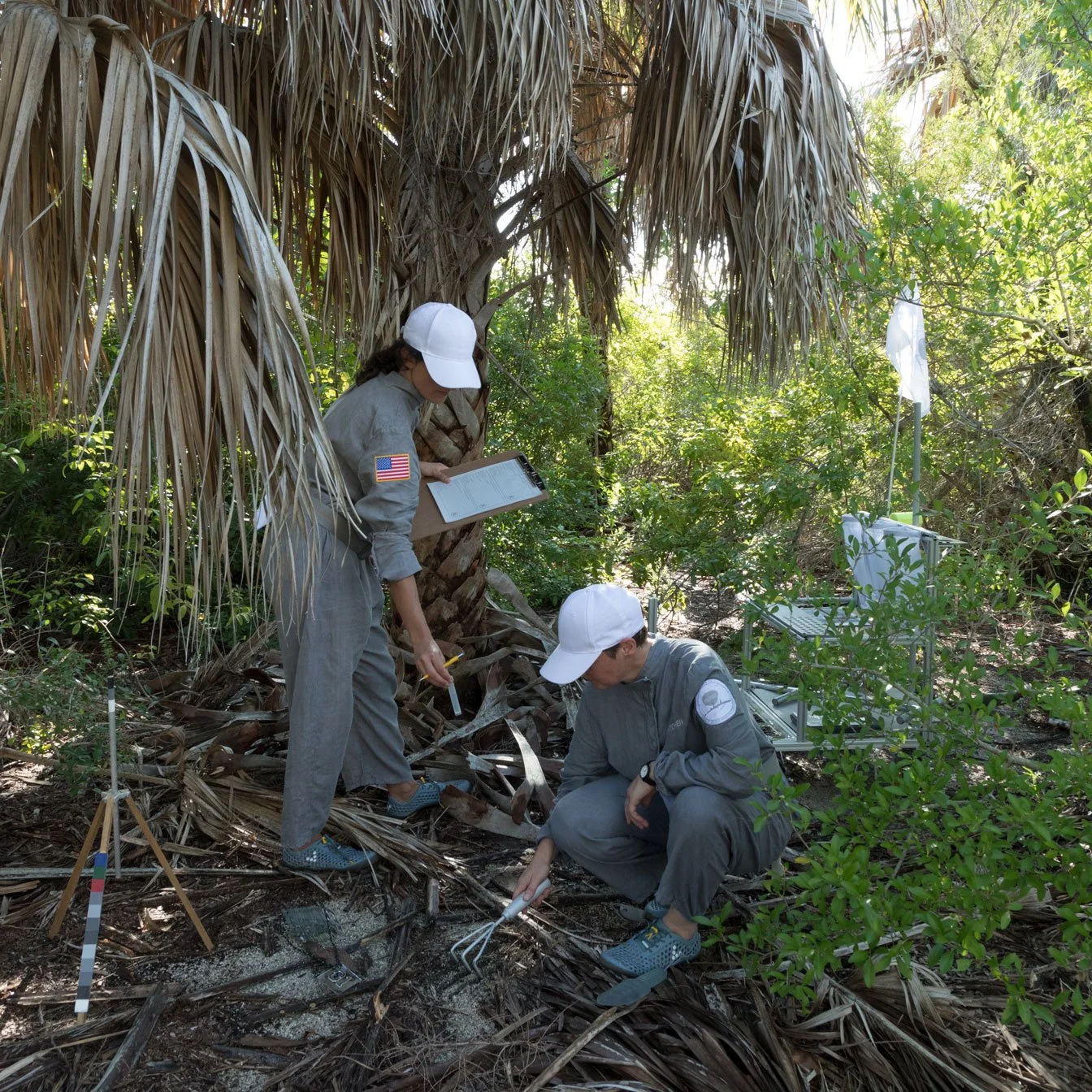
Another Final Frontier (2020) - Photography by Jessina Leonard. Collaboration with Shona Kitchen. Performance documentation
See more of Aly Ogasian’s work
ArtConnect | Website | Instagram
Main image: Keweenaw Observing Station, 2021. In Summer 2021, O’Steen and I were selected to participate in the Rabbit Island Residency, a highly competitive program based on a remote island in the Upper Peninsula of Michigan. During the residency, we began Keweenaw Observing Station, which focuses on climate change and weather patterns around Lake Superior and the Great Lakes system. The work consists of a series of site-responsive, portable sculptures that function as observational stations/instrumentation as well as repositories of information.
New Voices highlights emerging artists who showcase their unique perspectives and innovative techniques on ArtConnect. Applications are accepted on a rolling basis. If you would like to be featured in a personal interview on ArtConnect Magazine, read through the open call and apply here.