
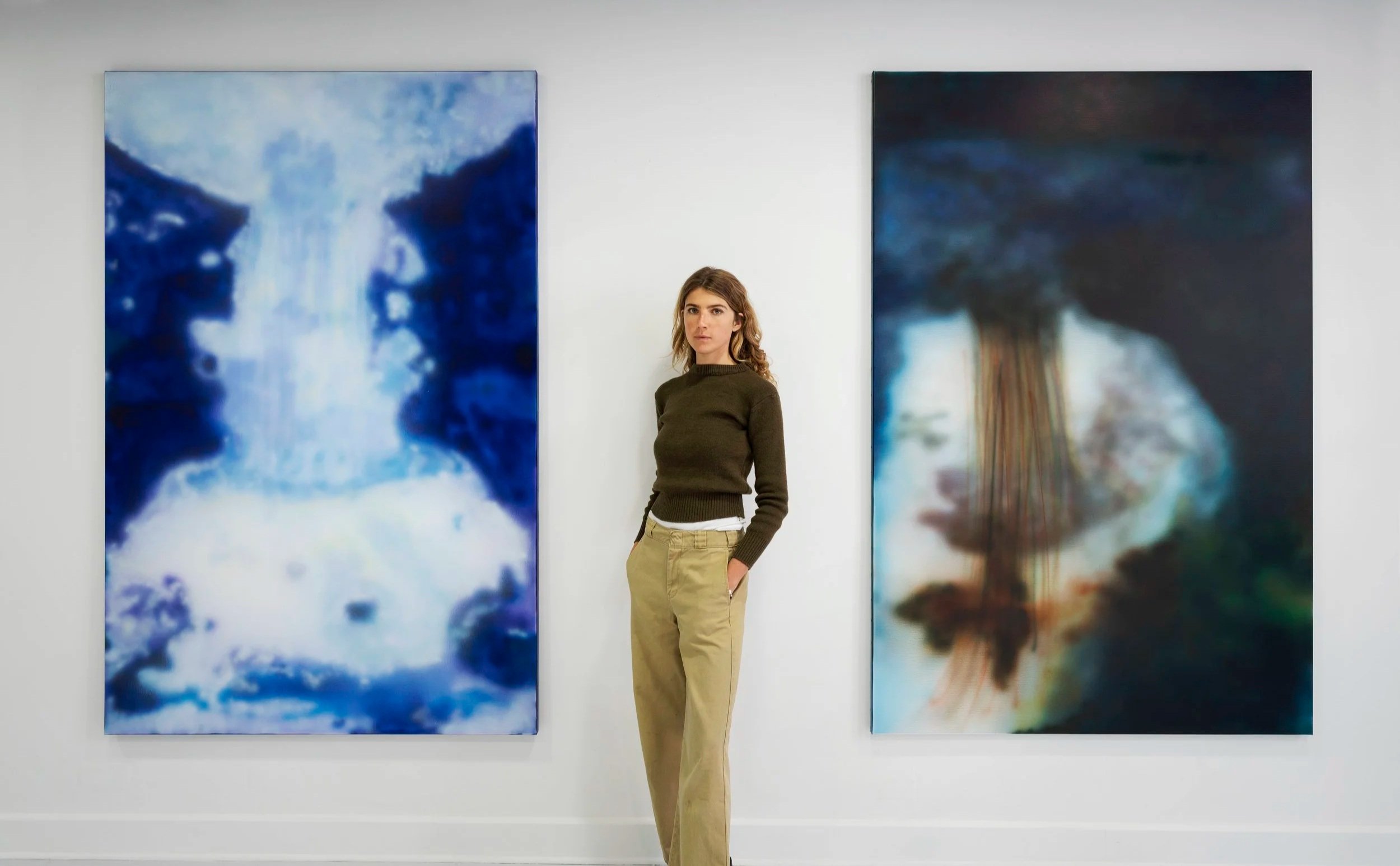
Babette Robertson
Exploring the porous boundary between inner and outer worlds.
Babette Robertson is spotlighted in the New Voices series, which highlights emerging artists who showcase their art on ArtConnect.
Australian-born, Paris-based painter Babette Robertson explores the porous boundary between inner and outer worlds in her work. While painting remains central, she also works across sculpture, installation, and robotics as vital counterparts.
Her early projects used mapping to study environmental degradation. Recently, she has turned that same rigorous focus to the unconscious, using dreams as source material. Her work is rooted in the belief that we exist within interconnected systems—ecological and psychic alike.
Curious to gain more insight into her artistic approach, we asked Babette a few questions about her practice.
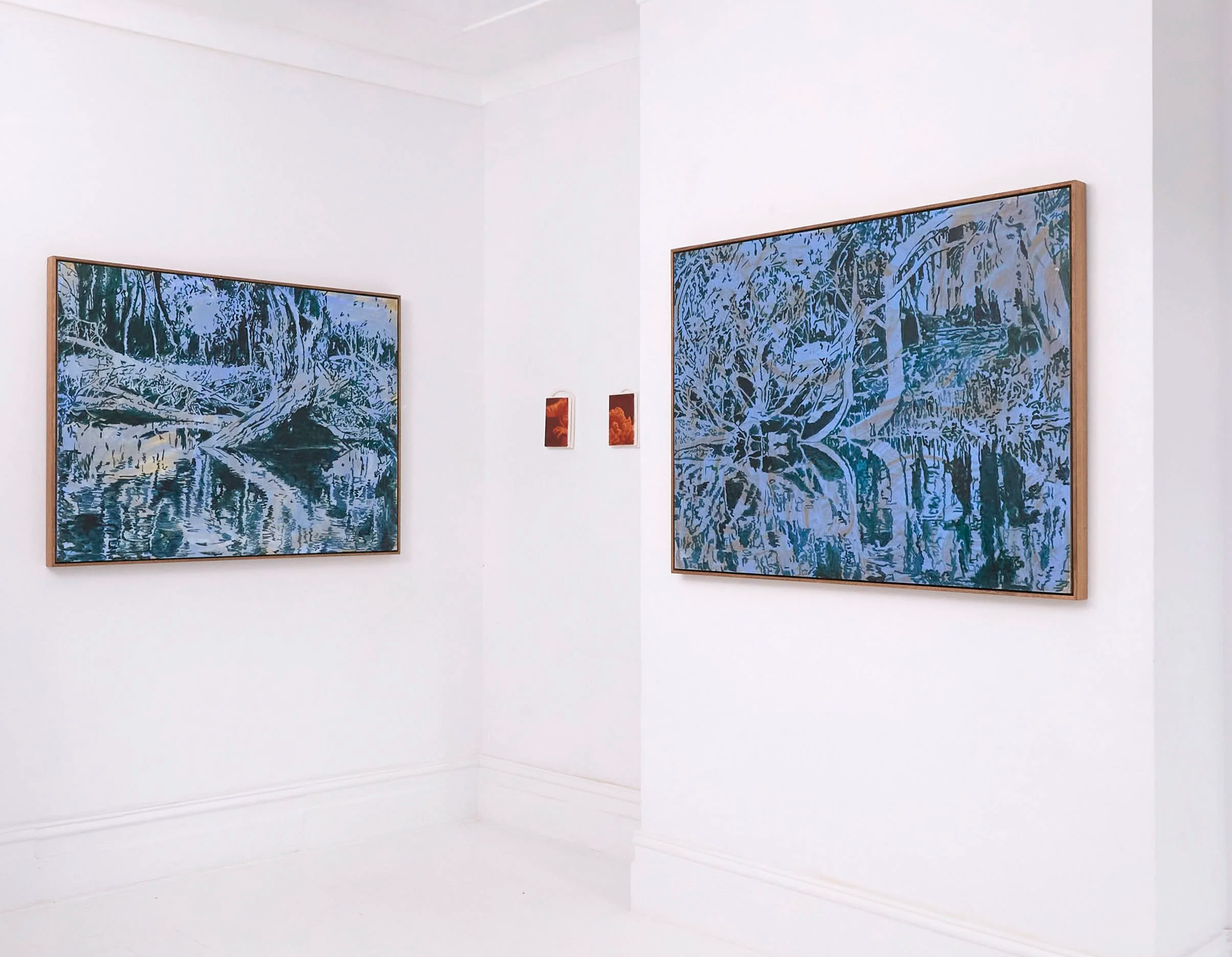
Heartache (installation view). Left: Fallen Tree #50, 2020. Right: Fallen Tree #53, 2020.
Much of your early work centred on environmental themes. Where did your interest in the natural environment originate?
I grew up on a biodynamic farm on Australia’s east coast, so immersion in the natural world was a condition of life. My childhood was spent by the Boolumbahtee (Manning) river, and my first creative acts involved making worlds from leaves and sticks. That kind of tactile engagement fostered a lasting sensitivity—less about seeing nature as static, and more about feeling the agency of materials and their specific environments.
This sensibility was reinforced by our daily practices. My parents live in close attunement with seasonal and lunar cycles, principles central to biodynamic agriculture. My mother, a herbalist, cultivated in me a belief in the subtle or unseen forces of nature. Her work quietly normalised the idea that plants possess an intelligence, efficacy, and a relational capacity that exceeds a purely utilitarian view.
So, in many ways, the environmental themes in my practice feel like a natural outgrowth of that foundational worldview. Projects like Every Fallen Tree extend this early sensibility, exploring how ecological materials and events carry histories, energies, and narratives of their own. My interest, therefore, is not simply in “nature” as subject matter, but in the ongoing dialogue and entanglement of human and more-than-human worlds.
Every Fallen Tree is a project you began in 2018. How has the work evolved over time, especially as you’ve worked among different landscapes?
In fact, the project hasn’t “evolved” at all - and that’s the point. The power is in its repetition.
For every tree, in every landscape, I follow the same three actions: logging its coordinates, pressing porcelain into its bark, and painting it. The consistency is the concept. It’s a form of quiet homage, treating each fallen tree—whether in a dramatic Tasmanian forest or one cleared for an urban development—with the same deliberate care. So the work doesn’t change from place to place; what deepens is the archive, and the resonance of that accumulated repetition over time.
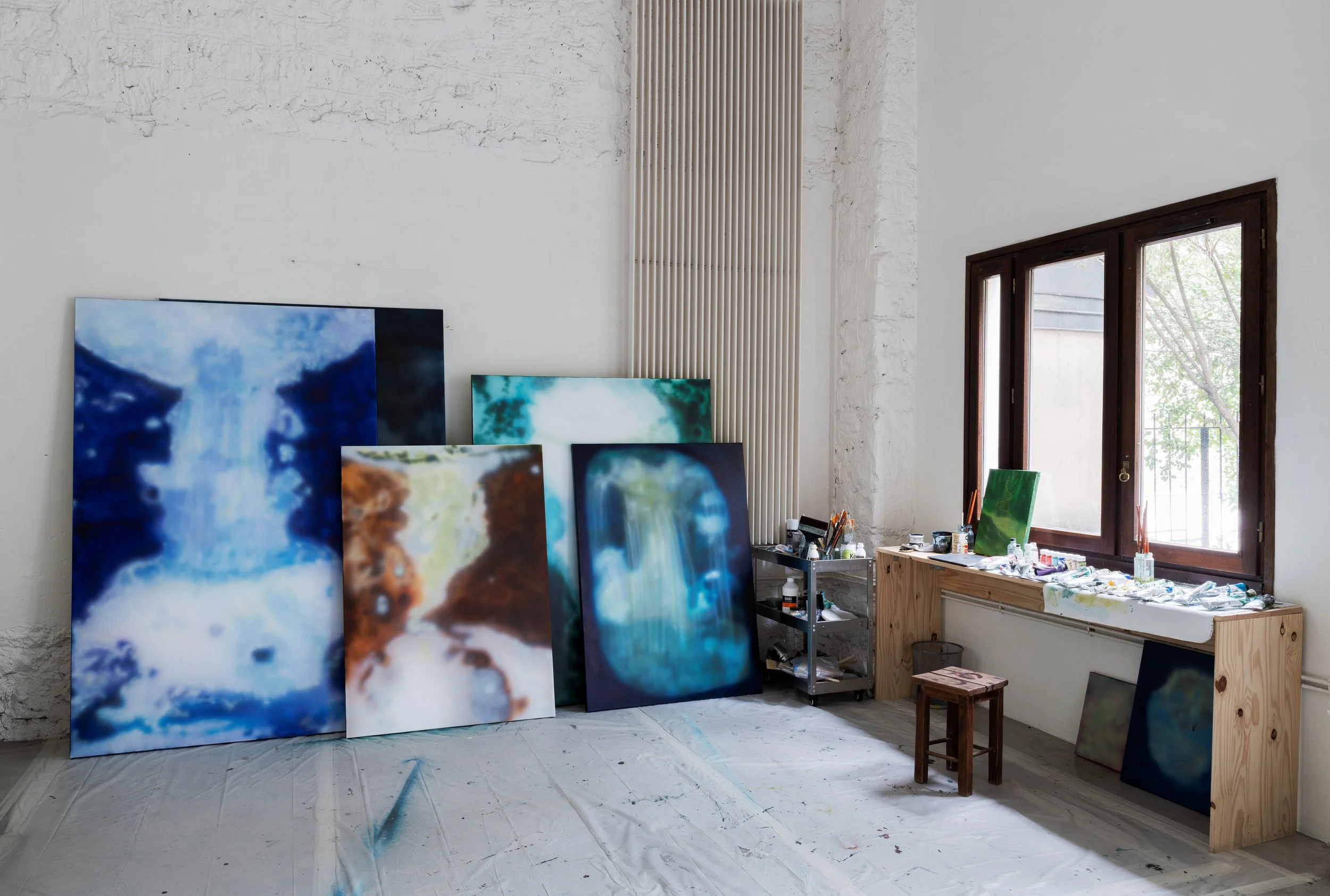
Babette Robertson, studio view, Paris, 2025.
In your most recent exhibition, a dream-based process appears in your practice. What sparked this redirection?
The shift began when I moved to Paris in 2023, a transition that disrupted my usual rhythms, in life and in the studio. At the same time, I was navigating a significant personal event. In that dislocated state, cut off from the natural presence I’ve always relied on to regulate my nervous system and fuel my work, my inner world amplified. My dreams became more insistent, vivid, and impossible to ignore. My mind was generating its own landscapes.
“It felt less like a planned "redirection" and more like a necessary surrender that is continuing to unfold.”
Instinctively, I started applying the same documentary rigor I’d used for fallen trees or riverbank erosion to my dreams. I record them obsessively, treating each as data, a psychic event to be logged and examined. It felt less like a planned "redirection" and more like a necessary surrender.
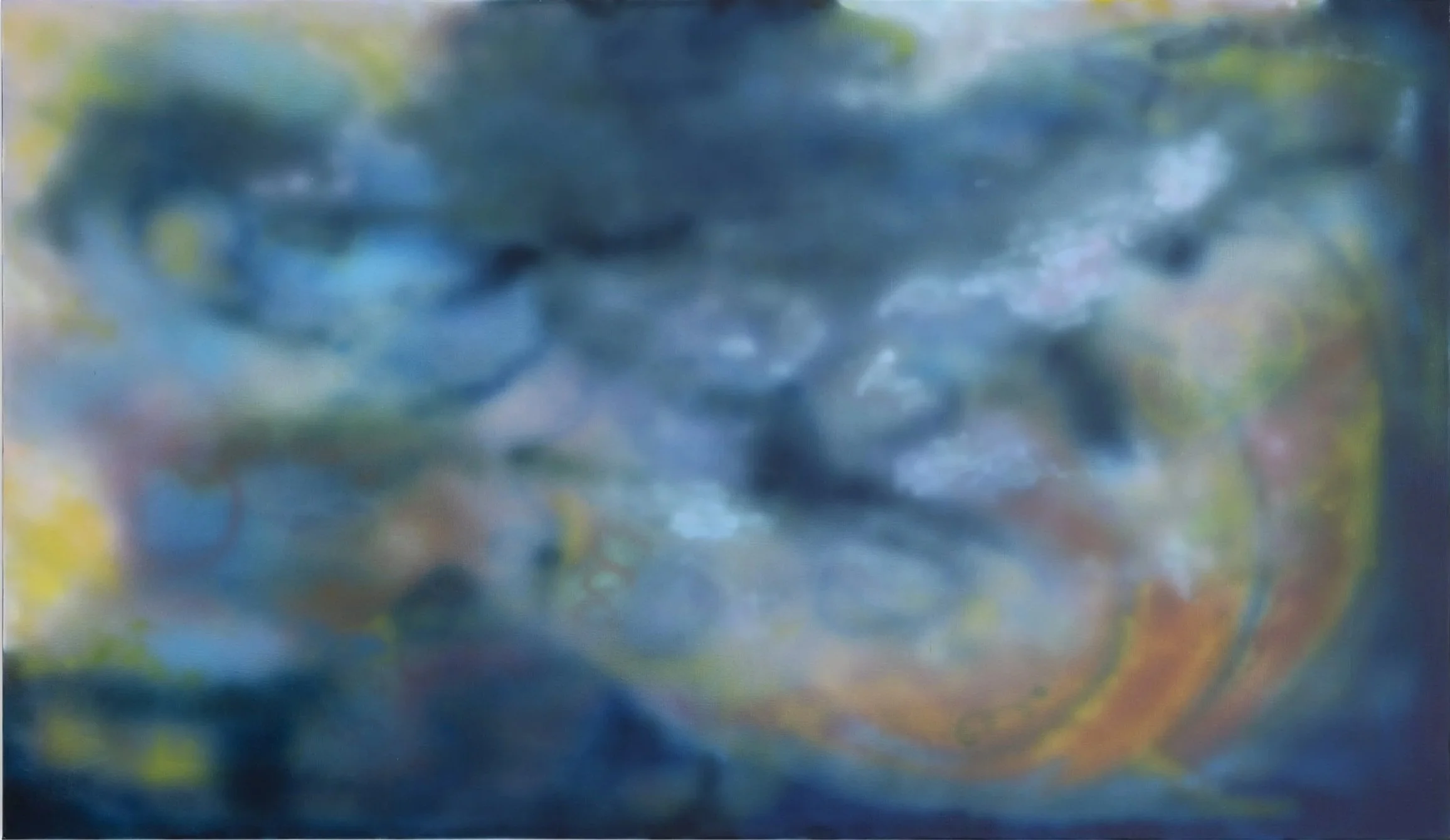
They were painting the white picket fence, but it was a disaster, they were spraying it with this turquoise spray that was going everywhere. It was supposed to just be for the details. When they went inside, the same thing kept happening in the house., 2025. Photograph: Tanguy Beurdeley
Dreaming is a rather intimate and private experience. What has it felt like to translate these inner encounters into artistic research and material for an audience?
I’m not thinking about an audience when I record my dreams. The work isn't meant to be an autobiography or a direct transcription. The source is private, and the final paintings are intentionally abstracted—the dreams are barely perceptible.
What carries through isn’t the literal narrative, but something of their emotional texture or structural logic: a certain quality of light, a sense of dislocation, or a fragmented rhythm. That’s the material I work with.
In a way, that abstraction is the point. It's about creating a space for interpretation, not giving a guided tour of my subconscious. I want the work to act as an open field where viewers can have their own encounter, guided by their own inner logic, not mine.
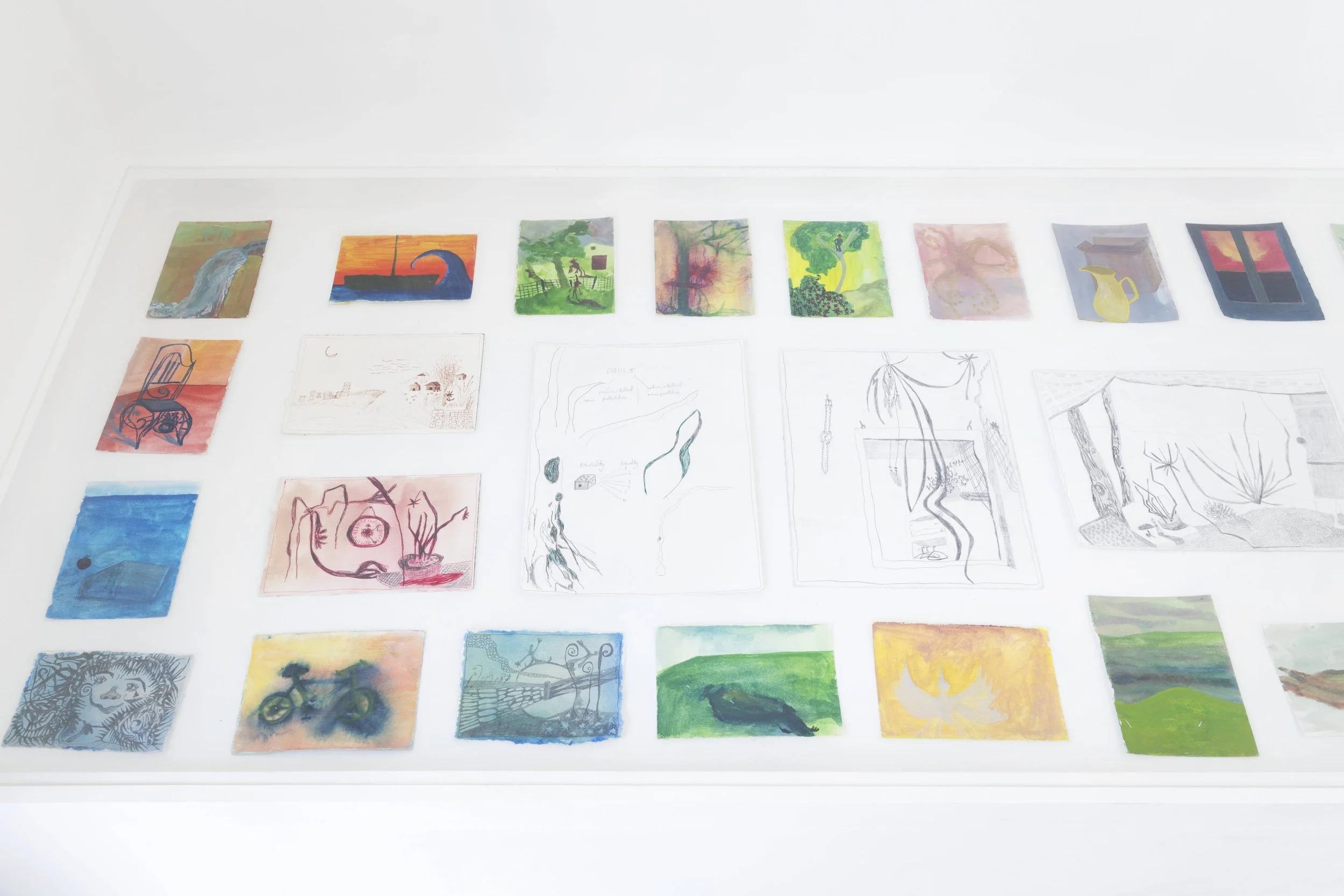
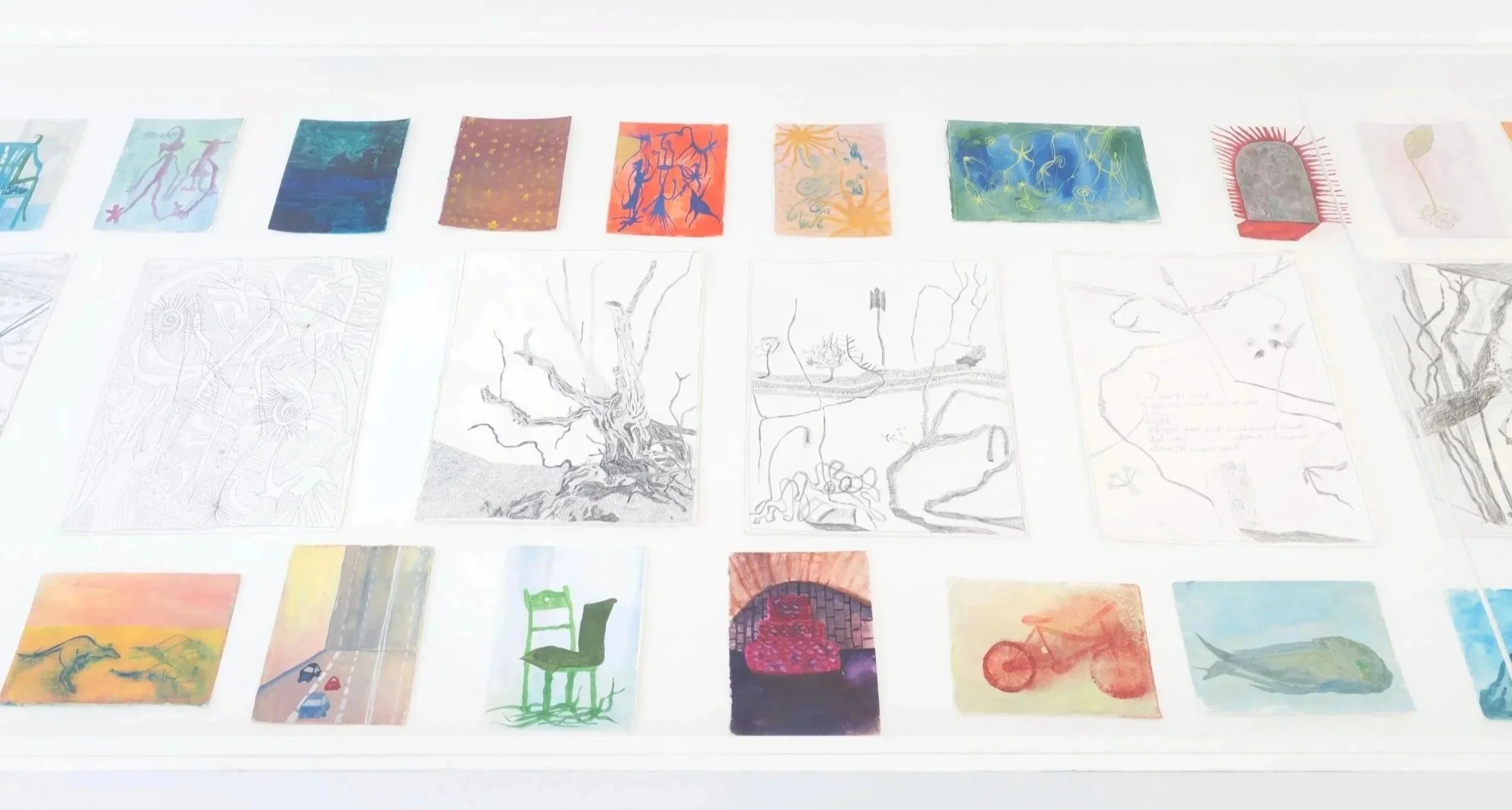
Vitrine installation view, Dream Drawing series, 2025. Photograph: Tanguy Beurdeley
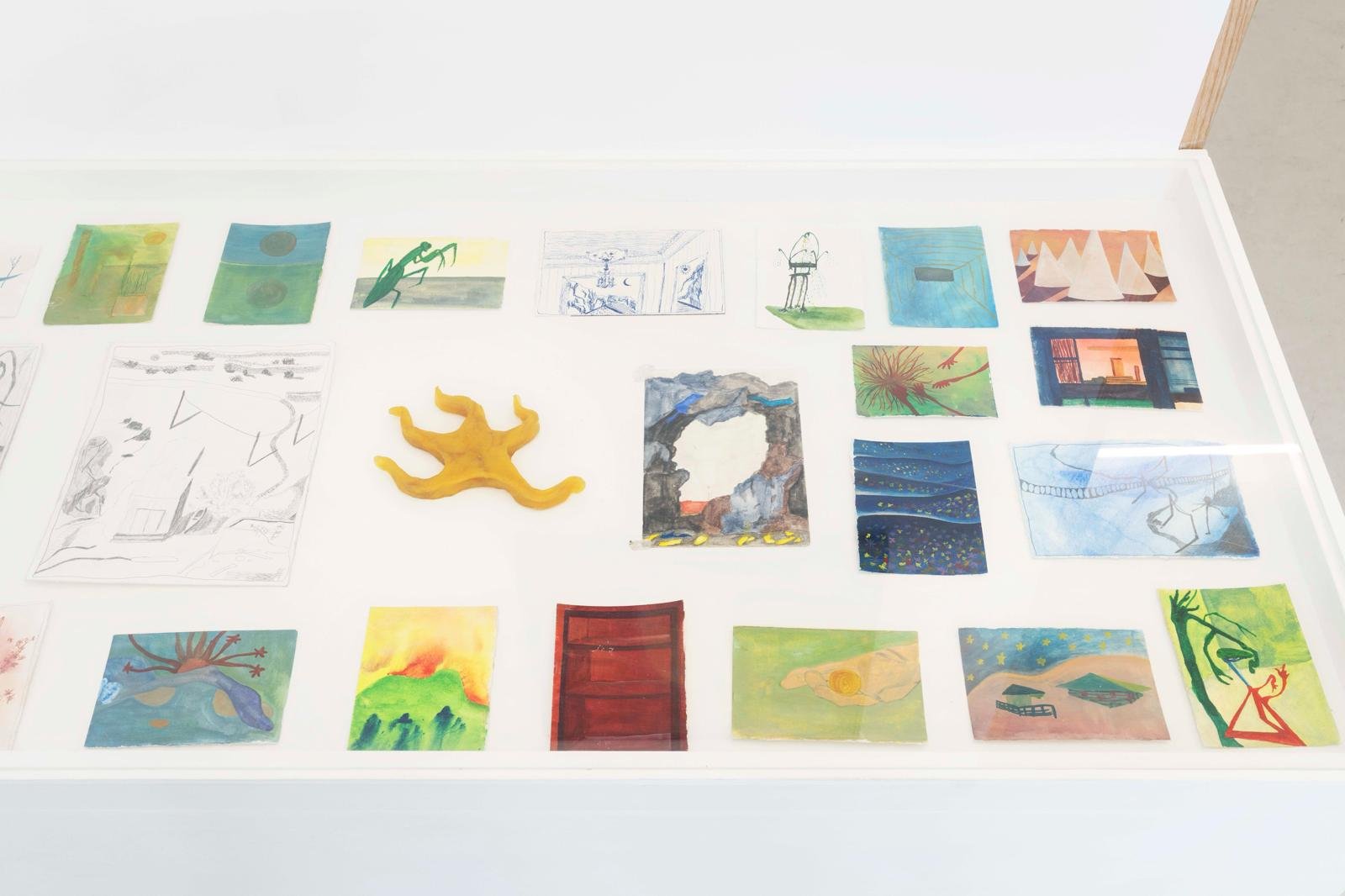
How does a dream morph into a finished artwork? Could you talk us through that process?
It begins with immediate transcription—writing down the dream in the middle of the night or upon waking. I then make very small, figurative watercoulor drawings. These seize a single moment or form from the dream—a specific figure, an object, an encounter. The drawings become anchors.
When I move to large-scale paintings, I’m not enlarging a sketch. Instead, I’m building an environment around the figurative core, dissolving its narrative context into color, texture, and atmosphere.
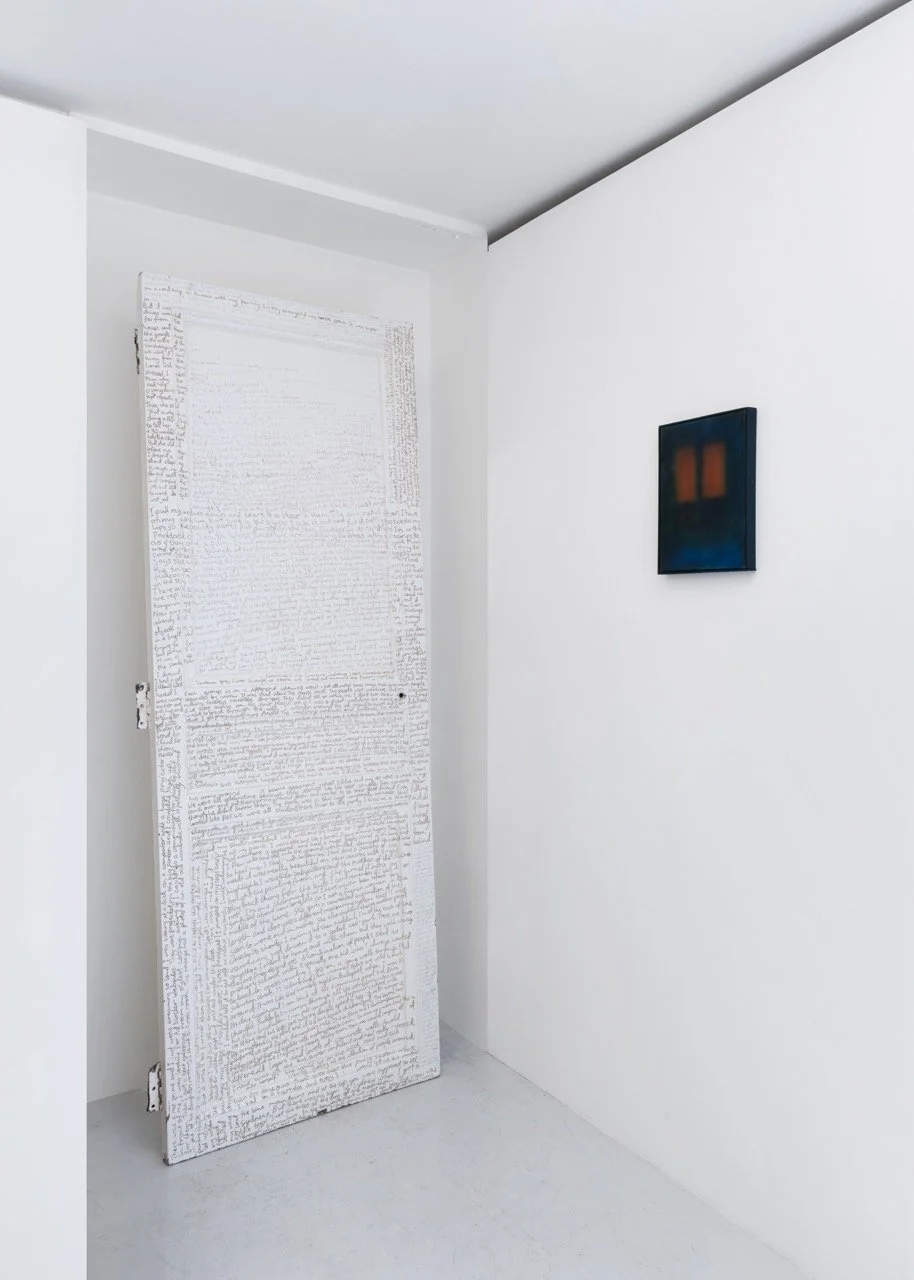
Left: Dream Door, 2025. Right: Something Was Glowing Behind, 2025. Photograph: Tanguy Beurdeley
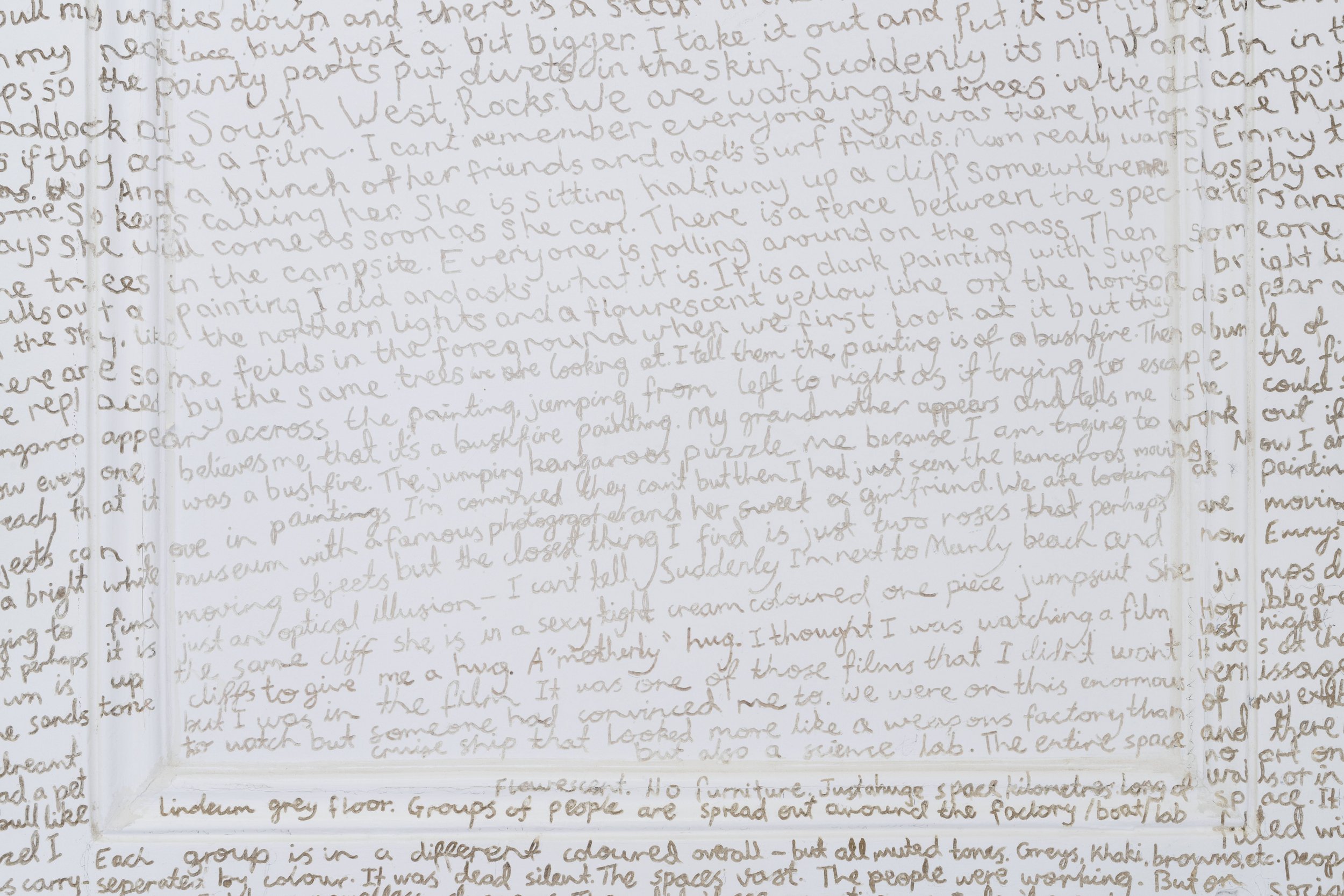
Detail of Dream Door, 2025
With the shift from environmental concerns toward the dreamscape, what visual changes have you observed in your work? Has this transition been liberating, challenging — or both?
Visually, the shift has moved my work from precise external documentation toward an internal, atmospheric language. Edges have softened, forms have dissolved, and the focus is now on a psychological space rather than a mapped physical one.
As all big transitions are, it has been both challenging and liberating. The recent exhibition Dans le Flou (In the Blur) at the Musée de l'Orangerie framed the blur as a response to "the erosion of certainties" and a turn toward "the indeterminate," arguing that in the face of instability, artists have legitimately made "transience, disorder, and doubt their focus." Seeing my own questions and methods articulated there affirmed that my process wasn't a loss of clarity, but a deliberate engagement with a different, more subjective mode of understanding.
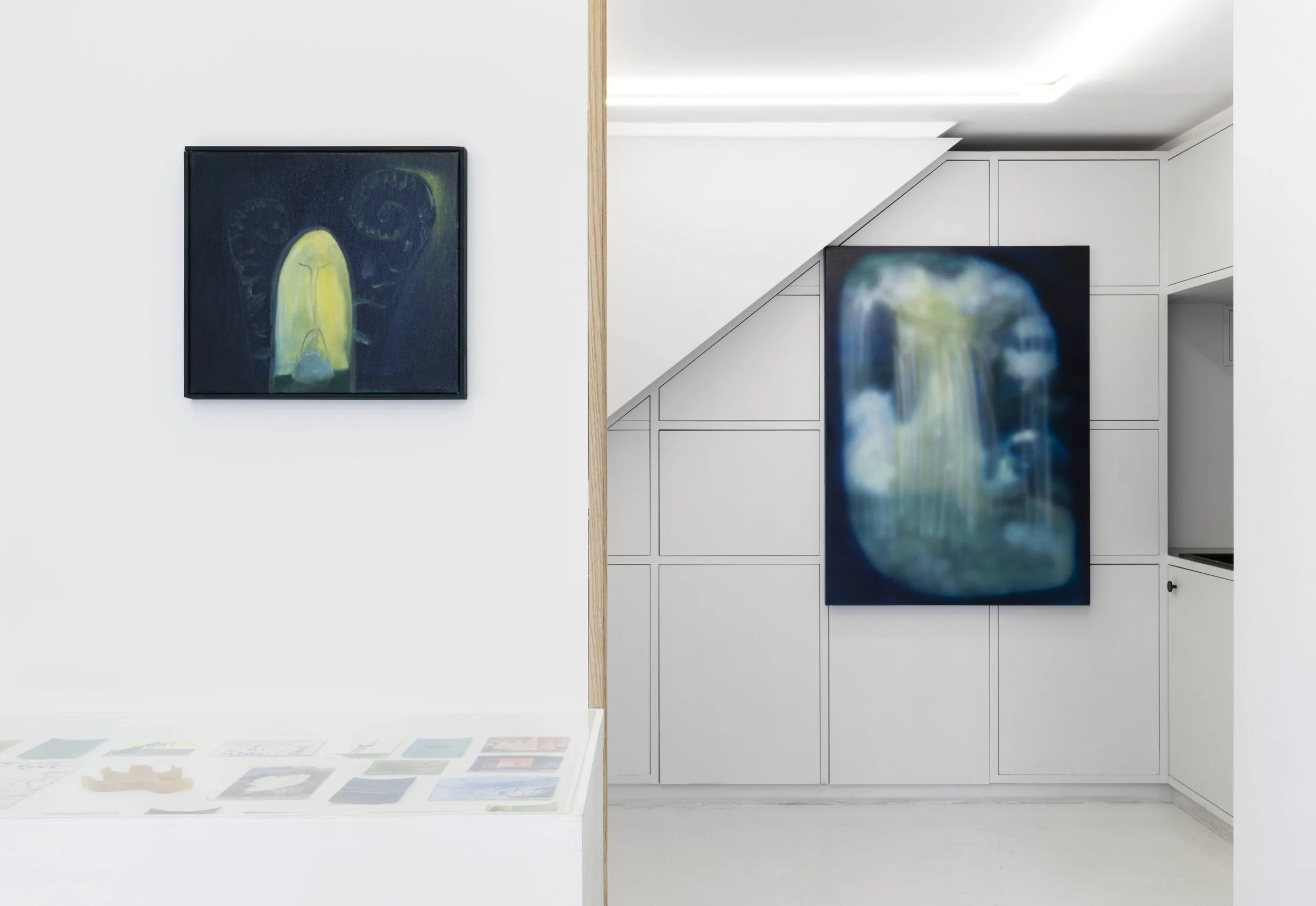
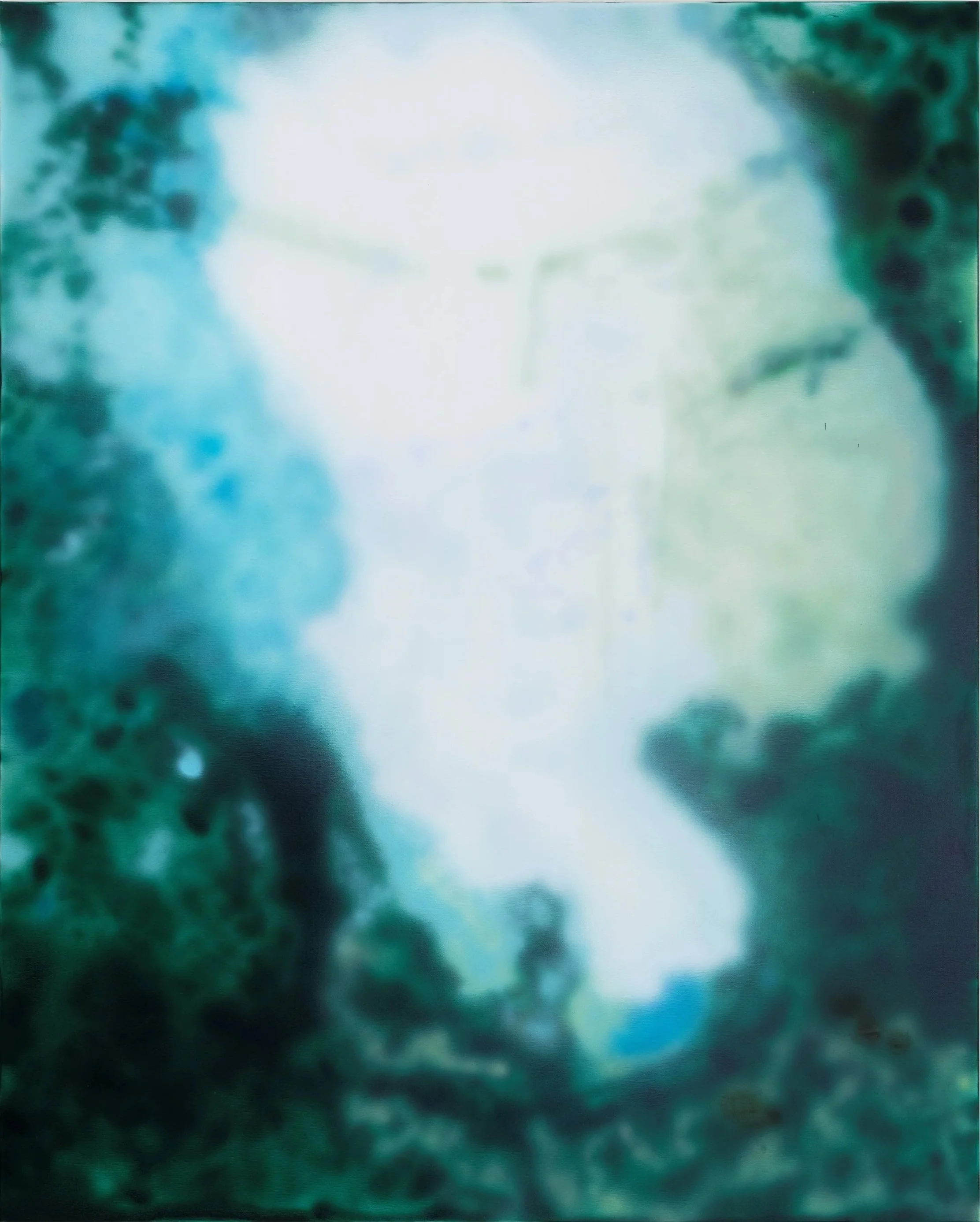
Left: Install shot Possibly Sometime Tomorrow Gallery, Paris, 2025.
Right: When we were in a forest, but the forest was called Paris... At some point we went into a house with scarily high ceilings, 2025. Image courtesy Olsen Gallery.
Finally, what are you working on next? Do you intend to continue this line of inquiry in 2026?
The dreams continue, so the practice continues. It’s a sustained inquiry, and the heart of that inquiry is in the paintings. My role is to be a vessel, translating the intangible weight of our dreams and unconscious into the physical language of paint.
I have exhibitions in Sydney, Paris, Lismore Regional Gallery, and New York. For 2026, my intention is simply to go deeper into the paint. The challenge is to remain in this liquid state between dreaming and making. The work is no longer about mapping a terrain, but inhabiting one.
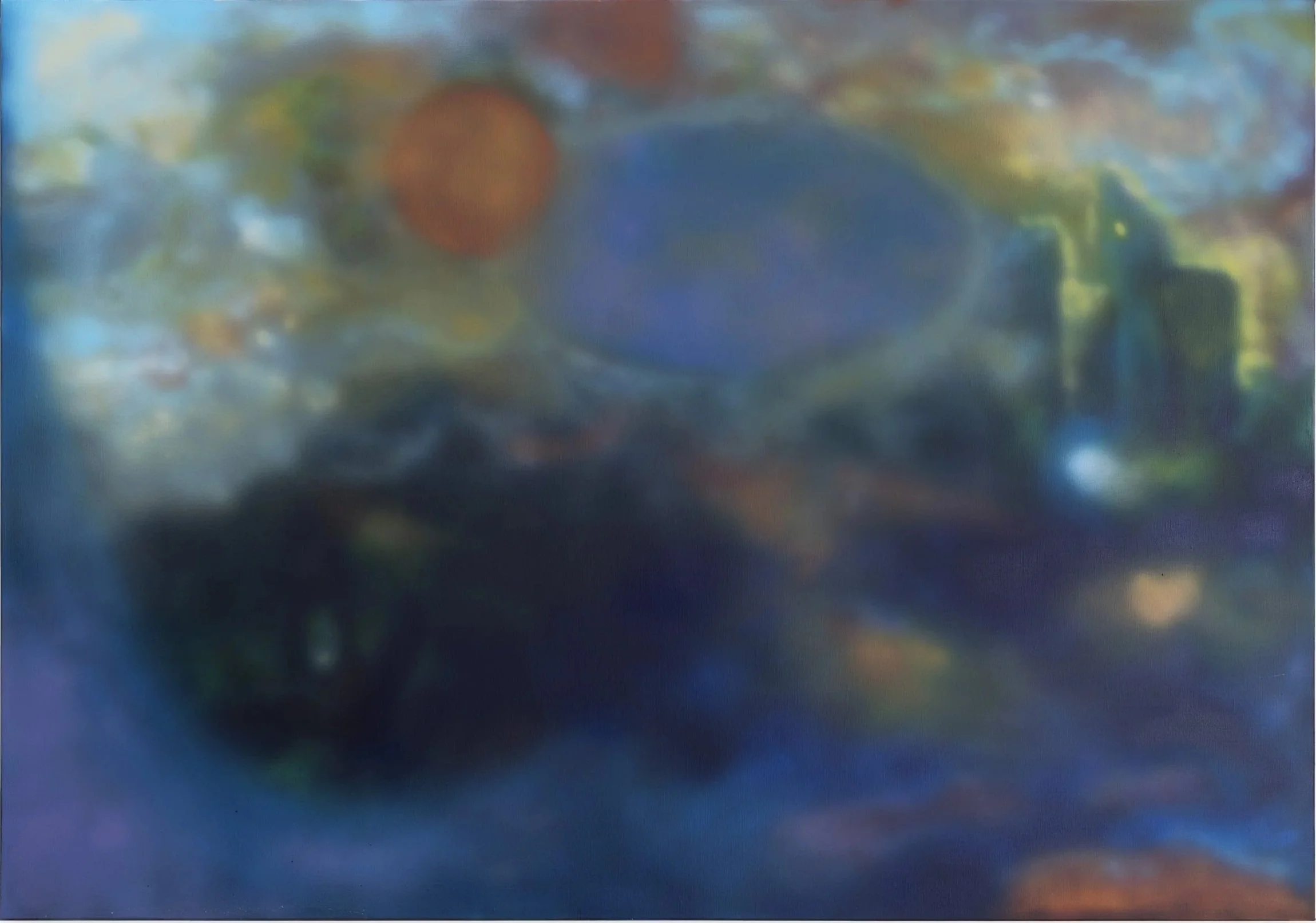
Looking through. There were lights on the horizon, but there was no horizon, 2025.
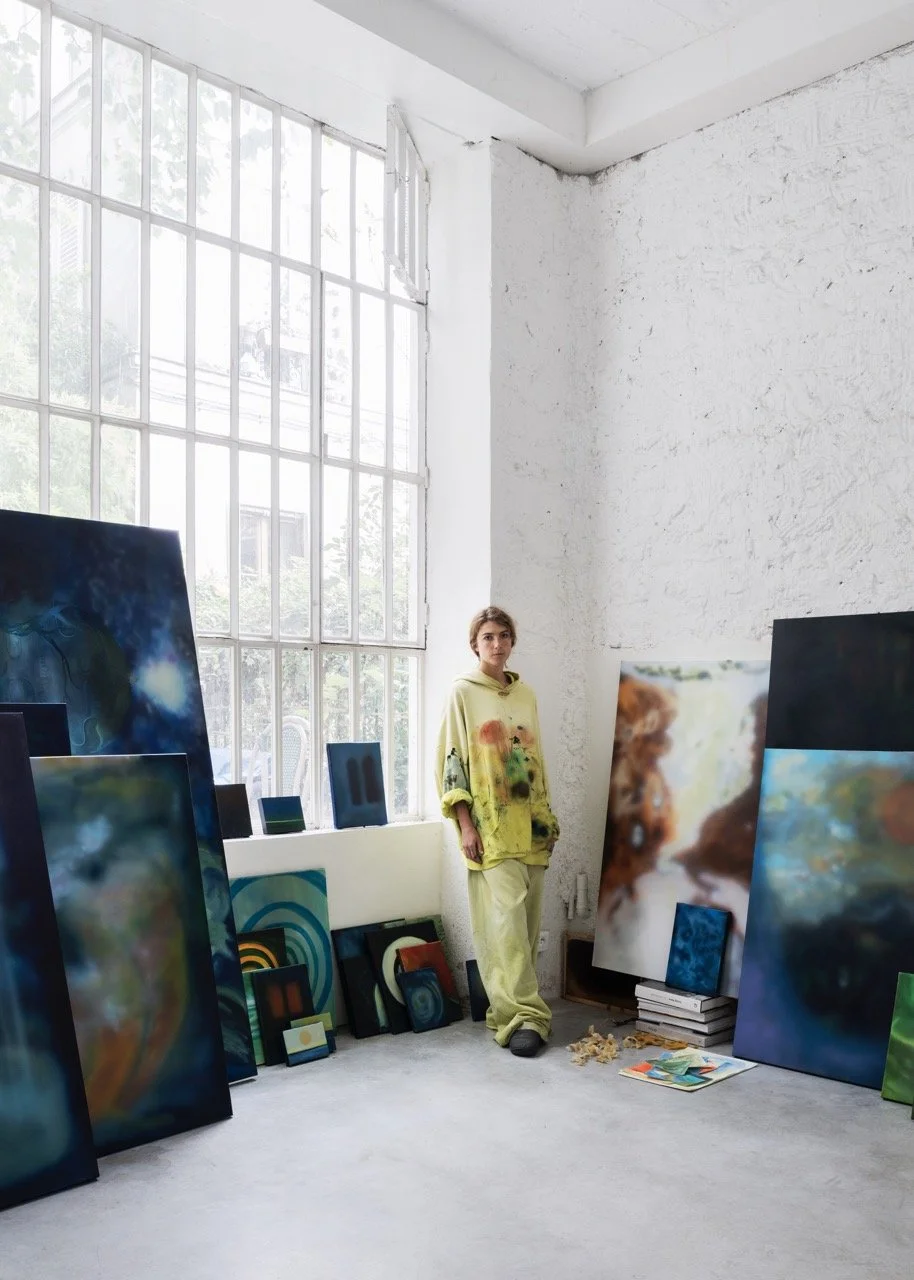
Babette Robertson, studio view, Paris, 2025
New Voices highlights emerging artists who showcase their unique perspectives and innovative techniques on ArtConnect. Applications are accepted on a rolling basis. If you would like to be featured in a personal interview on ArtConnect Magazine, read through the open call and apply here.