
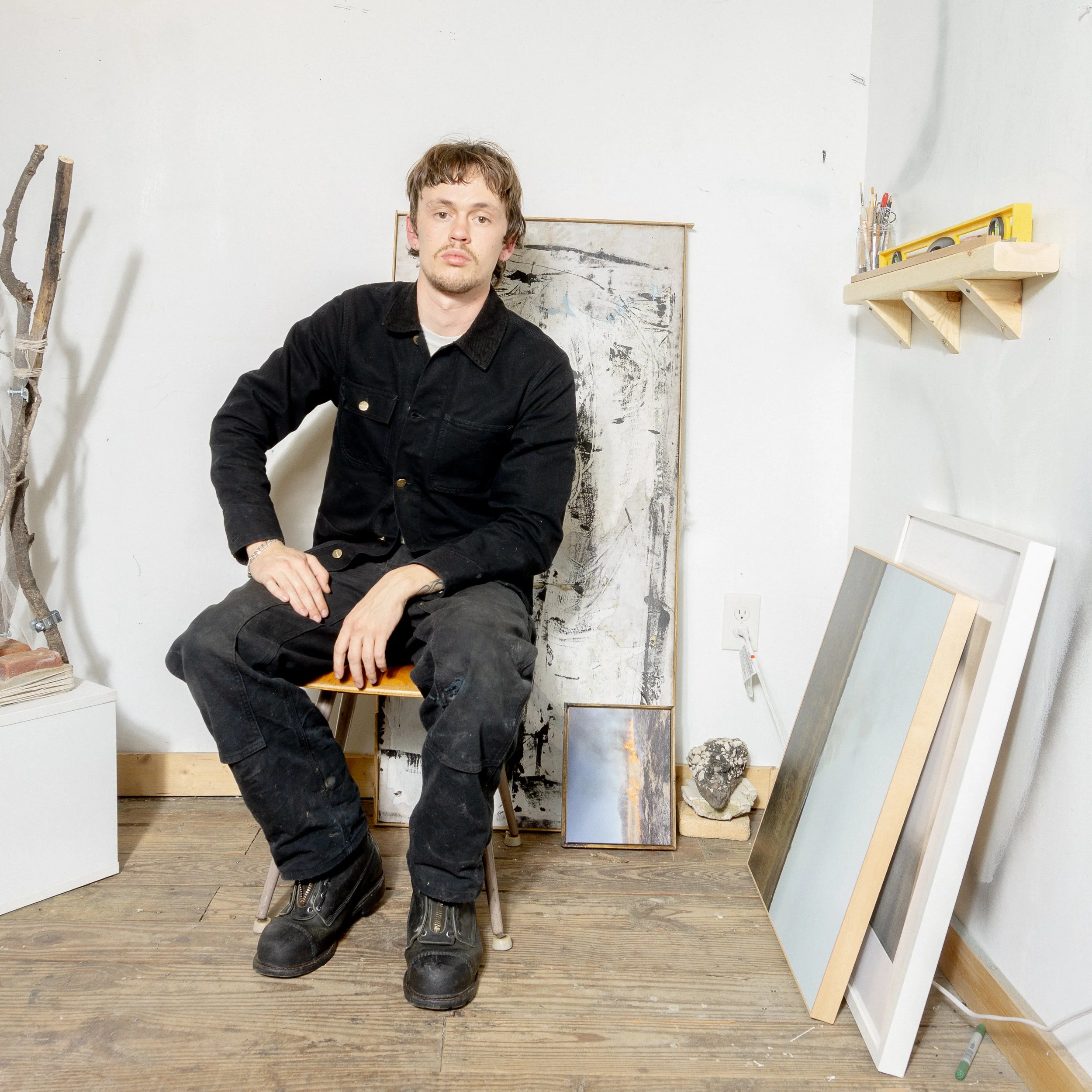
Colin Martinez
An artist & designer whose work questions how familial history, ecological change, and capital investment interact in the landscape we share.
Colin Martinez is spotlighted in the New Voices series, which highlights emerging artists who showcase their art on ArtConnect.
Visual artist and designer Colin Martinez is based in Chicago, IL. He was born and raised in Ohio, where he earned a B.S. in Landscape Architecture from the Ohio State University.
He employs print, installation, moving image, and collaborative projects to interrogate how familial history, ecological change, and capital investment interact in the landscape we share. His work often pictures the precarious unison of the natural and human-made.
Curious to gain more insight into his artistic approach, we asked Colin a few questions about his practice.
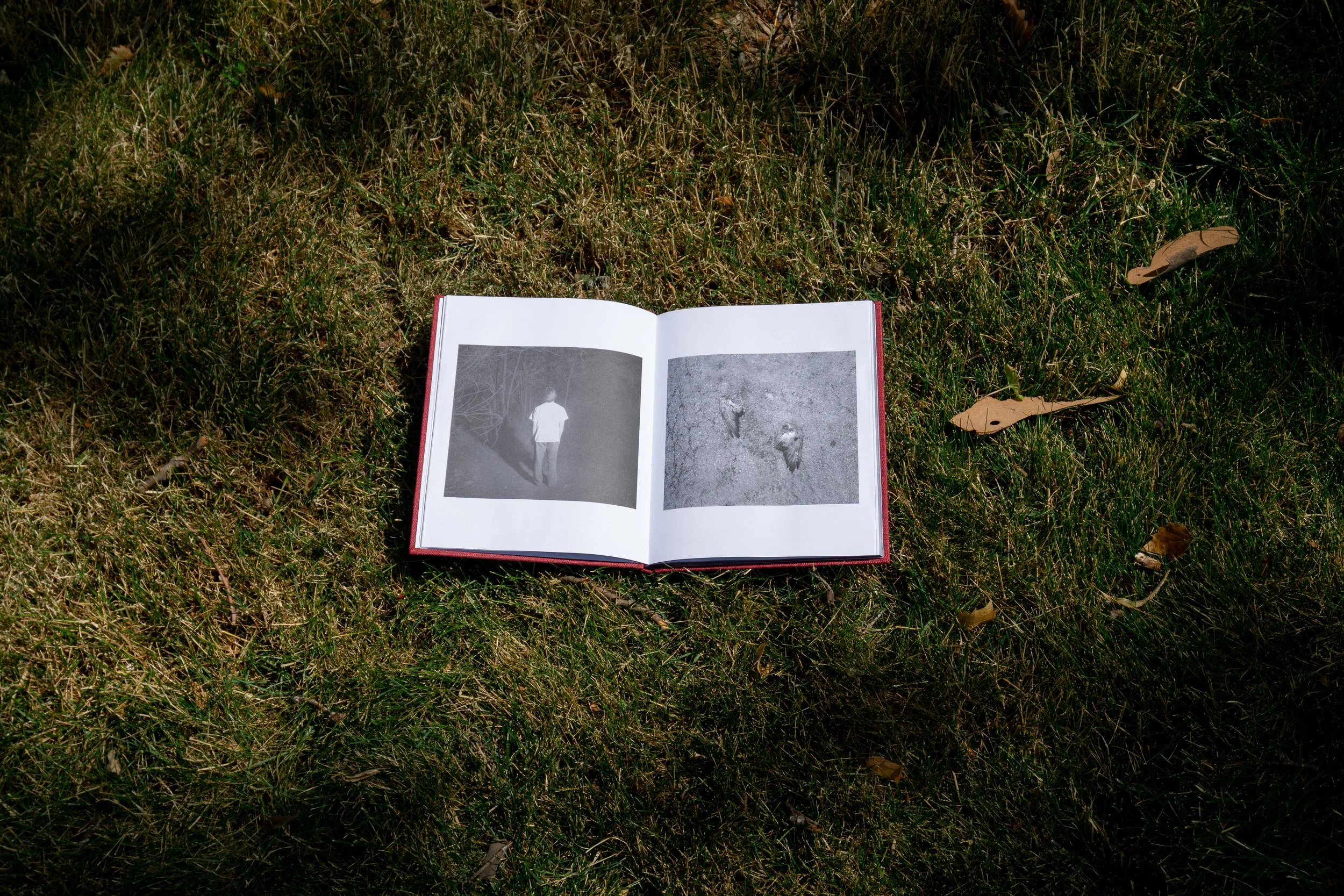
Soil Air Reverence (2025)
You are both a visual artist and urban designer, with a background in landscape architecture. How do these practices intertwine in your work?
I would say that an architectural education teaches you to look and see in the world in a similar way that photography does. Nothing is to be taken at face value, there are processes and histories at play behind every face, tree, layer of paint and structure.
In practice, and for the interest of my own time, I try to find ways to conceptually combine the two pursuits. I photograph fire cutting aggressively across wetlands during controlled burns, inside of century old structures now under public domain now slated for demolition, across the whipping waves of Lake Michigan.
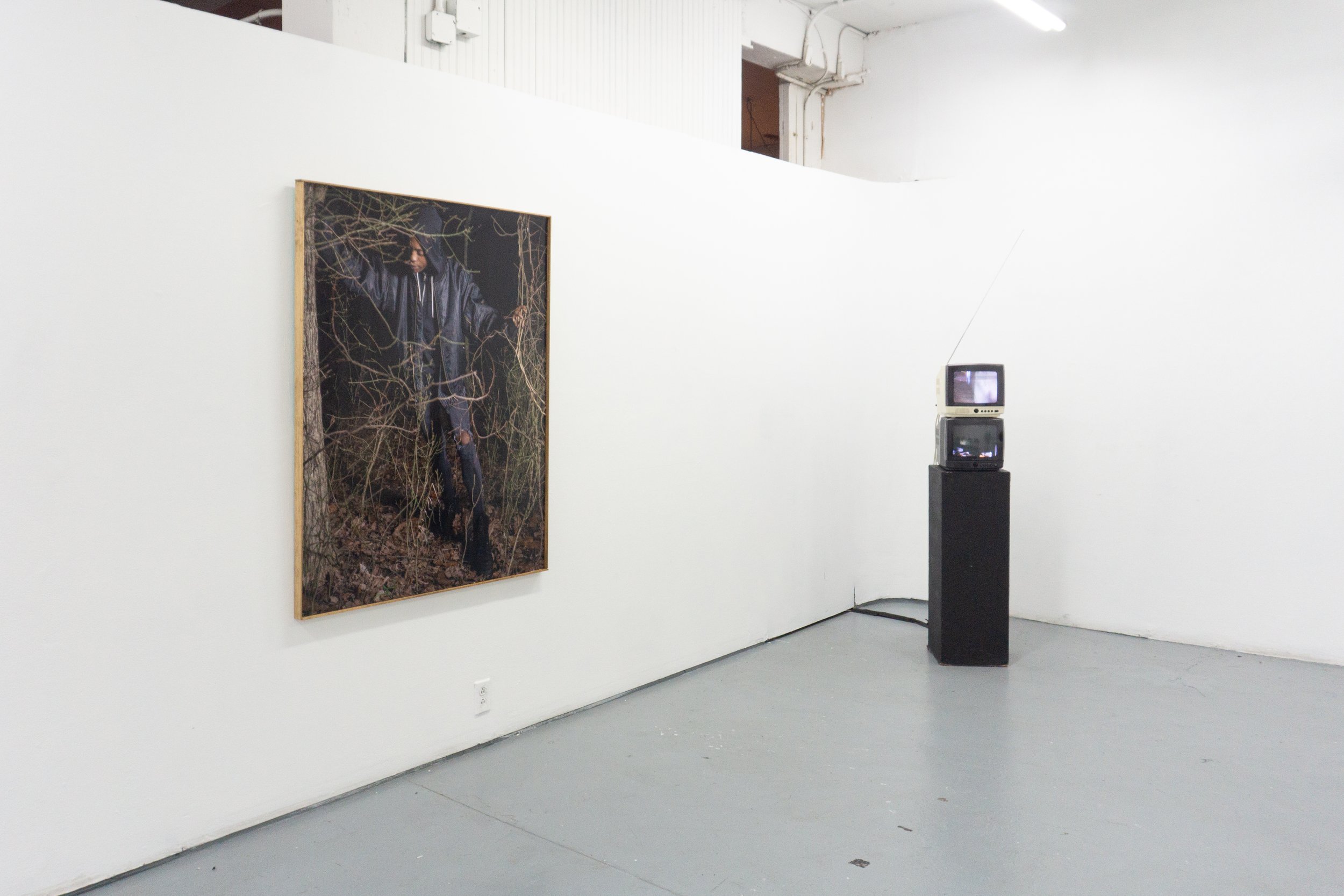
Installation view, “Arena”, 2024 at Skylab Gallery.
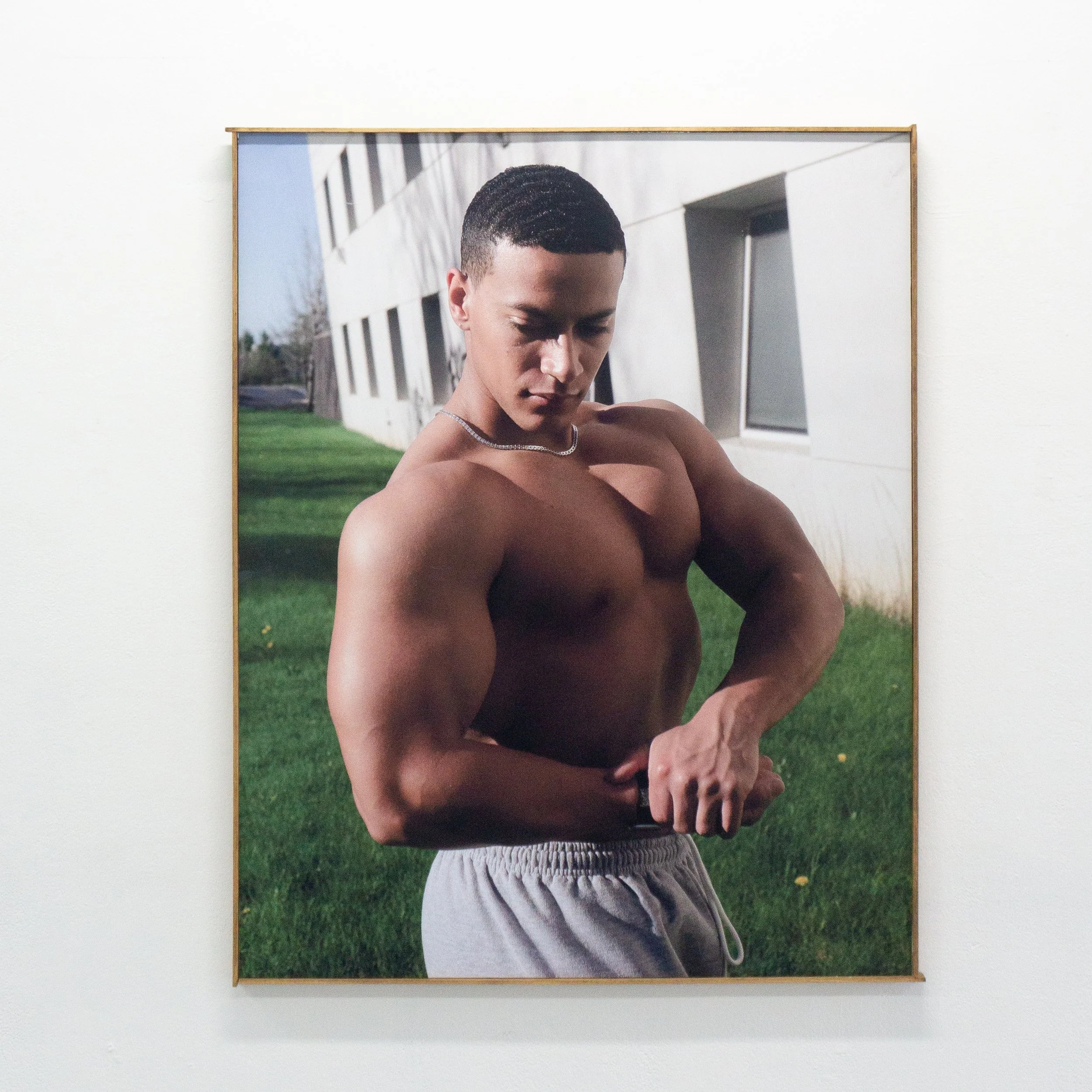
Brennan (2025)
In 2024, your solo exhibition “Arena” reflected on collective memory and ecological transformation in the changing Midwestern United States. Could you elaborate on the research and creative process behind this exhibition?
Much of the conceptual foundation for that show came after reading The Mushroom at the End of the World by Anna Tsing. I was really struck at how she was able to weave stories of people, plants, and fungi into a compelling, deeply moving, and open-ended narrative about the ecological futures that exist within our blasted landscapes.
In the book there existed some simple photography, but I was interested in how these concepts might translate into a full-fledged gallery photo show. The process for the show involved quite a bit of travel, as I researched sites from Pennsylvania to Indiana. Some of that came from personal experiences, like the burned out house on I-65 between Chicago and Indianapolis, and others from researching new factory construction along the Ohio River.
The individuals pictured within the show were taken from my extended circles within Ohio, as I tend to photograph people I have some pre-existing relationship with. During the portrait sessions I would ask them to place me into a landscape near where we met. This process produced some of the more uncanny images of images of the project, like Brennan the bodybuilder who met me in an abandoned office park near his girlfriends job.
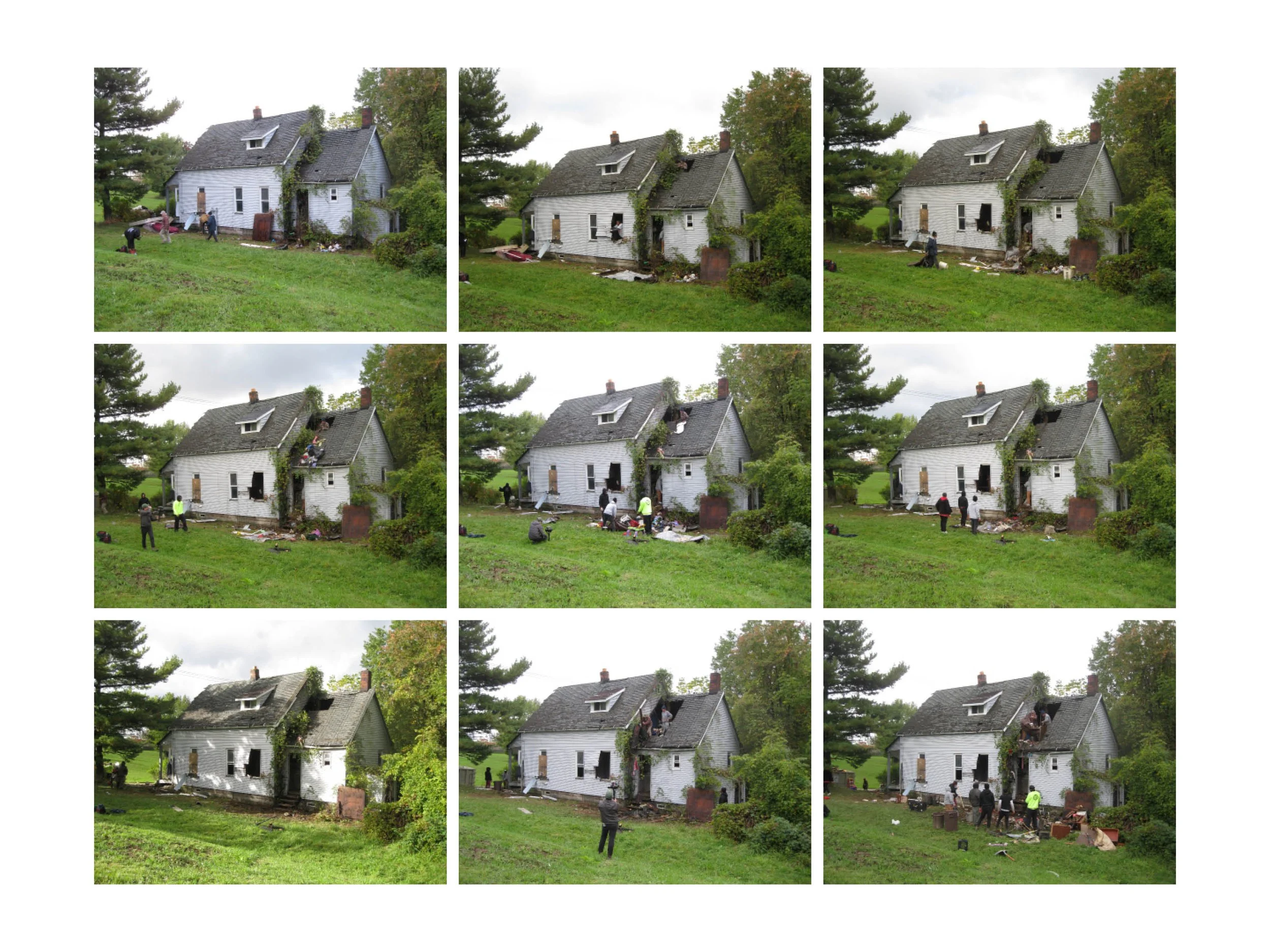
9413 Sophia Ave (2025)
This year, you participated in a year-long in-situ performance entitled 9413 Sophia Ave. Tell us more about this project and how it took shape.
I was initially brought on by a friend and former classmate, Malena Grigoli, to run the documentation of her grant-funded project 9413 Sophia Ave in Cleveland, Ohio. My role grew throughout the course of the project and as friends and collaborators we have taken the project past its physical boundaries as a former home.
The year-long performance of 9413 Sophia Ave included the choreographed deconstruction and subsequent biocycling of a home which was condemned by the Cuyahoga County Land Bank, resulting, physically, in a participatorily designed installation on the site. By using the concept of biocycling as an artistic medium, the life cycle of a built structure can be considered from myriad perspectives – the material as well as the cultural. We decided that we wanted the documentation to not only tell the story of the project itself, but also of the greater neighborhood history.
“Our blocks and homes, like layers of paint, contain histories that can be difficult to unravel; individual stories stand unmemorialized and without context.”
My role included documenting the process in many forms: setting up hunting cameras to document the wildlife on site, photograph the deconstruction process, but also interviewing, transcribing, and reprinting historical documents. The final form was presented in an evolving binder book – the contents of which emerged throughout the course of the project, and through archival documents, public images online, research, interviews, portraiture, and time spent along Sophia Ave and within its neighborhood.
9413 Sophia Ave aims, through its specificity, to tell a broader story about the built environment; and the work within this publication, through its geographical specificity, to tell broader stories of the neighborhood. Our blocks and homes, like layers of paint, contain histories that can be difficult to unravel; individual stories stand unmemorialized and without context.
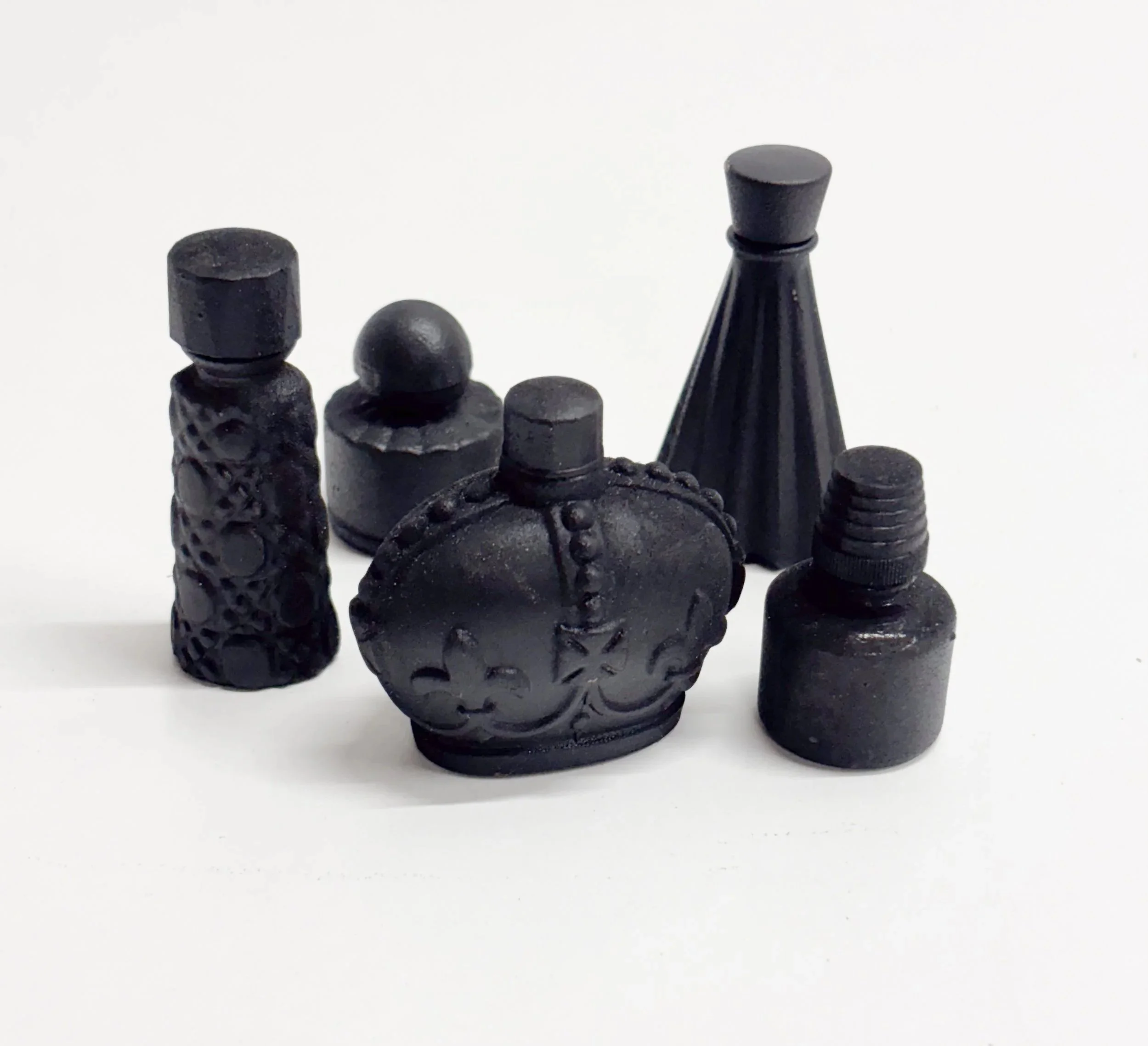
The Smell of a Home (2025)
As part of this project, you created The Smell of Home, distilling the scent of the home in 9413 Sophia Avenue into a perfume. What drew you to smell as a method for preservation? What does scent reveal about this site that other forms of documentation cannot?
I think that much of the project revolved around preserving ephemeral aspects of the home during the deconstruction process, Malena and I were really struck by some of the more fleeting senses within the home. The delicate feel of rotten plaster and drywall; how the dusty light that came in the windows; how plants had begun to creep around the windows; the wet smell of the basement.
Malena kept a select bit of the demo waste and we distilled the waste in various high-strength alcohol tinctures to extract the smell of paint, wet wood, drywall, cement. All were pungent but one of the mixtures successfully captured the smell well, and we bottled it into painted vintage perfume bottles from eBay.
The two of us have an appreciation for scent’s visceral and singular ability to incur nostalgia or a vivid memory, so I think the project was a fun spinoff of the greater 9413 Sophia Ave effort and a nod to perfume being a hobby of the two of ours.
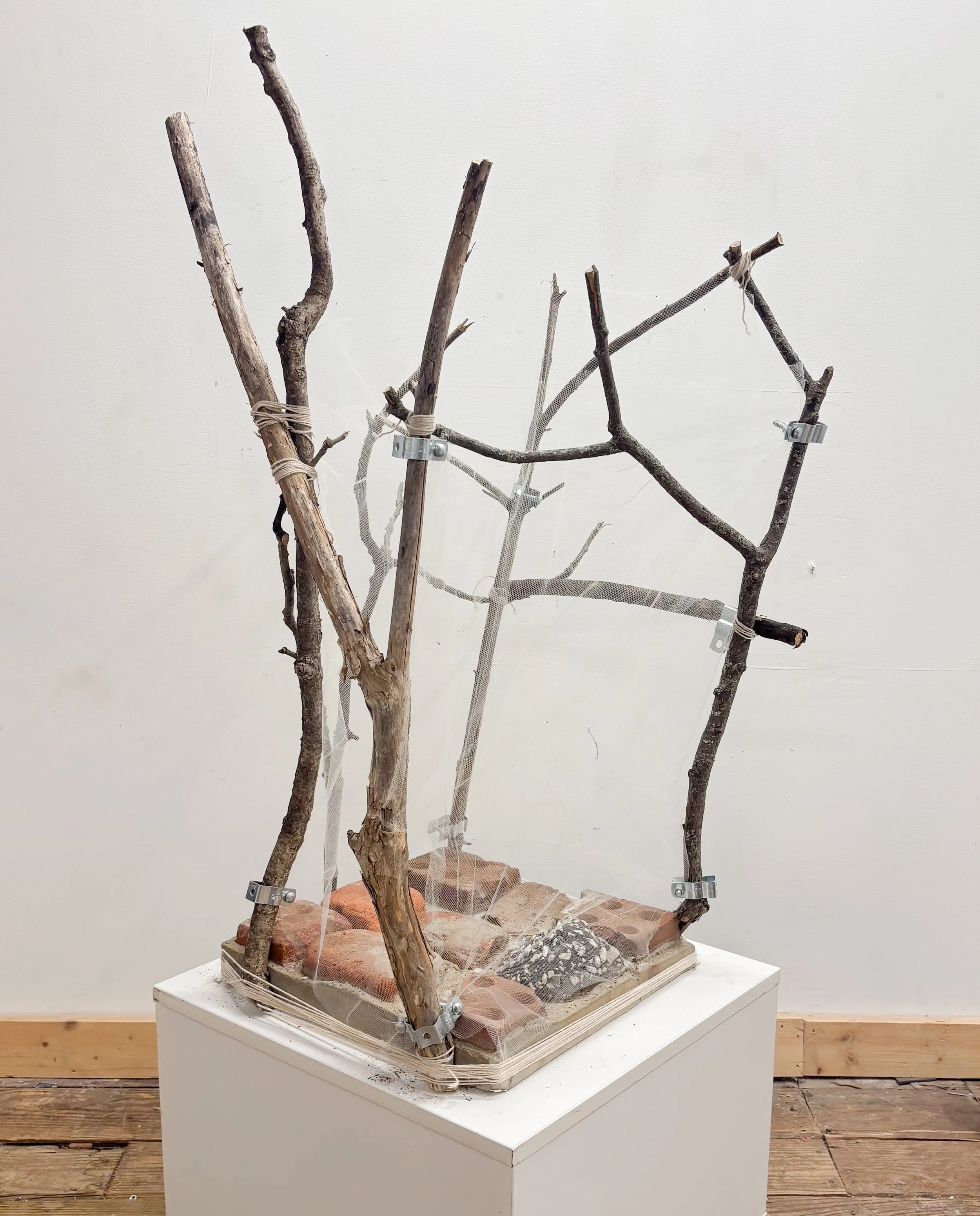
Studio (2025)
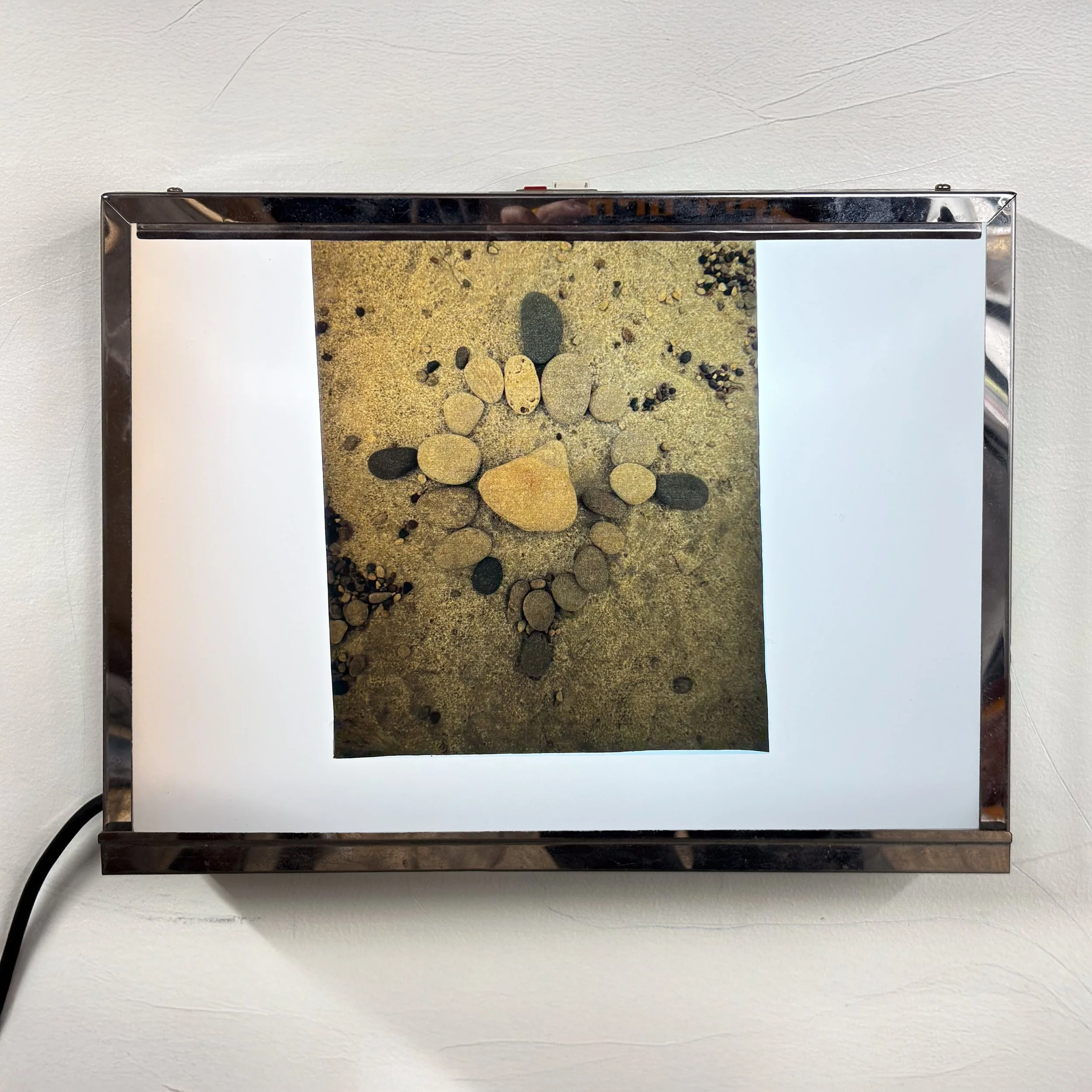
Studio (2025)
A recurring theme in your work is the precarious unison of the natural and the human-made. What is revealed through this precarity?
As I move through new and familiar landscapes alike, I am looking for clues of habitation. A concrete encrusted bar of steel, an eroded wooden beam in the lapping waves. I choose the word precarious because the systems of the Earth and Humans, described here as separate but really closely intertwined, have immense power to influence, change and to destroy one another. Only in recent years I think as a society are we coming to understand how delicate our systems really are.
Fundamentally I am interested in revealing some of the beauty and possibility by considering natural and human-made systems in tandem and as actors with immense power and agency to influence the other. There is a peace that comes with accepting these as dogma into your life I believe.
What are you working on next? Is there anything new coming up for you in 2026?
Aside from extending ARENA into a longer form book project that I hope to finish in 2026, I am excited to participate in two group exhibitions in February: one curated by Samiah Fulcher & Isaiah McDaniel at the Ukrainian Institute of Modern Art, and a second by Gemma Kim at Epiphany Arts Center. These will be my first proper exhibitions in Chicago and are in wonderful company.
See more of Colin Martinez’s work
New Voices highlights emerging artists who showcase their unique perspectives and innovative techniques on ArtConnect. Applications are accepted on a rolling basis. If you would like to be featured in a personal interview on ArtConnect Magazine, read through the open call and apply here.