
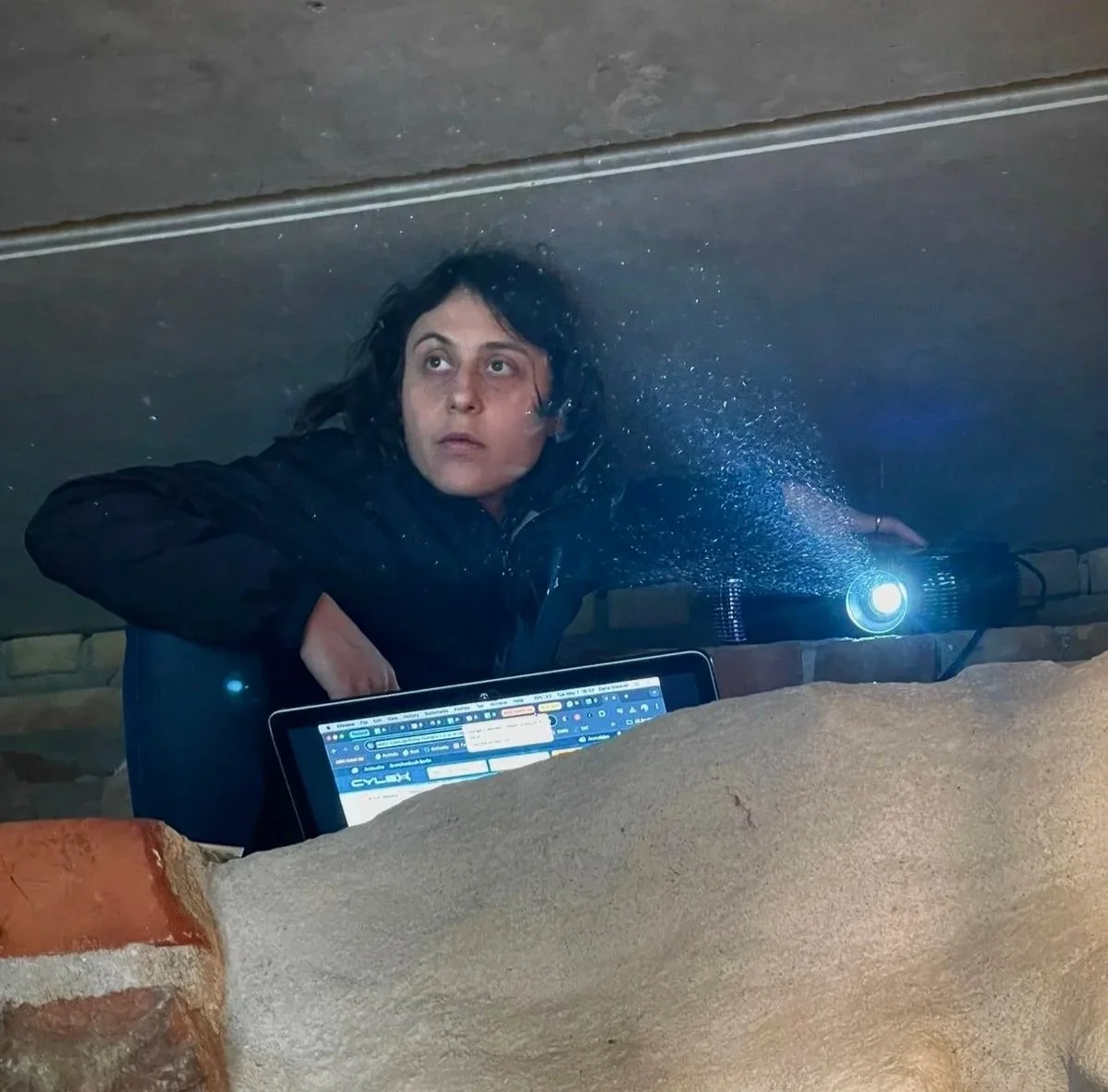
Photo: Branislav Jankic
Dana Melaver
Multidisciplinary artist engaging with scientific theories and the ways in which they change our idea of individuality.
Dana Melaver is spotlighted in the New Voices series, which highlights emerging artists who showcase their art on ArtConnect.
In her projects, Berlin-based artist and filmmaker Dana Melaver uses artistic methods as research tools, working creatively through ideas of the human experience. She often engages with scientific and technological theories and the ways in which they change our idea of individuality. Whether in video or installation, borrowing from aquaculture or oenology, the projects toy with the boundaries that delineate our being. Prioritizing engagement as practice, Dana frequently works with collaborators in the making process and includes participatory elements in exhibition.
Her work has been exhibited internationally, including in Berlin, New York City, and the 2023 Larnaca Biennale. Her film “Sleepless Birds” (2023), co-directed with Tom Claudon, premiered at Hot Docs in Toronto, and won the Christian Berger Cinematography Award at Innsbruck Nature Film Festival.
Curious to gain more insight into her artistic approach, we asked Dana a few questions about her practice.
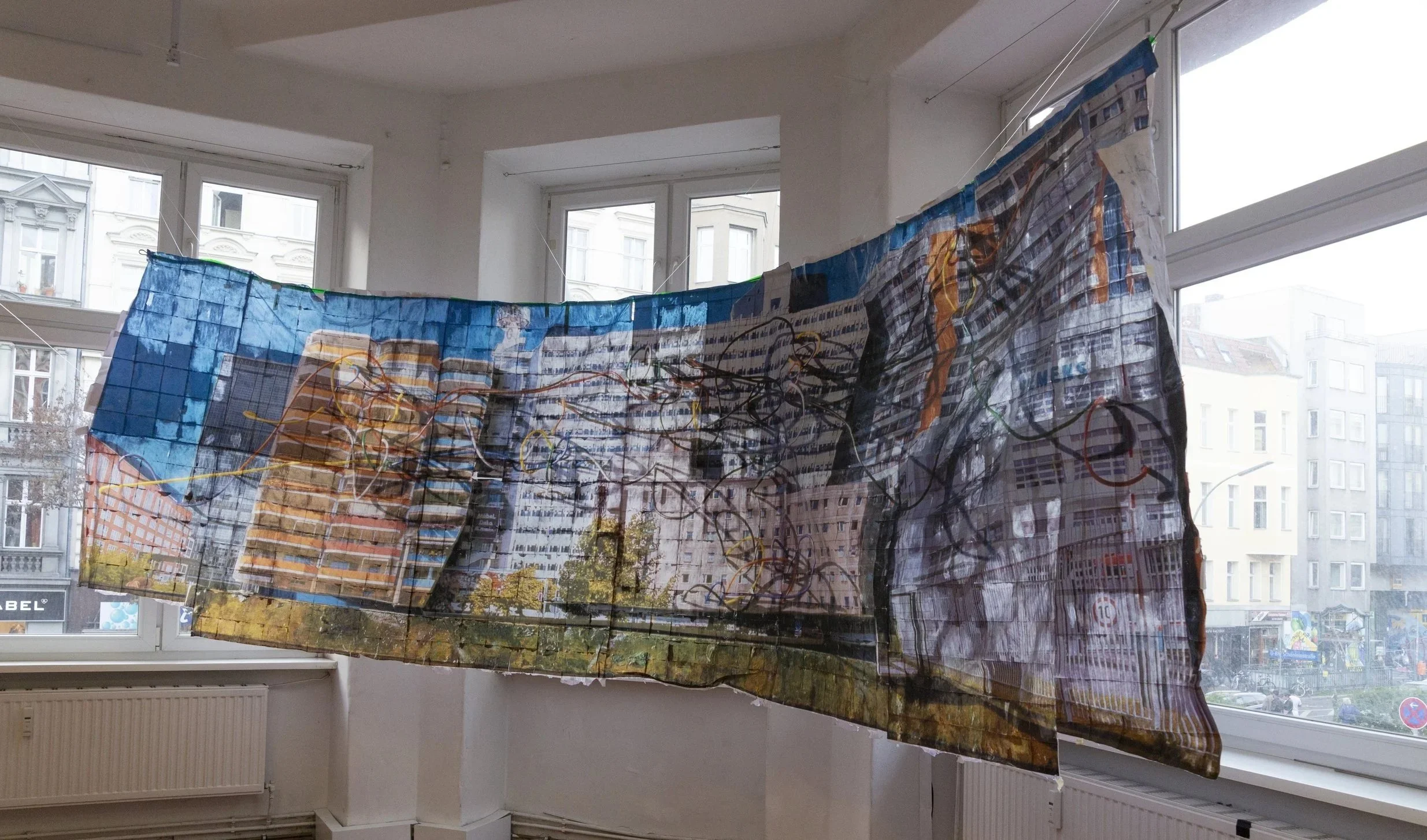
Installation view, Telegrafenberg – part 2 (2022) in group exhibition “RE-” at SomoS Art House, Berlin.
Projects of yours often engage with scientific and technological systems. What attracts you to those worlds? How did this interest begin?
This question has been a lot on my mind recently, especially in the context of some new work, but I think it comes down to feeling that there’s beauty in scientific discovery. The more we learn about our bodies, the natural world, the universe, and the weirder and more paradoxical these findings get, the more my imagination kind of runs wild.
I get the same sort of excitement, this gorgeous gut-punch feeling, from art that touches me and from (scientific) ideas that inspire wonder. It probably begins with my family, especially my grandfather, who is an incredible researcher. The passion in which he always told stories from his work – it just always felt connected to artistic creation. In my family it’s really split down the middle between creatives and scientists, who love to hear about each other’s work.
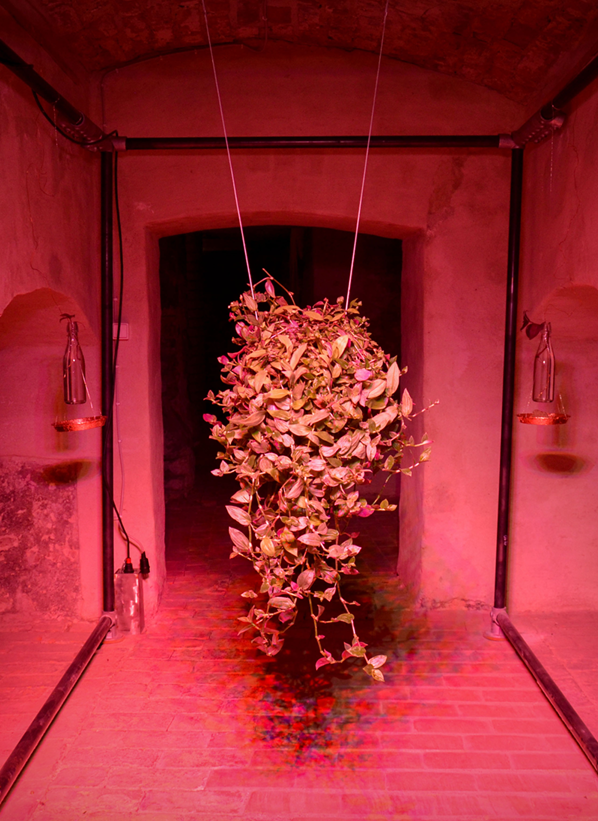
Part of Everything (2024), Dana Melaver and Tom Claudon. Photo: Anastasia Yevstafieva
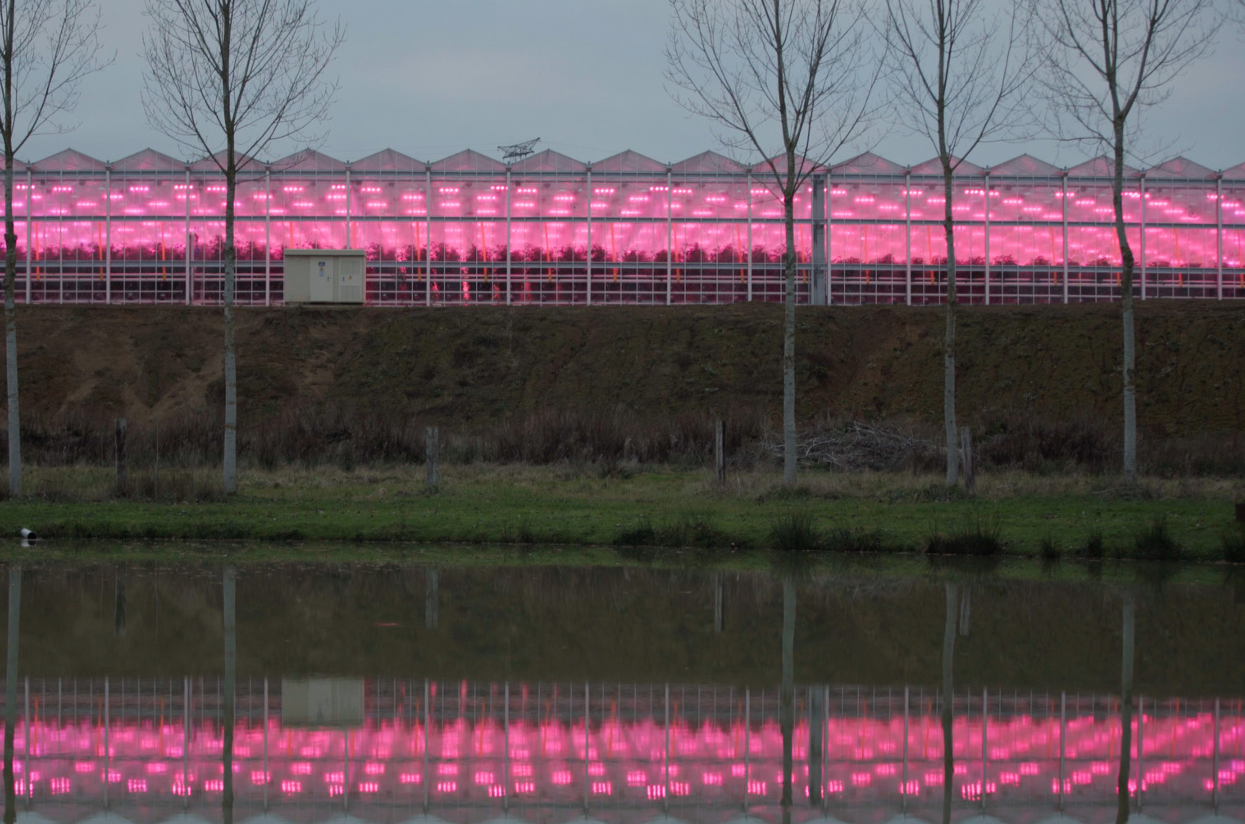
Film still from Sleepless Birds (2022), Dana Melaver and Tom Claudon.
While a focus on scientific processes is present in your practice, much of your previous work has looked inward. For you, is this an overlapping or opposing line of exploration?
In a way all my projects are self portraits, which is one of the reasons it’s important for me to engage other people, whether collaborators or visitors. I feel like I’m always asking something that feels important to me, and I crave this sort of reflection through other people. Take, for example, my film “Drops of Water”, which was inspired by my grandfather’s research. This work looks at the use of bacterial clusters in aquaculture, and how they may change our own sense of self.
The reason I feel it’s so personal is that the project came into its own at the beginning of a relationship, and I was fascinated by how these clusters are kind of a collective being, and I was thinking about how we morph and mould and reconstruct our own identity in intimate relationships. So this project, which is grounded in scientific research, and this big collaborative project, is also sort of based on really basic questions I had, and still have, about my own identity.
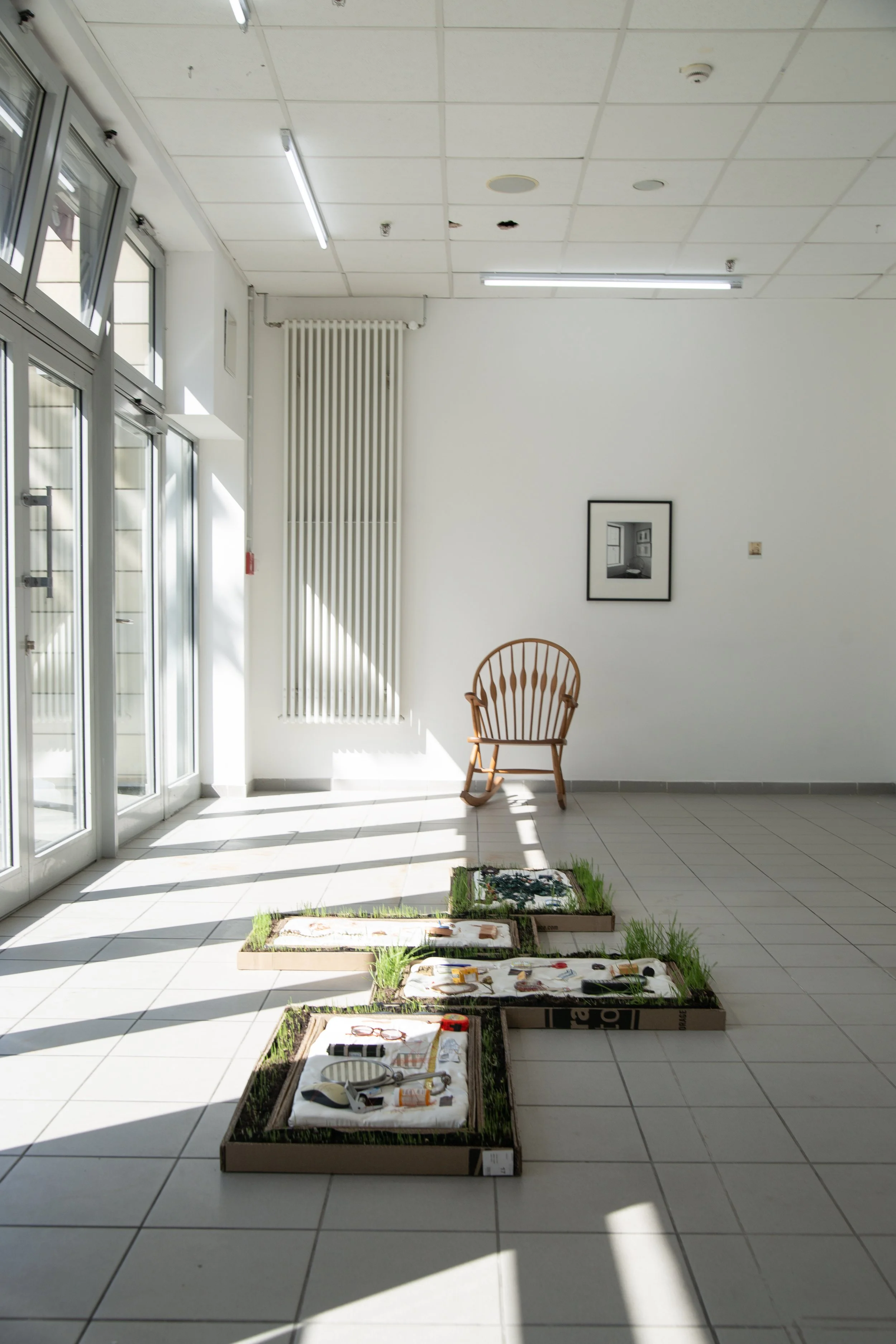
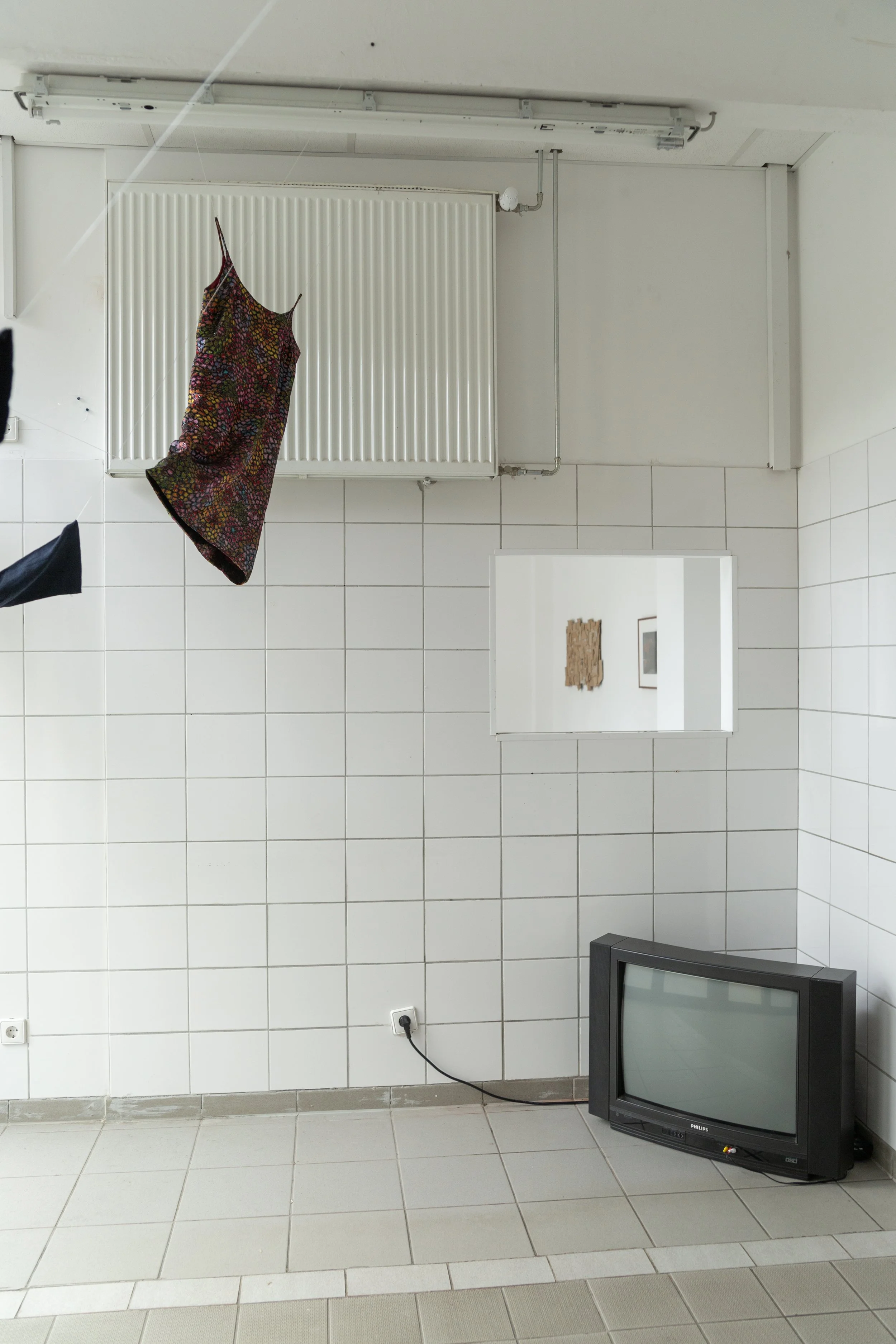
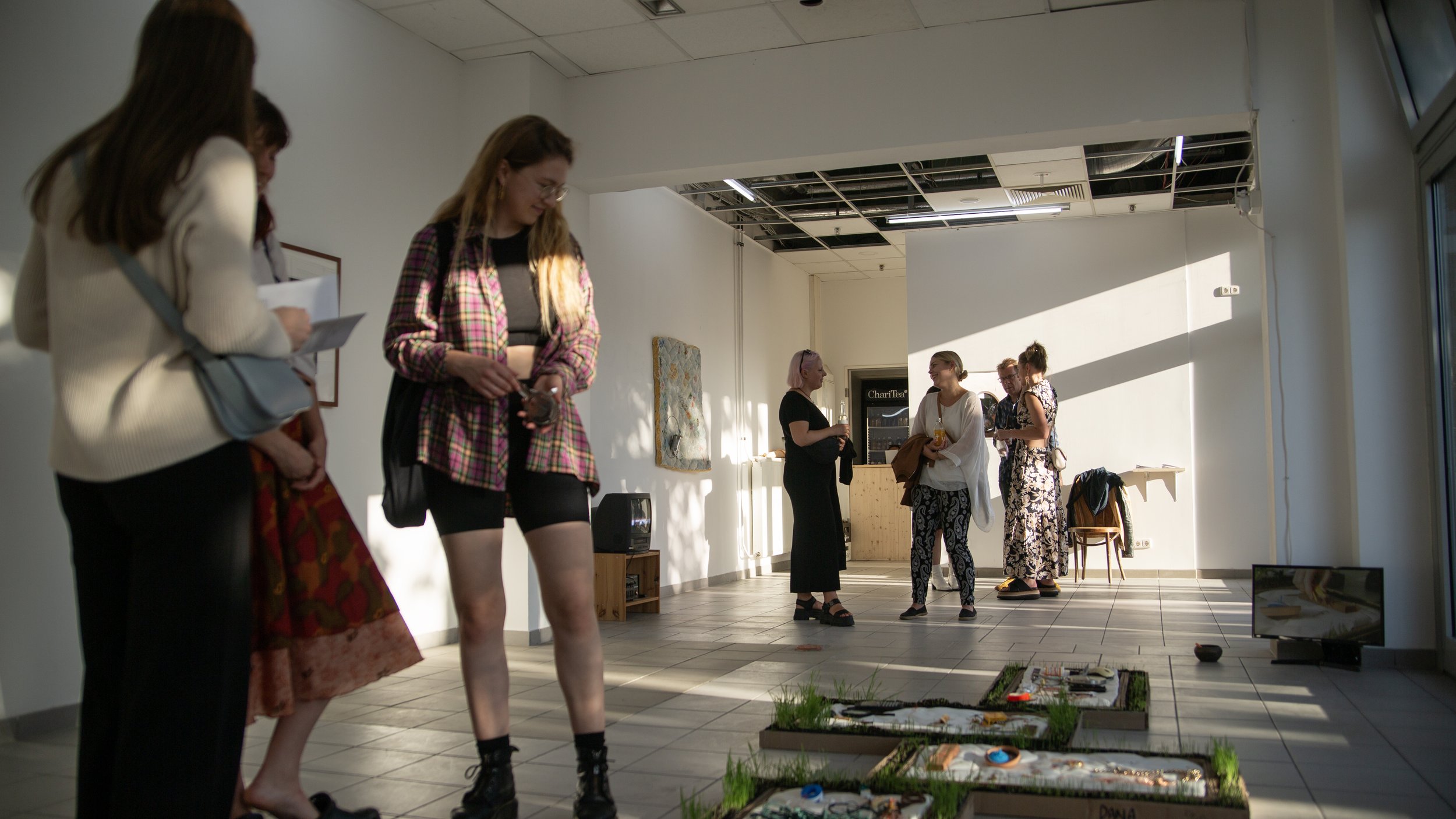
Installation views, “The Leftovers” at Culterim BACKSHOP, Berlin.
Your projects take shape through different media, yet many seem to stem from a photographic way of seeing. Can you tell us about your relationship with photography and how that approach carries into other forms like installation or video?
I’ve always been drawn by cameras – by this need to preserve a moment, through a unique perspective. I ended up studying photography at Parsons, but always looking sideways and messing around with different media until it sort of became this crossroads of – do I switch to the Fine Arts program or not?
To me, even projects of mine which involve neither camera nor print are always connected with image-making. I work across the spectrum of expanded photography, from alternative printmaking to digital media, but also I think photography informs my way of thinking and making. Even at conception, every project I had has begun with a question or thought and then I picture an image in my head.
“It (photography) doesn’t tell a hard truth despite everything we feel about pictures, and it’s this fluidity that is the most exciting.”
Photography may have been the most cataclysmic technological development. It has shaped our entire understanding of the world, of ourselves. And what I find interesting is that it’s always been misleading. Photography is based on light, which is paradoxical and filled with contradictions. It doesn’t tell a hard truth despite everything we feel about pictures, and it’s this fluidity that is the most exciting. I like playing with borders, with ideas and objects that thrive in the in-between, and this is what photography means to me. To take it super far, it’s both life and death. It is the survival of a moment and as well always the reminder of its loss.
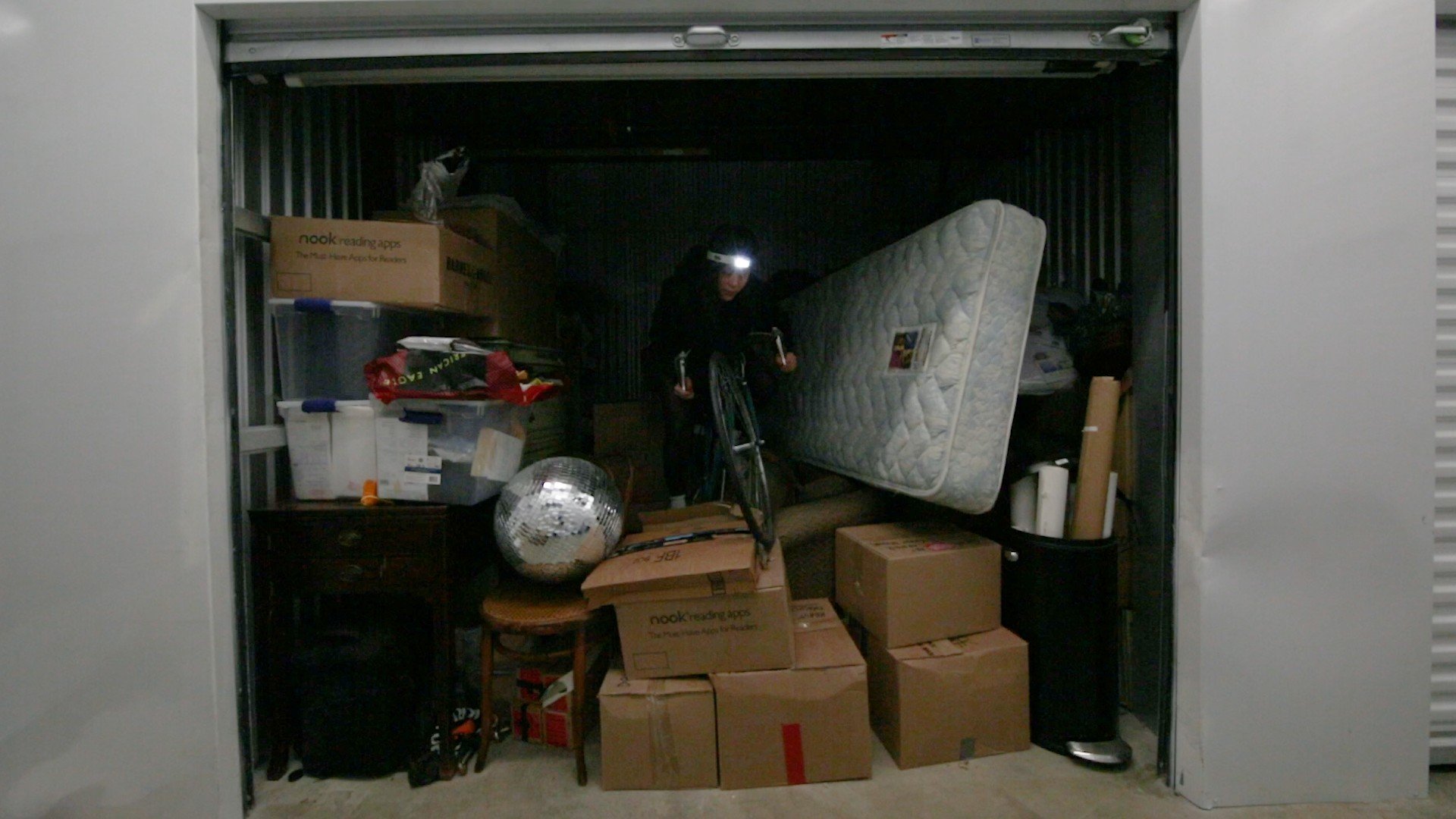
Film still from Self Storage (2023)
Your 2023 solo exhibition ‘The Leftovers’ was born entirely of an apartment that was broken down into a storage space in March 2020, using this stowed-away archive as raw material for new work. How did this project change your perception of materials and how they could be used?
This project was a unique opportunity to step into an old life – it was like a Time Machine, or really a time capsule. I totally immersed not only in my storage unit (which contained my New York life) but somehow in this former period of my life. One of the first actions for this project was filming the video performance “Self Storage”, which is built of improvisations within the unit itself. I would open boxes and see where they take me, and this sort of freed my mind and let imagination drive on a freeway. Suddenly coat hangers became monkey bars and a mattress a whale.
There was something so freeing with de-familiarizing my personal objects, and seeing them as something other than mementos or inanimate, but as possibilities. Once these hoarded things became raw material, they were no longer precious but malleable. To me, everything is material for art – trash, treasures, conversations – it’s just how you look at it.
In 2022 you released the documentary ‘Sleepless Birds’, directed with Tom Claudon, that tracks the rise of artificially lit, industrial greenhouses in the French region of Bretagne. How did you come across this particular story?
In 2019, I was working on my project “Drops of Water”, which looks at sustainable aquaculture practices as a way to re-think our personal sense of self. So looking at science through an artistic lens. Knowing my interests, Tom sent me a photo-based article in the French magazine Libération by photojournalist Charlène Flores about artificially lit greenhouses in Bretagne. And I said as a half-joke that we should make a film about this. So we did. Around May 2020 we started really digging into the topic, and Charlène, who was still living in Hong Kong, was extremely generous in sharing her research and contacts. We started filming that year in December and finished in December of the following year.
“The villages, they look unreal drenched in fuchsia pink. Even being there while filming “Sleepless Birds”, it was still hard to believe this was reality and not a dream.”
We are so happy “Sleepless Birds” is still screening in different places, but probably my favorite screenings were the ones in the region, which were always followed by incredible discussions with locally-engaged audiences. Artificial lighting, particularly in the countryside, and to this industrial degree is so incredibly damaging, and the topic doesn’t get enough attention. We know more and more about light pollution, but the conversation is mostly centered around urban areas, but to have this amount of light pollution in the middle of the countryside is so harmful to the local flora and fauna and biodiversity. So this topic really drew us in, but also aesthetically we were fascinated because these lights are so Sci-Fi looking. The villages, they look unreal drenched in fuchsia pink. Even being there while filming “Sleepless Birds”, it was still hard to believe this was reality and not a dream. Add to that our weird sleeping schedule (since we were shooting late nights and early mornings), it was kind of like working on another planet, in a space of in-between.

Photos: Tom Claudon.
What does collaboration bring to your process? Do you have a dream collaborator?
Collaboration means everything to me. My approach is that of a filmmaker – grounded in the knowledge that one person can’t (and probably shouldn’t) do everything. Teamwork adds not only richness to projects, but a good collaboration – one that feels like a small community working in mutual support – it somehow feels like the total human experience. Building together brings me joy, as an artist and as a person. This approach as well extends beyond the research and making process, into the exhibition itself.
I love engaging conversation as part of a project, and often I find that workshops and talks end up informing and even re-shaping the project itself. To close the New York exhibition of “The Leftovers” I moderated a group conversation around the topic of how our objects and storage are connected with personal identity and change. What came from this session was such a touching group exchange and I ended up playing an audio recording for the Berlin edition of the exhibition.
Looking forward, my hope is that somebody reads this (scientist, producer, musician, technologist) and feels inspired to write to me. But generally, my dream team knows who they are. I’ve been lucky to find wonderful collaborators over the years, and it would be amazing to be able to actually assemble a team and for everyone to be paid. Honestly this is something I’ve been thinking a lot about recently – how can we fund projects that need extra financial attention (visual arts working in the fashion of independent filmmaking), when the projects lie in between limited public funding and the indifference of private funds.
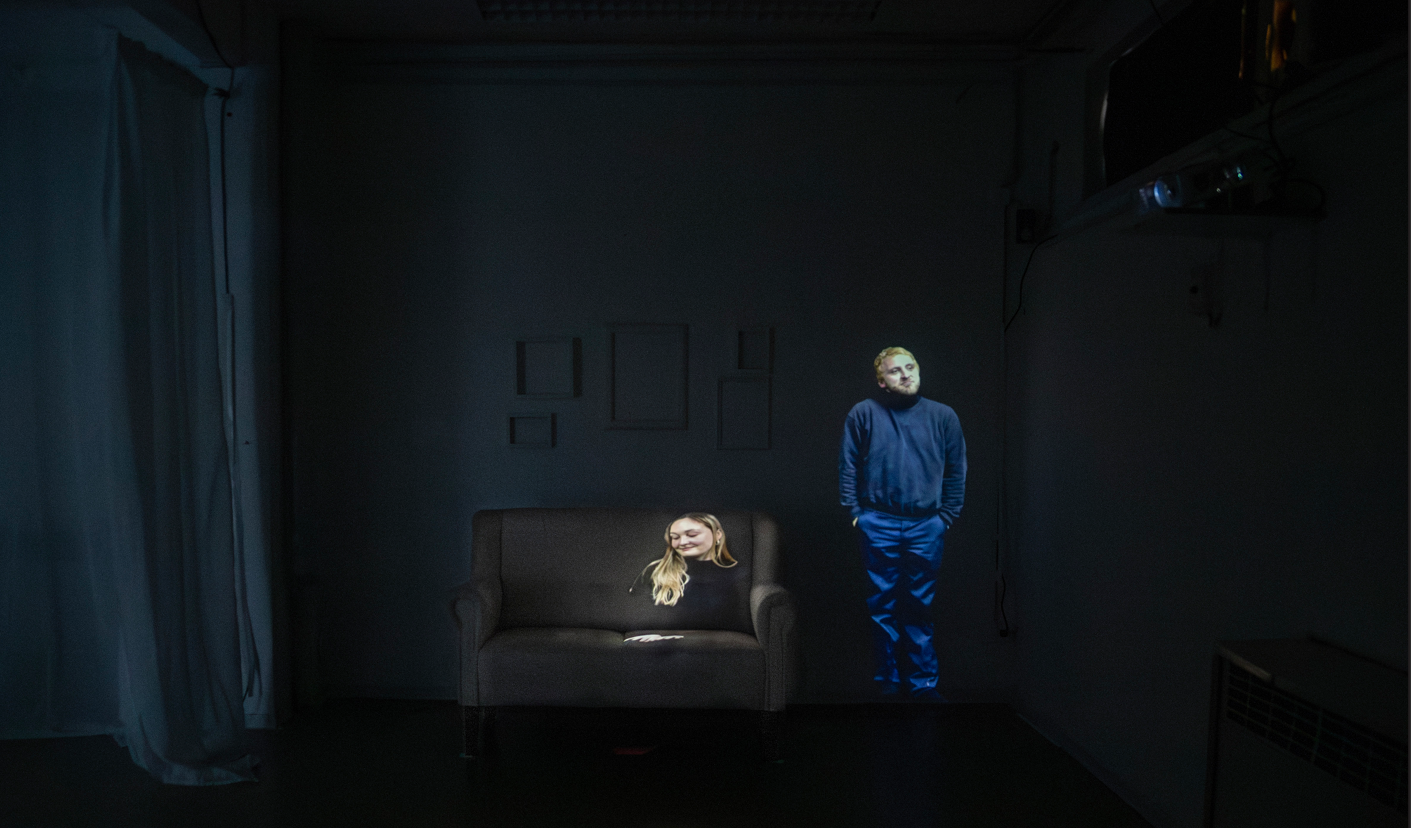
Installation view, “Das Wohnzimmer (The Living Room)” 2024, Solo Exhibition, in collaboration with Offener Kunstverein e.V. Rechenzentrum, Potsdam, Germany
Looking ahead, are there any particular areas of research that you’re keen to dive into?
There are so many exciting ideas, discoveries, theories floating around, that it can be difficult to commit to a single topic, but it also means I am always open to collaborations, new projects, and interesting commissions. That said, for the last year I’ve been developing a multi-piece installation grounded in ideas related to quantum mechanics. The idea is to great these large-scale, interactive and hyper-sensual (sensual, not just sensorial) video installations, which bring together beautiful theories and emotional experiences. The more I work on the project, the more I realize how much it is also related to cinema itself. Once again, I find that art and science are not only mergeable, but are intrinsically connected.
I’m also starting to get sucked into black holes (so to speak), and would love to create something related to their study, as well as the deep seas. I’m so totally obsessed with deep sea creatures, and am as well deeply concerned with deep sea mining, so this is an issue that is fascinating and inspiring, but as well really urgent.
See more of Dana Melaver’s work
New Voices highlights emerging artists who showcase their unique perspectives and innovative techniques on ArtConnect. Applications are accepted on a rolling basis. If you would like to be featured in a personal interview on ArtConnect Magazine, read through the open call and apply here.