
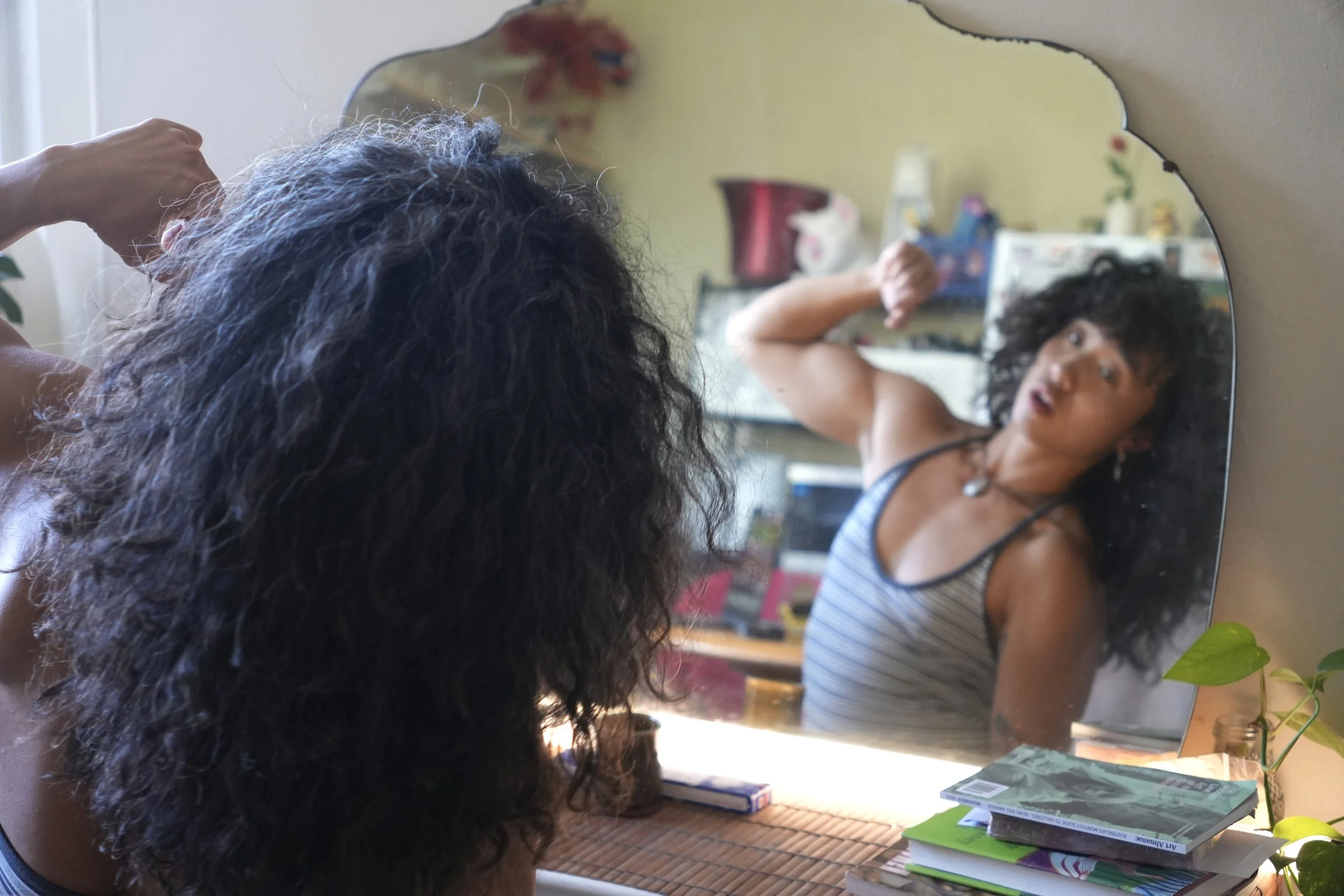
EJ Son
Multi-disciplinary artist using humour, provocation, and material excess to explore the body as a site of contradiction
EJ Son is spotlighted in the New Voices series, which highlights emerging artists who showcase their art on ArtConnect.
Sydney-based multi-disciplinary artist EJ Son works across sculpture, installation, ceramics, video, and kinetic systems. Their practice uses humour, provocation, and material excess to explore the body as a site of contradiction—where desire and fear, intimacy and spectacle, control and surrender coexist. Engaging with technologies of intimacy such as cameras, motors, surveillance systems, silicone, and bidets, Son examines how bodies and objects become sites of emotional labour, self-regulation, and visibility within contemporary digital and capitalist cultures.
Son has exhibited across institutional and artist-run spaces in Australia and South Korea, was a finalist in the Wynne Prize (2024) and the Ramsay Art Prize (2025) at the Art Gallery of South Australia, and recently received the Samstag Scholarship to study abroad.
Curious to gain more insight into their artistic approach, we asked EJ a few questions about their practice.
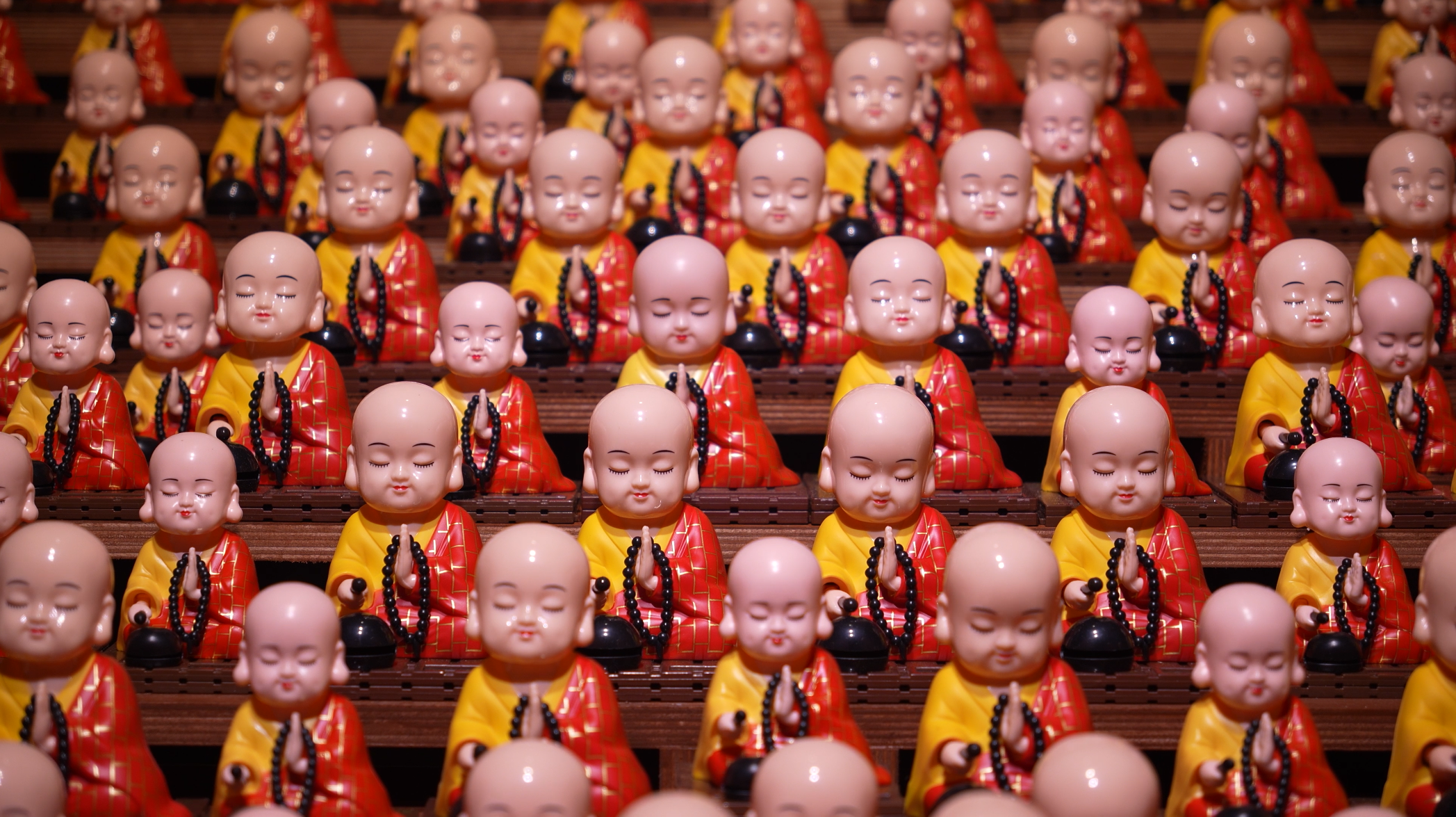
Nodding Buddha (2025)
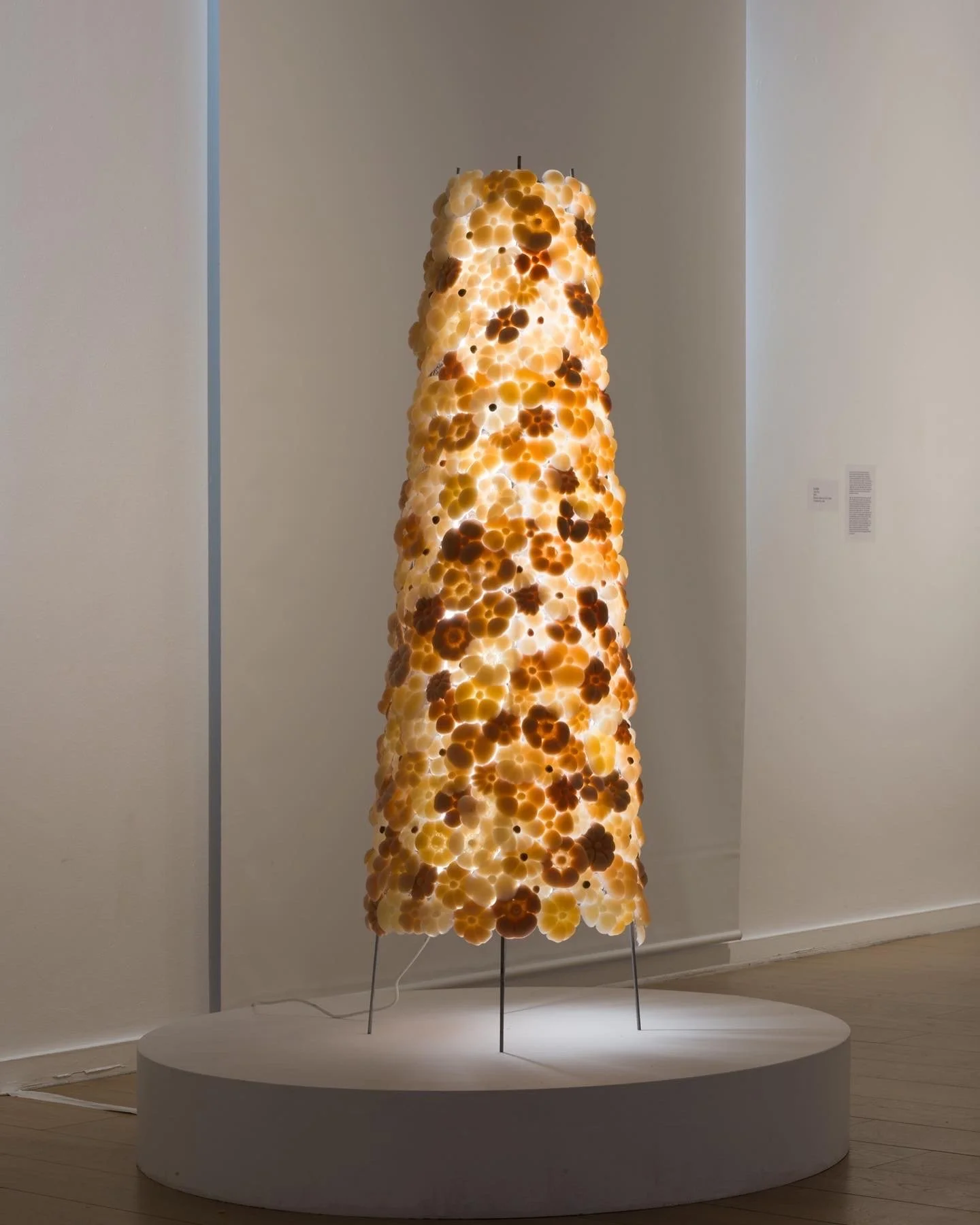
Titty Tree (2021). Photo by Garry Trinh
Your practice uses humour and provocation to interrogate the complexity of power. What draws you to humour as a strategy?
Humour is an incredibly effective tool in disarming people, often catching the viewers off guard, gaining an entry point in which the subject/object can be experienced without much resistance. I find myself mulling over power a lot, frankly desiring it as much as despising those who have it. I find this to be quite frightening and exhausting.
Humour is also a coping mechanism, and a powerful agency in itself. Transcending and puncturing the fear. Making fun of a weighted and governing matter gives great relief to rise above the absurdity, fragility and one's illusion of control.
You’ve described your practice as “paradoxical” — what opposites are colliding in your work?
I think life is a paradox itself. As soon as we find ourselves identifying with something rather too strongly, it is almost the law of nature to find ourselves contradicting the very thing. Thus my works naturally have paradoxical qualities by association, fear and desire being foundational. Some of the ‘opposites’ found in my work are:
control/surrender, intimacy/distance, pleasure/suffering, private/public, individual/collective, to see/to be seen, softness/hardness, care/neglect, subject/object, leaking/contained, exterior/interior, conscious/subconscious, discipline/impulse, rational/irrational, domination/submission, human/machine, human/nature, good/ bad, yes/no, true/false, fantasy/reality, order/chaos, permanence/ephemeral, innocent/perverse, childhood/adulthood —
Any attempt to define these binaries only makes them collide and infuse, exposing their instability, and I am captivated by our insistence on naming them and why, what, how and who that affects.
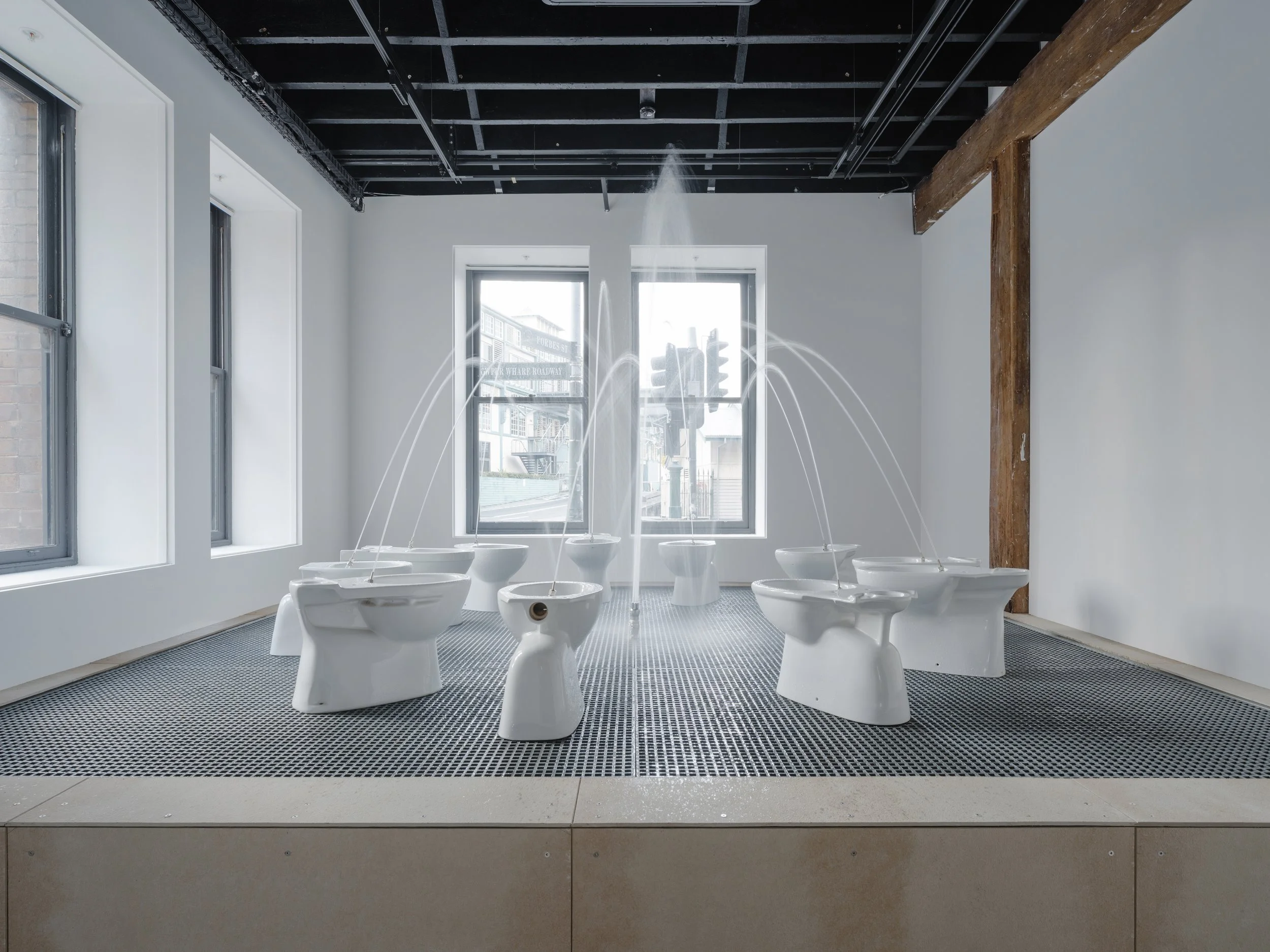
Fountain (2025). Photo: Hamish McIntosh
This year you expanded on your piece Fountain, which now features twelve rather than two toilets. When revisiting and scaling up the work, what shifted for you conceptually or aesthetically?
I am often seized by the compulsion to remake a work bigger, louder, multiplied. A tendency that has followed me through previous pieces and now shown in the latest Fountain (2025). Expanding from two toilets to twelve transforms the intimate, sexual act into something almost orgiastic: a dozen streams striving toward a single, central peak, some missing, some hitting, but all participating in the same chaotic, joint effort. The tallest jet is the climax of their collective endeavour.
Over the past year, I have finally come to relish the joy of working with others. I used to think I was better off alone, but there is nothing quite like the energy of people who share your vision and want the same thing you do. Fountain (2025) is as much a celebration of this insight as it is a gentle nudge for viewers to want to experience it themselves.

Fountain (2024). Photo by Kim Ki Suk.
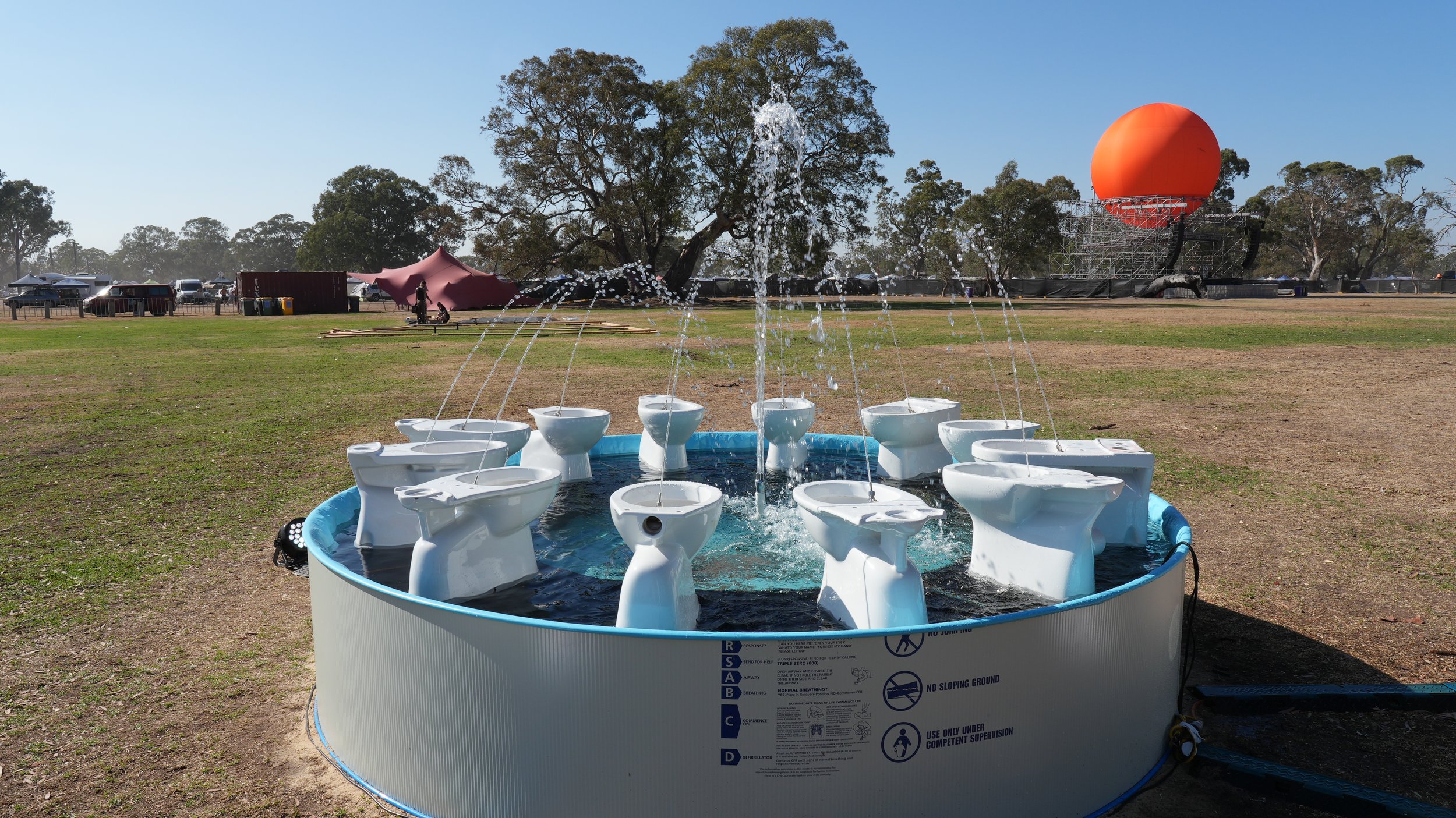
Fountain (2025)
Aesthetically, I am drawn to circles, instinctive, primal formations. Twelve toilets side by side in a circle seem to converse among themselves, exchanging secrets, boasting, conspiring. The scale is overwhelming in the best way: the arcs of water, the sound of streams hitting surfaces, the spectacle of it all, it’s a feast for the senses. Being by the fountain feels inherently romantic; the circulation of the water has a calming, almost meditative effect, prompting rest, reflection, and release. The movement and rhythm of the streams rejuvenate. I want audiences to lean in, circle around, return later, bring friends. I want the work to create a scene, whether a quiet moment of tranquillity for themselves, a spark for a conversation, a backdrop for laughter, or a private thrill shared with strangers.
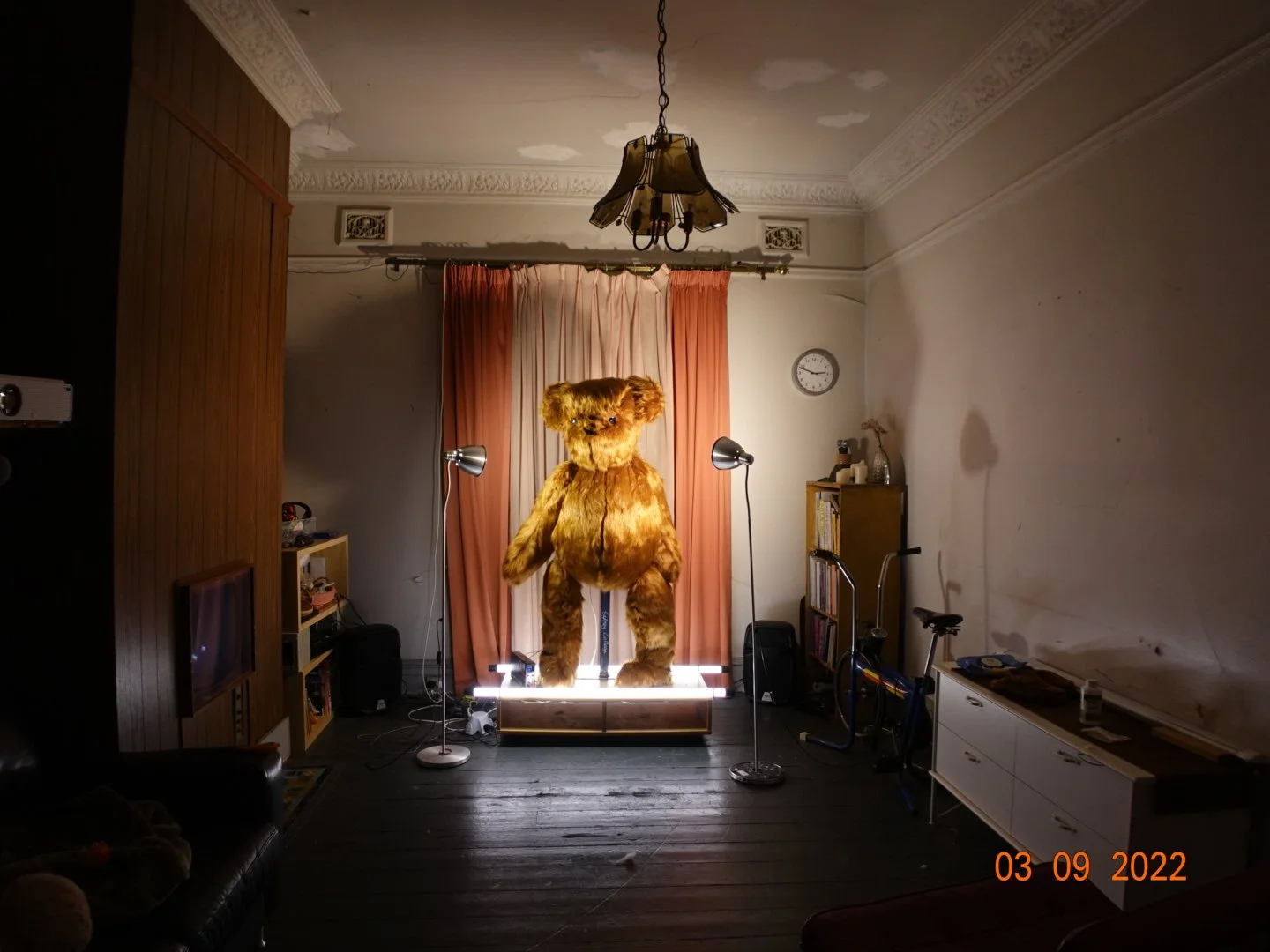
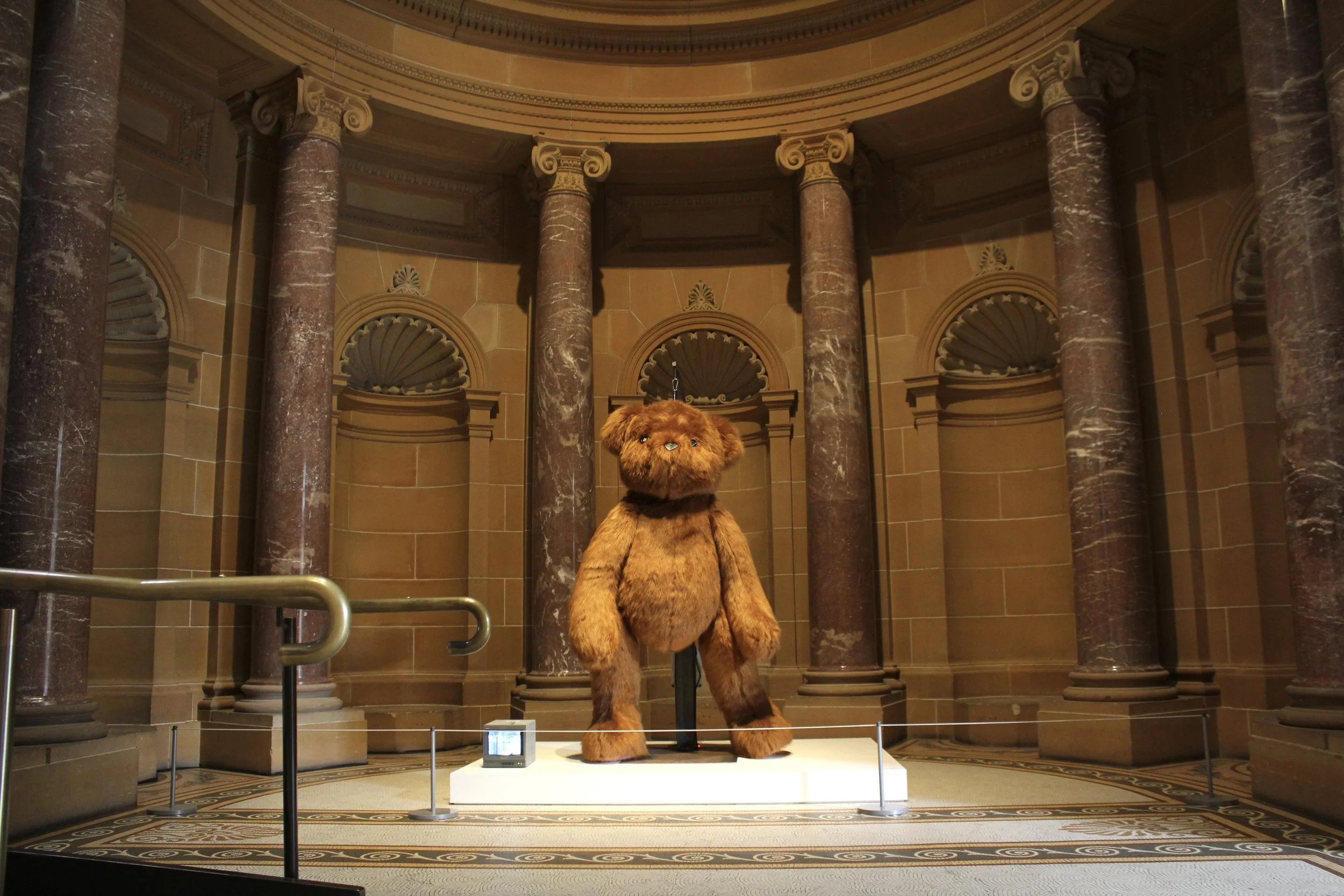
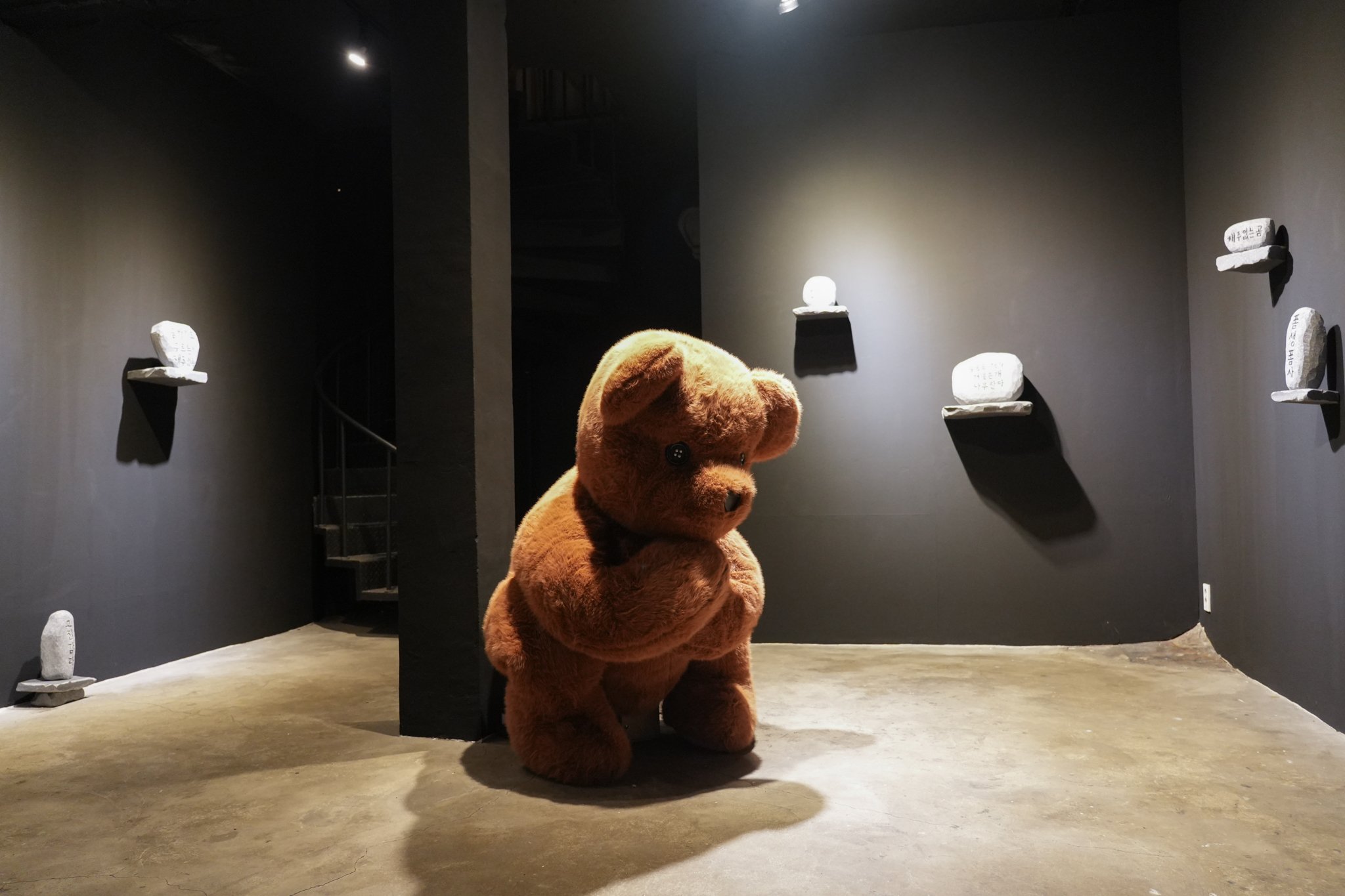
Dancing Teddy (2022–2025)
The larger-than-life teddy bear Dancing Teddy has featured in many of your recent exhibitions. How did this character first come into being? Has your relationship with the teddy remained the same since its inception?
The first iteration of Dancing Teddy was born in September 2023. I was living in a large, old four-bedroom Federation house in Croydon Park, and I found myself cold and lonely—especially as I had chosen to be celibate from romantic and sexual connections. I longed to be embraced and wished I had a huge teddy bear I could bury my face into, as I had when I was a child. Wishing I were small enough to do so, I thought: why not make a giant teddy that would make me feel small? I downloaded a DIY teddy pattern from YouTube, projected it onto a wall at 200% scale, and traced it onto baking paper to create the pattern.
I installed a camera in its right eye for two reasons. First, the house had very poor security. The windows had no locks, and the back door wouldn’t shut properly. This allowed me to use Teddy as a surveillance camera I could access from my phone. Second, I grew up watching the Korean reality TV show I Live Alone, where celebrities living alone have cameras installed throughout their homes and are given a mascot teddy with a camera in its right eye. I had wanted to be on that show and wondered, why would we voluntarily submit to being surveilled? What does it mean to be “captured”—to be seen, recorded, witnessed? It reminds me of the old philosophical question: “If a tree falls in the forest and no one is there to hear it, does it make a sound?” Intrinsically, I think we want to be remembered, and without the eyes of others, we feel we do not exist.
The teddy also dances because I was fascinated by the idea of robots—machines standing in for labour we no longer wish to perform. The bear performs the work I do not want to do, but which I also cannot fully escape. I jokingly would call myself “pimp teddy,” referencing a Korean saying “The bear performs the tricks, and the money goes to the men.” This opened up a whole conversation about exploitation—but Teddy is, of course, an inanimate being.
My most recent iteration of Teddy, shown at Openspace Bae in Busan and now at the National Communications Museum in Melbourne, is called the Trickless Bear (2025). Here, Teddy is hunched, cradling its knees, lost deep in contemplation. Its back rises and falls as it breathes heavily. Teddy seems to wonder: who am I dancing for, and for how long? I once thought my relationship with Teddy had run its course, but I now see that it will continue to evolve and change alongside me.

Dancing Teddy (2023) at Dark Mofo. Photo: Jessie Hunniford and Rosie Hastie
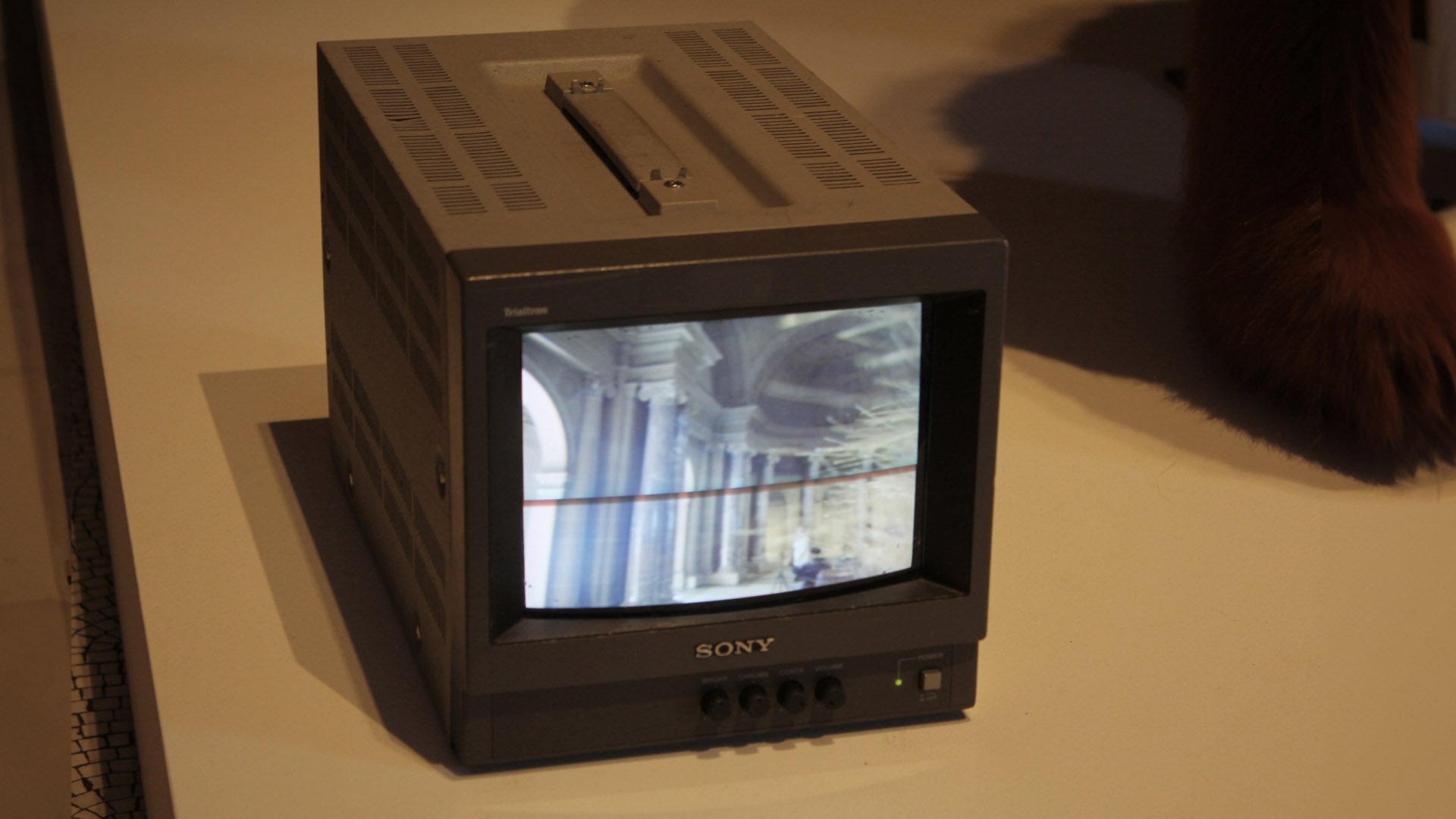
Teddy Monitor (2025)
Some of your works incorporate robotics. What role does technology play in your practice, and what specifically draws you to robotics?
Technology feels incredibly advanced, especially in discussions and concerns around AI. Yet the robots we see on the market are endearing in their limitations; their attempts to mimic human movements and emotions are often clumsy, and these failures make them more human than anything. The technology I use in my work is far more rudimentary than it might seem. The motors that make Dancing Teddy swing its hips, for example, are repurposed from car window wipers, using a simple pendulum-like mechanism.
“In my view, technologies are ultimately built to do three fundamental things: to save, to kill, and to fuck.”
I’m drawn to robotics because it is inherently science-fictional, so much is revealed in our fantasies about machines. There is always a person behind their creation, shaping them to human needs and desires. What we get robots to do—or to be—is ultimately a reflection and projection of ourselves. In my view, technologies are ultimately built to do three fundamental things: to save, to kill, and to fuck.
I also find it fascinating that many comfort dolls for the elderly or lonely men are increasingly replaced with robots instead of real human connection. How we outsource care, performance, and attention reflects our priorities as individuals and as a collective.
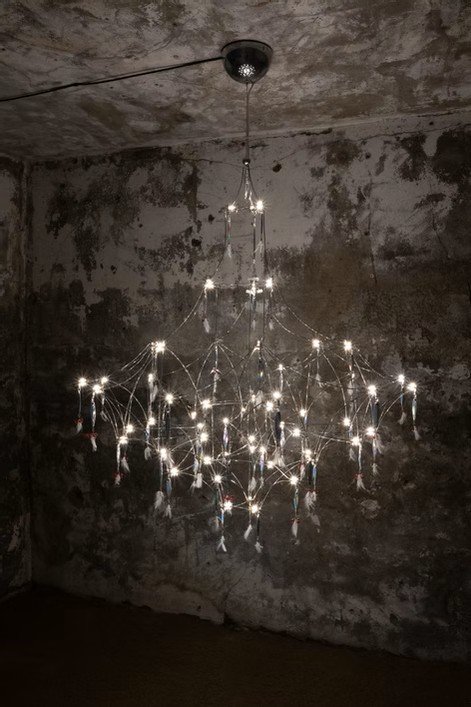
The Chandelier, the bait and the red beads (2025)
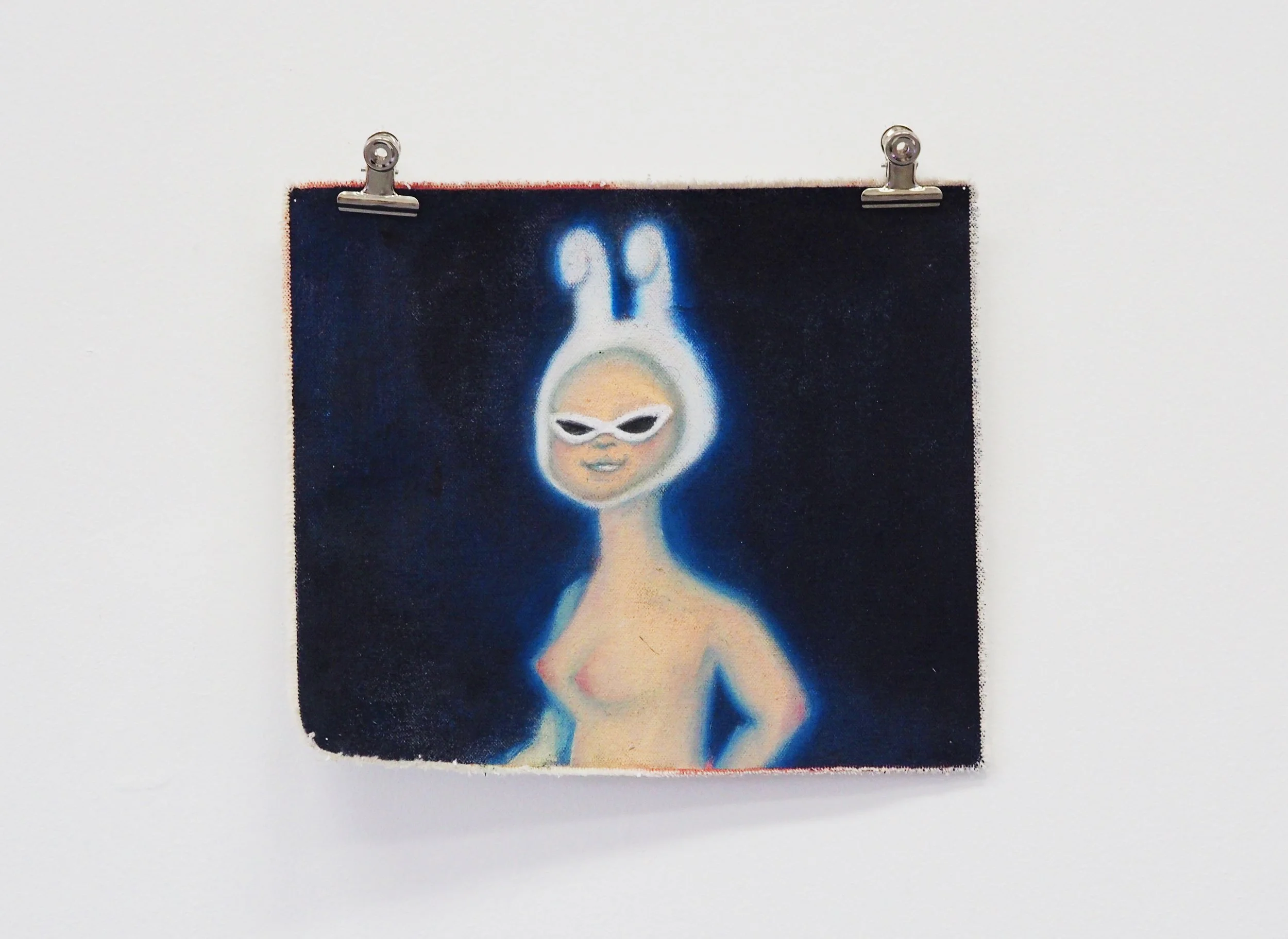
Bad Bunny (2017)
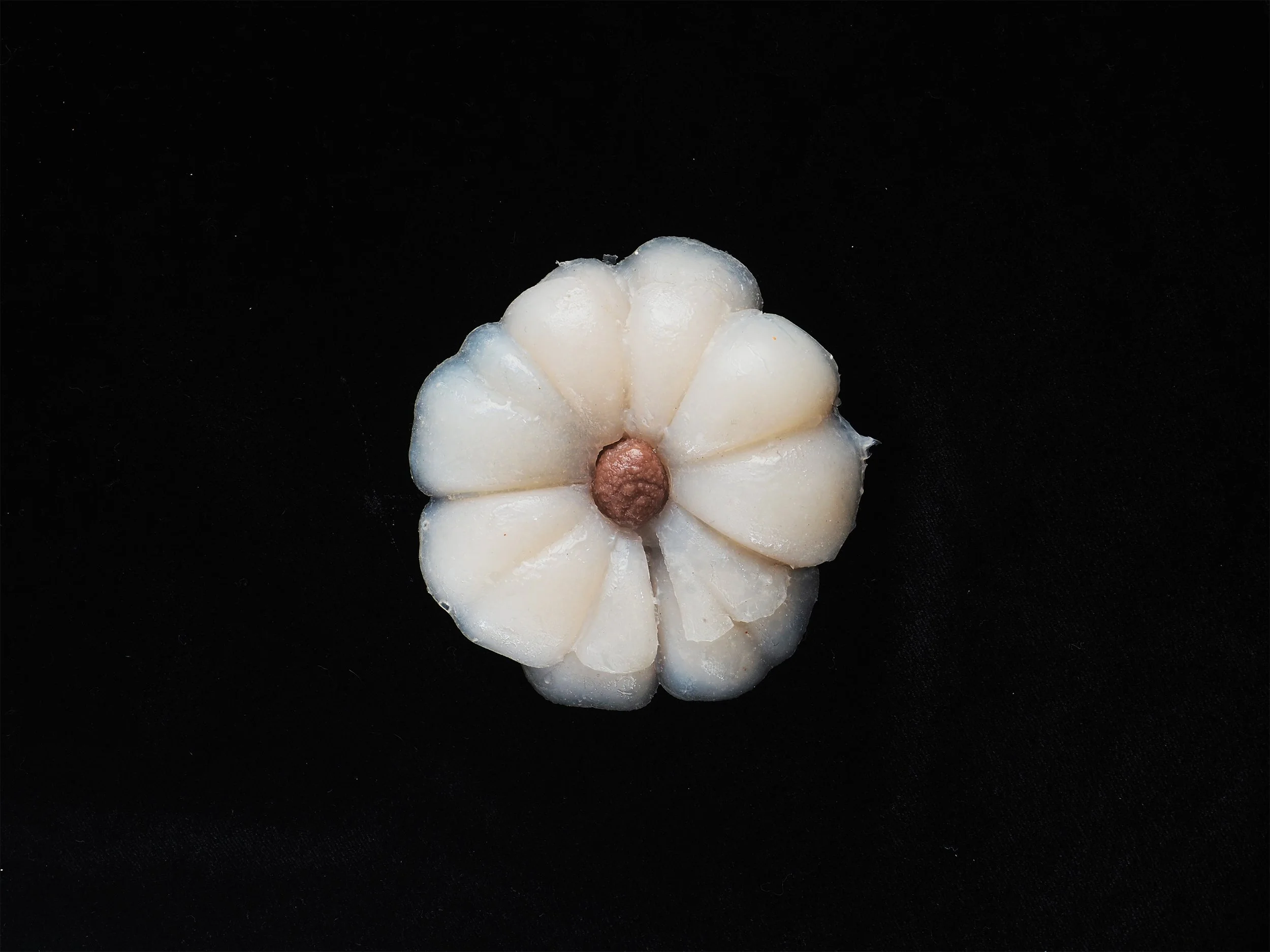
Nipple Flower (2021)
Tension around binaries of gender, sexuality and race is often cultivated in your work. What do you hope this tension generates for viewers?
The tensions around binaries are already present by default—socially, politically, and historically. Simply by existing outside what is considered “normal,” tension emerges. I see this friction as a generative force, a site where something new can become possible.
My works don’t explicitly set out to address gender, sexuality, or race as isolated themes; I find that approach reductive to the complexities that make an individual. Instead, the tensions I carry in my body and life become transformed into something more shared. An experience that resonates beyond the specifics of identity. I genuinely believe that the most personal is the most universal.
What I hope this tension generates for viewers is a kind of internal friction. A discomfort and a shift that prompts a playful interrogation. But perhaps the tension is already a site of familiarity. Maybe they already know this feeling; maybe they feel seen, or even validated. I want the work to open up that possibility too, that the discomfort, contradiction, or ambiguity they sense is not isolating but shared. The tension is not meant to resolve, but to open.
What are you working on at the moment?
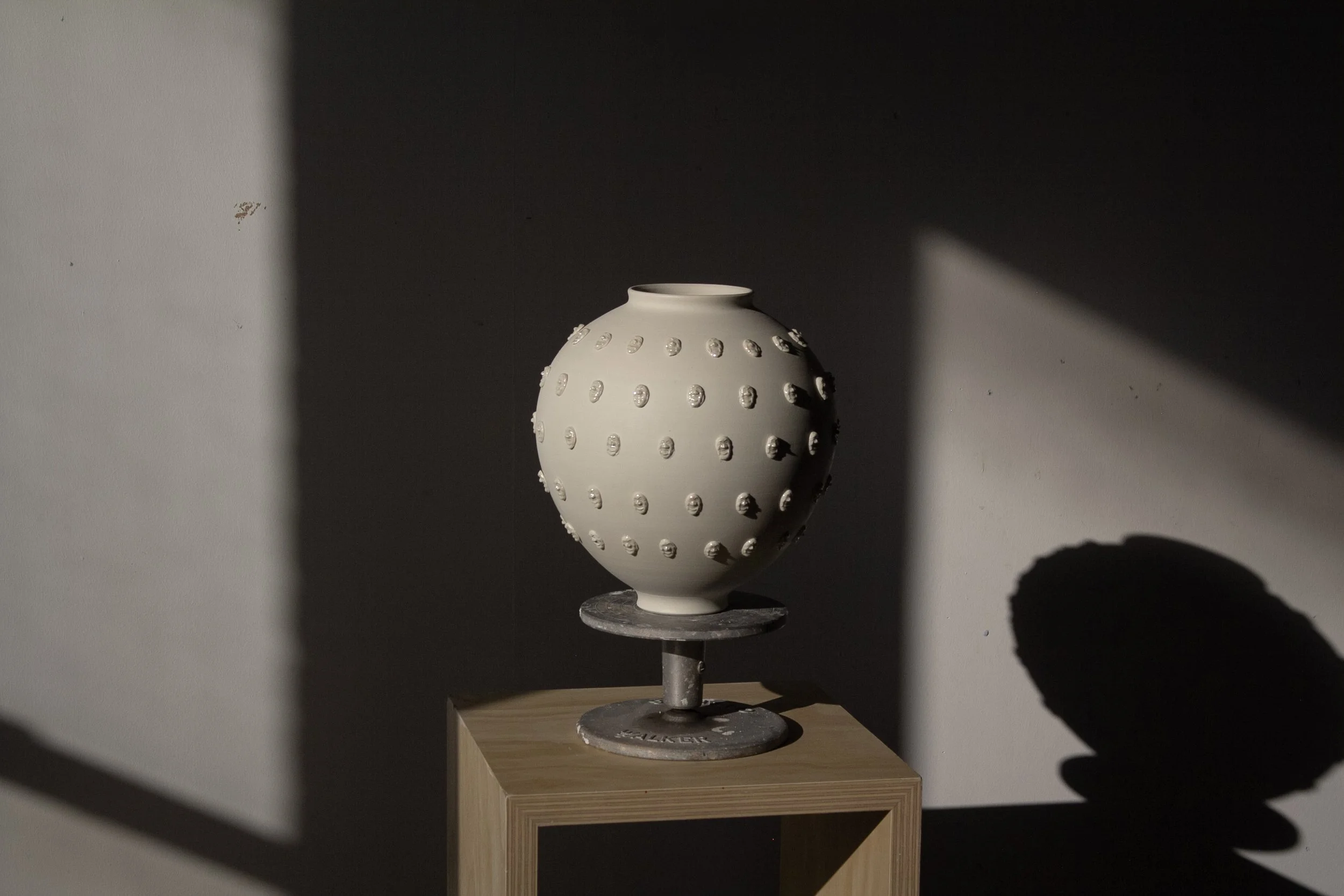
I’m currently returning to my ceramic practice. I have around 200 unglazed pots that I’ve been putting off finishing, but the truth is I actually prefer them unglazed. There’s something about the porous bisque surface that I find incredibly beautiful, the soft pinkish hues that disappear once you fire over 1000 degrees, and the way the light is absorbed so elegantly. Part of me wonders if I’ve simply romanticised and justified my avoidance of glazing because it brings a real sense of uncertainty and fear.
Alongside my artistic practice, I’ve been dedicated to the gym, exploring bodybuilding over the past couple of years. This has been an important part of my process, informing my understanding of the body, queerness and discipline which informs my art practice.
See more of EJ Son’s work
New Voices highlights emerging artists who showcase their unique perspectives and innovative techniques on ArtConnect. Applications are accepted on a rolling basis. If you would like to be featured in a personal interview on ArtConnect Magazine, read through the open call and apply here.