
New Voices
Francisco
Trêpa
On ambiguity, mutation, and parasitism
Francisco Trêpa is spotlighted in the New Voices series, which highlights emerging artists who showcase their art on ArtConnect.
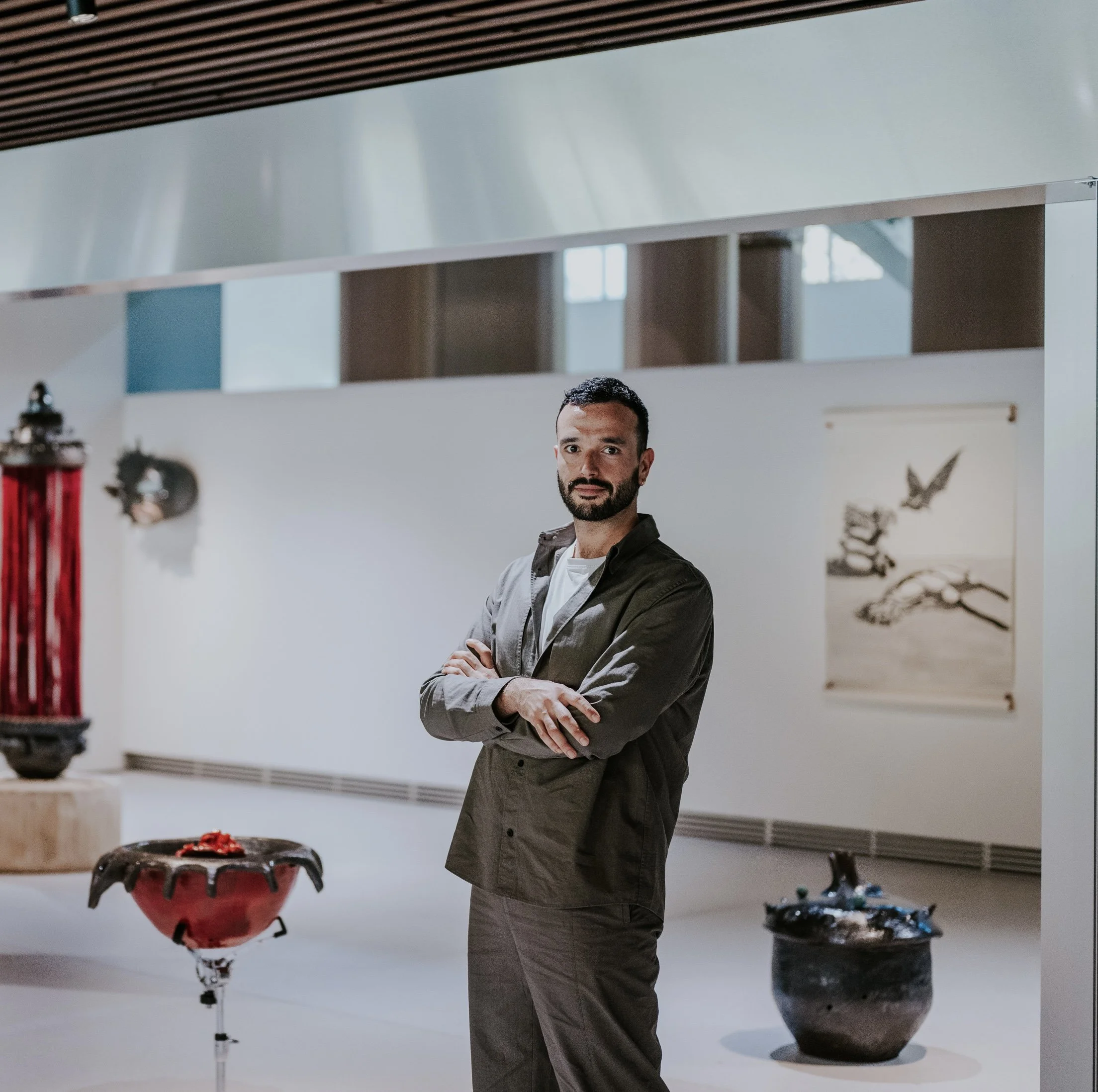
Francisco Trêpa is a Portuguese artist living in Lisbon. He studied ceramics at the António Arroio Artistic School (2013), earned a degree in Sculpture (2017), and completed a Master’s degree in Multimedia Art (2022) at the Faculty of Fine Arts of the University of Lisbon. Since 2015, he has exhibited nationally and internationally in various galleries and institutions.
His work is included in the António Cachola Collection (MACE), the PLMJ Foundation Collection, the Portuguese State Contemporary Art Collection (CACE), and several private collections.
In 2024, he was named a finalist for the EDP Foundation New Artists Award, resulting in the prize exhibition at MAAT in Lisbon. That same year, he won the Grand Prize of the Sovereign Portuguese Art Prize. He recently presented Baile dos Bugalhos (Gall Ball), a solo exhibition at the Calouste Gulbenkian Foundation’s Modern Art Center in Lisbon (CAM).
Curious to gain more insight into his artistic approach, we asked Francisco a few questions about his practice.
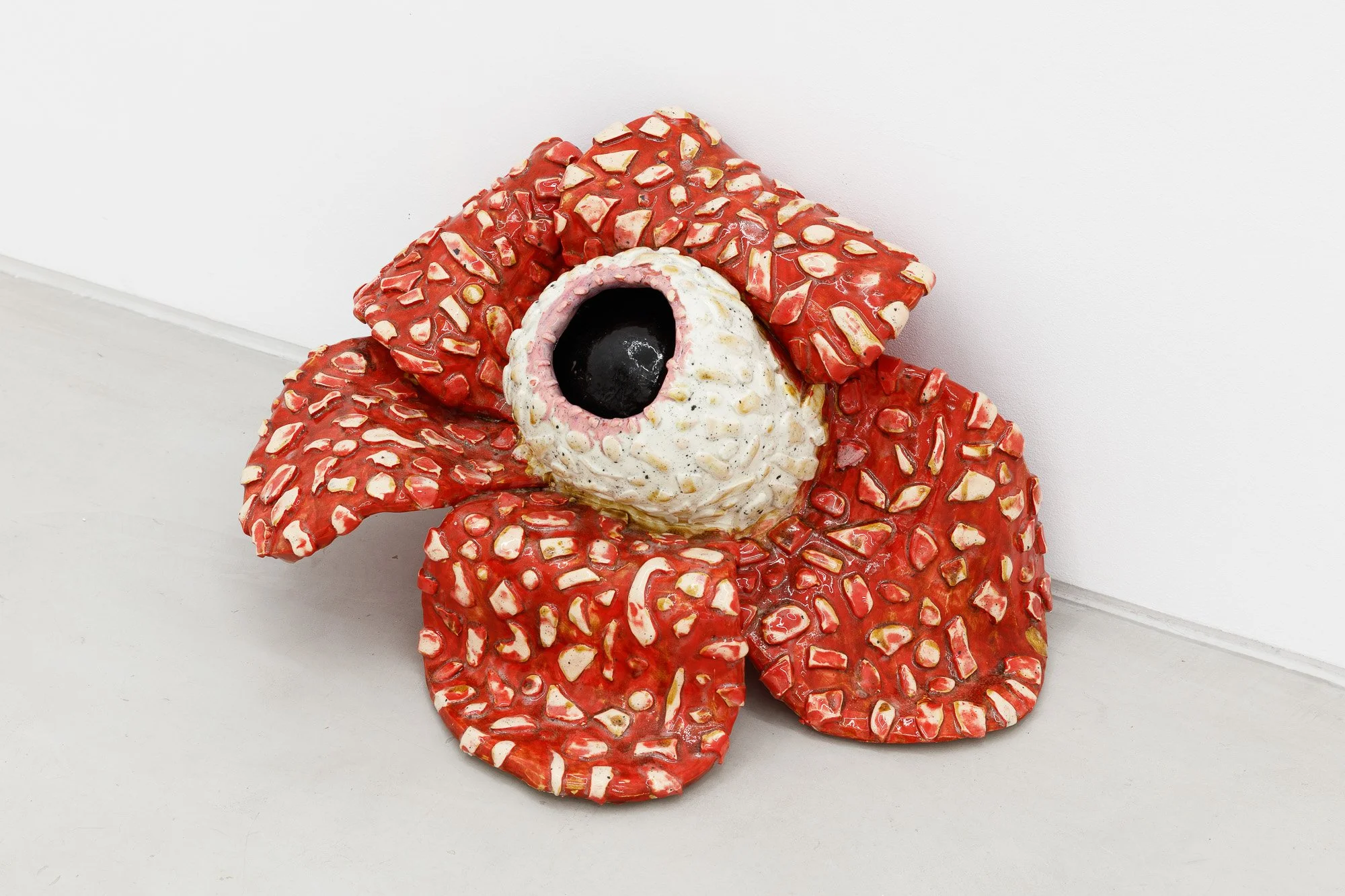
Corps-flower, 2024. Courtesy of Galeria Foco and Photodocumenta
Your work has a fantastical, sci-fi quality, whereby life-like figures that are almost familiar are cloaked in a veil of mutation. What inspired this distinct aesthetic, and how has it evolved over time?
Space itself is a flexible, dynamic fabric that can bend, stretch and deform, yet we humans live in a world governed by laws, prejudices, stigmas, dogmas of extraordinary rigidity and cruelty.
We live in a time that is both fluid and rigid, incredibly advanced yet marked by profound regressions. Technology is now as much a part of our lives as nature, perhaps even more so, and it may not be long before machines become more intelligent than humanity itself. I think we need more fluidity, and a greater willingness to embrace the invisible and the unsayable without fearing the unknown. When we look at nature, at plants and animals, we see an extraordinary capacity for transformation. Plants, in particular, fascinate me: you cut them back in one place, and they grow somewhere else. There is something deeply inspiring about that. They nourish our imagination. After all, what would science fiction be without science? And what would science be without biology?
Over the last few years, I became interested in developing a character that could have stepped out of a science fiction film. But with that character came an entire world. Across different exhibitions, each exploring different subjects, this figure has continuously taken on new skins. It has undergone constant metamorphosis, embodying, through the form of a monster, human gestures, emotions and animal traits.
I’ve always loved fantasy, and I grew up at a time when its culture flourished and fantasy films were incorporated into pop culture, so part of my inspiration comes from there as well.
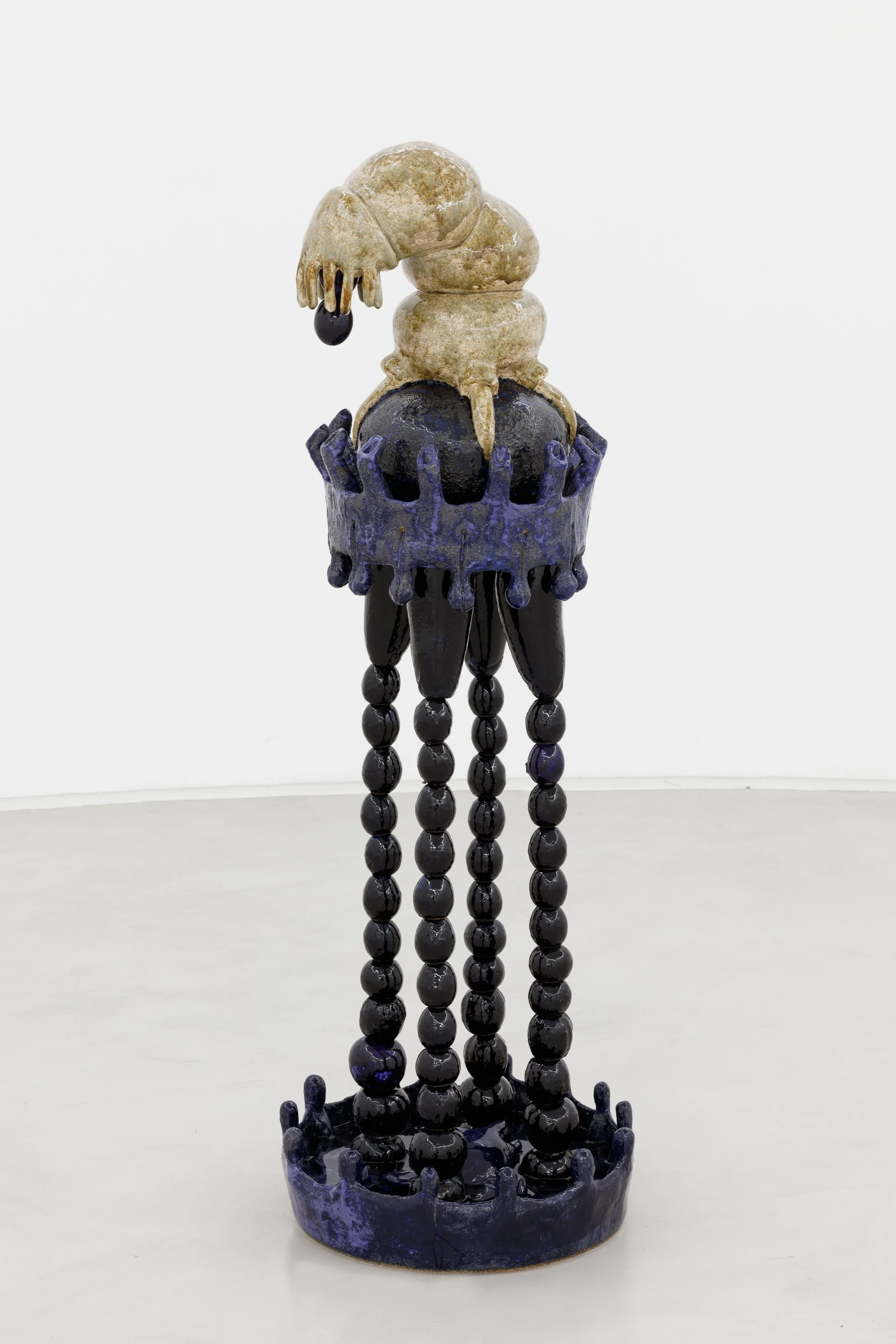
Dripping stage, 2023. Courtesy of Galeria Foco and Photodocumenta
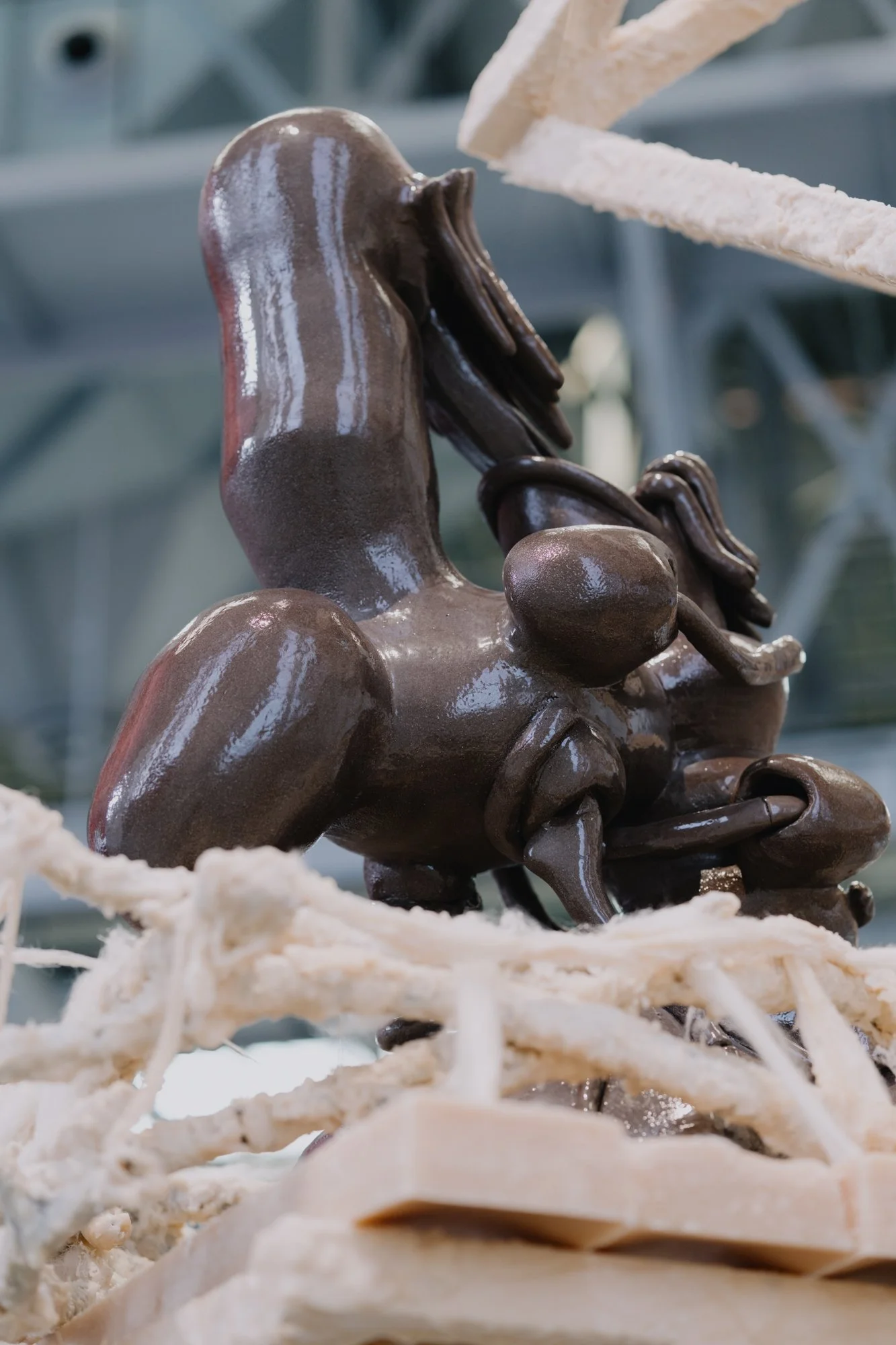
Ciconia Ciconia, 2025. Courtesy of Bruno Lopes Maat Museum
The symbiotic relationship between plants, animals, and technology underscores a lot of your recent works. What about this interplay interests you?
A flower pretends to be dead, how is such theatricality possible? Fleshy, studded with thick petals, enormous, monstrous, and yet still a flower. A palm weevil larva found inside an infected palm tree in the Botanical Garden ends up in the taxidermy laboratory of a museum. Storks, the beloved birds said to deliver newborn babies, begin nesting on high-voltage electricity pylons. Overnight they go from being cherished to being treated as pests. Chicks hatch in those nests and some are electrocuted. Home becomes a trap. Doesn’t that also speak to the housing crisis? I certainly saw it reflected in the relationship between storks and technology. Pollinators are replaced by micro-bot drones. Gall wasps use oak trees as wombs in which their eggs can metamorphose.
Relationships are what fascinate me most. Nothing exists in isolation. We ourselves are hosts to millions of bacteria, fungi and parasites. We depend on bacteria, and we must fall in love with them. Our gut is like a garden, and we have to cultivate the right bacteria. If we consume too much sugar, we feed the bacteria that harm us. So which bacteria help us? And what do they need? Probably not sugar. That’s what interests me: relationships. We’re only now beginning to understand these relationships inside our own bodies, but we’ve observed them for a very long time between plants, animals and other forms of life.
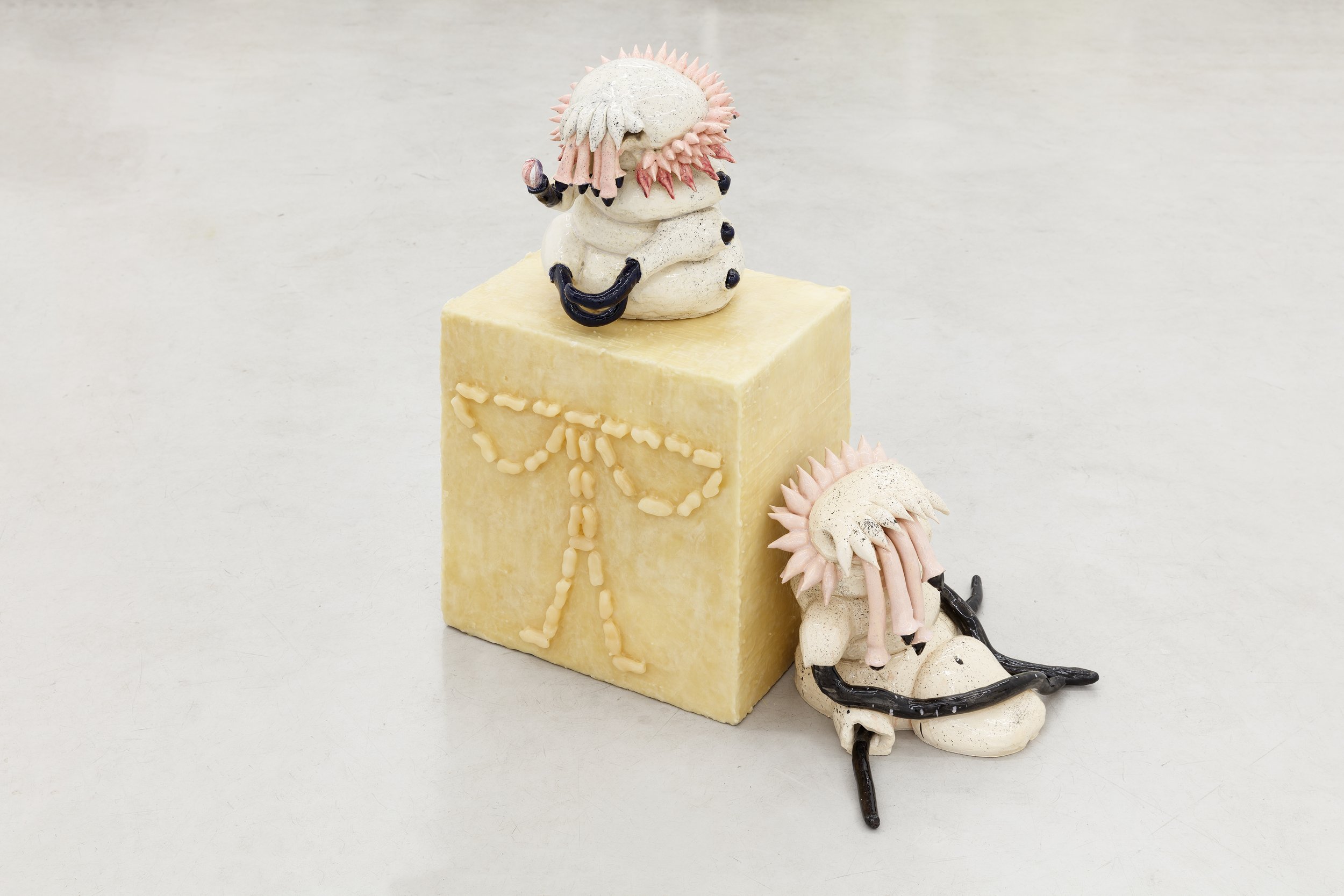
Pollinator, tired pollinator and drone, 2024. Courtesy of Galeria Foco and Photodocumenta
You’ve mentioned that these relationships “fall on the spectrum of ambiguity.” Where does this ambiguity lie and how does your work explore it?
With my characters, I wanted ambiguity from the outset. They have no gender. They look soft while they’re hard and cold. They seem terrifying and beautiful. They may have two, three or four arms. They become whatever the viewer wishes to see, whatever they choose to project onto them.
But ambiguity exists above all in matter itself. Materials are inherently ambiguous, they can be transformed, twisted, melted, broken, and sculpture is fundamentally about engaging with that ambiguity.
“Materials are inherently ambiguous, they can be transformed, twisted, melted, broken, and sculpture is fundamentally about engaging with that ambiguity.”
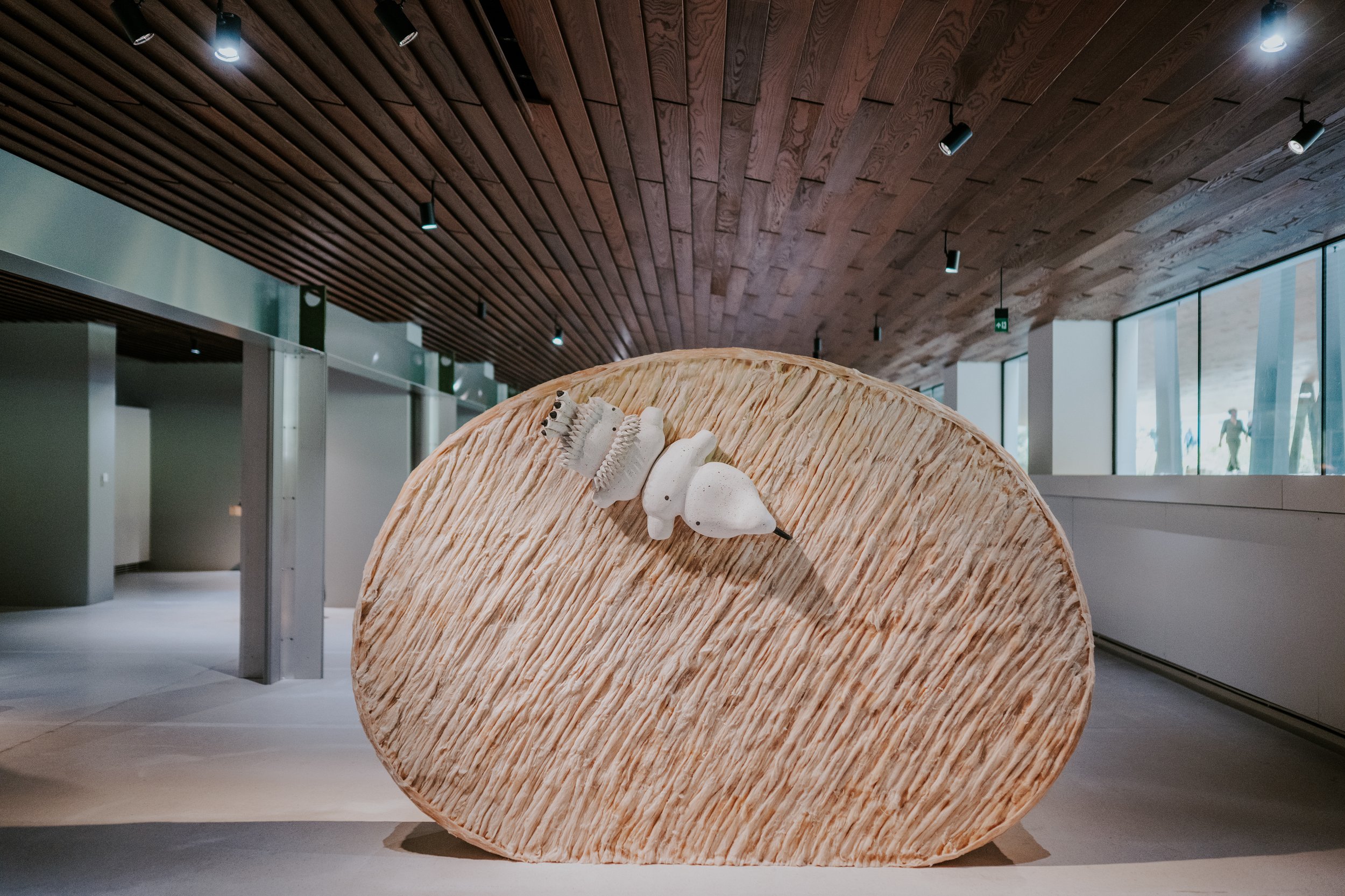
At the benining the wound, 2025. (Unfired piece). Courtesy of Pedro Pina CAM – Gulbenkian Foundation
Your 2025 exhibition Baile dos Bugalhos (Gall Ball) at the Calouste Gulbenkian Foundation’s Modern Art Center in Lisbon questioned accepted notions of parasitism in an ecological context. What dominant narratives were you challenging with this work and why?
At CAM, I wanted to celebrate a structure that completely captivated me, and from which I think we can learn an enormous amount. Neither animal nor plant, the gall is a perfect mutation. Simply thinking about it begins to blur the very idea of parasitism.
At first glance, the wasp appears to be a parasite because the oak tree doesn’t seem to benefit directly from the gall. But that’s a very rigid way of looking at things. Eventually the gall falls to the ground and becomes humus. Once the wasp has left, the gall remains on the tree and is occupied by other species. Ants establish colonies inside it. The ants attract birds; the birds eat the ants, disperse seeds, consume other parasites, and, in the case of jays, carry away acorns and bury them, some of which will become new oak trees.
Nothing is linear. The idea of the parasite runs through our own societies as well. How many people are pushed aside? Considered inferior, undesirable, in other words “parasites” of society? There is a cruelty embedded in that judgement that often has very little to do with the subject in question.
Beyond the exhibition’s narrative, I also became a kind of parasite within the museum itself. I deliberately disrupted certain institutional conventions. I kept a working studio inside the exhibition. I opened the show before it was fully finished, with sculptures that were still unglazed. Throughout the exhibition I removed works from the galleries, altered them and brought them back.
All of this led me to think of the exhibition itself as a gall in the process of growing, while I became the egg, the larva and the wasp that pierced, inhabited and ultimately departed from the museum.
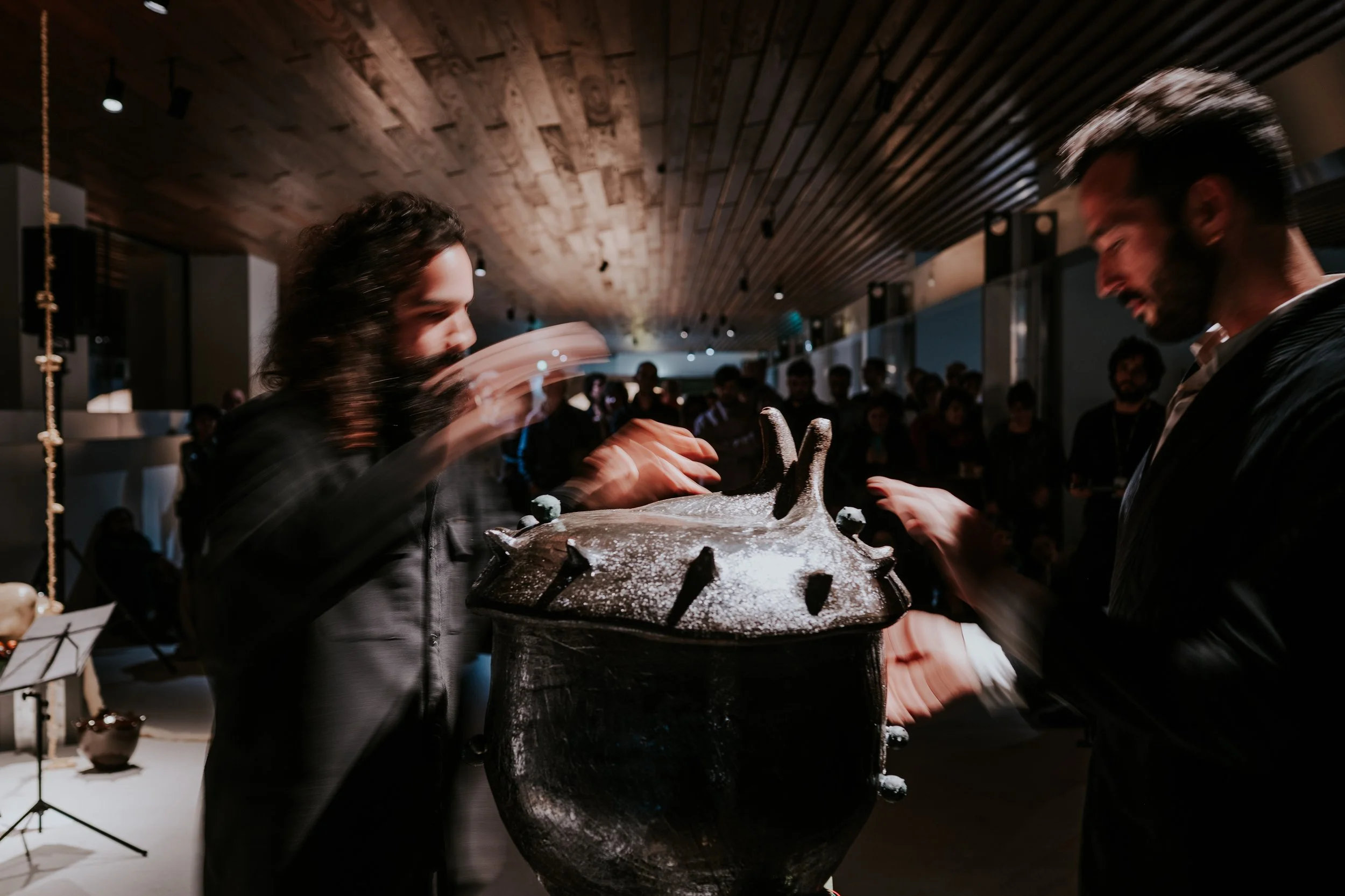
Performance Last dance, Francisco Trêpa and Ely Janoville. Courtesy of Pedro Pina – CAM Gulbenkian foundation
Through collaboration with the musician Ely Janoville earlier this year, some of your sculptures were transformed into musical instruments. How did this collaboration come about? When sculpting the pieces, was this potential something you always had in mind or did it evolve organically afterwards?
The collaboration began one night over a conversation in a bar.
I loved working with Ely. Since the exhibition was titled Gall Ball, I wanted sound to become part of it. Ely has developed a fascinating practice using small metallic buttons that transmit our body’s static electricity to activate a modular synthesizer, which in turn generates sound.
I created the sculpture with those buttons in mind and designed the buttons around the idea of conducting energy. That’s how the bronze galls came into being.
In many ways, our collaboration echoes the gall itself, which exists between the plant and animal kingdoms. Likewise, this sculpture, and the performance that activated it, occupied the space between two distinct artistic practices, two different academic traditions and two different mediums that nevertheless intersect.
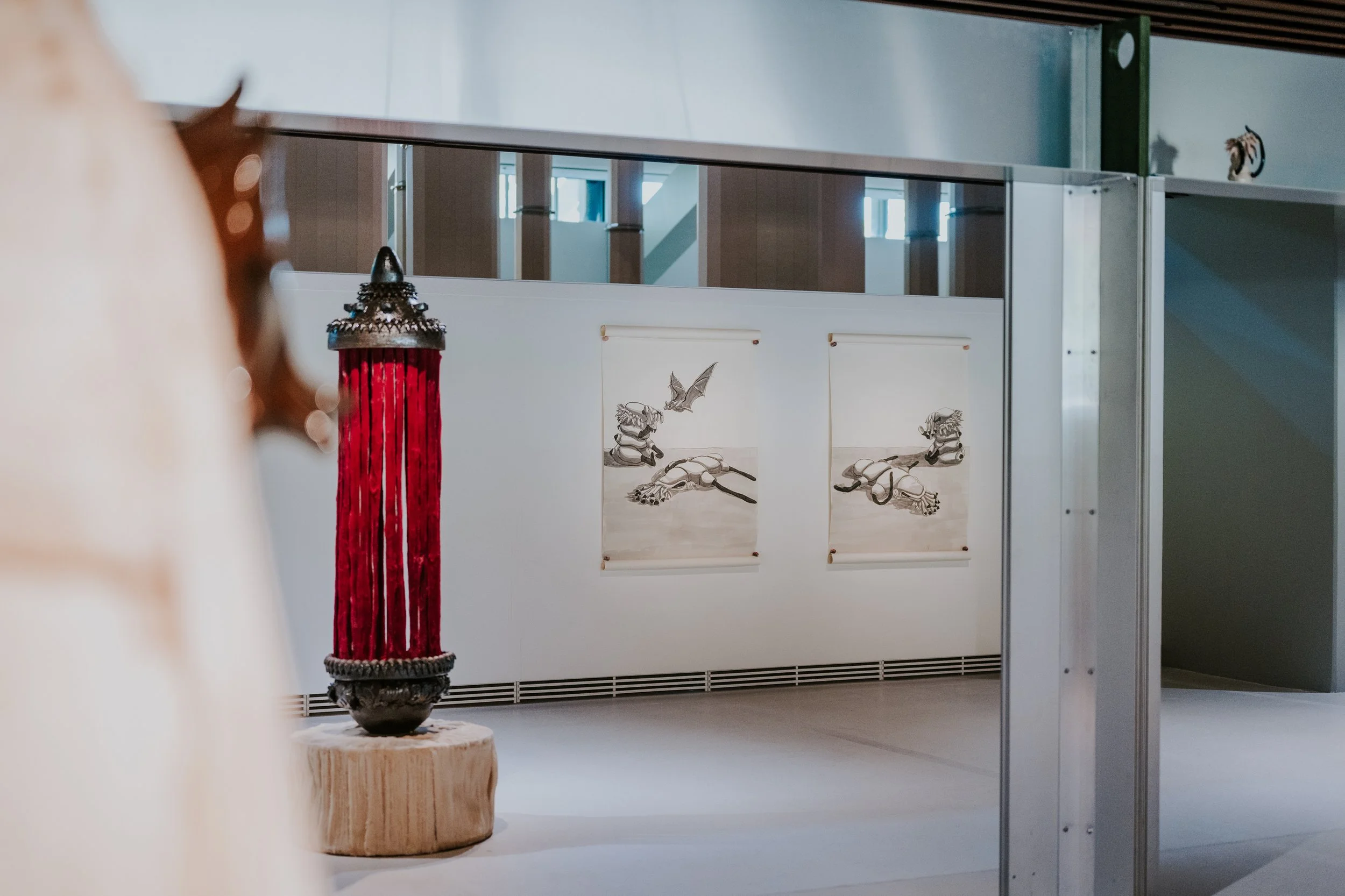
Courtesy of Pedro Pina
What are you working on at the moment? Is there anything exciting coming up for you?
At the moment, I’m preparing my next solo exhibition at Galeria Foco in Lisbon (PT), as well as an exciting project celebrating the twentieth anniversary of MACE museum in Elvas (PT), as well as other projects coming out soon. In both projects I’m researching the relationships between parasites, religion and forms of power.
I’m currently in a period of transition. As major changes unfold in my own life, I feel my work is changing too. I’m in a moment of introspection, expanding my own limits.
See more of Francisco Trepa’s work
ArtConnect | Website | Instagram
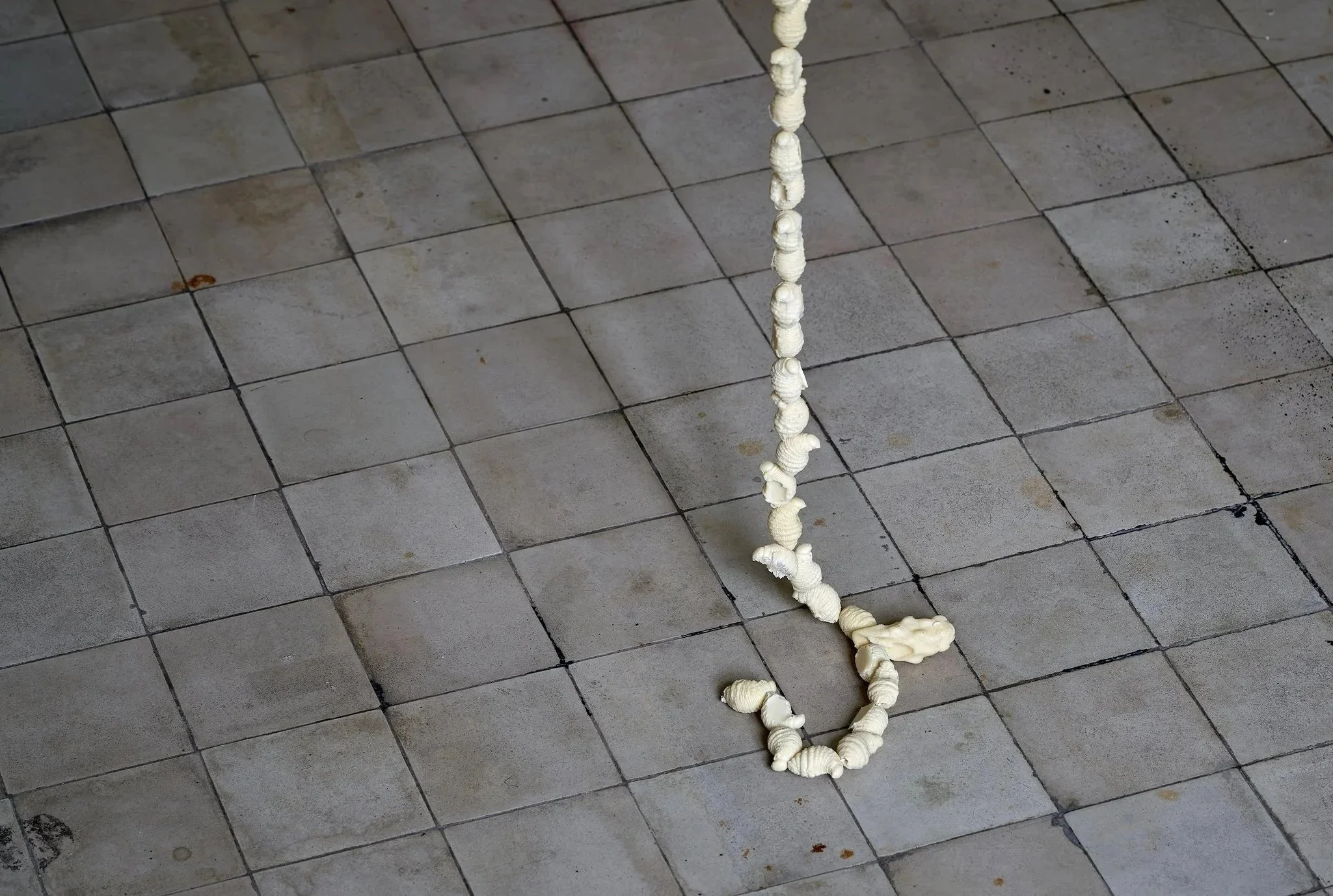
Main image: Tira, 2022. Courtesy of Ricardo Nunes, Natural History Museum
New Voices highlights emerging artists who showcase their unique perspectives and innovative techniques on ArtConnect. Applications are accepted on a rolling basis. If you would like to be featured in a personal interview on ArtConnect Magazine, read through the open call and apply here.