
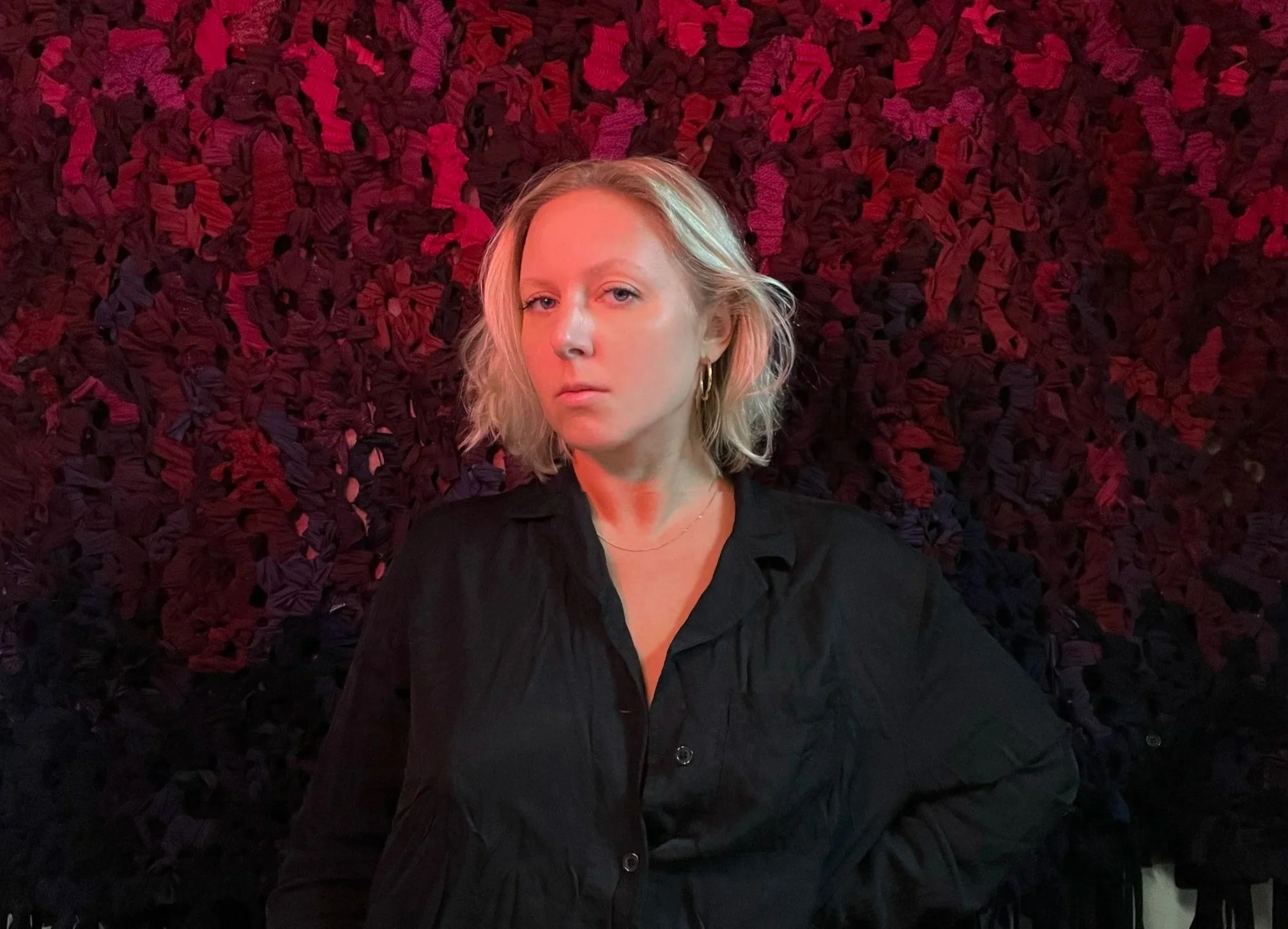
Isabella Chydenius
Exploring the night and underground nightclub culture as spaces of togetherness, momentary freedom and joy away from the heteropatriarchal square norms of the day.
Isabella Chydenius is spotlighted in the New Voices series, which highlights emerging artists who showcase their art on ArtConnect.
Berlin-based interdisciplinary artist Isabella Chydenius’ artistic research investigates the history of queer and underground nightclubs as sites of resistance and draws attention to how they may serve as a catalyst for change in society through the dialogue between activists, artists and socio-political movements. She is interested in the club space as a metaphor and abject, and approaches them as small microcosms within larger society. Her practice combines mediums such as light, video, sound, cast glass, text, photography, ripped clothes, and found objects to create sculptures and immersive installations.
She graduated from a Master of Fine Art degree at the Michaelis School of Fine Art at the University of Cape Town in April 2021, and has since relocated to Berlin after 15 years of living in Paris, London, Cape Town and LA.
Curious to gain more insight into her artistic approach and perspective, we asked a few questions.
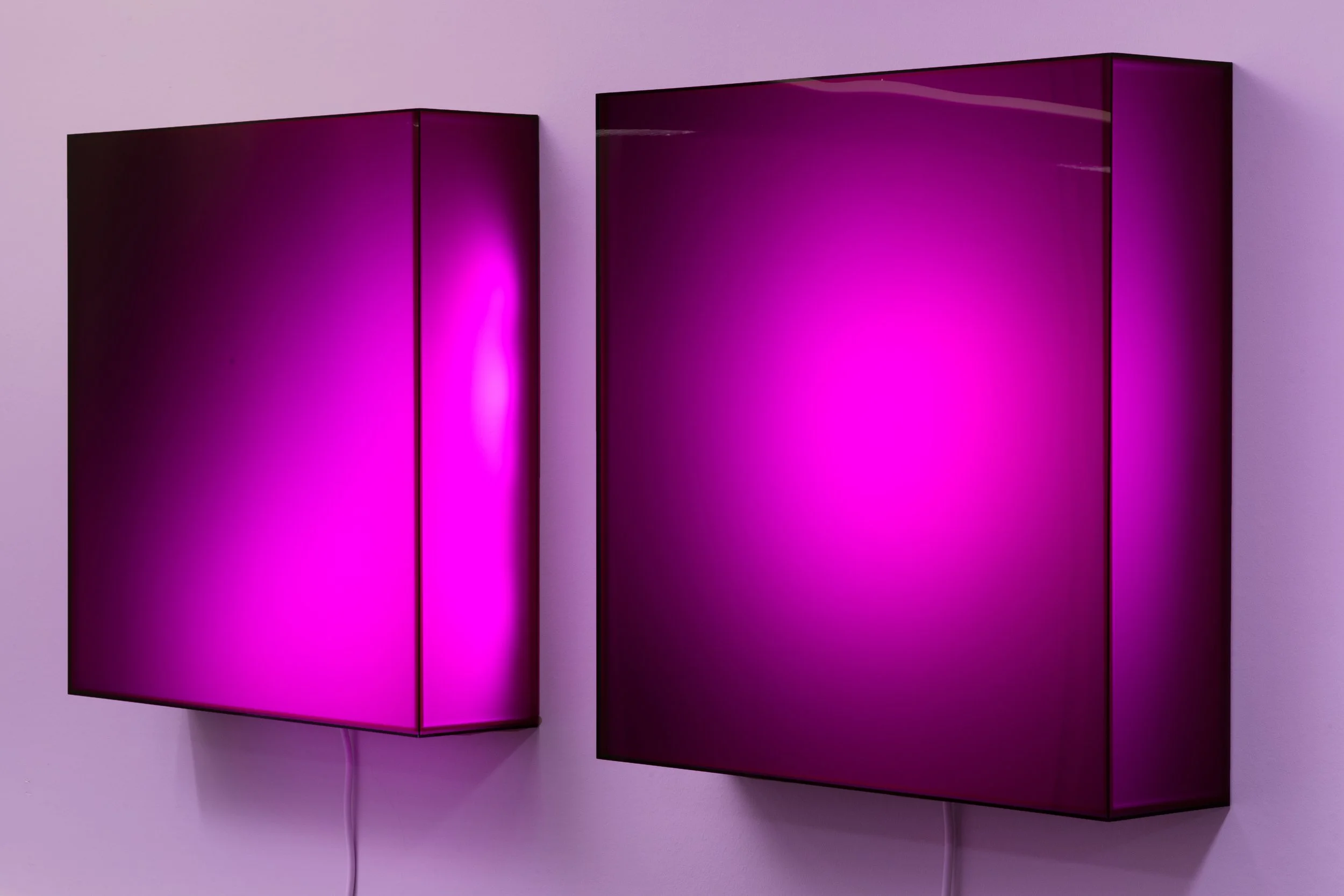
Two sides of one story (2022)
Club lights are like traffic lights for lost dancers (2022)
Your work draws from underground nightclub culture as a space of resistance and togetherness. What first drew you to these environments as a source of artistic research?
I’ve been going to clubs since I was around 16 years old. At the time they had more of an importance in terms of finding community and self discovery, especially since I moved away from Helsinki to Paris (2008-2011), then London (2011-2014). I must admit that I definitely overlooked them as spaces for artistic research, it was kind of just given that they were creative spaces full of interesting people with fascinating imaginative minds. I myself always had a disposable camera with me and photographed my friends, and wrote diary scribbles and poems influenced by my experiences from night time escapades and revelations.
It was only at the beginning of my MFA (2018-2021) that I understood how the many years spent in queer clubs had not only shaped me as a person, but defined the way I see and interpret the world, and therefore also my practice. By acknowledging the importance of the spaces, the artistic value, both historical and current, became evident and I haven’t been able to focus on anything else ever since.
“…the many years spent in queer clubs had not only shaped me as a person, but defined the way I see and interpret the world, and therefore also my practice”
You’ve been working with this theme since 2018. How has your exploration evolved over time?
I’ve been working with the theme more intentionally since the beginning of my MFA, and am seeing how there’s a circular motion to what I’m drawn to. I go from working on very personal and collected experiences that highlight violence and unsafety within the queer community in the night and the night-time-economy, until that becomes overwhelming. The aftermath of working with that then often requires me to try and take a bit of distance from the violence, at least within my practice. Therefore, from there the themes develop towards joy and togetherness, and other positive energising aspects of club culture. Once I’ve gathered some strength again, there’s space to explore the more urgent questions and critiques again.
Visually, this circular development may be observed in my practice through colour and material choices which affect a general mood of an installation, video, text, sculpture, or painting. That said, a focus on darkness doesn’t necessarily always mean that I’m researching violence, quite the opposite. Examples of exhibitions where I focused on darkness in a positive manner are ‘Hide and seek’ (Galerie Historischer Keller, Zitadelle Museum, 2023) and ‘The potential of club corners; notes on creating space’ (Finland Institute in Berlin, 2023). Both exhibitions focused on the potential and playfulness that may happen in dark club corners if the spaces are intentionally safer spaces.
In your practice, you work across many mediums—from sculpture to text, video, sound, light, textiles and more. Tell us more about your relationship with materials. What are you drawn to at the moment?
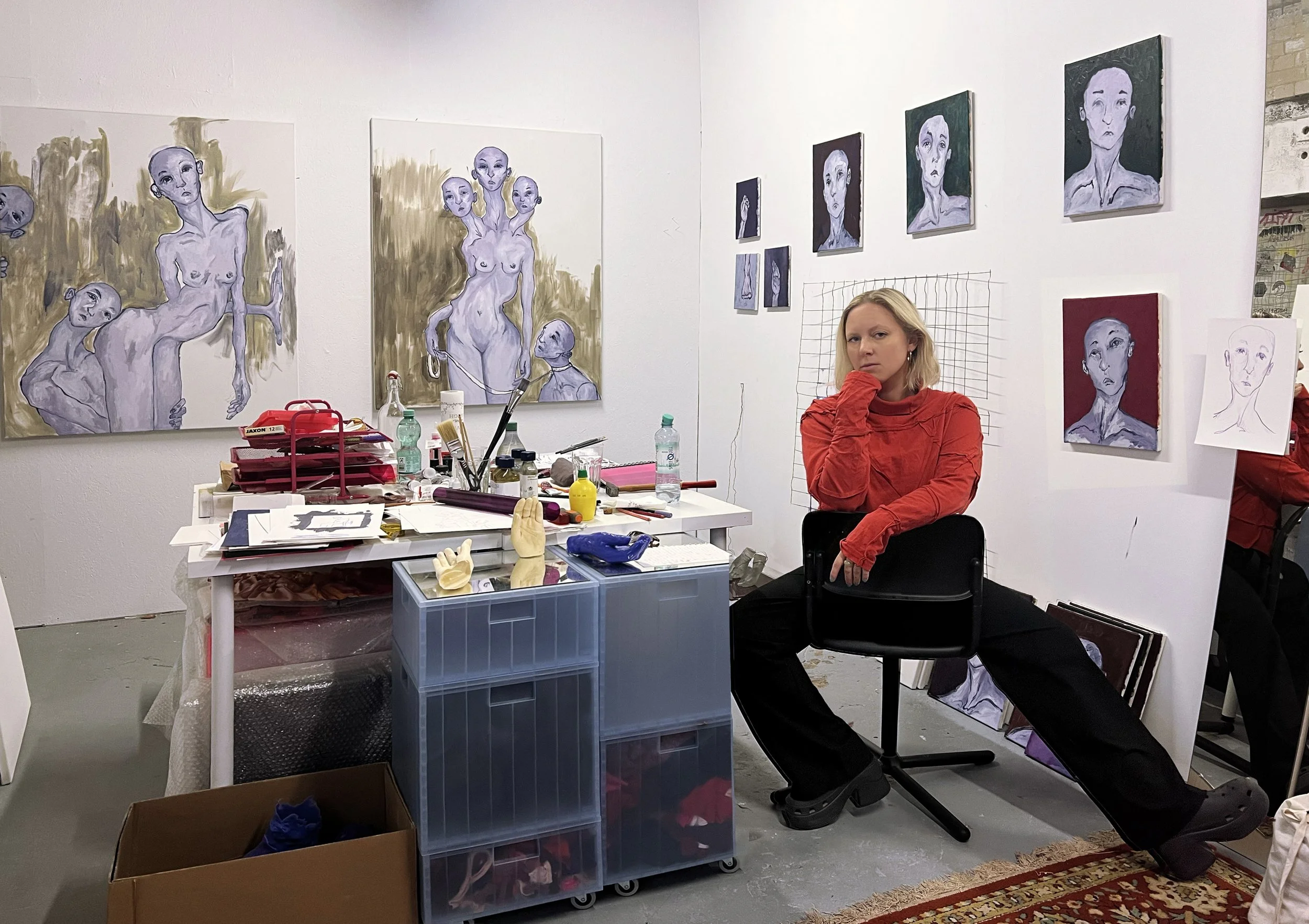
Currently I’m really drawn to text, glass casting and painting. I have a background as a painter since a very young age, and have only been doing installations for the past 11 years. I tried to return to painting around 3 years ago but I ended up frustrated and threw everything out. Recently something changed though, and the painting process is flowing again. In this way, my relationship to materials and different mediums is first and foremost quite intuitive, or I like to believe so. Yet, as a conceptual artist, it’s hard to ignore that my research often influences what materials I “suddenly” find appealing haha.
I haven’t quit installations and sculptural work, but I missed a more quick intuitive process to have on the side, which painting and writing provides. Large scale installations can feel like I’m a manager of a technical team, while painting, writing, and glass casting, allows me to work with my own hands again. It’s such a cliché but they are the only mediums through which I can transcend to forgetting about time, and the rest of the world.
Central to many of your works is the colour pink. How did this fixation begin? Will pink continue to feature in your work?

Dancing on my own (2021)
Pink is a colour that has unsettled me for as long as I can remember. My mother used to want me to dress very girly as a kid, while I wanted to dress in overalls and big t-shirts. I have very early memories of feeling that especially men didn’t take me seriously if I wore pink cute clothes, and I hated it. I’ve associated pink with those memories until I started going to queer clubs.
During my early years in Cape Town, I was once again photographing my friends and architectural elements in nightclubs, and in clubs where photos weren’t allowed, I would take sneaky photos and selfies in toilets.
When I looked back at them during my MFA, I realised how pink as a colour was celebrated in queer clubs, while in mainstream nightclubs the colour was most likely found in the women's gender segregated bathrooms.
I started researching the history of the colour, and in my MFA wrote a chapter on its parallel development within western feminist history; how it’s been used, abused, and reclaimed etc, and critiqued all the way into the contemporary. In my work, I therefore use a tone that I’ve titled ‘Club Pink’ which functions as a metaphor for the development of the colours' different meanings, and most importantly is symbolic of queer spaces and their constant aims to be intersectional microcosms of social change.
I still feel challenged by the colour, but I’ve found ways to let the challenge energise me instead of put me off. It has been a lot though, so currently I’m moving towards exploring different shades of purple, which evidently is a development from pink towards darkness, like the last colours of the sky before it turns midnight blue. Not sure yet if it’s just a break from pink or a completely new journey.
“I still feel challenged by the colour (pink), but I’ve found ways to let the challenge energise me instead of put me off.”

Dark Waters: Waves (2025)
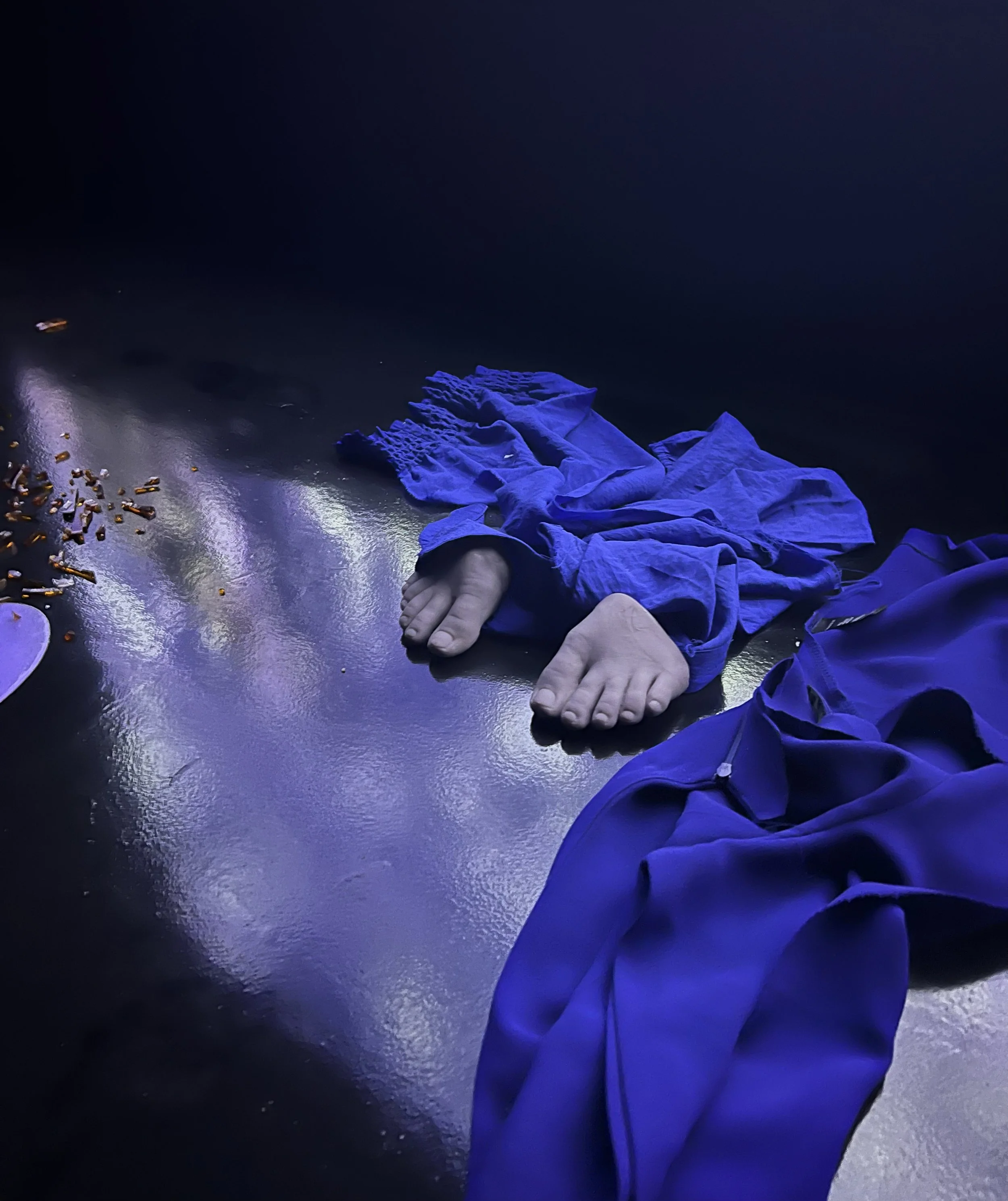
Your most recent installation ‘Dark Waters: Waves’, on display in Helsinki until November, positions ocean waves in dialogue with rave culture. Why waves? What does this motif open up for you?
Waves, the ocean, and bodies of water have always been a centring element for me. There’s something calming about different motions of water, and when I moved to Berlin I found myself looking for an equivalent. Aside from moving as close to the Maybachufer canal as possible, funnily enough, I found wave-like motions in a nightclub. It was a Sunday afternoon and I was standing with some friends on a balcony-ish area above Panorama bar, looking down at the dancing people when I realised how much these dancing bodies seemed like an ocean below me; each body an individual wave, in symbiosis.
In this moment I remembered an article titled ‘The Future Body at Work’ by Kasia Wolinska and Frida Sandström (E-flux, 2019, issue 99), in which they discuss the late dancer, choreographer and theorist Isadora Duncan’s idea of the contemporary dancer as an individual wave among other dancers. I drew a parallel to my own research in how the dancefloor functions as a safer space for self expression when the individual dancers respect fellow dancers. Then, a synergy between all dancers is formed, which is jeopardized if one or more persons harass someone or act violently.
After that I made an exhibition titled ‘Just let me dance’ (2022) in Berlin which was my first exploration of waves and raving, and ‘Dark Waters: Waves’, although 3 years later, is my second. I was reminded of this theme at the beginning of the year when I stayed with my dear friend and writer Catherine Rudolph, who was about to give a lecture on queerness and water within poetry back in Cape Town. Since then I started developing the conceptual and material ideas of ‘Dark Waters: Waves’. I’ve really enjoyed returning to the theme, and the theme keeps unravelling new ideas for future work.
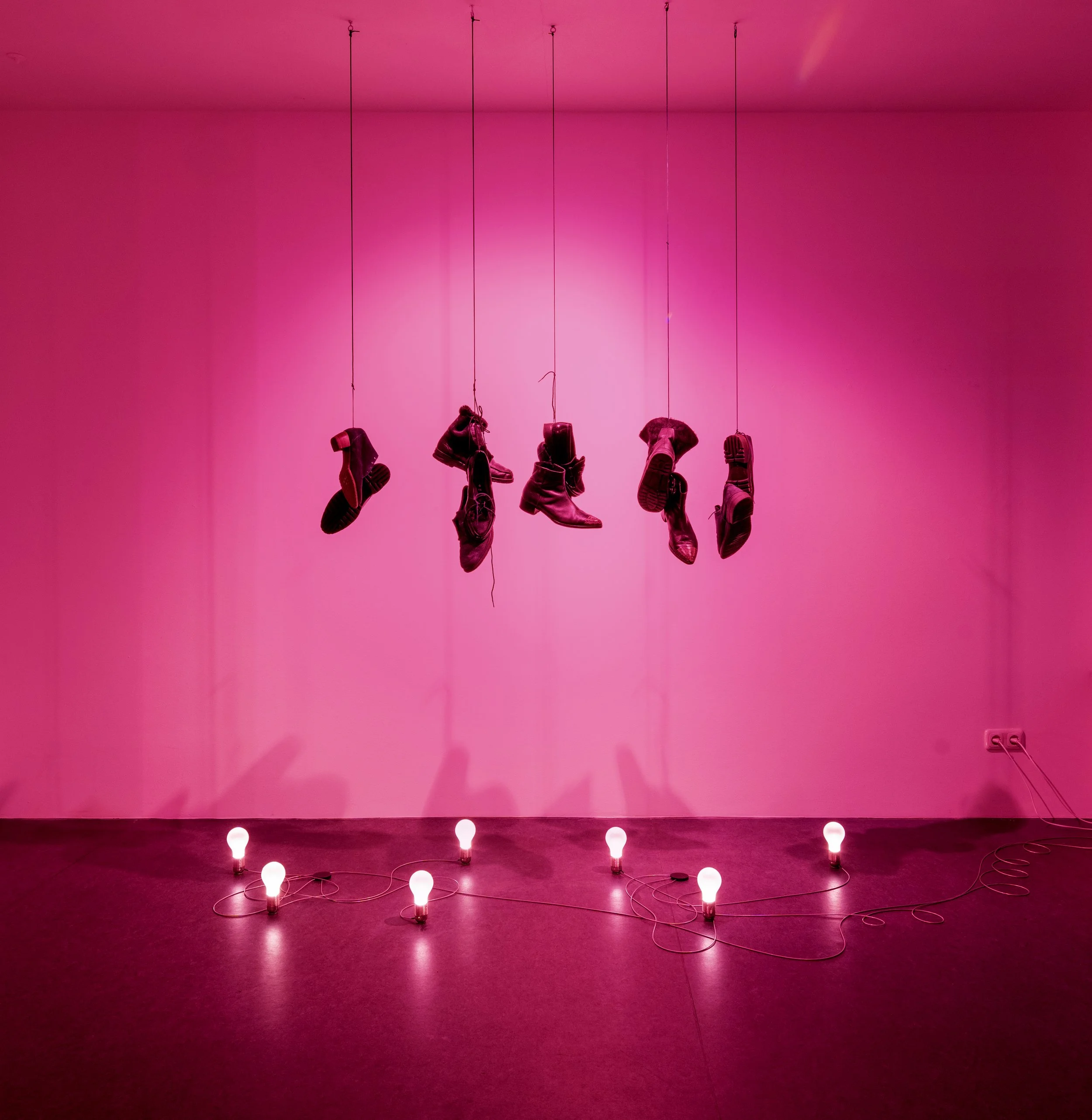
Murder on the dancefloor (2022)
To date, you’ve collaborated with sound artists, coders and dancers. Who would you love to collaborate with in the future?
I would love to collaborate with dancers again. I don’t know how and when yet, but an intention is growing. I used to do performance pieces and performative work between 2015-2018, but have since gotten too shy in front of audiences. Sometimes I still miss working with actual human movement and the expressions that real-life bodies, individual and collective dancers, can bring to life.
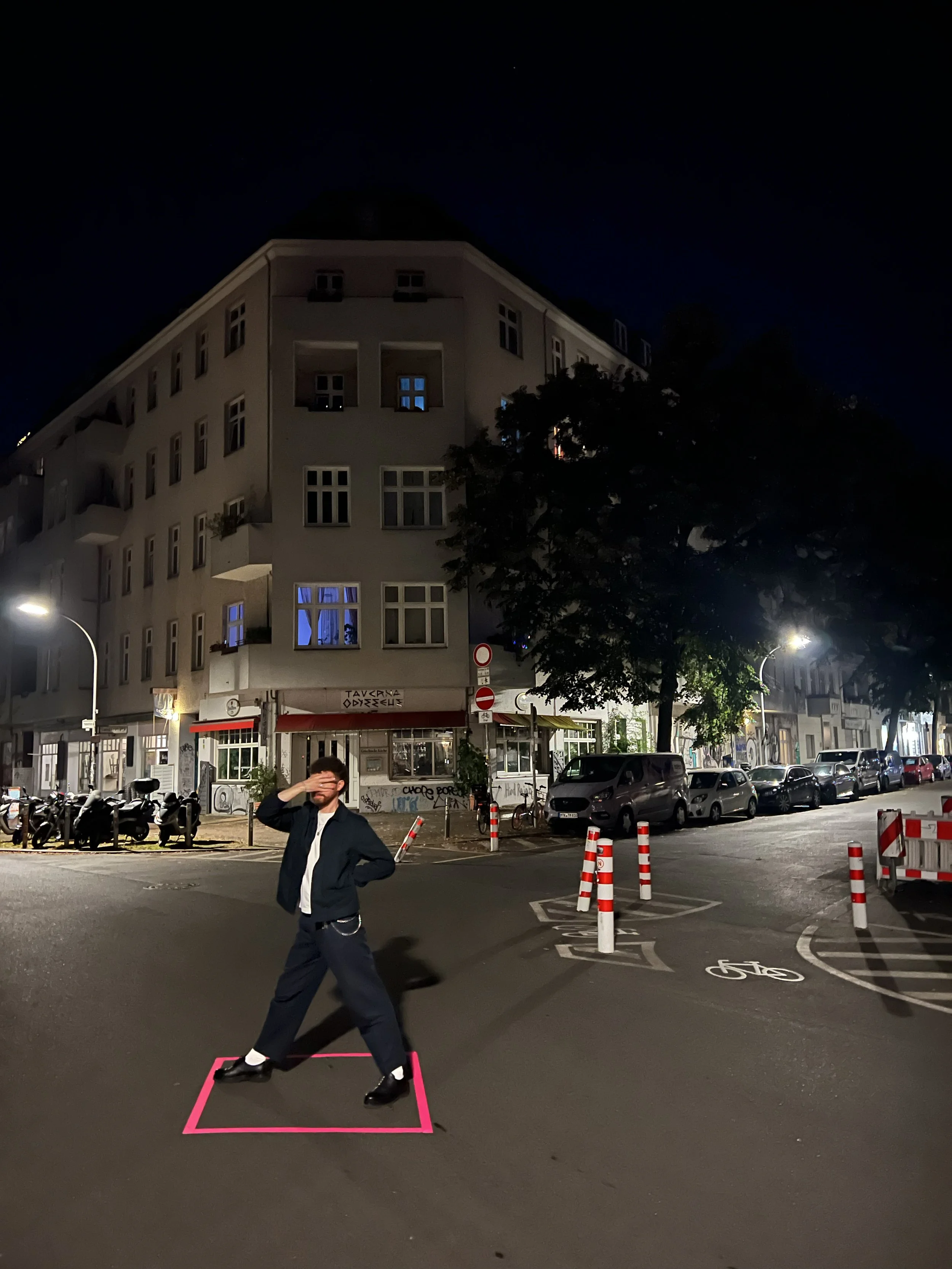
#pinksquareproject Chris, Berlin (2025)
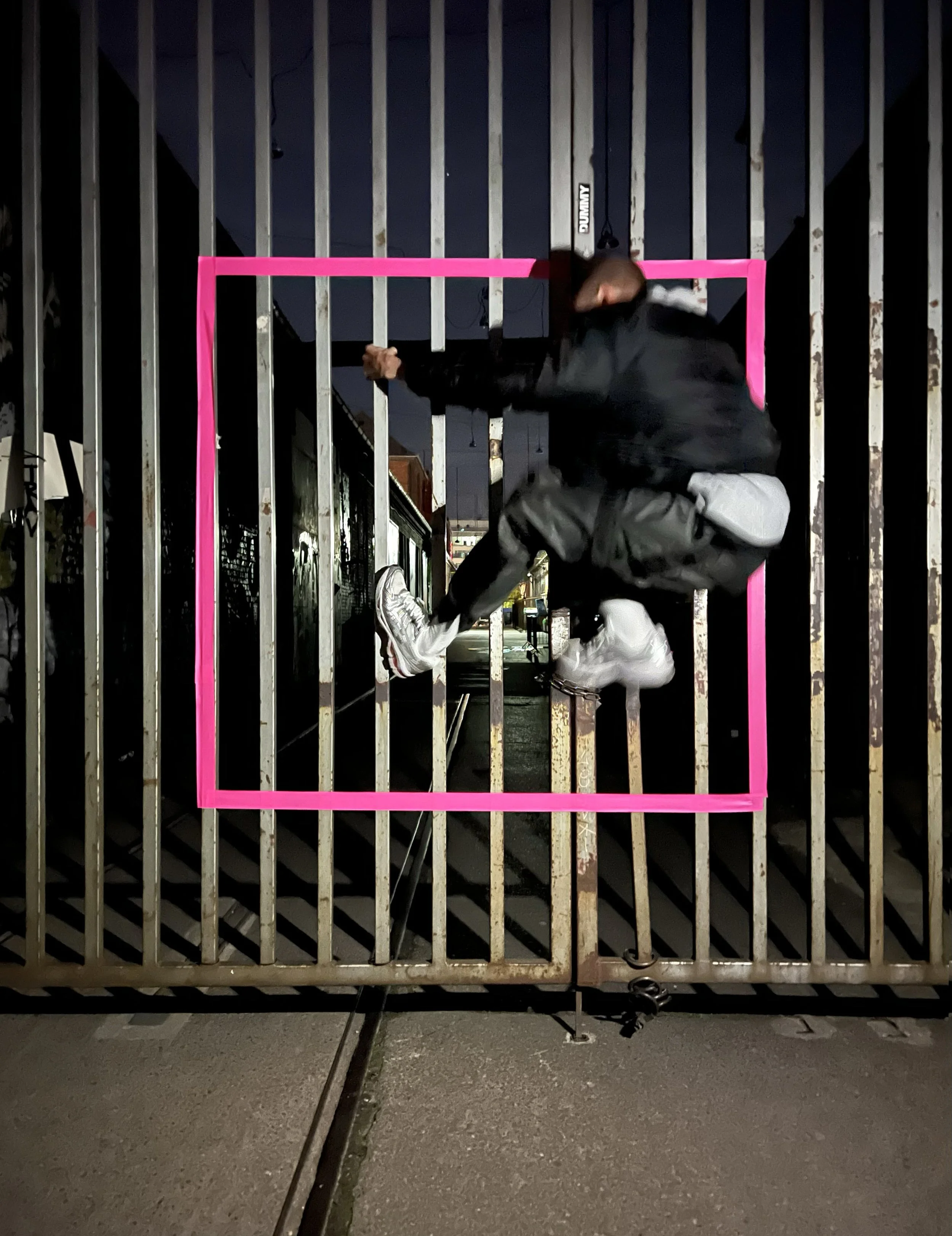
#pinksquareproject Jan, Berlin (2023)
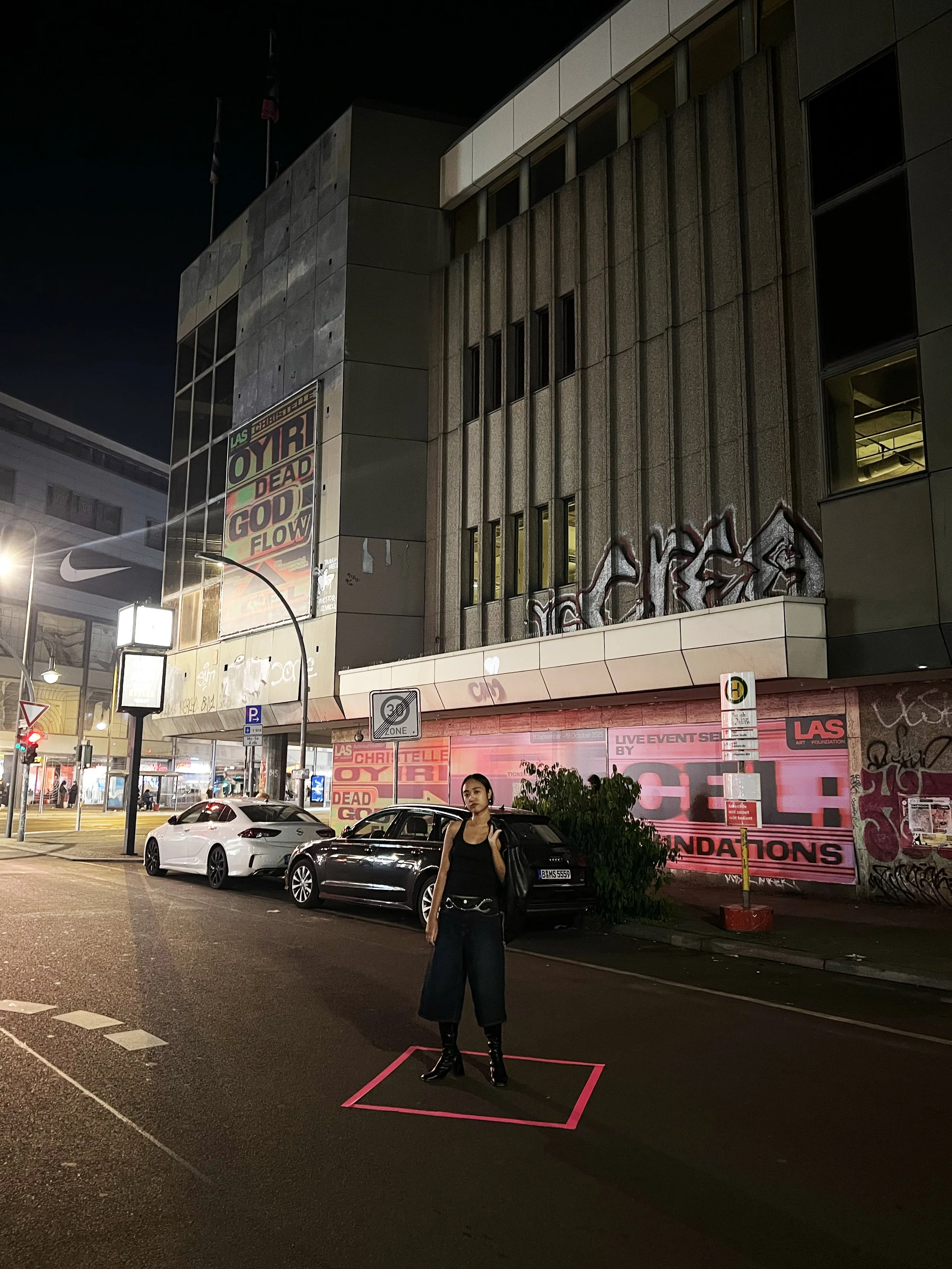
#pinksquareproject Retno, Berlin (2025)
What’s next for you? Anything new coming up?
I’m currently working on 3 different projects; a sculptural series combining cast glass, wax, and found material, out of which one work will be exhibited in a group show in Helsinki, opening on the 6th of November at Galleria Toinen Silmä. Secondly, I’m painting when I can. The paintings started off as studies of the colour purple, studies of hands and feet, and other body parts that I’m casting in glass, but have developed into an exploration of scenes of intimacy, sexuality, and power dynamics through semi-surreal characters based on imagined scenarios.
Since moving to Berlin, I’ve become curious about the work of a dominatrix as a tool for empowerment in a heteropatriarchal society. However, again, I’m too shy to embark on the real-life journey, so the paintings function as a dream world where I can pursue the scenes. Thirdly, I’m waiting on funding for a bigger 2-year project; a community-participatory sound installation.
Oh and, I have also returned to my public intervention series titled #pinksquareproject, so keep your eyes open in the streets ;)
See more of Isabella Chydenius’ work
New Voices highlights emerging artists who showcase their unique perspectives and innovative techniques on ArtConnect. Applications are accepted on a rolling basis. If you would like to be featured in a personal interview on ArtConnect Magazine, read through the open call and apply here.