
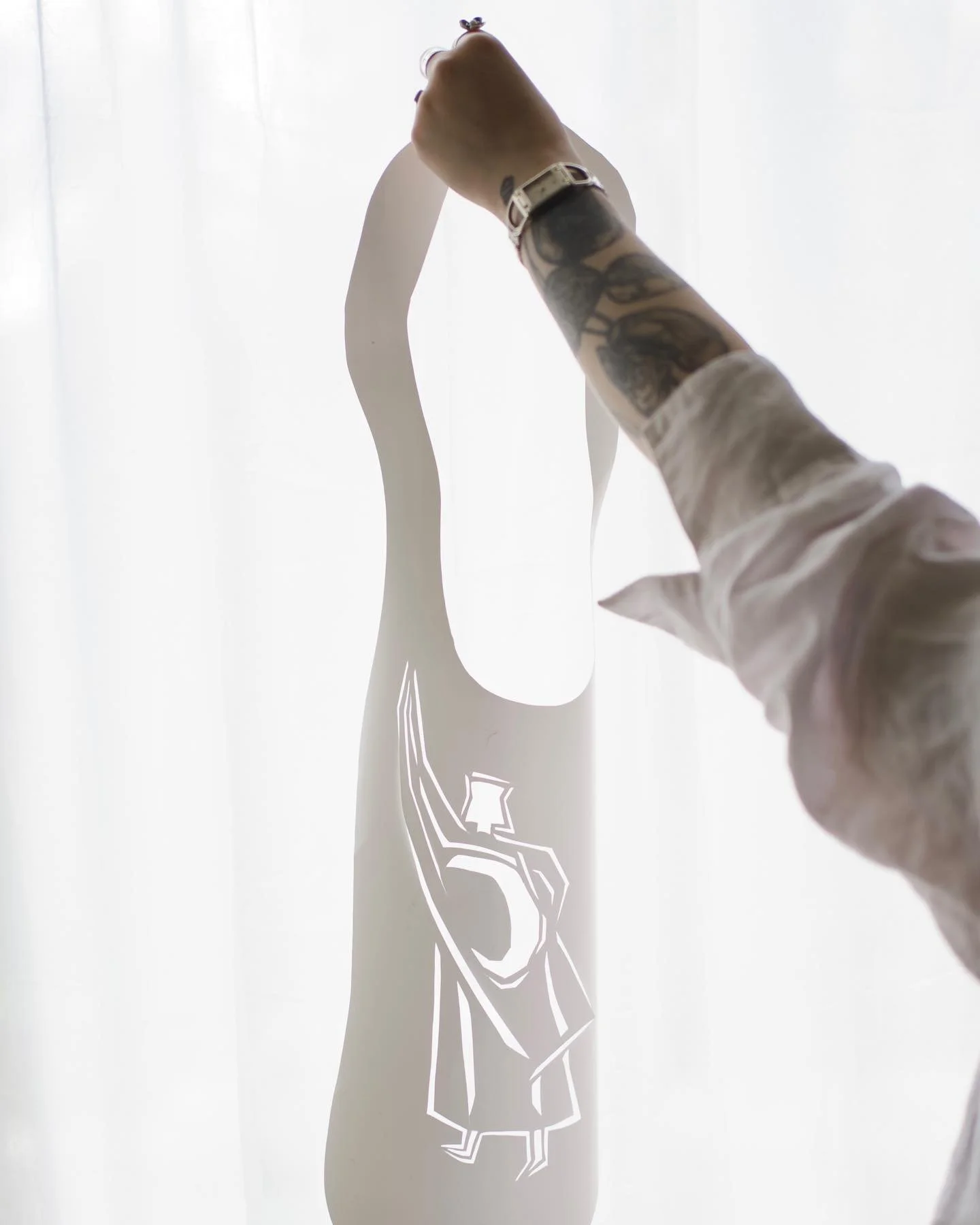
Jade Mikell
Multidisciplinary artist and activist investigating social currency and sustainability through the lens of disability.
Jade Mikell is spotlighted in the New Voices series, which highlights emerging artists who showcase their art on ArtConnect.

Image: Spencer Brown
Jade Mikell lives on unceded Lək̓ʷəŋən land by way of unceded Taystayič. With her practice, she investigates subjects like social currency and sustainability through the lens of disability. She is interested in how accessibility and sustainability often conflict, and inspects how we might engage in conservation without relying on exclusion.
She has exhibited work internationally. Most recently her solo exhibition, Vuelve, Oración en el Cielo, opened in 2025 at Casa Lu in México City, presenting research on how migratory birds and disabled bodies navigate climate instability.
Her work has been commended by the Canadian Broadcasting Corporation, a Canada Arts Council Explore and Create Grant, Innovate Grants and MyMa.
Curious to gain more insight into her artistic approach, we asked Jade a few questions about her practice.
Your practice traverses various mediums including painting, sculpture, installation, words, movement and more recently sound. Was this interdisciplinarity always present in your practice or did it emerge organically over time?
The desire to work in different mediums was consistent from early-on, but I definitely lacked an initial confidence (and infrastructure) to extend beyond painting. I didn’t attempt sculpture or installation in a meaningful way until I had the space to explore more earnestly during my degree. From there, other mediums I’d always intended to include found their space.
In the information age I feel a pressure to commit to a specific medium and method in my practice (to be immortalised online indefinitely), which I reject, but my materials and timing are still very considered. A subject which might translate well in sculpture might not befit painting, a topic suited for writing might not translate as I’d intended through movement, etc.

The Doe The Trout and The Gelding visit the Quiet Place where there is Wind and Rain, 2025
Production of your work relies on upcycled and salvaged materials. What materials have you recently been drawn to? How do you locate them?
I’ve worked with rehydrated acrylics (binder added to dried paints, to varying degrees of success) and upcycled canvases for years. The motive was a desire to divert microplastics from waste sites in some capacity and to keep functional stretched canvases out of landfills. I never throw out projects from my own studio that displease me.
I began sourcing from my University during my BFA. In my department there was a recycling site where students would drop off materials and projects they didn’t wish to use anymore. I’m known as the ‘garbage artist’ so I’ve been brought chalky paint tubes, canvases someone worked on but aren’t satisfied with. A woodworker once donated some beautiful offcuts to me that I’ve used repeatedly in sculptures for years. In my blade cutting paper sculpture practice I often source paper from the offcuts of other artists.
I’m looking forward to fully transitioning over from acrylics to natural pigments in the next couple years. I recently harvested some shaggy-mane mushrooms from my backyard, a species which deliquesces and can be used as ink when blended and heated. I’m excited to share my experiments with that.
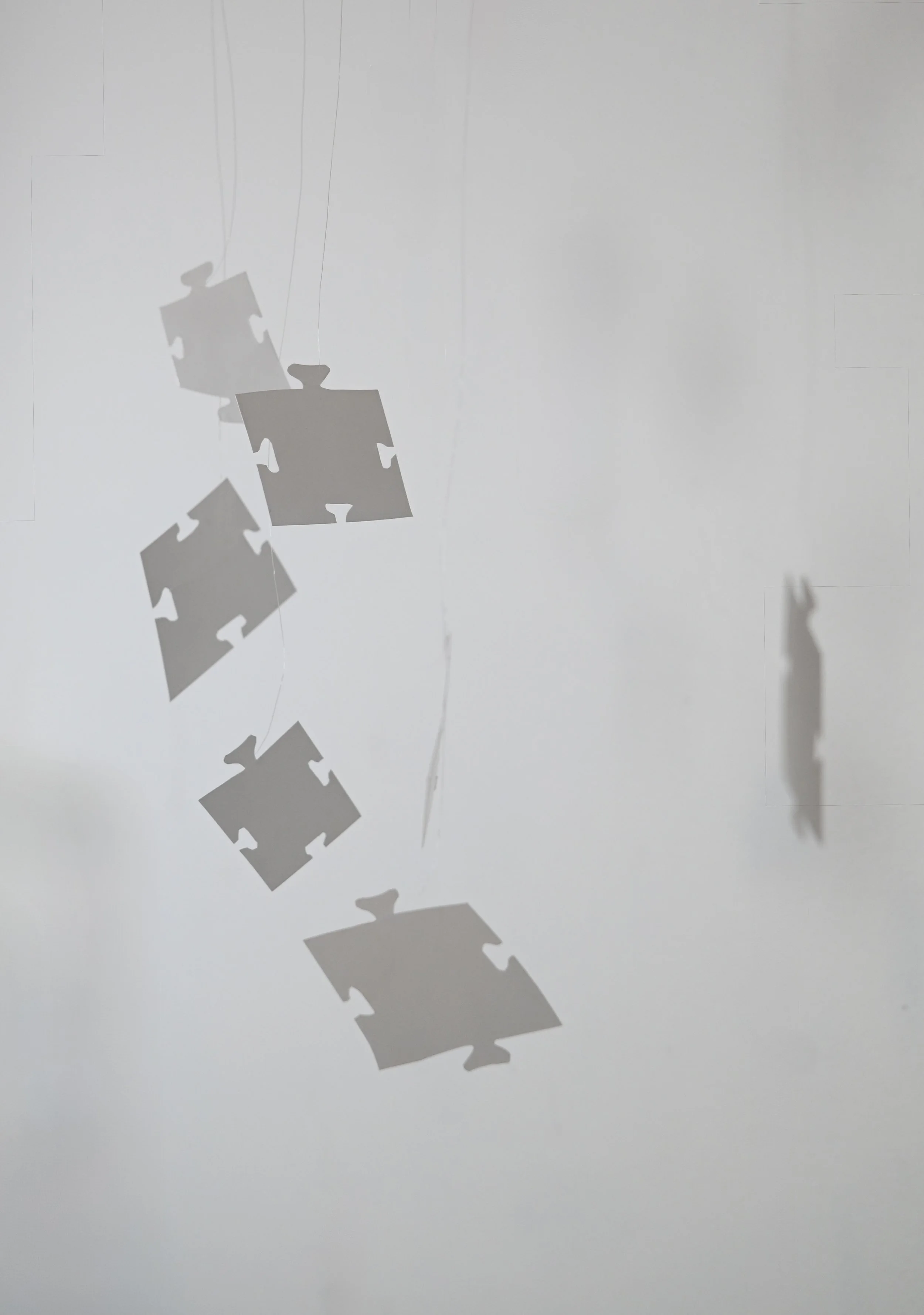
Sigiloso (1 in 31), 2025
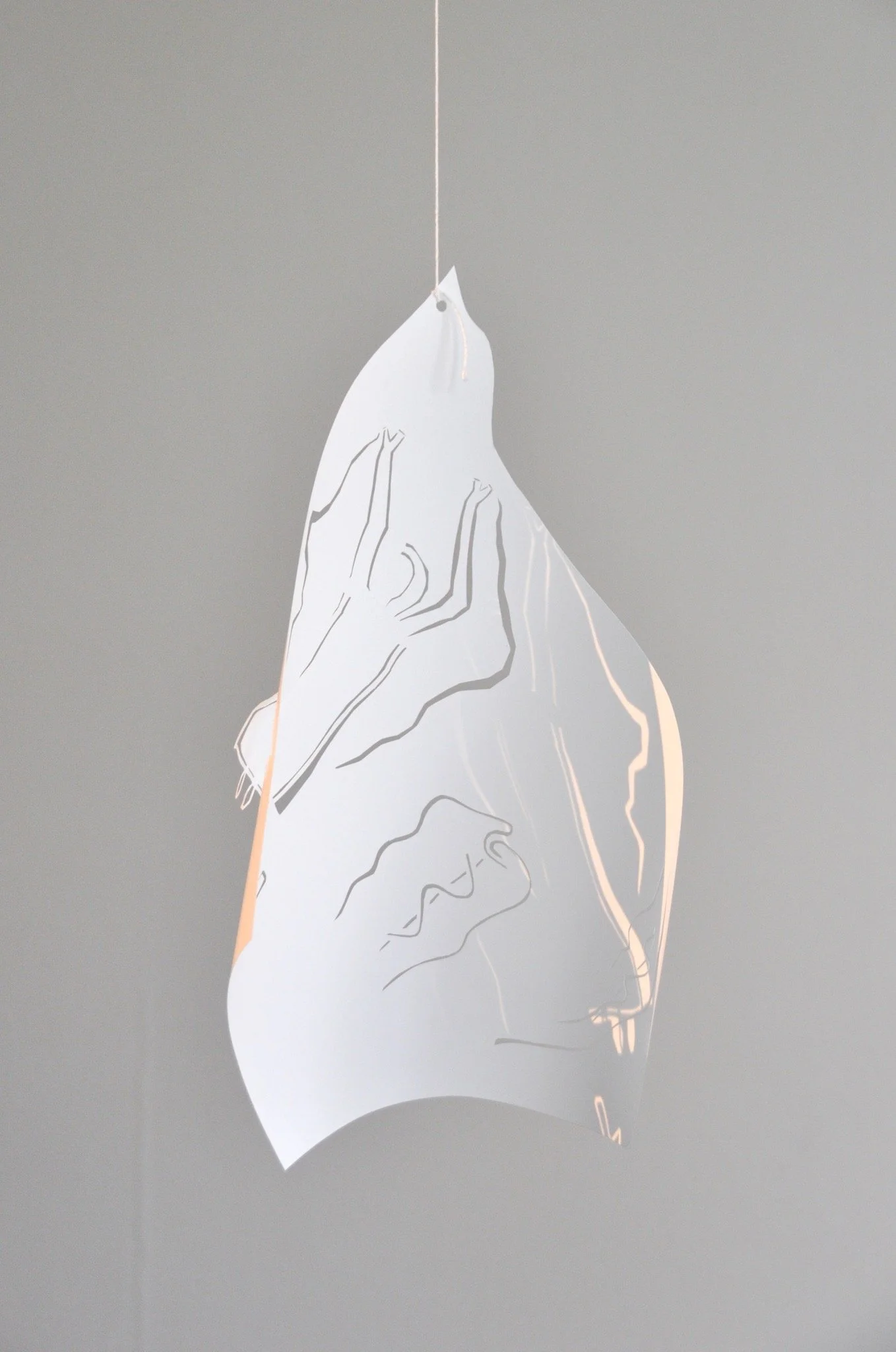
Eurythms, 2023
Your first international solo exhibition, Vuelve, Oración en el Cielo examined parallels between migratory birds and disabled bodies navigating climate instability. How did that research begin?
I’ve been enmeshed with birds since I was five years old. Some of my earliest memories are of counts with my birding Grandmother. When my physical disability increased, I became interested in how the environment impacts physical movement: why birds leave, how ecological disruptions can motivate some species to stay or stray the path unexpectedly. Vuelve inspects how similar the pitfalls experienced by migratory birds are to those by disabled bodies navigating increasingly inconsistent temperature trends and weather systems.
Where I live the weather is mild, cooler and traditionally very wet, yet we are increasingly hit with droughts that threaten local ecosystems every summer. Being able to contrast research conducted at home in my local climate with research conducted in distinctly hot, arid climates like on Lanzarote and in México City was an incredible experience. My work during these two residencies last winter culminated in Vuelve, but I’m not done with the underlying research and I hope to continue indefinitely.
An analysis of institutional inaccessibility is threaded within your recent work. What in particular are you investigating in this space at the moment?
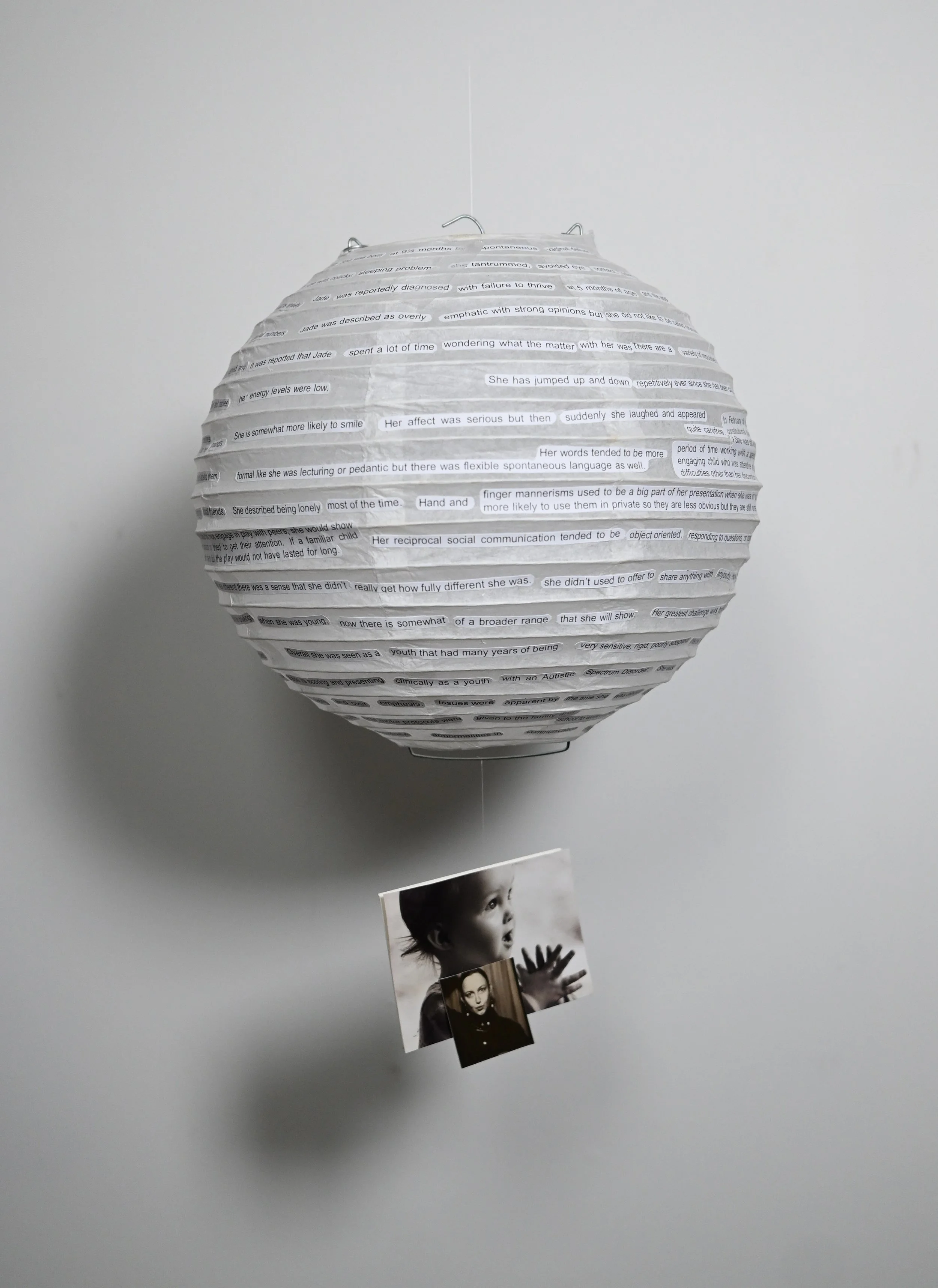
It was felt by the Occupational Therapist that Jade’s Bouncing and Rocking were Attempts to Cope (she needed help to latch), 2025-2026
I’ve been especially interested recently in how disability has been inaccurately idealised and how critical perspectives from within that community are usually deplatformed in the social institutions of online spaces. Sanitized, palatable versions of Autism, for example, which discount significant components of our community or intend to separate Autism from disability entirely, reach further online than presentations which might be more typical of someone with higher support needs and irrefutably attached to disability. This is true of all disabilities, but Autism online spaces highlight it well.
A project I’ve undertaken to work through my feelings about public representations of disability has been to reproduce my own clinical history in my work. I’ve been wheatpasting identifiable, structural but non-functional furniture objects with photocopied excerpts of medical assessments which describe me in varying clinical contexts from ages 2-17. A lampshade with no bulb, a chair which cannot bear any weight, etc. I’ve also made work focused on the puzzle piece, a symbol associated with Autism Speaks.
Autism Speaks is understood by most of the ‘actually’ Autistic community to be a hate organisation, provided the irredeemable media they’ve produced and stigmatising beliefs they’ve espoused, which degrade Autistic children. I’m intrigued by the puzzle piece as indicative of Autism however, and despite my disdain for Autism Speaks feel seen by a motif which emphasises that I do not easily fit into my prescribed surroundings.
You’ve spoken about the tension between sustainability and accessibility. Where do you see this conflict most visibly manifest?
There is usually very little space in environmental organising for visibly disabled people. Medical equipment is often single-use, and reusable alternatives often don’t exist for disabled people who rely on single-use equipment. I’ve been afforded a flexibility which many of my disabled peers have not been to be able to make ‘classically’ sustainable choices; even still as I’ve begun to rely more on limited use medical equipment (bandages, etc.), I’ve felt enormous shame about it.
I live somewhere defined by the kinds of outdoor recreation which is often inaccessible to disabled people, so I’m very passionate about reimagining what a ‘legitimate’ relationship to the natural world looks like, as well as what it means not only to value the natural world, but to be considered an involved part of it. Do you need to sleep outside? Do you need to summit mountains, or can you be as legitimately committed to sustainability and conservation even if you require single use medical equipment, or cannot safely camp overnight? Does the inability to do so imply you belong less in the natural world? If so, why is that the prerequisite for advocating for our Earth?

Unidentified Spectrogram Study recorded December 18th 2024
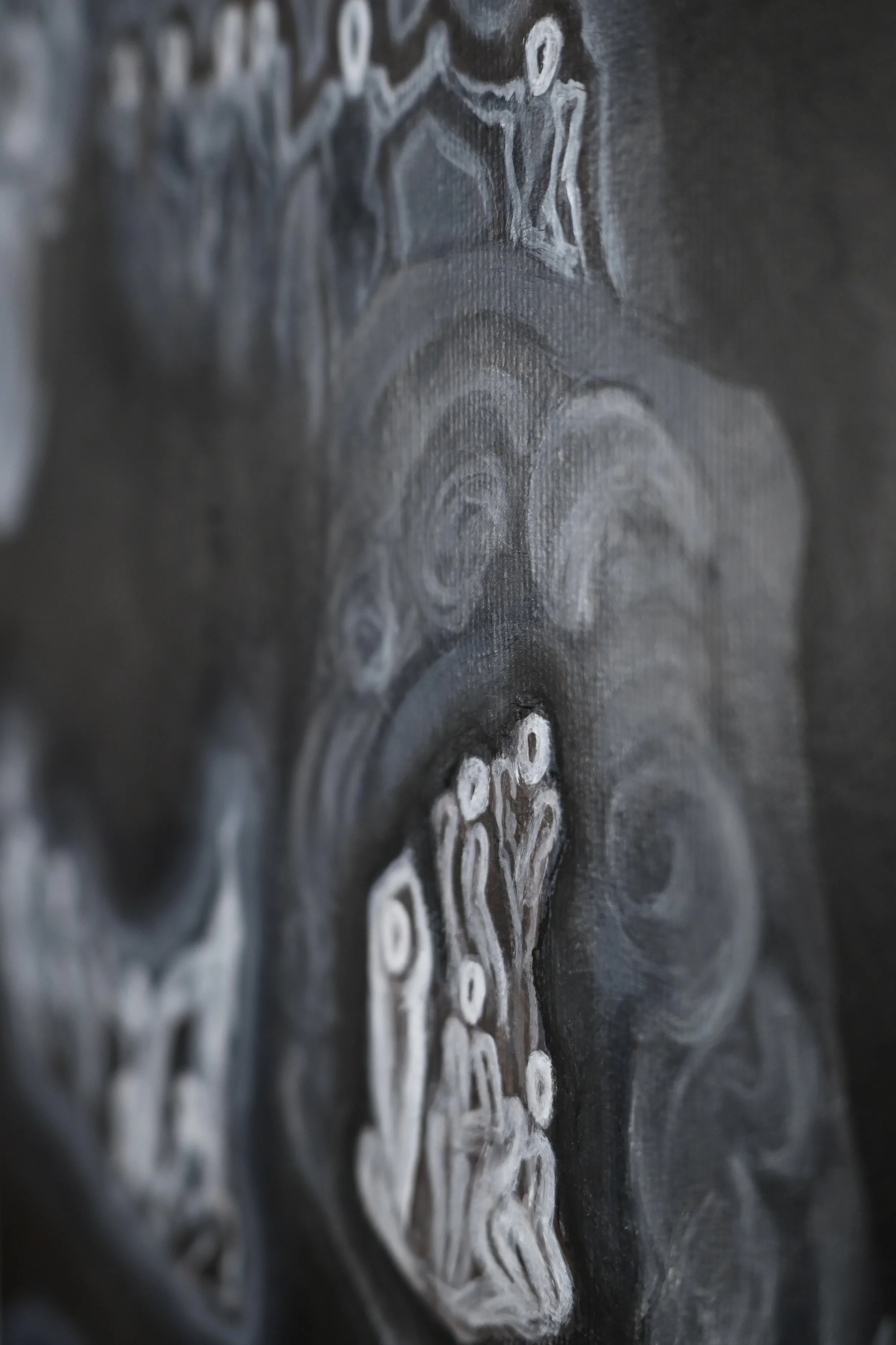
I Offer to you Life (eggs water my body) (detail), 2025
How does your work grapple with these competing forces?
My work is defined by limits in how I can engage. I’m unable to drive a vehicle or to bicycle, so there are natural spaces I cannot easily access. My work is inherently shaped by my body’s incapacities and spatial restrictions, so I turn instead to my immediate surroundings. I’m very fortunate to live in walkable proximity to some natural spaces, but I try to interact with the Earth in even the most proximal instances; mosses latched onto the concrete under my feet, pigeons navigating industrial infrastructure above me. I cannot speak for the experience of every person; disability is vast and varied and it would be disingenuous and unfair for me to speak over the experiences of others, so I reference mine predominantly, but I always intend to consider those which extend beyond mine. The work I did for my exhibition Vuelve addressed this, as I endeavoured to make sounds I’d documented (with support) at inaccessible sites visible, tactile and experiential in the gallery setting.
“My work is inherently shaped by my body’s incapacities and spatial restrictions, so I turn instead to my immediate surroundings.”
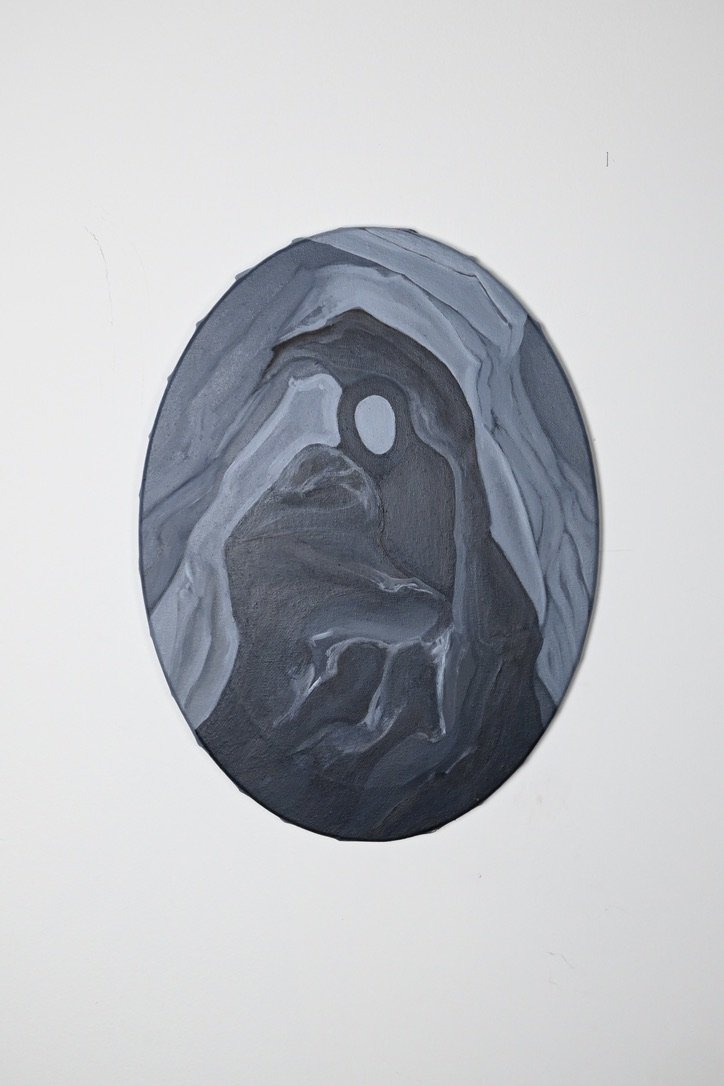
Eurythmy (A to B), 2026
You’ve mentioned that your work inspects how disability is often framed through moral inadequacy in institutional spaces. How do you see this framing operating and how do you work to unsettle it?
Disability is deeply individual but is treated in most institutional spaces within the limited binary of either irredeemable deficit or an exceptional accomplishment. While I vehemently reject the idea that disabled people should necessarily be prodigies when navigating obstacles to earn our position in society, I also reject the rhetoric of our circumstances as piteous, our lives as inherently unfulfilling.
As a child I underwent lots of therapies, notably late-stage ABA training, a therapy for Autistic and neurodevelopmentally disabled children which shares a founder with queer conversion therapy. These therapies, though presented as evidence-based clinical procedure often utilise moralising language, assigning hierarchical value to how children navigate inconsistent sensory environments. When I make work that hopes to unpack the impacts of these moral classifications to my person, I try to consider what would have been meaningful for me to encounter in an artwork during that time as I waded through unbelievable shame regarding my undesirable brain and aching body.
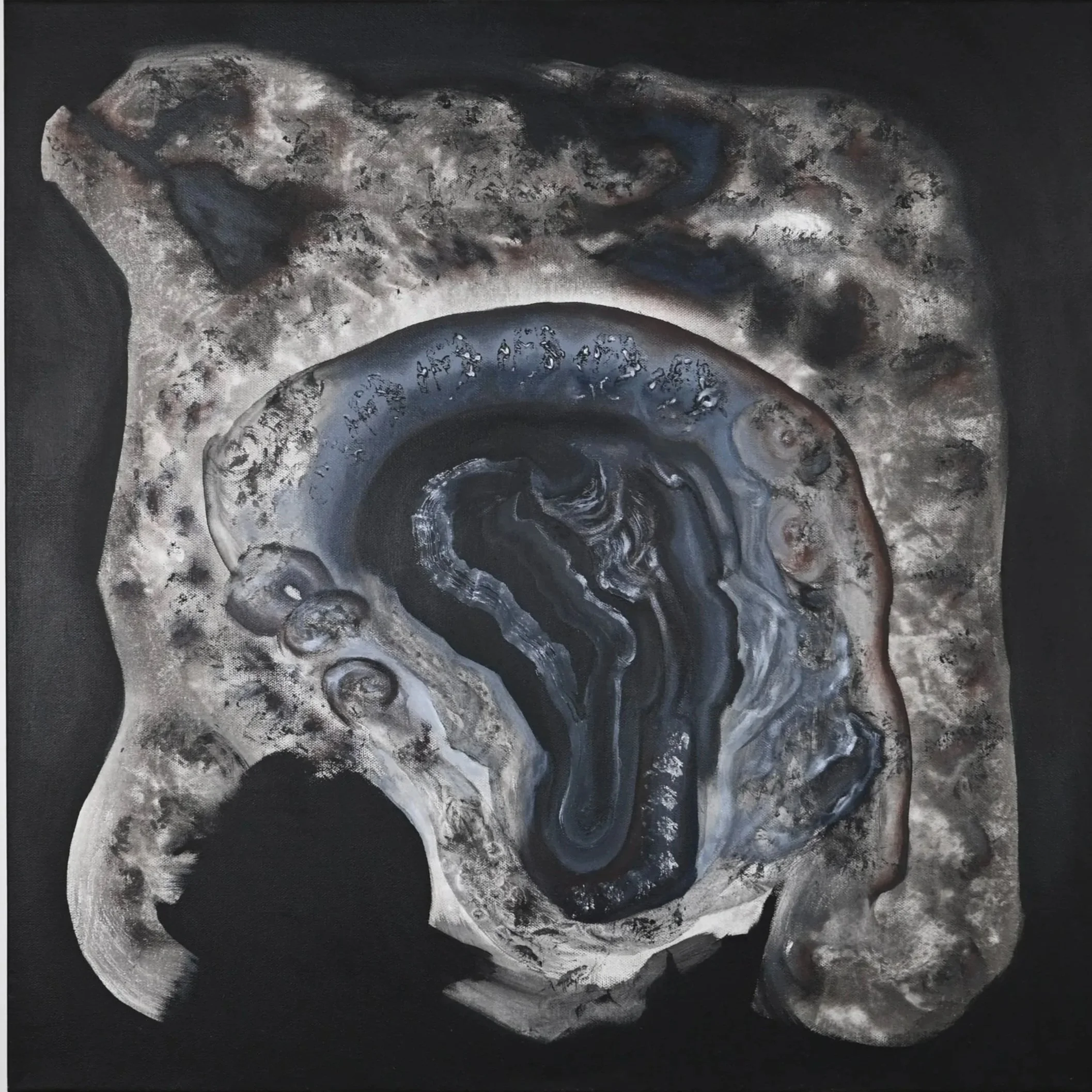
Biomimicry, 2026
Beyond visual decisions like opting for very specific colours and materials, I consider what would’ve been affirming subject matter. I’m working on a movement piece right now documenting myself stimming, a self-regulatory behaviour commonly identified in Autism, in naturally-occurring instances, over the length of a day. Work like that would’ve been ground breaking for me to have seen in my childhood.
Another institution I've been inspecting is that of the culturally-closed spiritual community I was raised in, Anthroposophy. This setting, one with established teachings on disability being tangible proof of wrongdoing in one’s past lives, has been very foundational to me. Anthroposophy relies on a specific set of visual languages, movements and motifs, which I’ve used in my work for a time. I’m currently working on a series of paintings which highlight the elements, colour values and other connotations associated with each weekday, through the perspective of having constituted a deficit in this space.
What is coming up for you in the near future? Are you working on anything new?
Besides what I’ve already referenced, I’m excited to share some further movement, writing and sound art I’ve been working on. I’ve engaged with these mediums as extracurriculars for most of my life, but finally feel brave enough to integrate them into my practice more openly, something I’ve yearned to do for years.
See more of Jade Mikells work
ArtConnect | Website | Instagram
Cover Photo: Eurythms II, 2024: Image: Spencer Brown
New Voices highlights emerging artists who showcase their unique perspectives and innovative techniques on ArtConnect. Applications are accepted on a rolling basis. If you would like to be featured in a personal interview on ArtConnect Magazine, read through the open call and apply here.