
JORGE SÁNCHEZ Di BELLO
JORGE SÁNCHEZ Di BELLO

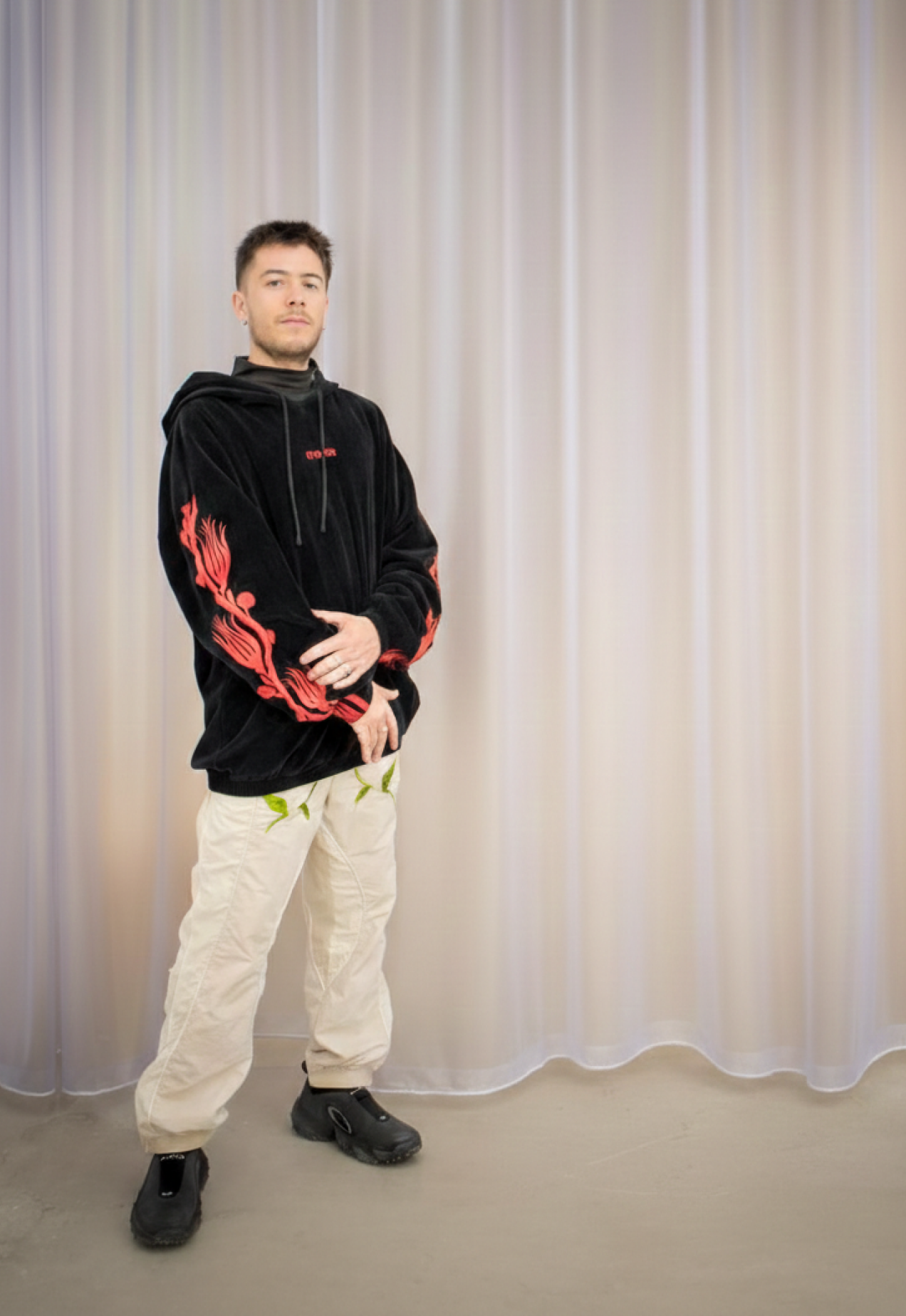
Photo by Craig Stennett
Jorge Sánchez Di Bello is a Colombian contemporary artist working with sculpture and installation, currently living in Halle, Germany.
Jorge is one of ArtConnect’s Artists to Watch '26
Jorge Sánchez Di Bello works between installation, object, and glass, investigating how materials can carry traces of memory, history, and political context. Drawing on references connected to Colombia as well as the global circulation of objects and images, his practice explores how meaning becomes embedded in everyday materials.
Through processes of cutting, layering, and transforming surfaces, he alters familiar objects so that they shift between fragility and tension. Glass, in particular, becomes a material through which transparency, fracture, and reflection reveal hidden structures and narratives.
Rather than presenting fixed meanings, Sánchez Di Bello’s works invite close observation of material processes and subtle symbolic references. His installations create spaces where objects function as carriers of memory, allowing viewers to reflect on how histories are constructed, preserved, and sometimes obscured through material form.
ArtConnect asked the winning artists to share with us a glimpse into their creative life to get a sense of their personal inspiration and artistic process.
Has there been a moment in your artistic journey that fundamentally shifted how you see your work?
I believe that my time studying for my diploma marked a turning point in my relationship with and understanding of my work. I am referring to the degree of awareness regarding the material and its value in transformation through objects. Understanding space as a place for reflection that seeks to strengthen our connection with the world and recognize that we are part of a collective. Understanding my process as a deep connection from research and memory to the visual conception of the work.
Roberto Rivadeneira
Curator
“What draws me to Jorge’s work is his deep understanding of material, territory, and power. His spatial arrangements operate as quiet critiques of social and political structures, using form and placement to reveal how power is constructed and distributed.”
Your work examines material, territory, and power. How did these concerns begin to shape your practice, and how have they evolved over time?
At university, I discovered glass and began working with it. I learned not only about the material’s characteristics and techniques, but also came to understand the importance of its use and its visual, symbolic, and conceptual significance. This has helped me to perceive the material as an element that engages in dialogue and transformation.
On the other hand, as a Colombian artist based in Germany and in a process of re-identification, territory is not merely another theme, but becomes an essential and recurring question of inhabiting an identity—always revering my place of origin and understanding where I come from. I like to create works with a strong “political” charge. I am interested in how power, or structures of power, remain closely intertwined with society and how these same structures are sustained over time. This is mainly reflected in my work when I address intense and complex images related to civil war, drugs, the exploitation of raw materials, and threats to Indigenous peoples and their ways of life.
I seek to change perspectives, shift boundaries, promote a culture of memory and collective memory, and ultimately to encourage each individual to reflect on their socio-political responsibility. For this reason, most of my works take the form of installations, as they consistently create spaces for reflection on worlds that appear distant, while at the same time being inextricably linked to European and colonial contexts.
How do you approach material selection, and how does a material begin to inform the direction of a project?
For me, material does not serve only a practical or technical function. I consider it an element that transforms, represents, and engages in dialogue.
In most of my projects, the primary material is the research and documentation themselves. These, in turn—and in parallel with an initial, metaphorical idea—determine the use of material. In the creative process, practical function does not usually take precedence; rather, what matters is the possibility of transforming the material into an object that contributes to the work’s narrative, not only visually but also symbolically.
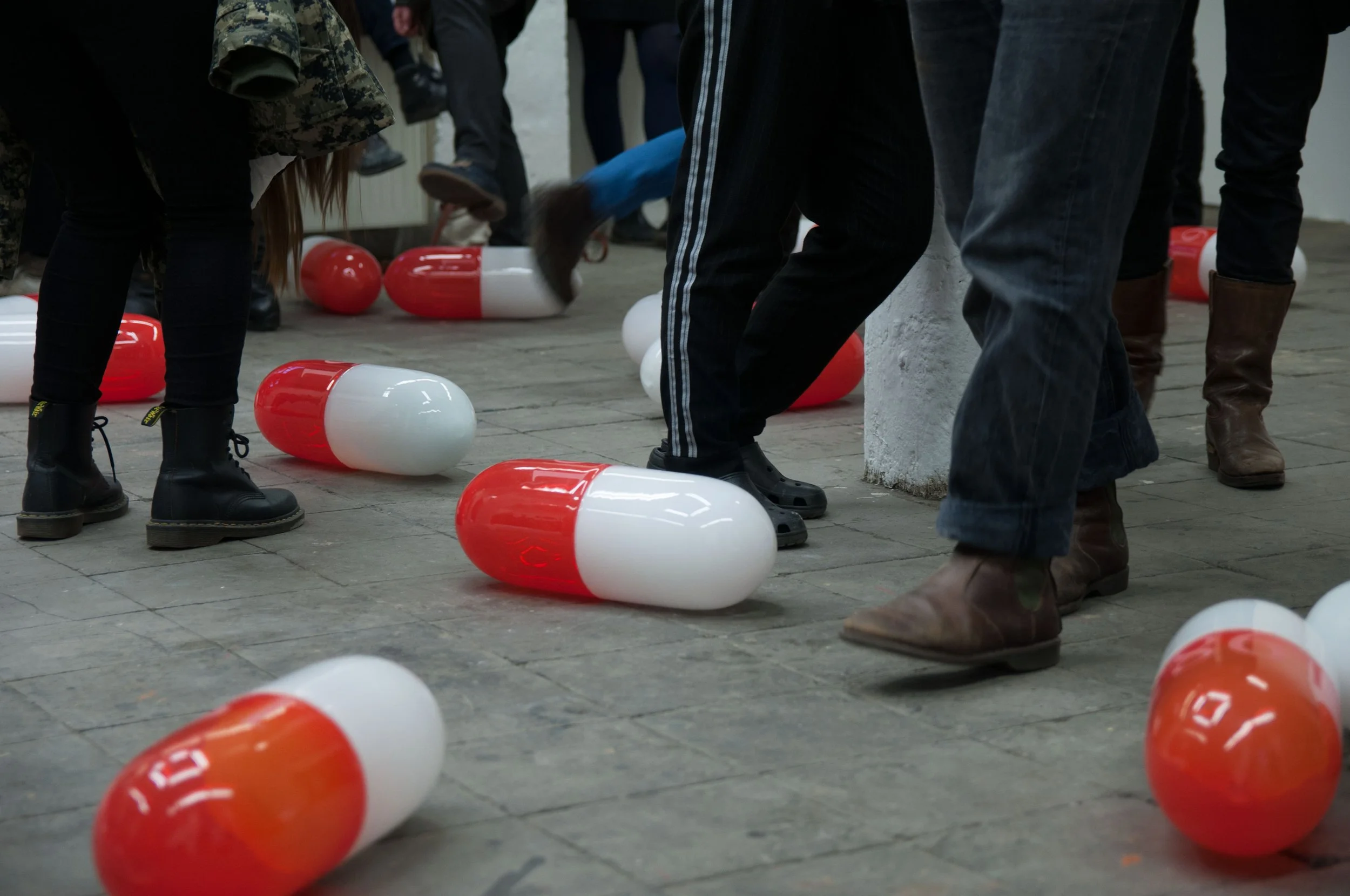
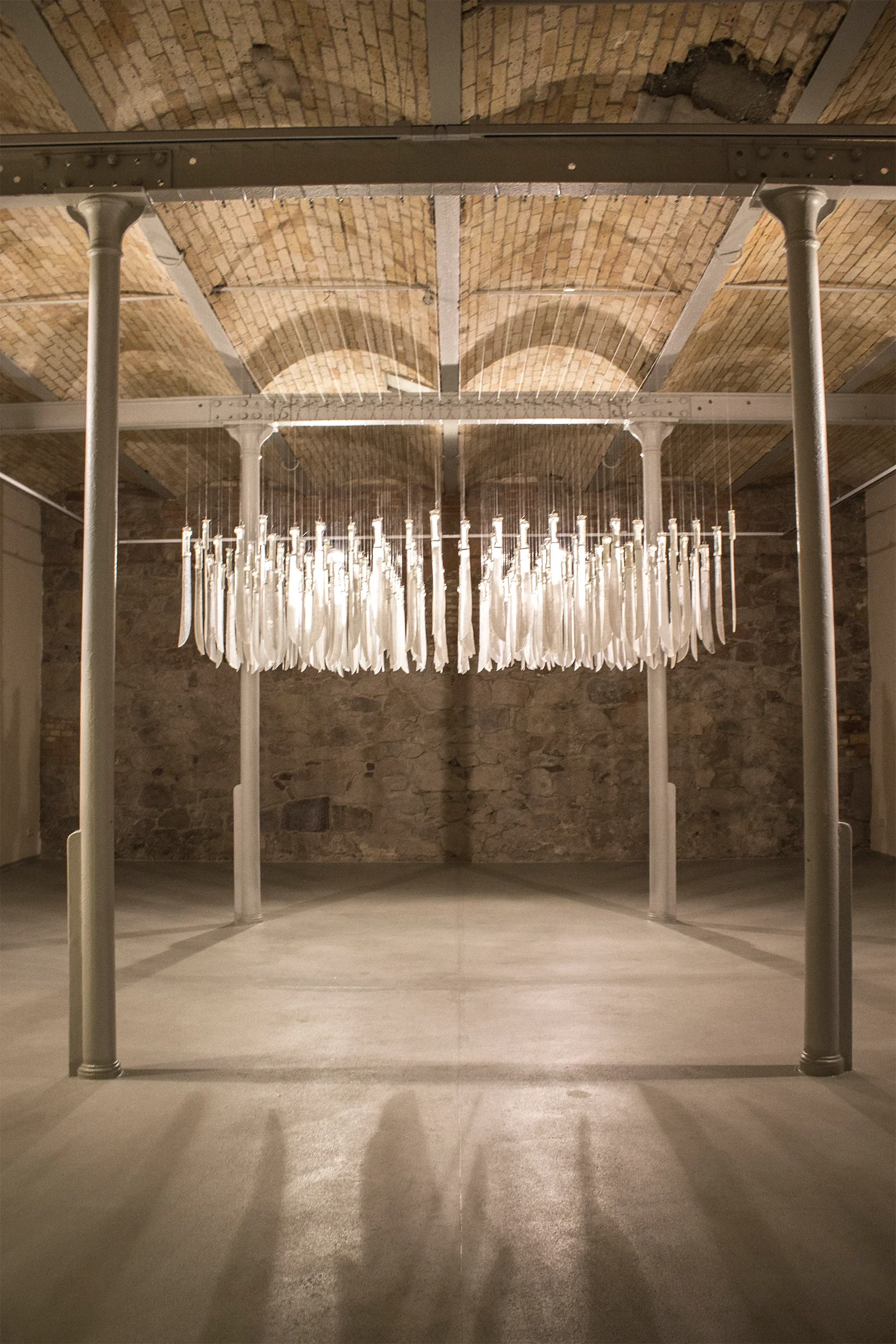
Gedächtnispillen | Glas formgeblasen, montiert, sandgestrahlt je Ø 16cm X 45cm | Foto: Jorge Sánchez Di Bello | 2018.
Territory can be understood geographically, politically, and even psychologically. What does “territory” mean within your practice, and how does it manifest in your work?
As a migrant, territory is linked both to one’s place of origin and to the context in which one lives. For me, it is part of the DNA and identity of my work. Since I have lived and worked here, my practice has always been influenced by my place of origin, while at the same time engaging in dialogue and building connections with the context in which I live.
For example, in my research and creation project Ranchería, which began out of a need to understand—directly from the Wayuu territory in the department of La Guajira, Colombia—the realities of Indigenous life in relation to the exploitation of natural resources. In this case, it focuses on the largest open-pit coal mine on the continent, El Cerrejón. The installation recounts my process and experience in the place and, through its title, references the house or group of houses where the Wayuu people live.
It uses the analogy of chess to portray the territory and to represent the structures, figures, and roles of Indigenous communities, drawing on their worldview to reconstruct, through materiality, my own game. Presented within a European context, the work invites viewers to sit down and reflect on that territory. All of this departs from the fundamental premise that Colombia is the largest supplier of hard coal used to supply German power plants.
You describe art as a tool for transforming narratives and creating critical spaces of experience. What kinds of narratives are you most interested in questioning or rethinking through your work?
I am interested in questioning narratives of collective memory and rethinking responsibility as something conceived from the collective—understanding the role that we, as individuals, hold within our cultural, social, political, and economic society.
When viewers encounter your work, what kind of experience do you hope they leave with?
I perceive my installations and my work as atmospheres for reflection.
In my works, the viewer themselves become part of the installation, of the space with which they must interact. They appropriate a part of the work by taking a postcard, a newspaper, or an instruction manual. In this way, the work transcends the places and worlds in which it can be experienced, while at the same time expanding, multiplying, and reinforcing my intentions to encourage reflection and awareness.

POWERger exhibition, Ruina Gallery, San Martín Tilcajete, Oaxaca, Mexico
Looking ahead, what questions or urgencies are currently present in your studio? Is there a direction you feel your practice is moving toward?
I believe that my practice is increasingly moving toward research and historical, ethnological, and anthropological review of archives—primarily to rethink narratives that intersect with issues of contemporary society, positioning the artist as a witness to history.
Anything else you would like to add—perhaps something about your process, influences, or what’s next for you?
I believe in the power of work that is rigorous and respectful of information, as well as in conscientious practice and responsible production.
My work is the result of long processes of research and documentation that aim, therefore, to answer the question through different media expressions of the visual arts: to what extent is art capable of absorbing information and “releasing” it again in a pictorial sense?
My greatest influence is and will always be my home—this world of paradoxes and ambiguities that nourishes me and motivates me to rewrite histories through the aesthetic experience of art. Through this life choice, I hope to reach and connect with new audiences and to continue being part of this beautiful cultural exchange that life is.
See more of Jorge’s work
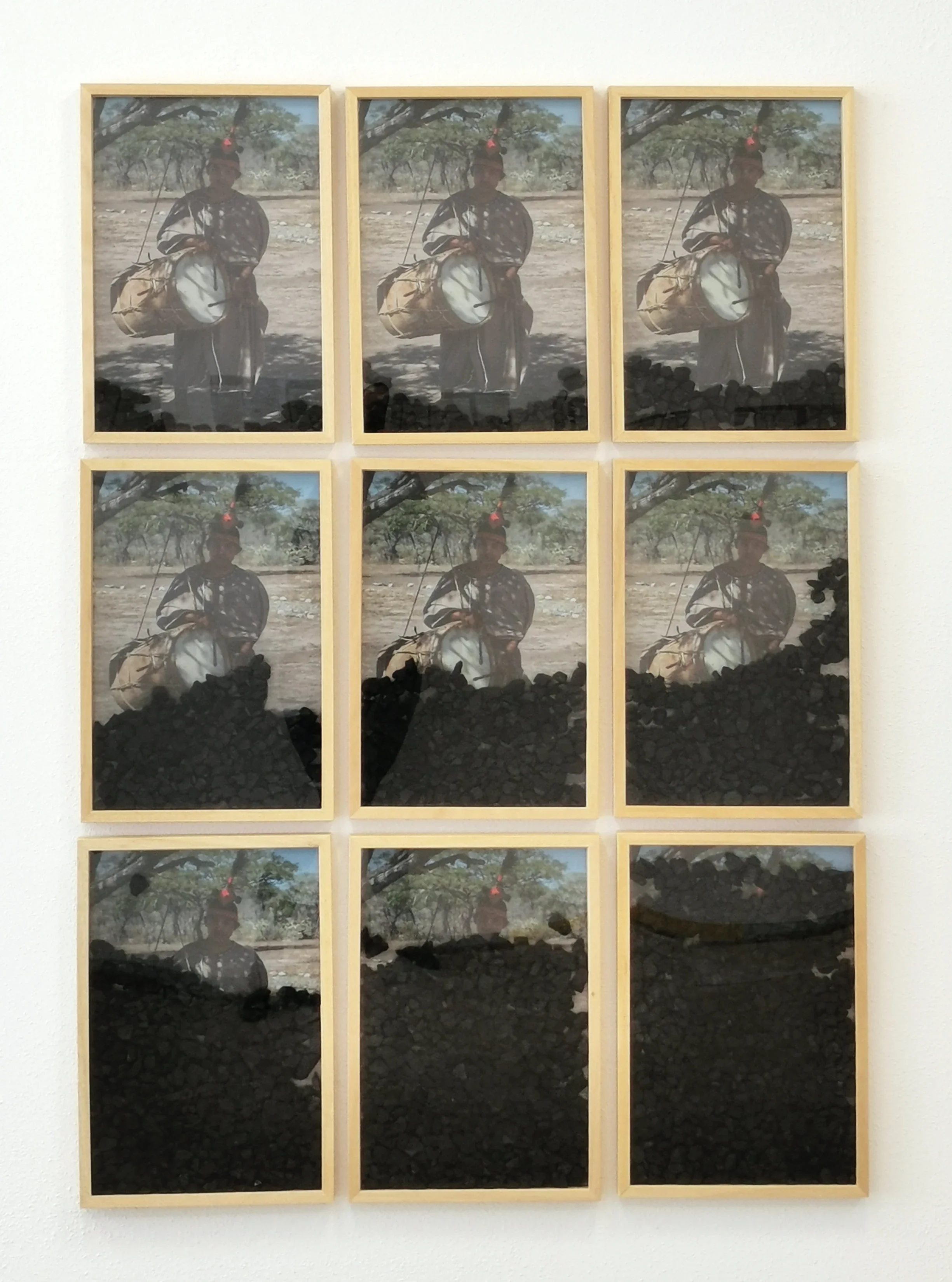
SOUVENIR | Hof 2023 – 2024
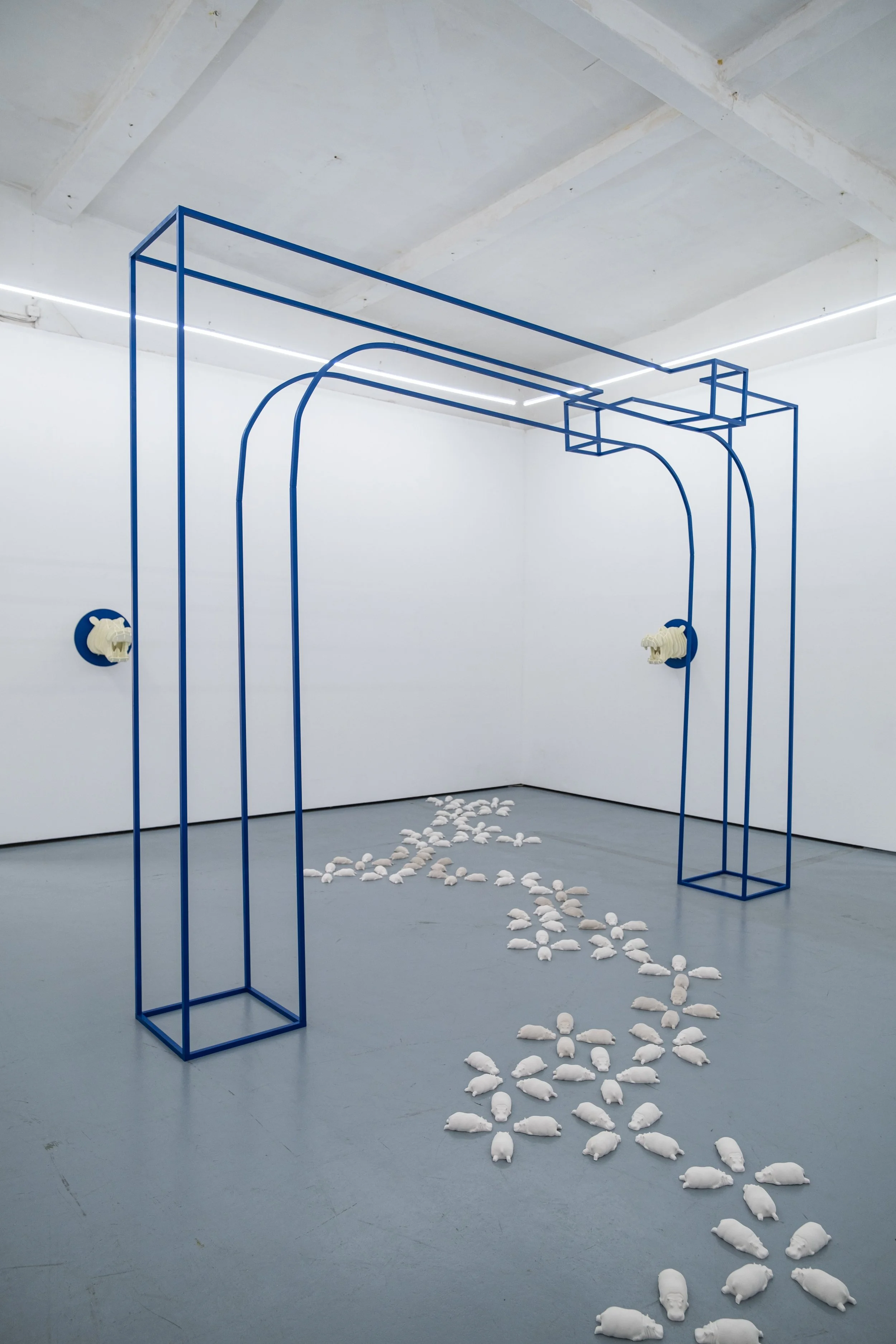
HERRENLOS DIE INVASION (Ownerless: The Invasion)
Común