
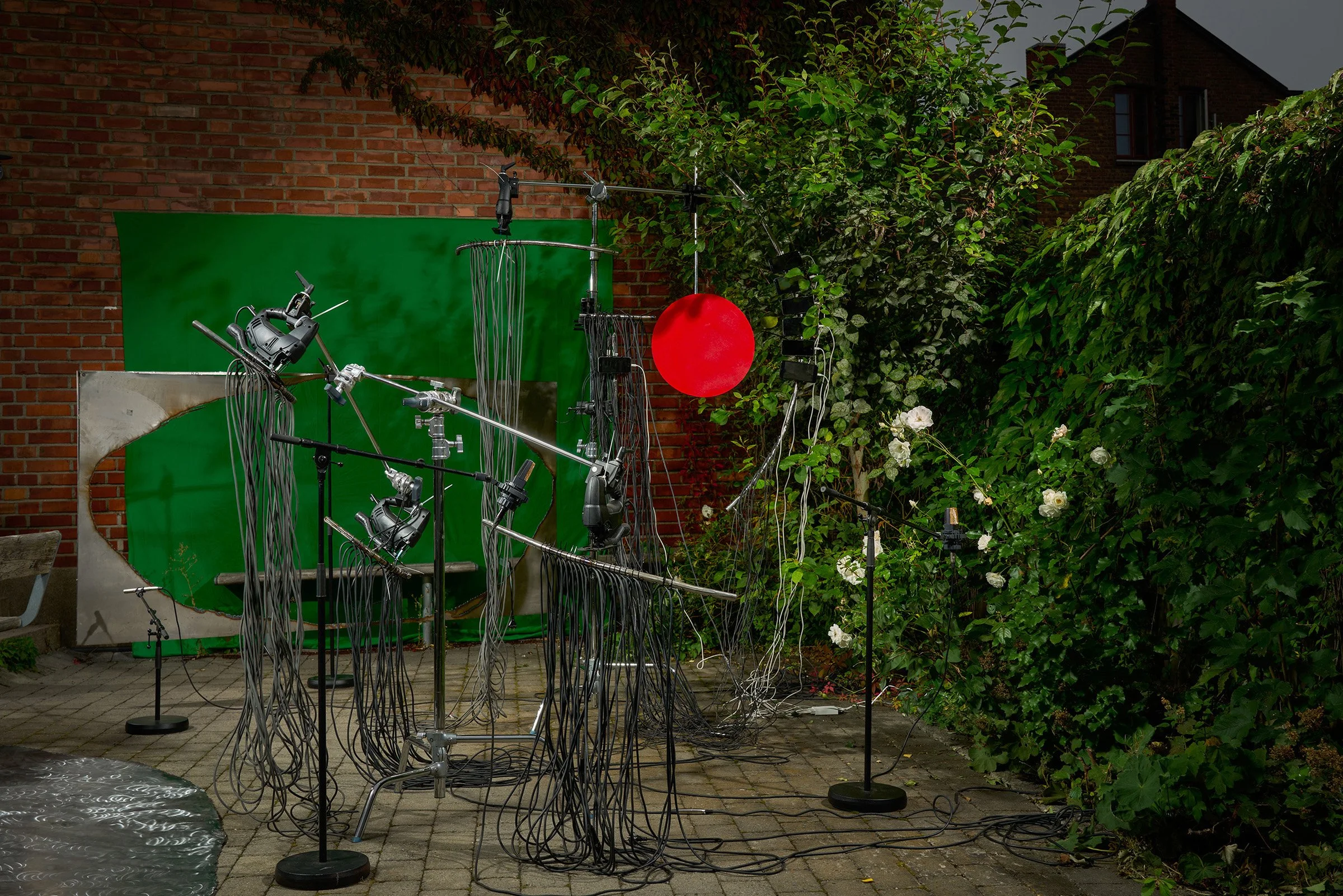
New Voices
Kim Hankyul
Kim Hankyul is spotlighted in the New Voices series, which highlights emerging artists who showcase their art on ArtConnect.
Kim Hankyul (b. 1990, Busan, South Korea) is an artist based in Oslo. Working primarily with sound and kinetic installation, he explores social conditions of survival and disparity through the interplay of sound, movement and media technologies.
He holds a BA in Aesthetics from Seoul National University and an MA in Art from the Faculty of Fine Art, Music and Design at the University of Bergen. Recent presentations of his work include the UCCN Pavilion at the 16th Gwangju Biennale (2026), SOLO OSLO V at MUNCH, Oslo (2026), Salón Acme, Mexico City (2024), Pal Project, Paris (2024), Kunstnerforbundet, Oslo (2024), and Entrée, Bergen (2023). He received the Kistefos Prize (2021) and Sparebankstiftelsen DNB’s Grant (2022). His work is held in the Astrup Fearnley Collection, Oslo.
Curious to gain more insight into his artistic approach, we asked Kim a few questions about his practice.
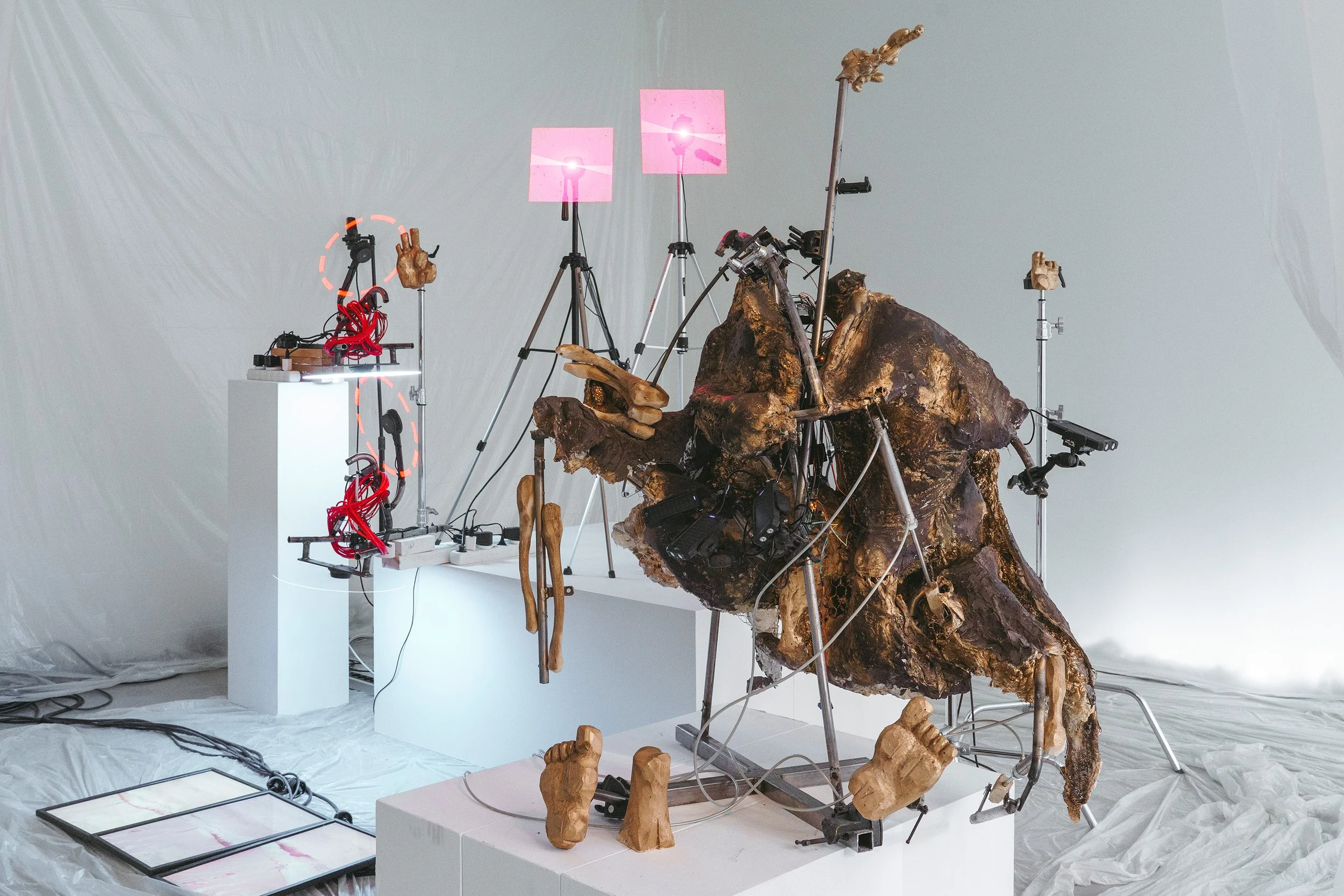
Art of Making God, 2026. Picture: Lydgalleriet / Rune Halleraker
For over a decade, you’ve been creating kinetic sculptures using light, sound and movement. What initially drew you to this medium, and what continues to interest you about working with movement and mechanical systems?
I used to work in a photography studio and theatre in my early to mid 20’s. I was initially drawn to the incoherence between stages and backstage surroundings, as well as the endless amount of improvisation that we had to devise on site, to make a satiable outcome in each show. Everything and everyone had to react to one another’s rhythms, pay attention to one another, listen and answer carefully. This naturally led me to explore kinetic and total forms of art.
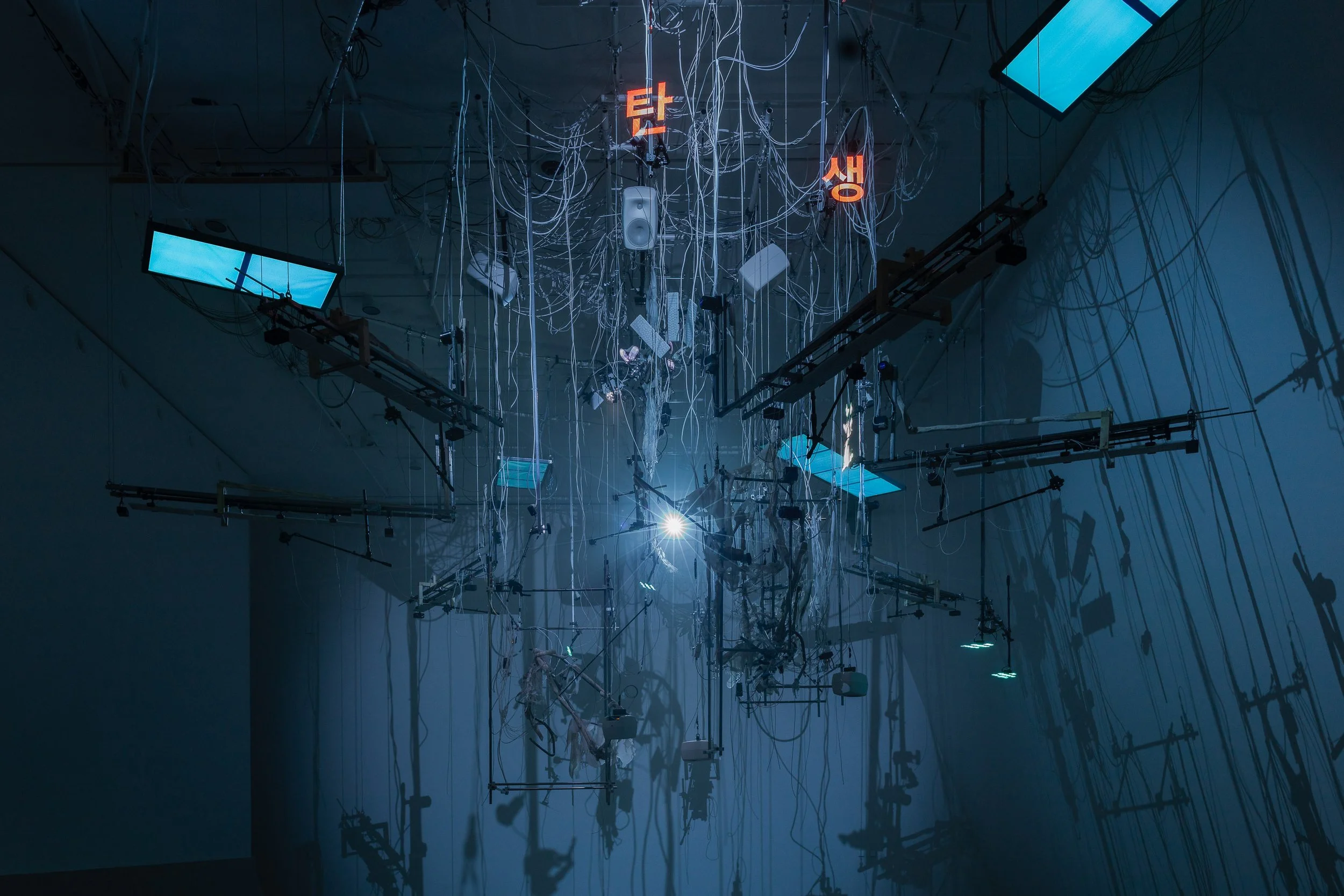
Shore, 2025-2026. Picture: MUNCH / KUNSTDOK / Tor S.Ulstein
Your recent multimedia installation Shore departs from testimonies of people whose lives are entwined with the ocean. How did you approach gathering and translating these personal accounts into an artwork? Whose perspectives does the work bring into focus?
The point was to decentralize the focus so that no single individual’s perspective would become the main point of emphasis. Three groups of divers shared their stories—unscripted—which, quite unexpectedly, converged around the themes of war, loss, and poverty.
Throughout the exhibition’s development, I grappled with how best to preserve their voices while ensuring that the audience could engage with the stories without the burden of having to "read" text. To solve this, in constructing sculptures and sound mechanisms, I leaned into abstraction in translating their stories into the evocative soundscape. In addition, I concluded that printed handouts or audio commentary would not be seamless enough so I landed on using hologram fans - the transparent windows for the voices, to merge into the landscape of machines.
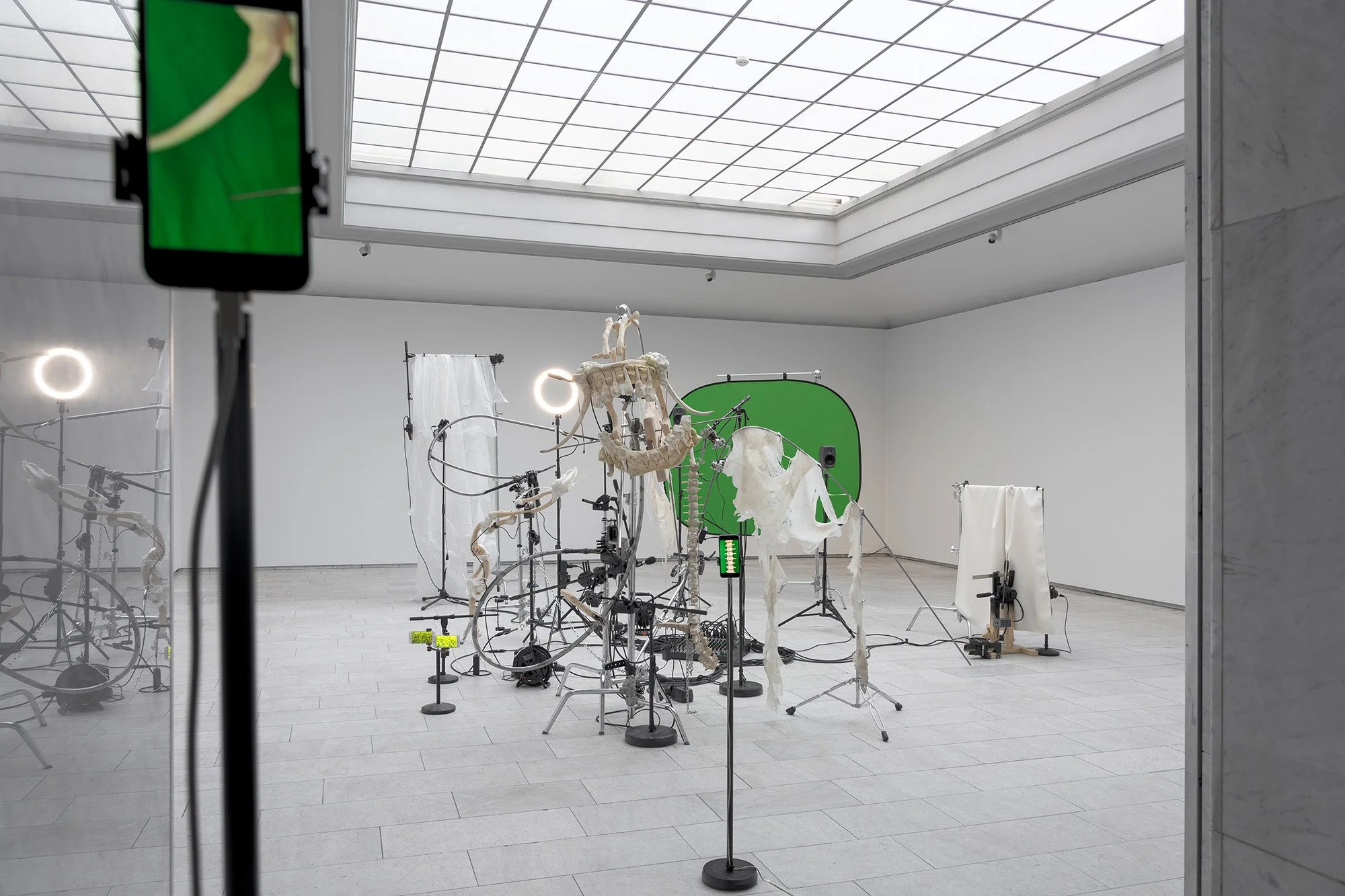
Forest_Sound_Motor_Machine.mov, 2024. Picture by Jon Gorospe
Can you tell us more about your work Forest_Sound_Motor_Machine.mov? What was the starting point for the work, and how did you approach its construction?
This work originated from two distinct starting points. The first was the writings of Hito Steyerl, who interprets military patterns through the lens of digital pixelation; drawing on this, I began exploring the concept of a loss of visual resolution and the ways in which this phenomenon can be leveraged as a political tool. Then, in 2023, I met a military veteran who was participating in the same artist residency program. He frequently spoke about his experiences on the battlefield—memories that had left a profound, traumatic imprint. He recounted moments such as being forced into absolute silence during training in the woods, having to communicate solely through gestures, and witnessing scenes of death from a bird’s-eye, or overhead, perspective.
Influenced by his recollections and the questions posed by Hito Steyerl, I decided to ensure that no single vantage point could function as a stable visual perspective—in effect, I set out to make every perspective "fail." I generated sound based on various visual elements—ranging from the minute to the large—and paired these with semi-abstract sculptures that allude to the veteran’s accounts.
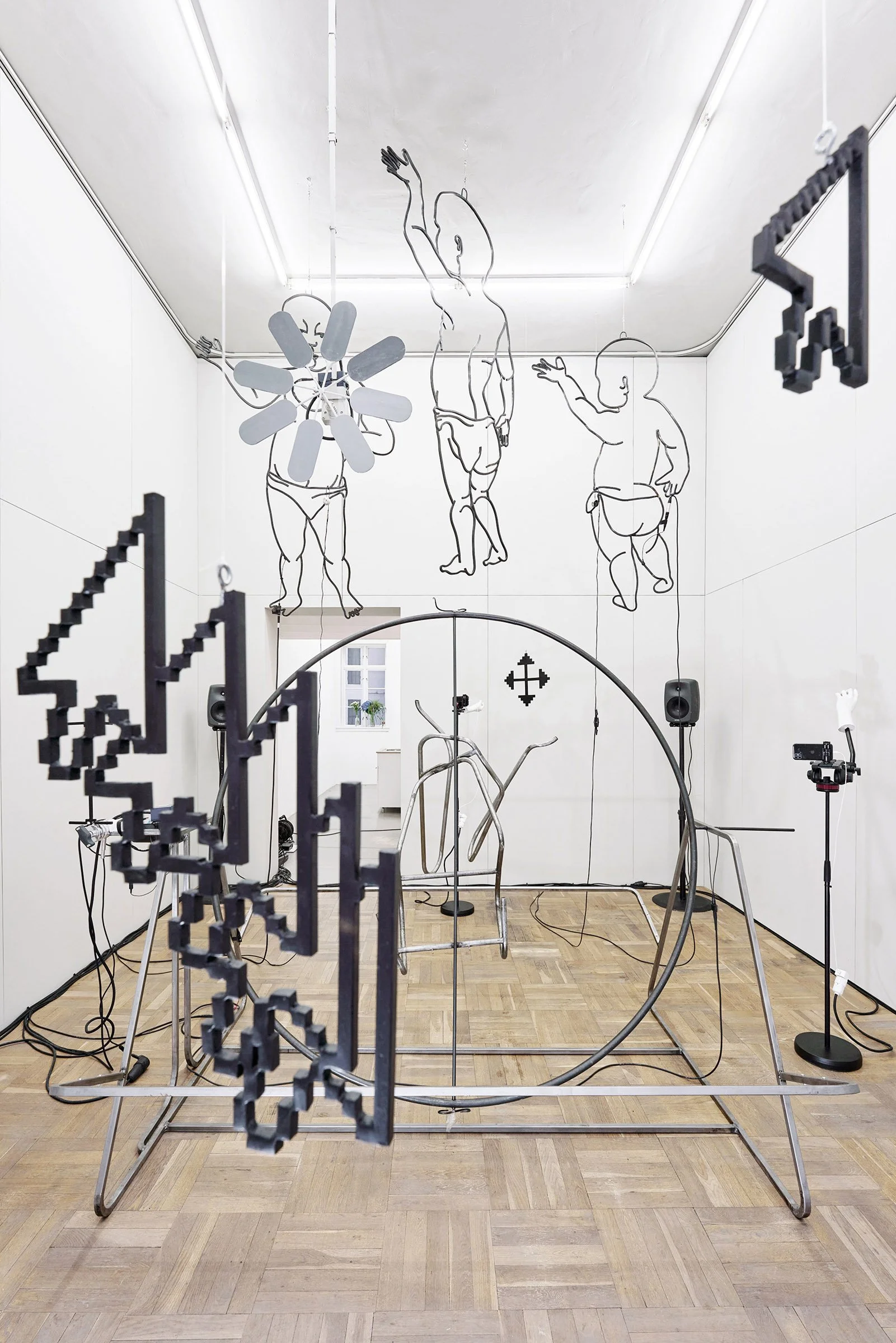
Olympia (of the Abused Look and of False Consciousness), 2023. Picture: Entrée Bergen / Bent René Synnevåg
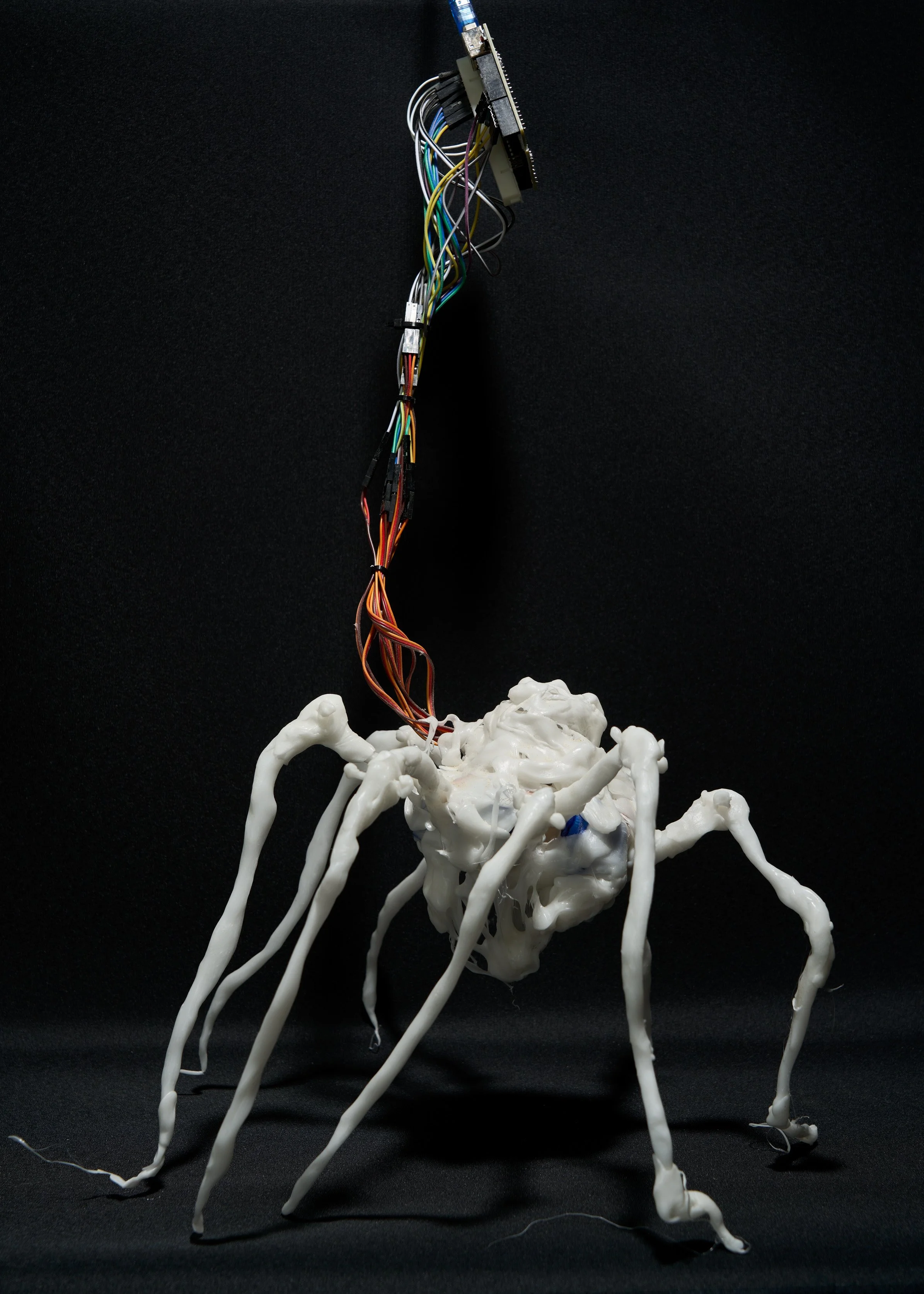
Maman by Louise Petite-Bourgeois, 2024. Picture: Bent René Synnevåg
Much of your recent work engages with personal narratives and interpretations of history. What interests you about working with individual accounts, and how do you approach the relationship between personal memory and collective histories?
I often think about the word "testimony." The subject who testifies is one who proves their own existence—an existence that is not inherently taken for granted.
Returning to the work Shore, I get to think of The Little Mermaid. In the tale, the Little Mermaid’s voice and feet get to be items of exchange values. I read it as a metaphor for foreignness - whose right to speak or travel can be hardly guaranteed in one place. she must trade one for the other. This is where I encounter testimonies. Then history inevitably follows along.
“I aim to explore both the freedom and fairness that the digital realm offers, as well as the potential for violence and discrimination it harbors.”
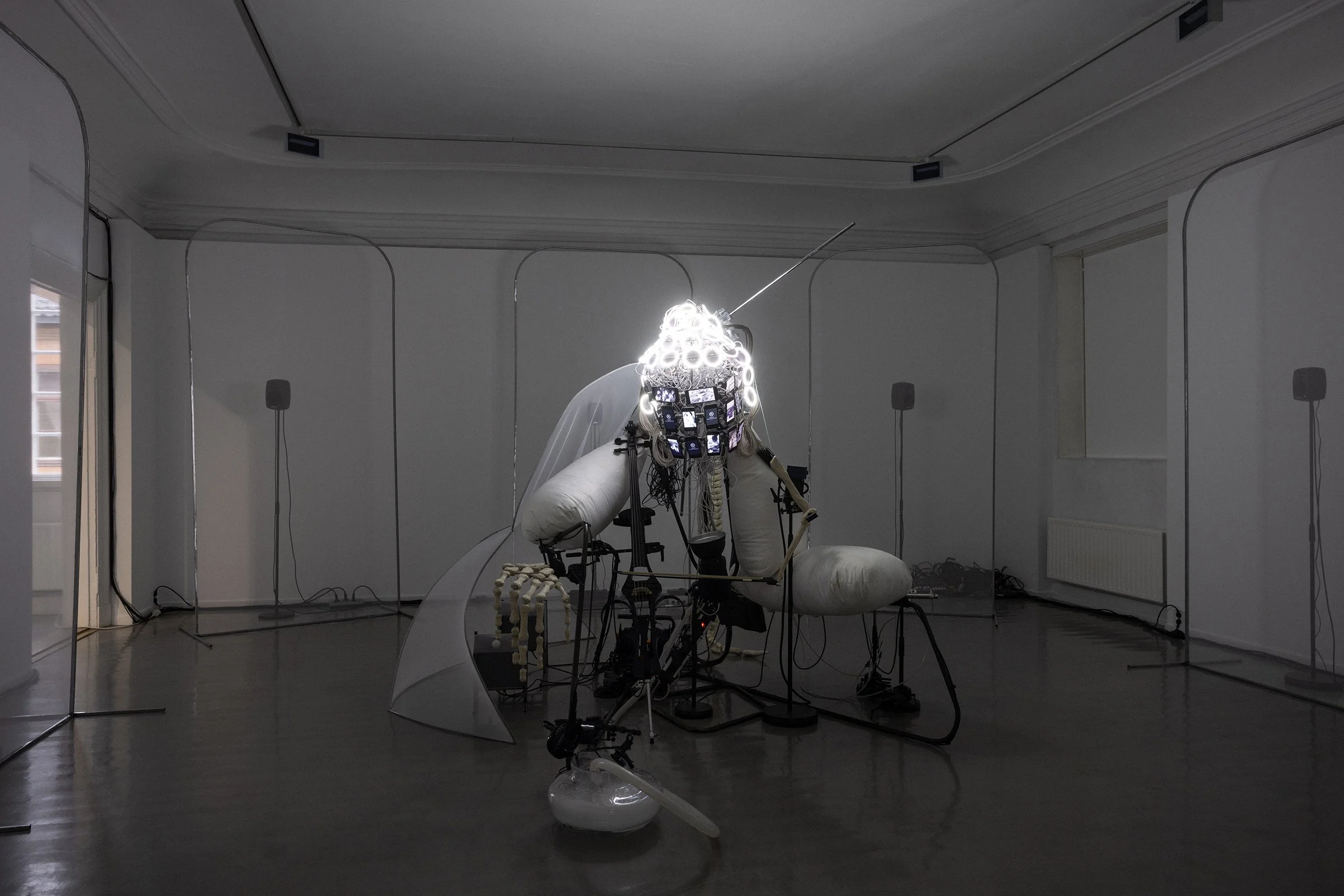
AV Buddha, 2022-2023. Picture: Oslo Kunstforening / Julie Hrnčířová
An exploration of society’s relationship with digital imagery runs through works such as AV Buddha and Olympia (of the Abused Look and of False Consciousness). What aspects of our engagement with images are you interested in examining?
I believe that digital images have become an organic part of our perception. They serve as various windows and screens through which we view the world; the parallel, interconnected sequence of digital screens has become a part of our daily lives, conditioning us to experience different times and spaces simultaneously. Through this, I aim to explore both the freedom and fairness that the digital realm offers, as well as the potential for violence and discrimination it harbors.
In AV Buddha, I sought to demonstrate how short-form content—initially functioning as a medium for the rapid circulation of war imagery—eventually devolves into mere "visual fatigue," discarded amidst an infinite, fast-moving stream of images. In Olympia (of the Abused Look and of False Consciousness), I explored the loss of a singular perspective and the erosion of visual distance—while simultaneously highlighting the inherent, unbridgeable remoteness of digital images—by drawing a connection to the specific characteristics of the full-window gallery space where the work was exhibited.
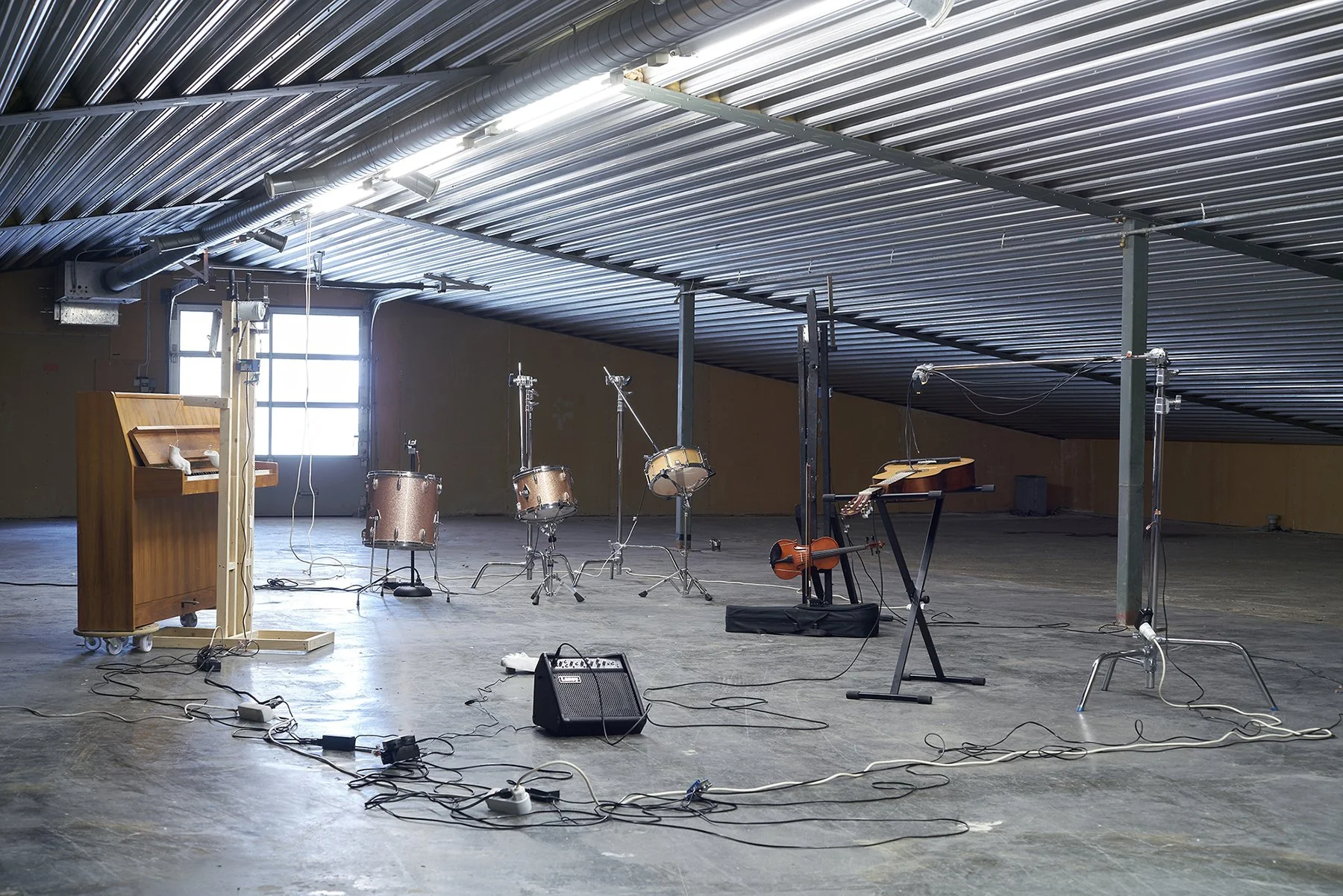
Anything that isn’t Evolving is Dead, 2021. Picture: Dale Rothenberg
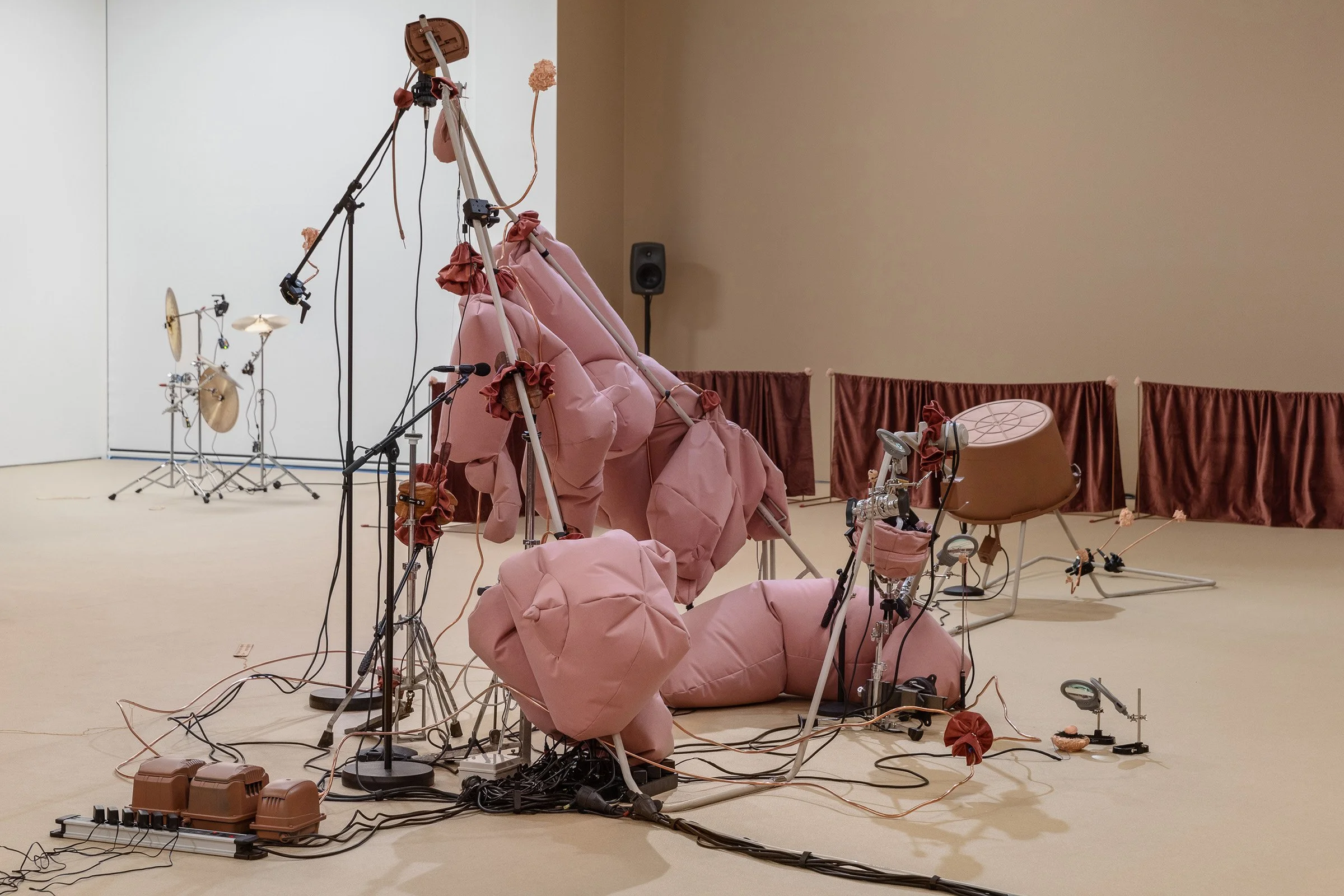
Bildungsroman, 2023. Picture: KUNSTDOK / Tor Simen Ulstein
See more of Kim Hankyul’s work
Main image: Immortal Landscape, 2024. Picture: Bent René Synnevåg
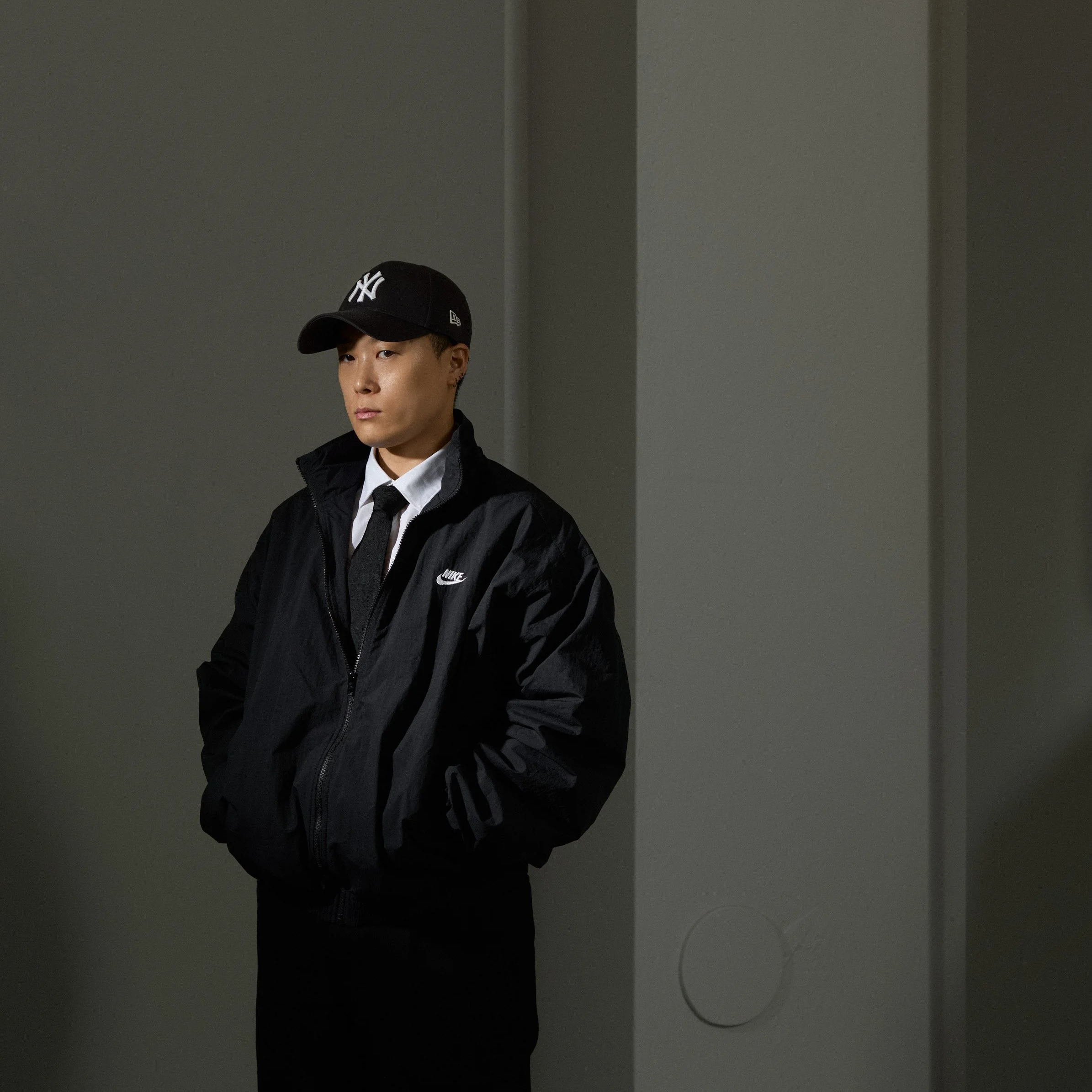
Portrait by Bent René Synnevåg
New Voices highlights emerging artists who showcase their unique perspectives and innovative techniques on ArtConnect. Applications are accepted on a rolling basis. If you would like to be featured in a personal interview on ArtConnect Magazine, read through the open call and apply here.