
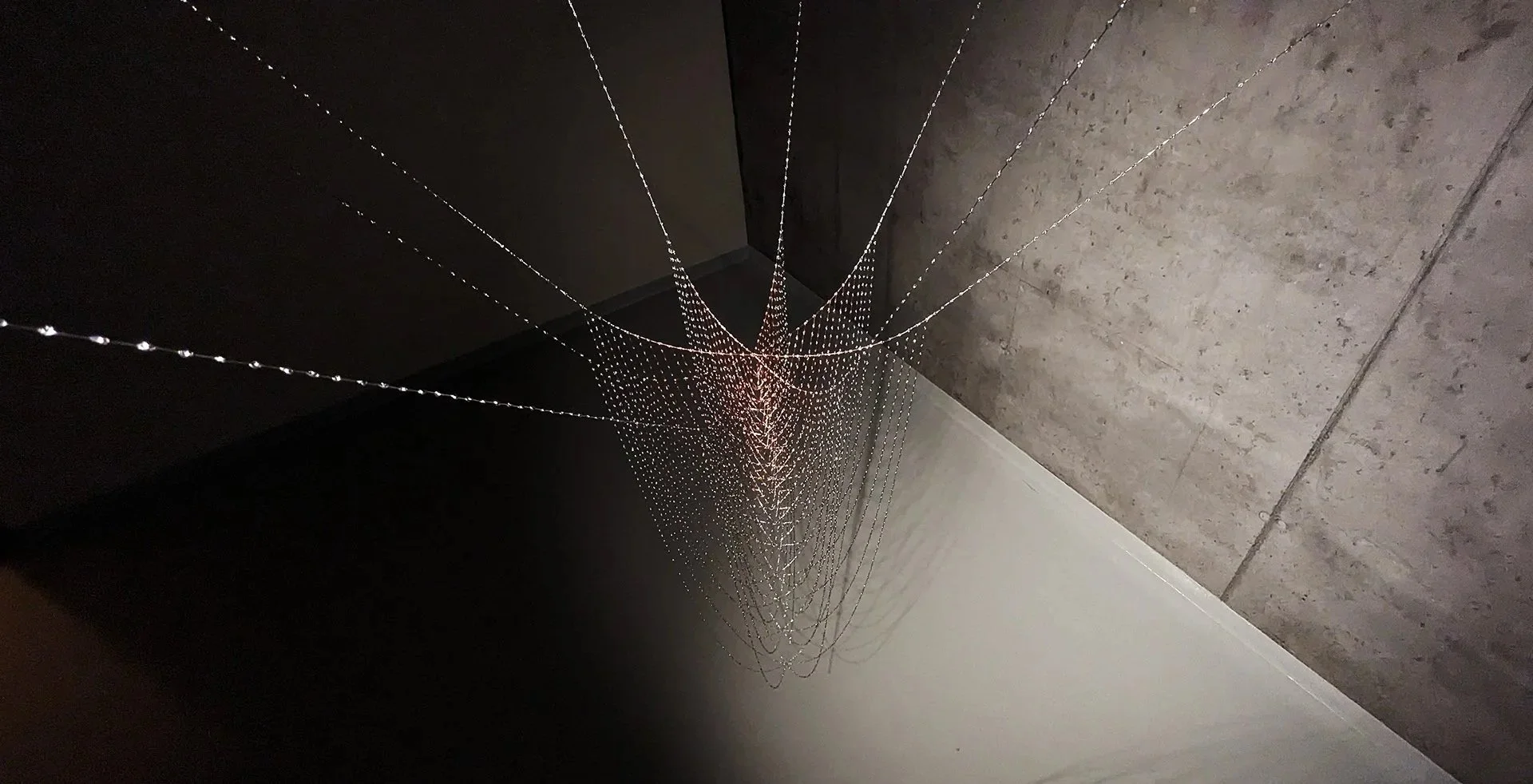
New Voices
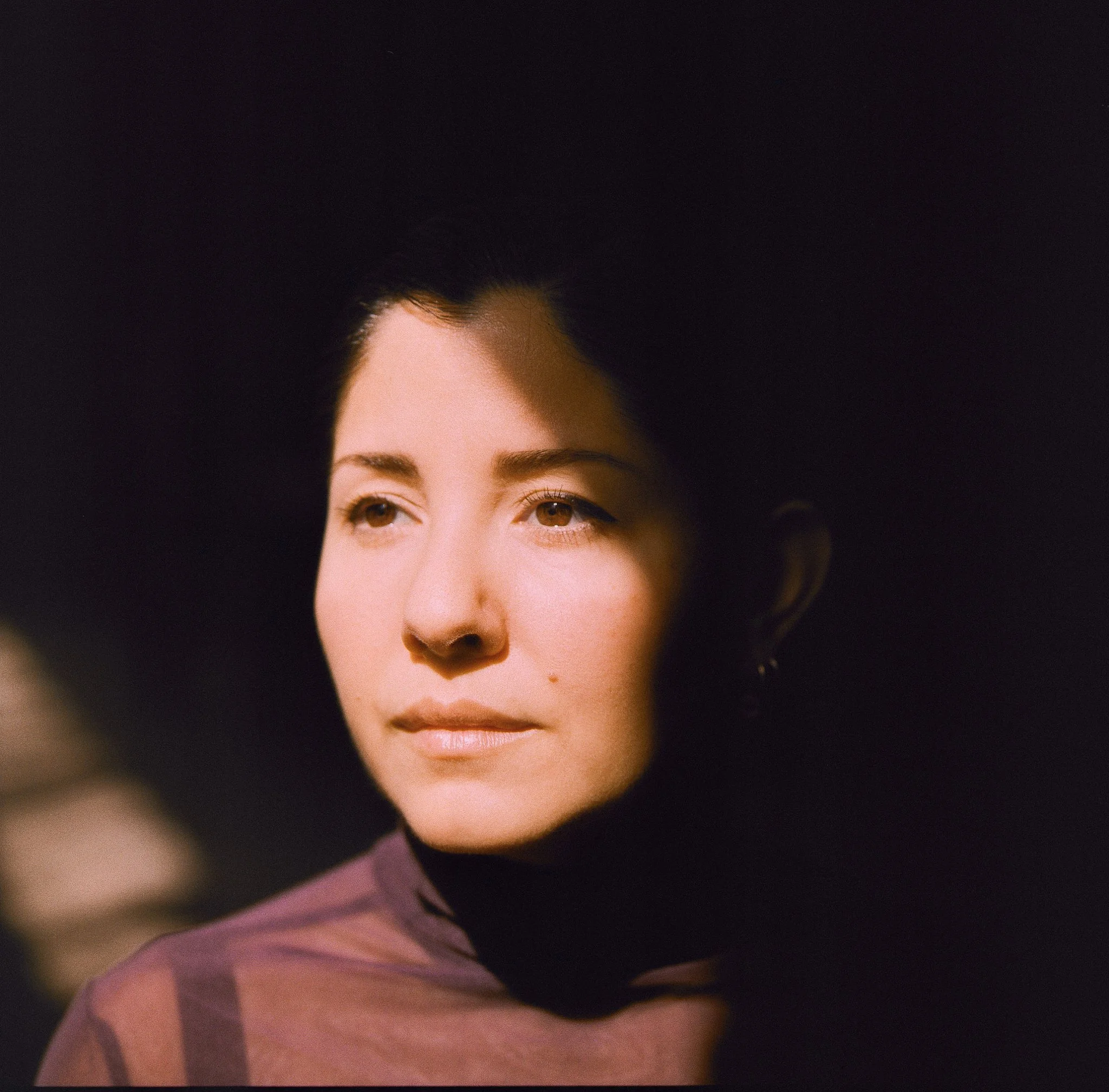
Maria Esthela
Maria Esthela is spotlighted in the New Voices series, which highlights emerging artists who showcase their art on ArtConnect.
Maria Esthela is a Honduran-Canadian self-taught multidisciplinary artist based in the unceded territory of Tkaronto (Toronto).
Her practice investigates the adaptation and evolution of consciousness. She examines how identity, memory, the bodymind, and spacetime adapt through a diffractive shaping of material and meaning. Her personal neuro-cultural lens—adjusted by the recurrent geographic and linguistic ebb and flow of her life—focuses on a universal truth and paradoxical tension: vulnerability is the catalyst for collective wonder and connection. She engages with sculpture, installation, and drawing in a non-linear exploration of emergence, immanence, and entanglement.
Curious to gain more insight into her artistic approach, we asked Maria a few questions about her practice.
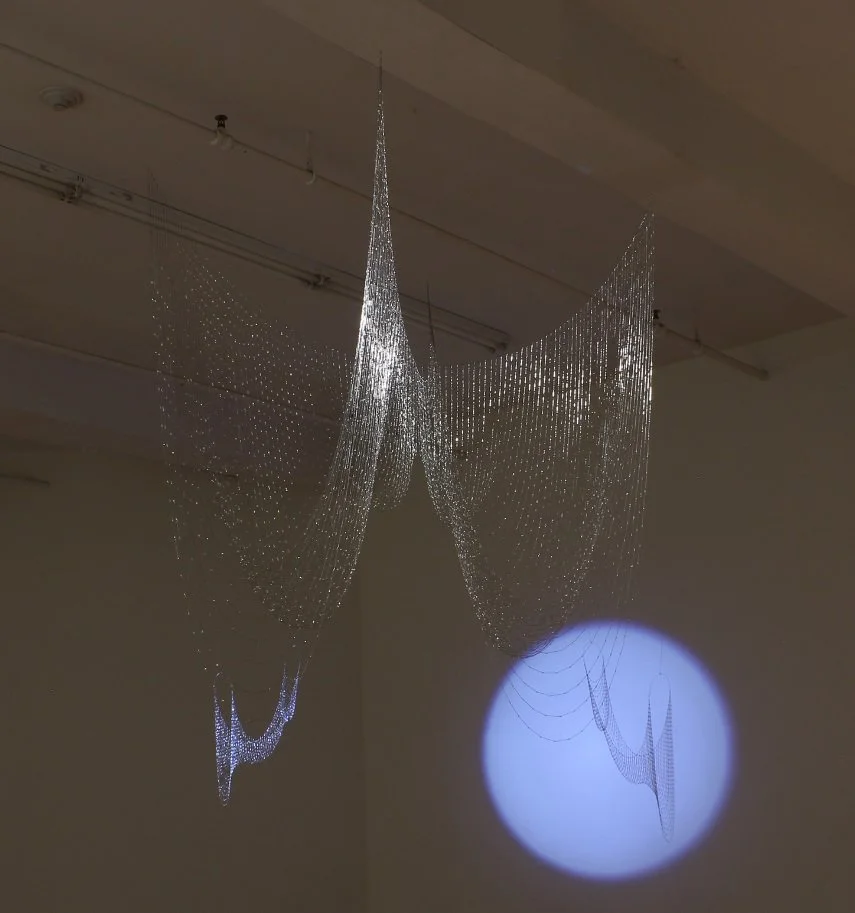
2^0=1, 2022
MR, 2022
You’ve described your artistic practice as methodical, intuitive, and site-responsive. Can you tell us more about your process, from ideation to execution?
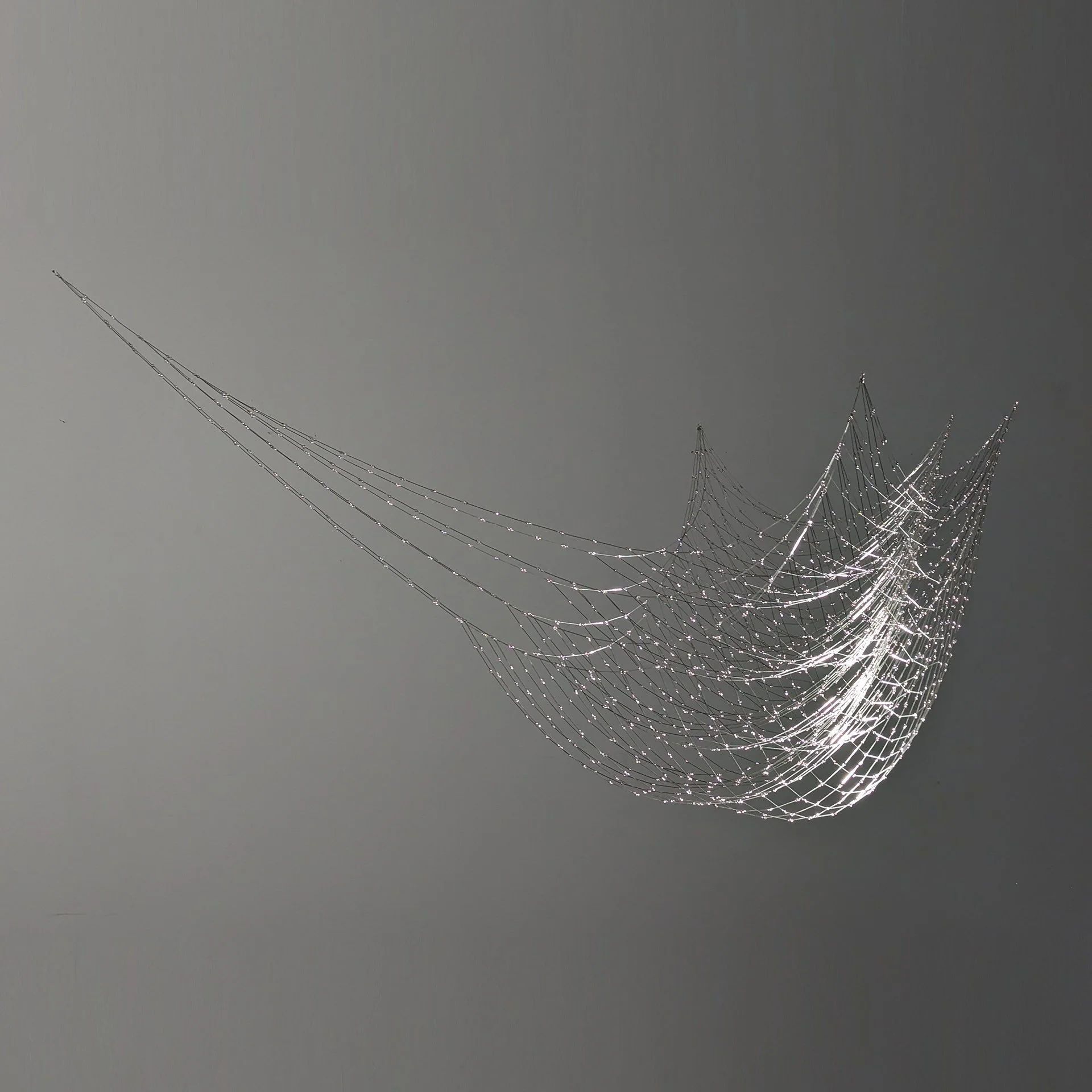
My perspective is not separate from the world or outside it; it is within it. Every space we occupy has its own light composition and rhythm, to which I respond with a gesture that traces the outline of a feeling or question. The lines I draw reflect the light and are arranged, one by one, like notes on a music sheet. I’m currently working with metal wire, which I cut, loop, and link one by one by hand over the course of several months. I work steadily and pace myself to avoid injury. Discipline becomes ritual, and most of my process happens in a meditative state while I repeat this tactile movement.
Over the past couple of years, you’ve been working with a range of materials, including wire, mesh and steel. Can you tell us more about your relationship with materials and how it has evolved over time?
M4NAT, 2022
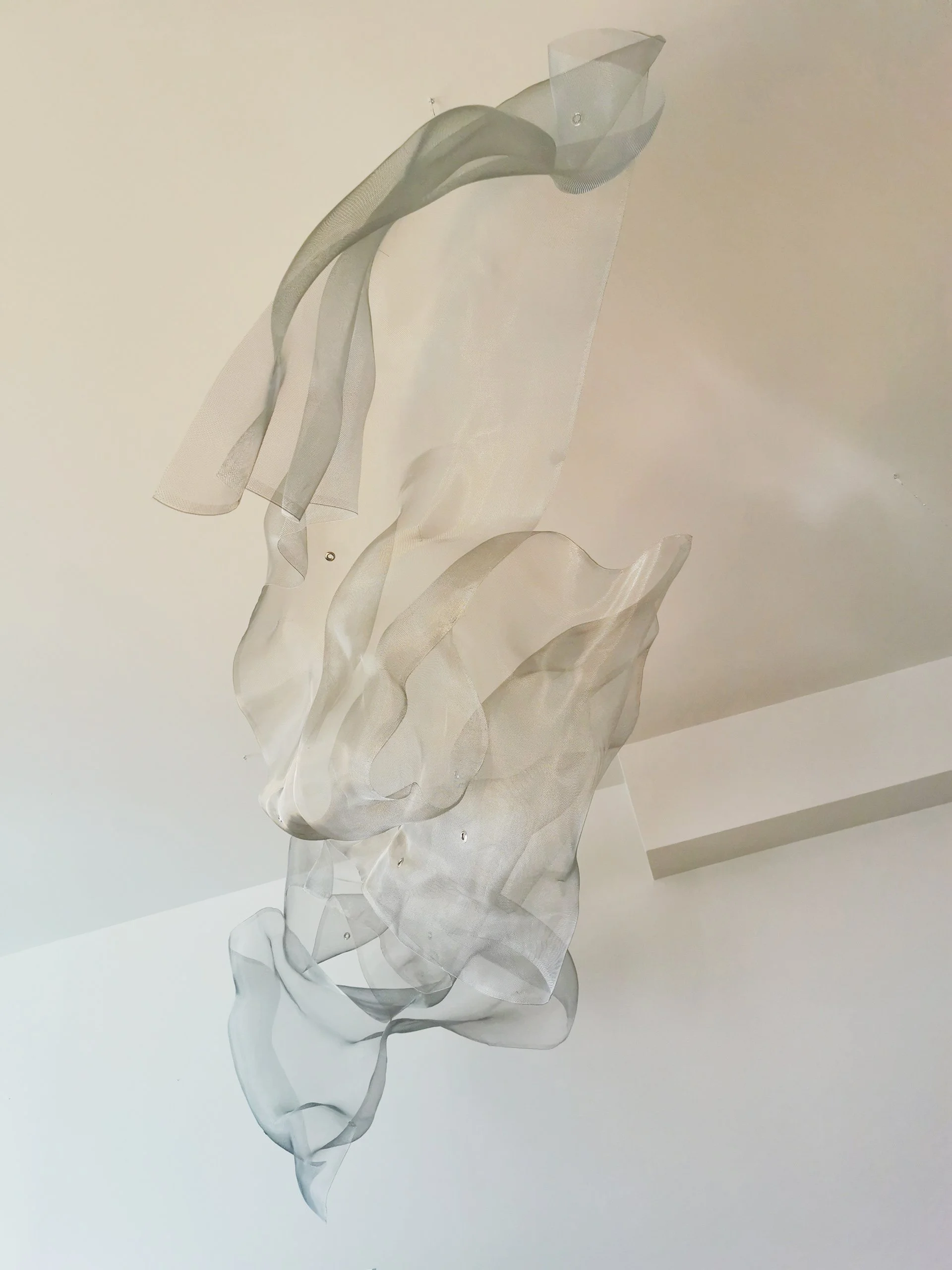
I began with photography, and I noticed my attention always moved towards the light. So I abstracted the camera to the mirror and the lens, metaphors for knowledge and consciousness, and decided to work with reflective and transparent materials only. I love hardware stores, and I came upon a roll of aluminum mesh. The cross-weave reminded me of Foucault's “grid” analogy and the intersection of time and space. I wanted to zoom in on and expand this idea by creating my own three-dimensional weaves with wire chains, and began to reimagine the grid through scale and in collaboration with gravity. I’m currently exploring texture in light using 0.01mm copper wire and patinated steel as a contrast to enhance it.
Light plays a central role in your work. How do you approach light in your sculptures, and how does it shape the way you work with form and space?
I let it happen, let it emerge, and then dance with it. I follow its lead. I think what fascinates me about materiality and matter is its ability to emit and absorb light. Atoms are vast regions of empty space, and electrons move within them in waves and probability patterns. I approach light, form, and shape in the same way, though movement. I often perceive light as sound, and they are both, in essence, waves in motion. So rather than trying to control them, I flow with them.
“I approach light, form, and shape in the same way, though movement. I often perceive light as sound, and they are both, in essence, waves in motion.”
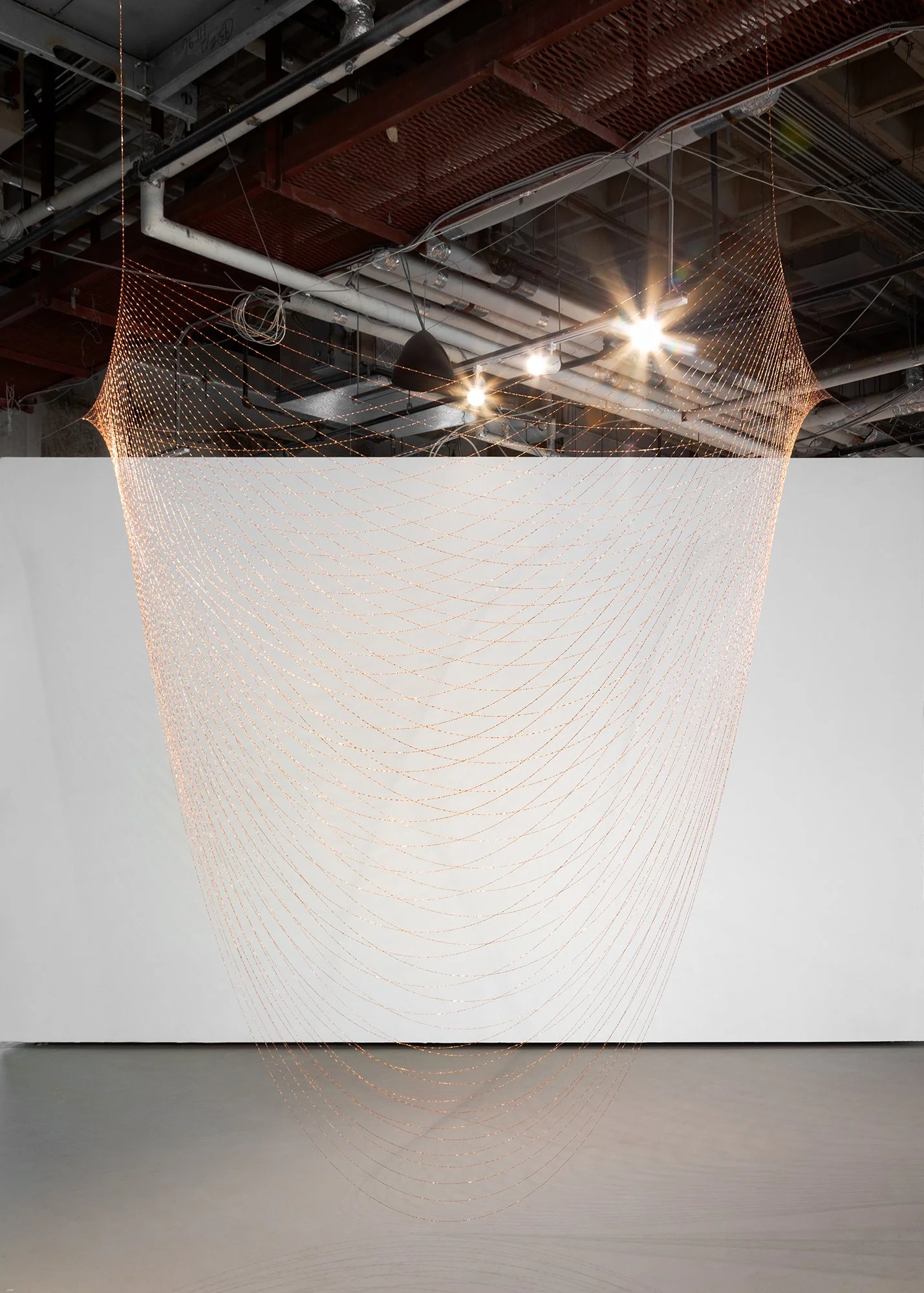
815 Birds in Space, 2025
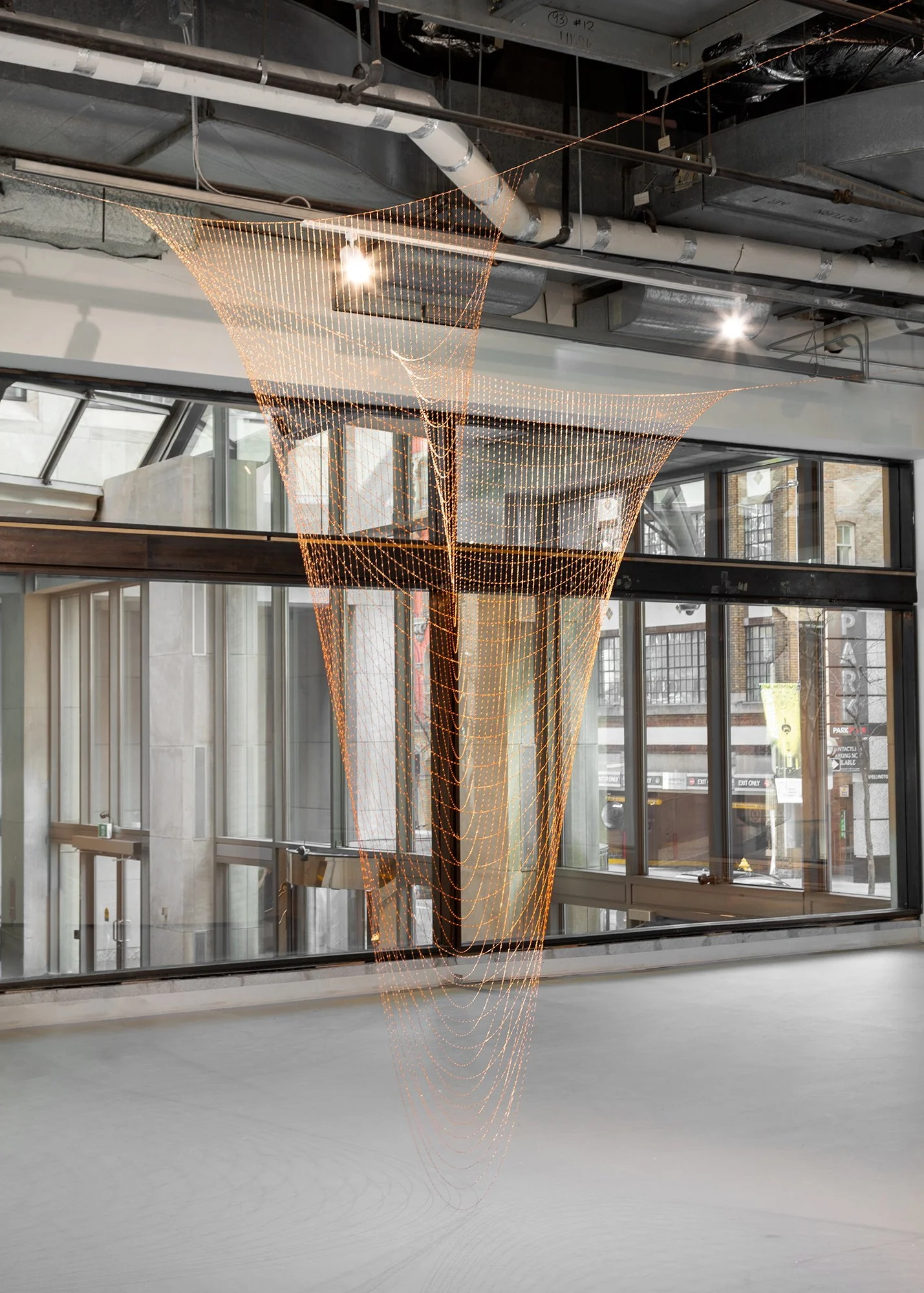
815 Birds in Space, 2025
815 (Birds in Space) traces how personal histories of migration and cultural dislocation surface through engagement with tension. Can you tell us more about this series and the ideas that underpin it?
When I learned that Brancusi travelled from Romania to Paris on foot over the span of a year, I thought of my own journey, and that of so many others who migrate to follow their bliss or intuition. To leave the comfort of home and everything you know requires vulnerability. Being vulnerable is frightening and sometimes even dangerous, yet paradoxically, it is the only way to transcend fear and emerge as something new. That is the tension.
Liz Larner engaged with Brancusi’s sculpture Bird in Space from a feminine point of view using thread, and I thought, why not continue this conversation through plurality? Nothing is ever static or absolute, and energy is never lost, only transformed. Movement is universal and embedded in memory, our ancestry, creating patterns, repetition, like the seasonal migration of birds, the constellations in the night sky, and the blood in our veins.
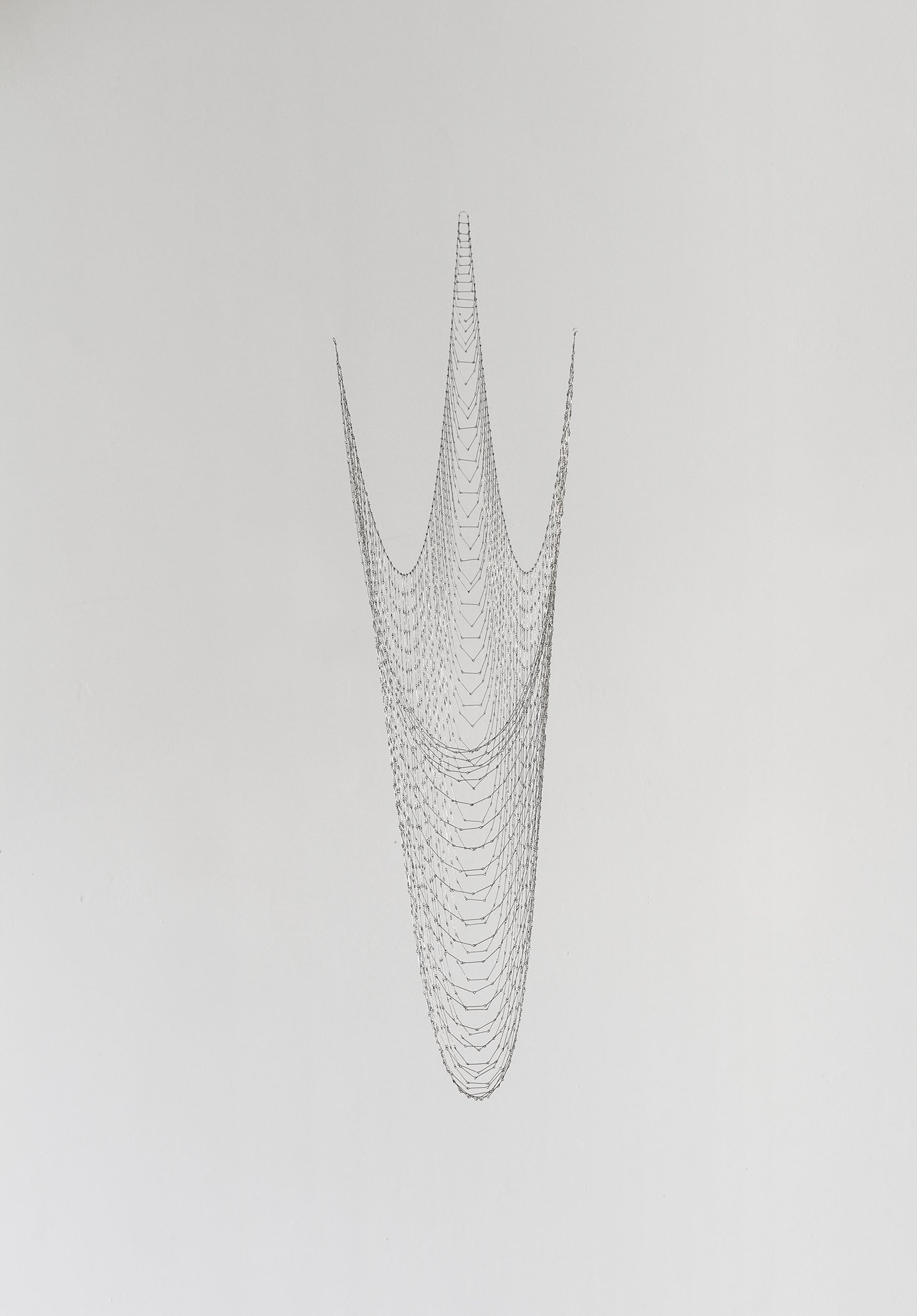
P3T4L0, 2022
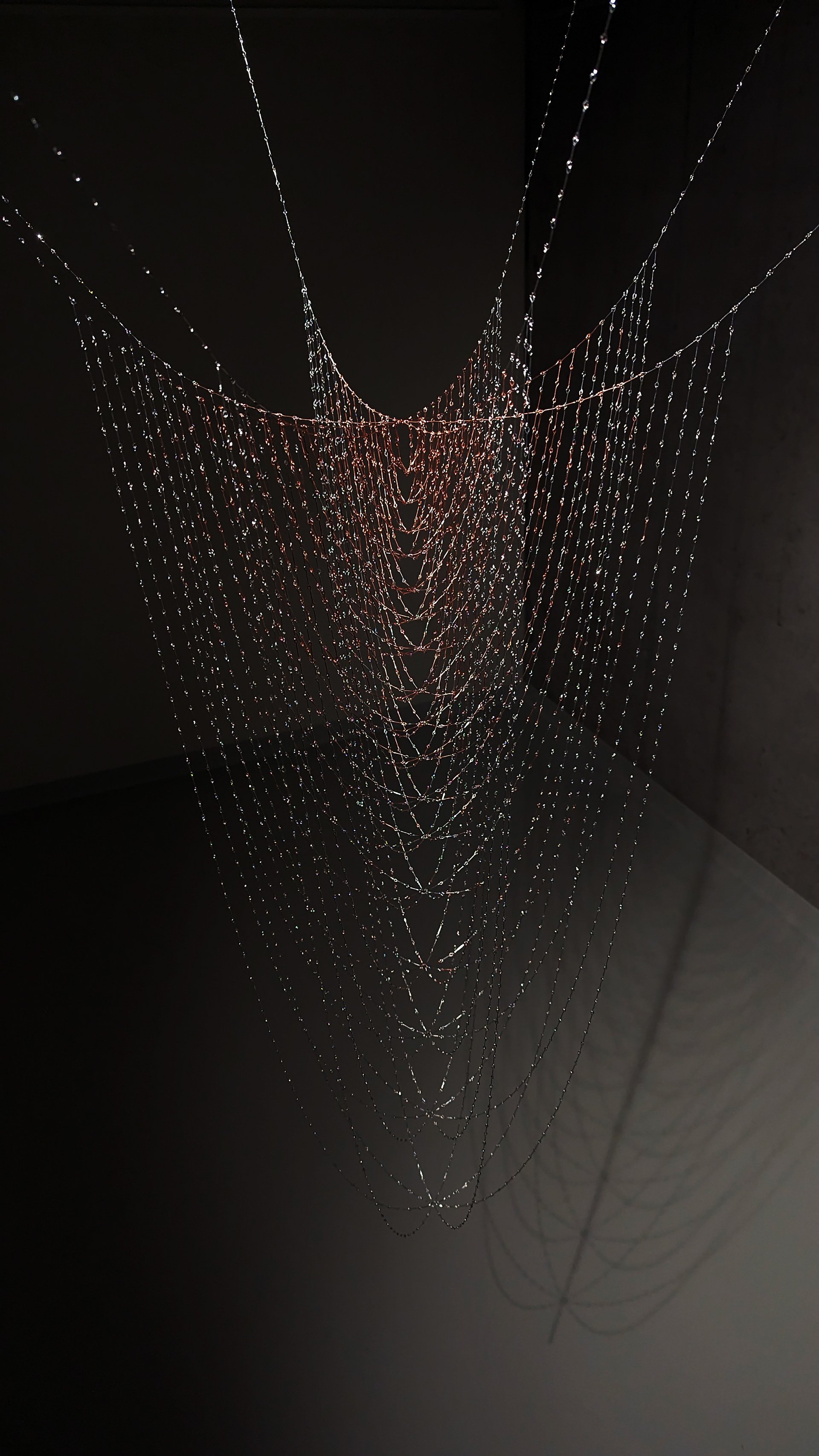
Q0, 2023
Is there a particular material, process, or idea that you’re interested in exploring further at the moment?
I’m currently working on a completely new body of work for my first commercial solo. I’m particularly inspired by Derrida’s la différance, and hope to elucidate the apparatus of desire and its impact on the natural world.
What’s coming up next for you? Are you working on anything exciting?
I will be exhibiting 815 (Birds in Space) in Venice for the Arte Laguna Art Prize from November 6-29, and also fine-tuning the concept for my first solo exhibition in the United States next year at The Sculpture Center as part of their Revealed Series for emerging artists.
See more of Maria Esthela’s work
ArtConnect | Website | Instagram
Main image: Q0, 2023
Portrait by Marguerite Ranger
New Voices highlights emerging artists who showcase their unique perspectives and innovative techniques on ArtConnect. Applications are accepted on a rolling basis. If you would like to be featured in a personal interview on ArtConnect Magazine, read through the open call and apply here.