
Marina Zumi
On connection, dreamscapes, and meditative encounters with the unseen
Marina Zumi is spotlighted in the New Voices series, which highlights emerging artists who showcase their art on ArtConnect.
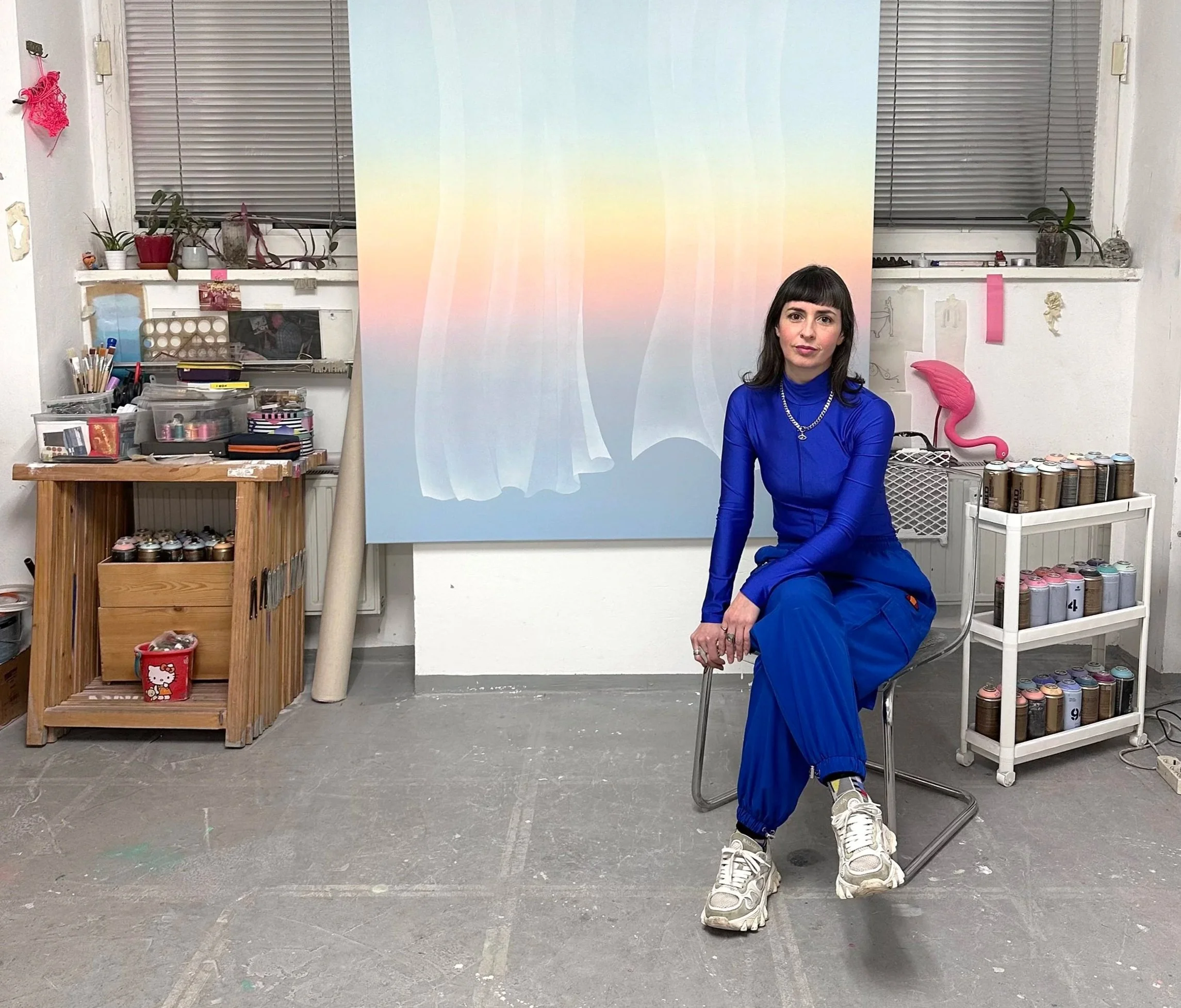
Marina Zumi is an Argentinian-Czech multimedia artist, born in Buenos Aires and now living in Berlin. Her practice spans large-scale murals, public art, light sculptures, immersive site-specific installations, and finely detailed textile-based works developed in the studio. She has conceived and executed installations and public commissions that have been exhibited across more than 35 countries.
Guided by a search for connection and the hidden light that pulses beyond material form, her work invites a meditative encounter with the unseen. Through impossible perspectives and translucent, playful elements, Zumi evokes silence, stillness, and the slowed tempo of contemplation, offering each piece as a luminous refuge, a space of quiet retreat from the intensity of reality.
Curious to gain more insight into her artistic approach, we asked Marina a few questions about her practice.
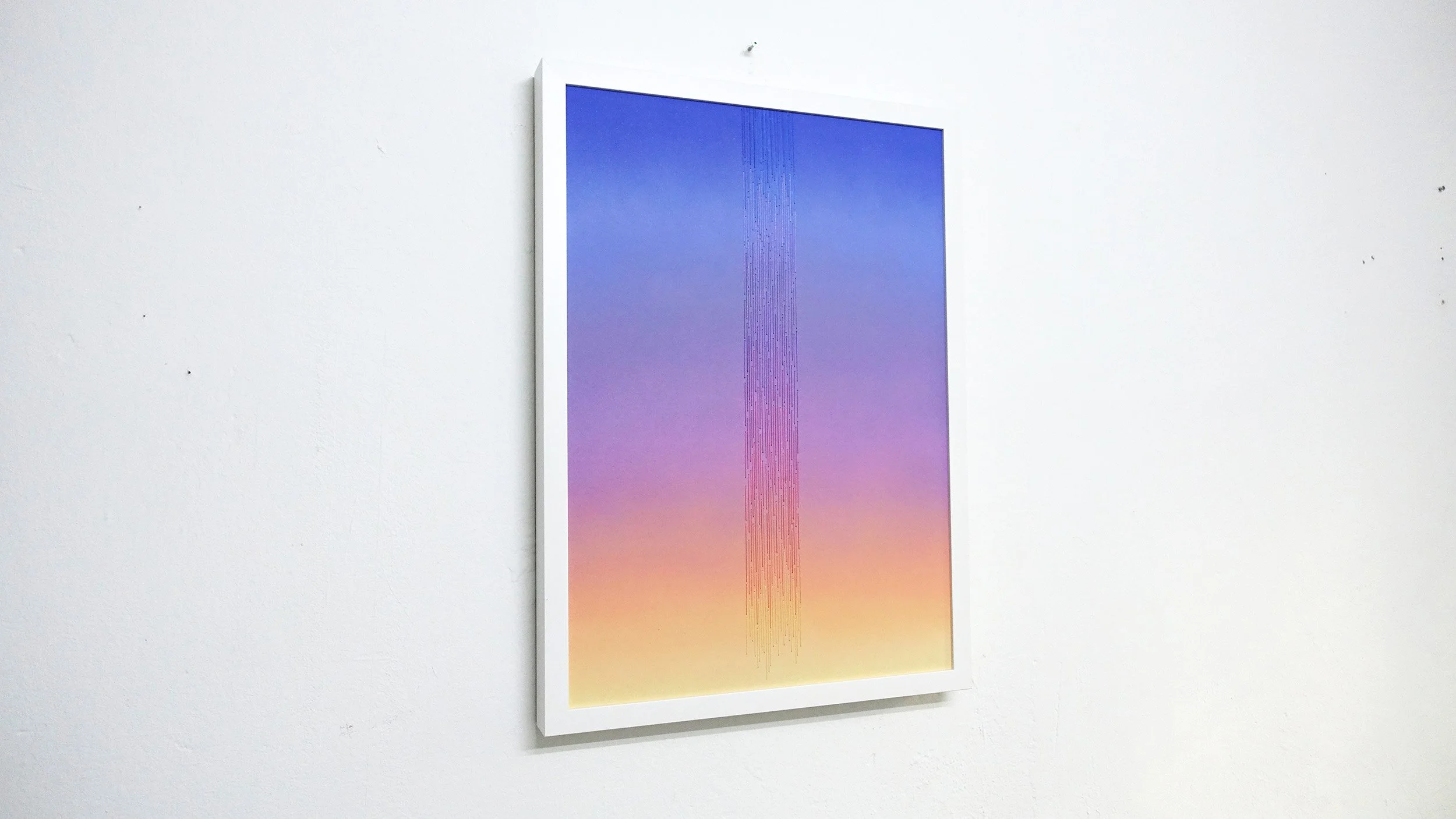
Ardour, 2025
Originally, you started out within the tradition of South American Neo-Muralism. How did you find your way into that field, and how has your experience creating murals shaped the work you make today?
I was studying fashion design and working very prematurely for a big Buenos Aires fashion brand when, through Design university friends, I was invited to join a street art session one weekend. It was love at first sight. Many peers at the time were painting characters in the Pictoplasma style, but something in me needed to go elsewhere. I followed the pull toward nature: painting the living world in the middle of polluted streets. That contradiction became my first language.
It shaped me completely. Whatever I was going to do with my life, it was going to be built around having time to paint. When I moved to São Paulo in 2009, I began to understand something deeper, that painting big teaches you how to see small. The mural is always in conversation with the city, with people passing, with weather and time. You never know how long it will last.
In São Paulo I became a founding member of Coletivo 132, an art collective born from years of art meetings and social projects that eventually grew into A7MA Art Gallery. With pride I can say it is still open today, fourteen years later. And that impermanence I carried it into the canvas. Now when I finish a work, I feel the meaning it no longer belongs to me, it belongs to whoever stands in front of it. Every reinterpretation, every person who stops and looks, brings a new value, a new character, a new color into the experience.
Someone told me once what they thought my painting was about. When they asked if they were right, I said yes, even knowing they weren't. Because who am I to correct the meaning? Who am I to explain what the work is about when I am not there? Street art gave me that 'desapego'. The wall doesn't wait for my explanation. The imagination of the other person is the seed, and that seed belongs to them, not to me.
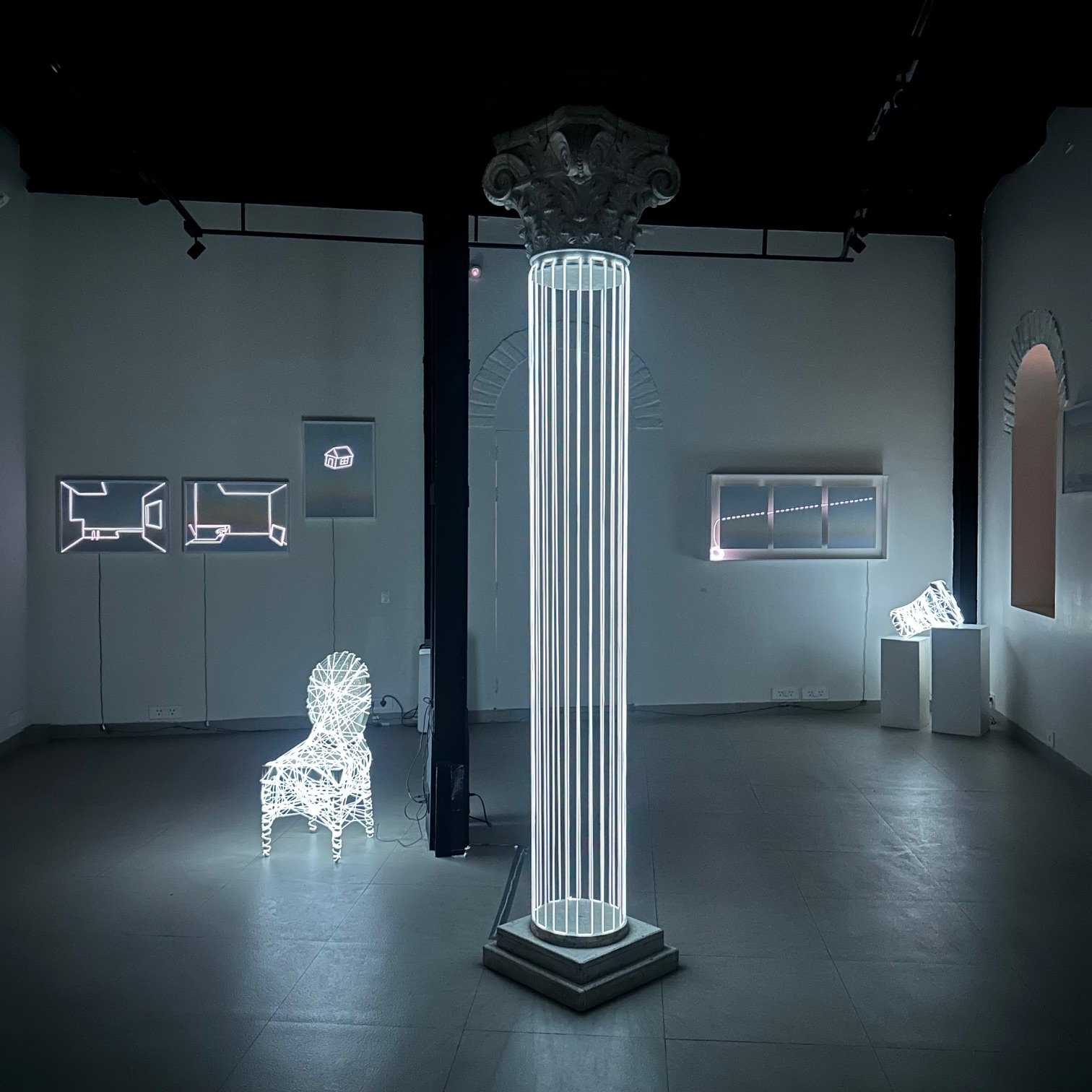
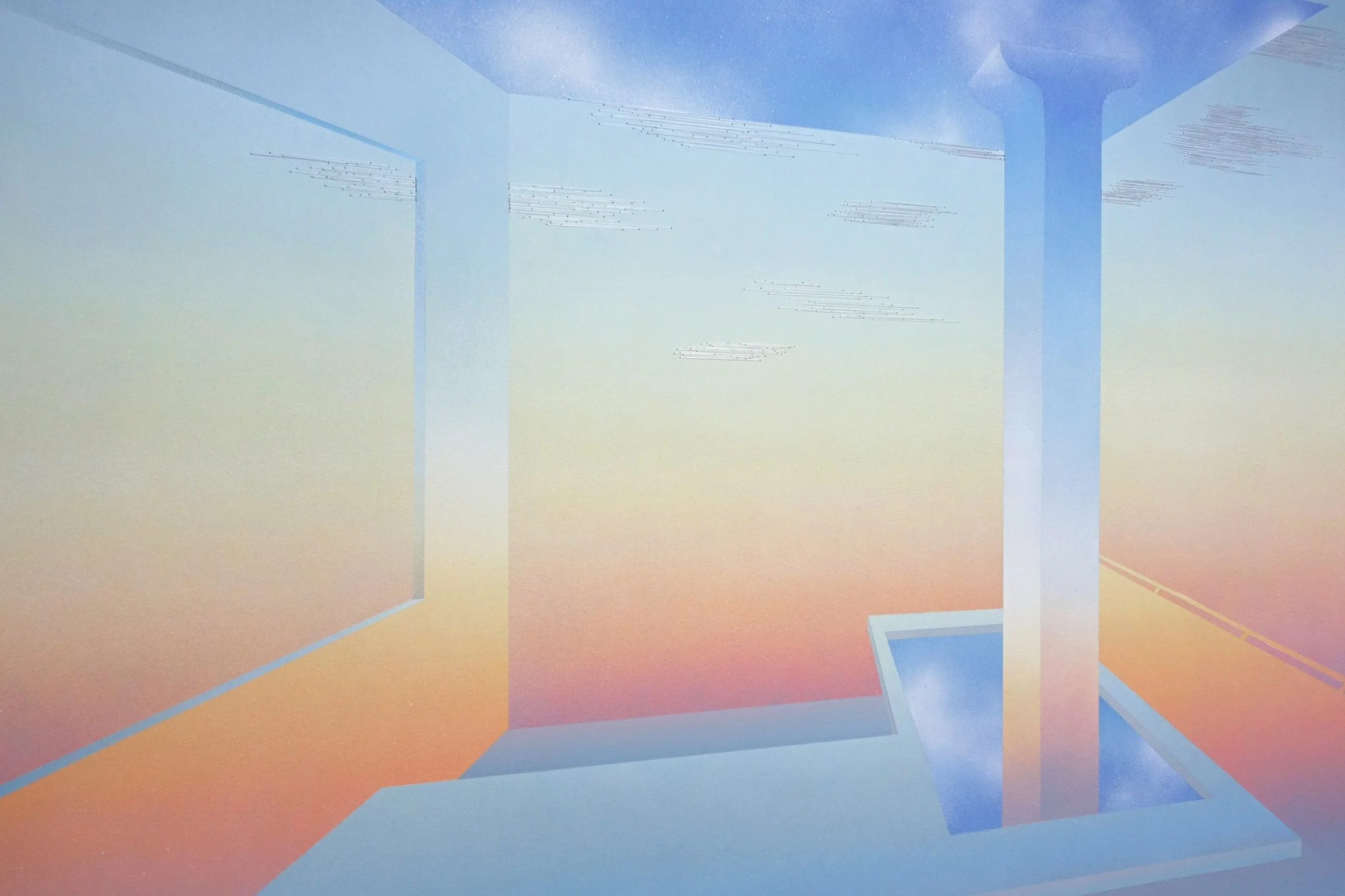
SEW DENTS ON EVERY SKYLINE (Installation view), 2024
In recent times, your practice has shifted to embrace the use of emerging technologies. What inspired this transition, and what possibilities did these new tools open up that weren't available through murals? Light in particular has become an increasingly central medium in your practice. What draws you to light specifically?
It was a natural progression, not a rupture. I have always studied nature, and behind every form in nature, after every particle of every cell, we are light. Every mass, in the end, is a string of vibrating energy. That pulled me toward bioluminescence: the capacity of living beings to generate their own light, to shine from within. Coming from South America, I was always surrounded by people who had that quality, who could shine in the middle of the hardest circumstances, without the safety nets that the first world takes for granted.
Even in the murals, I was already studying light, the way a painted hue shifts depending on the light that surrounds it. And I was mapping something else too: the invisible lines of connection between people across distance. I would stand in Buenos Aires and feel my family six hundred kilometres away, a friend two thousand kilometres further. Those mental root lines, what quantum physics now calls entanglement, I could feel them in my chest before I had the language for them.
The move to EL neon wire was the moment those lines became real. It is a delicate material, and I made it one of my main tools. I began to trace those fluxes of energy into immersive light installations: first abstract, then spatial, then sculptural. GATES, in 2020, was my first large light sculpture, eleven poetic doors, built to reconnect people separated by distance.
The value of the subjects in my work is not its cost or its material weight, it is what that place, that object represents to the person standing in front or even standing inside of it. Through immersive light installations I found the courage to go further: wrapping significant spaces and objects in light, chairs, columns, stones, ladders, spaces. A chair asks: where do I hold myself? A broken column asks: which self rules of art, will grow and break?
Every medium I have worked in has carried me to the next, mural and textile arrived together, one feeding the other, and from there the scale of the wall opened the door to immersive, immersive led to sculpture, sculpture expanded into multimedia. Light was never a destination. It was always the thread running through everything.
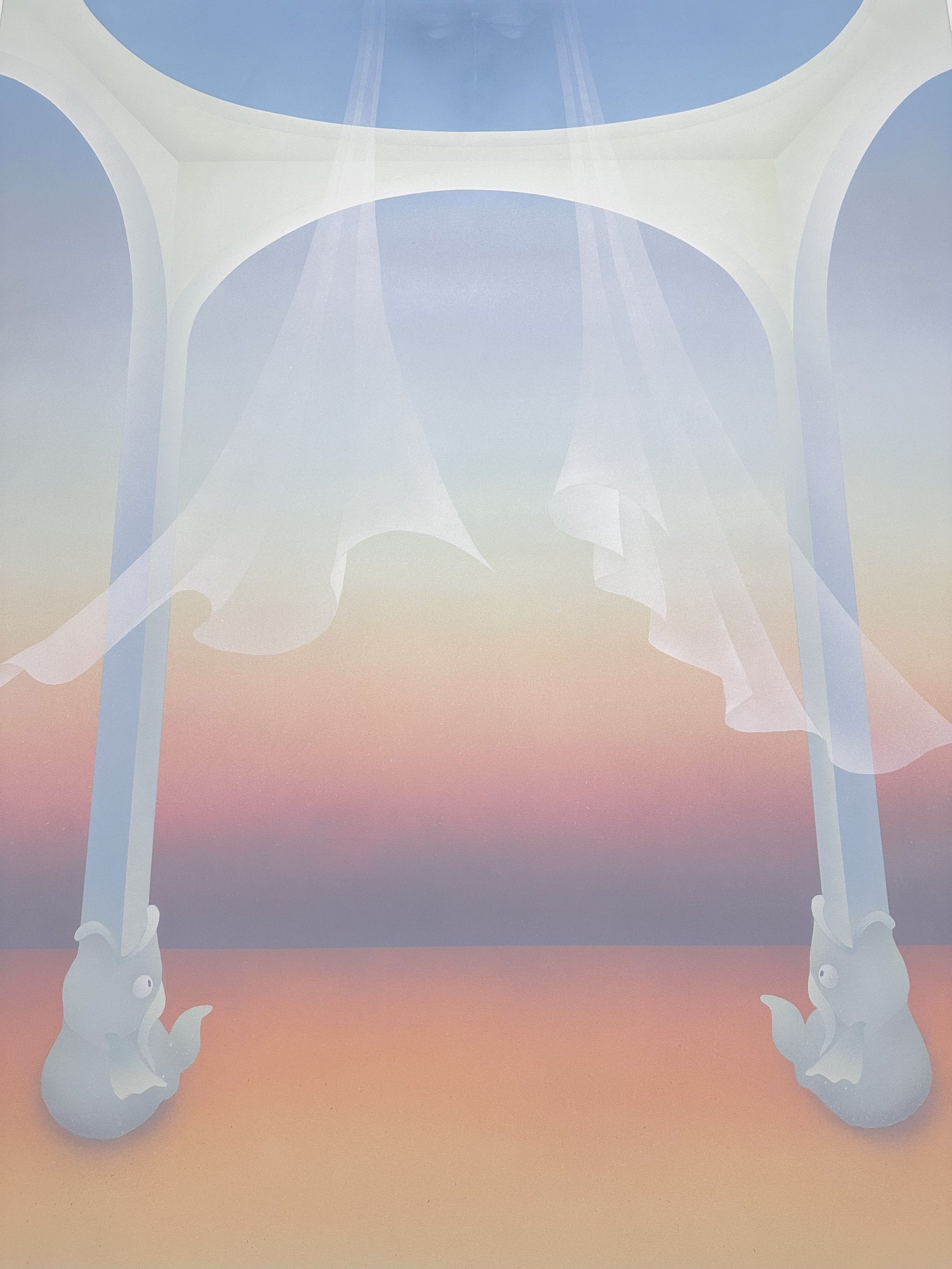
Breath, 2025
Connection is a concept you've cited as central to your practice. What kinds of connections are you most interested in exploring, and how do different elements, ideas, or aesthetics cross-pollinate in your work?
I am the child of a country the size of a continent. Growing up, my family was scattered across vast distances, I could spend nights imagining dots all over, and that distance drew invisible maps in my mind from a very early age. I came to understand that the greatest strands of my life are the people I belong to. They become part of me and I speak about them constantly, but it is always grounded in something larger. At 14 I got into Buddhism, then a lot of nature and physics, and ended up into quantum, meditating a lot and kind of netting a grid connecting all these dots in my mind while trying to find meaning in my art. Simply as, we are mere energy connected to everything.
That grounding feeling of being part of something immense, carries both a sense of void and a sense of release. Because in the void, even when far from family, far from safety nets, it is precisely those invisible threads of belonging that fill everything.
Connection not as a naïve subject of work, more likely as a reminder that there is something more behind the 'screen'; there is empathy and kindness, and in a society that looks it has forgotten, I prefer to be an irrational believer of those invisible tights, than to succumb.
Every medium I have worked in has carried me to the next, from self taught steps into murals and textile art that kinda arrived together, one feeding the other, and from there the big scale of the walls opened the door to immersive light site specifics, immersive lights led to sculpture, sculpture expanded into multimedia. Nothing is separate. Everything in fact has always been 'connected'.
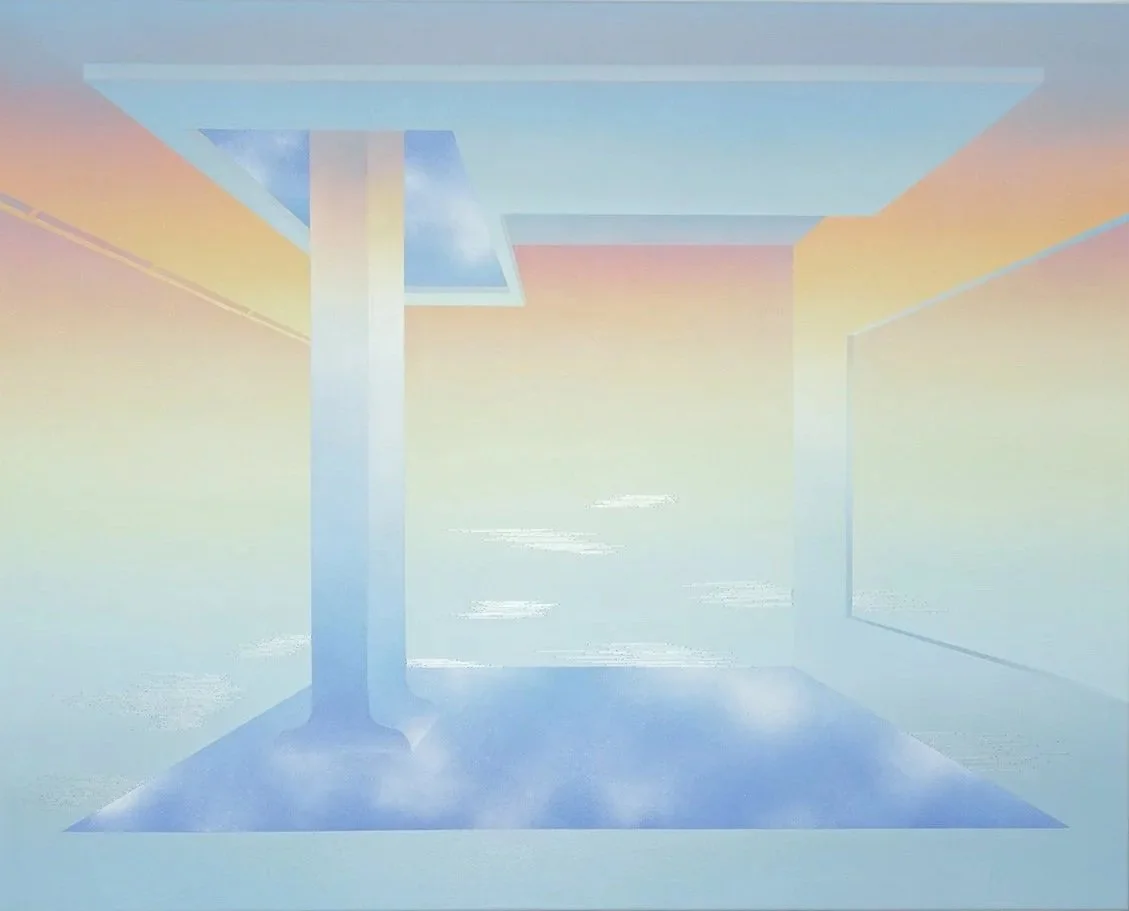
Arriving Home, 2026
Throughout much of your career, you've created work for public space. How does your approach change when working within an exhibition context?
Surprisingly the preparation to paint a building has nothing to do with physical strength, of course the body matters, but what carries you up that crane, what holds you steady on the scaffold, is the mind. Mental preparation is everything, being constant and not giving up against weather, the crane rental time pressure and tiredness is the key.
The studio is a completely different conversation. I remember finishing a building in a week and then spending a month and a half on a canvas no larger than 154 x 120 cm, still adding details, refining definitions, layering colour. The intimacy is intense in a different way. Nothing disappears. Nothing is rained on. Every mark stays. Two completely different disciplines of attention, and I need it both to coexist in creation.
The issue with my hand forced me into stillness. A fissure in the joint of my painting wrist that no doctor could find until open surgery, two years after it started, and two more years to recover the strength to work freely again. And overthinking made me ask: where do I actually want to go next? Street art is still treated by most of the contemporary art world as not even third-tier market belonging. And that is a strange feeling, because I am proud of that past and everything I achieved in it, having many good exhibitions and institutions participation. That weight pushed me to become more conscious of where I want my career to go, and that's when I decided to dive more into a future that sees more of my studio art and all been slowly nicely shifting: stubborn as I am, you see.
Years ago I made a wish: to paint big murals and travel all over the world. And I did. Now, with a different mindset, I hope to see myself institutionally recognised as a South American artist from Argentina with Czech blood, and a different background, yes, but one that belongs.
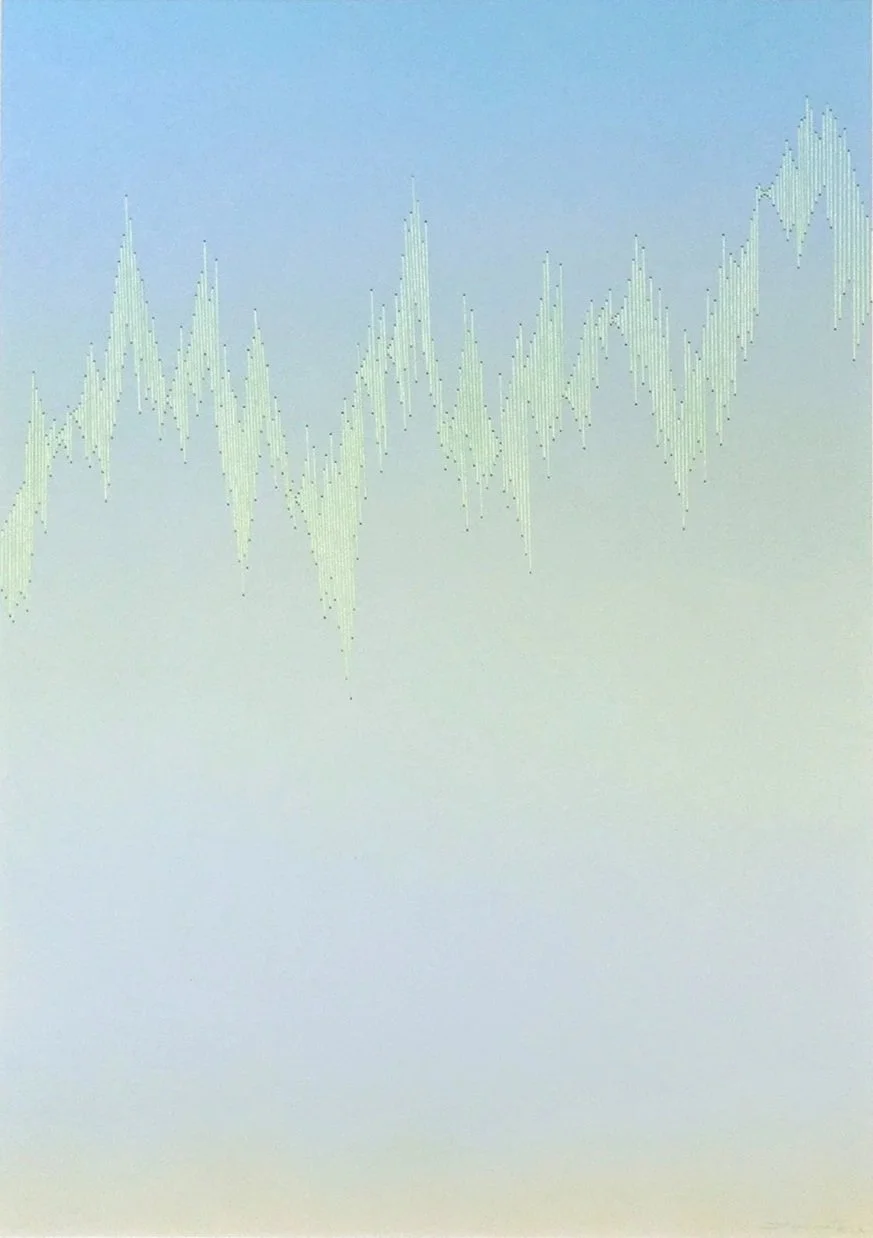
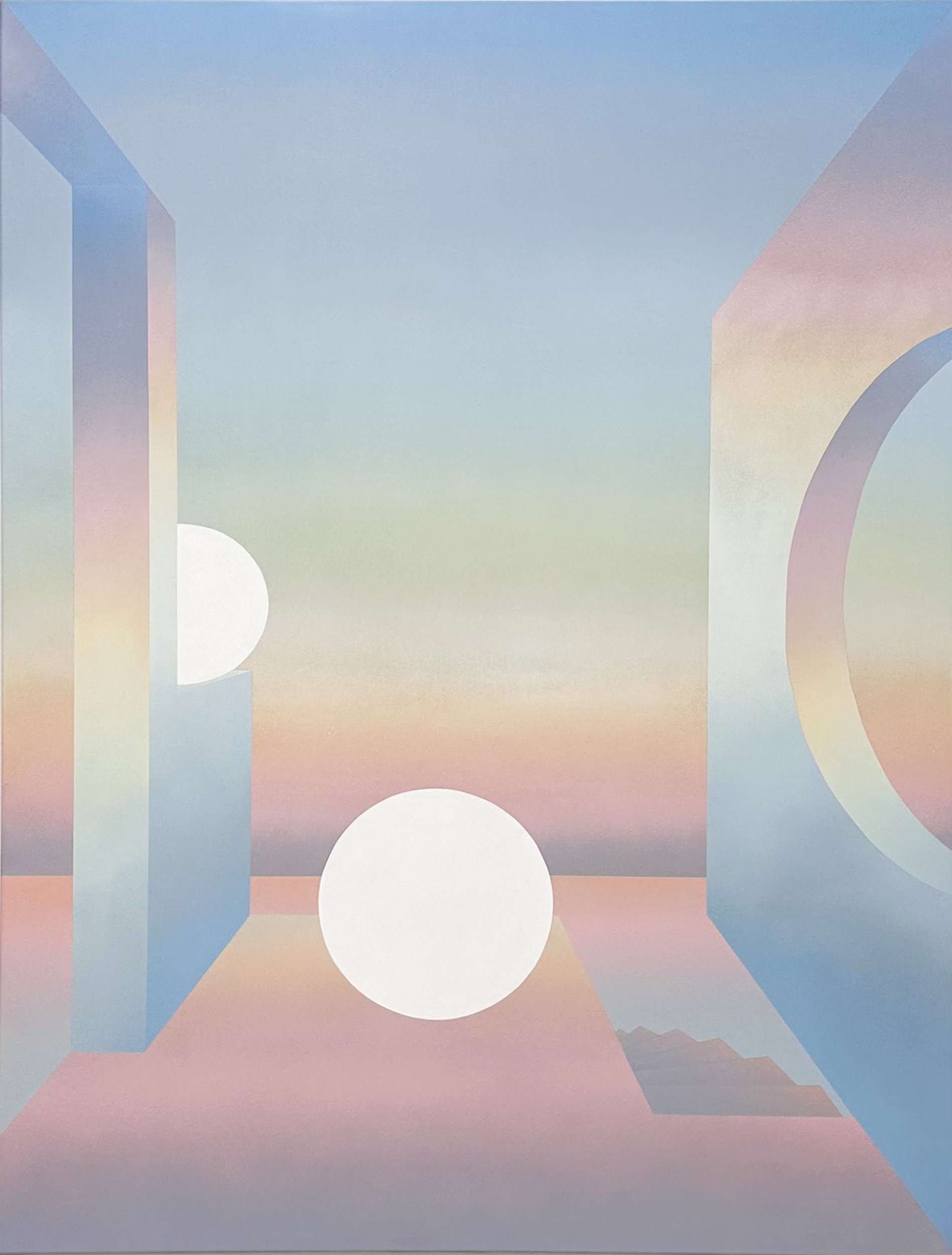
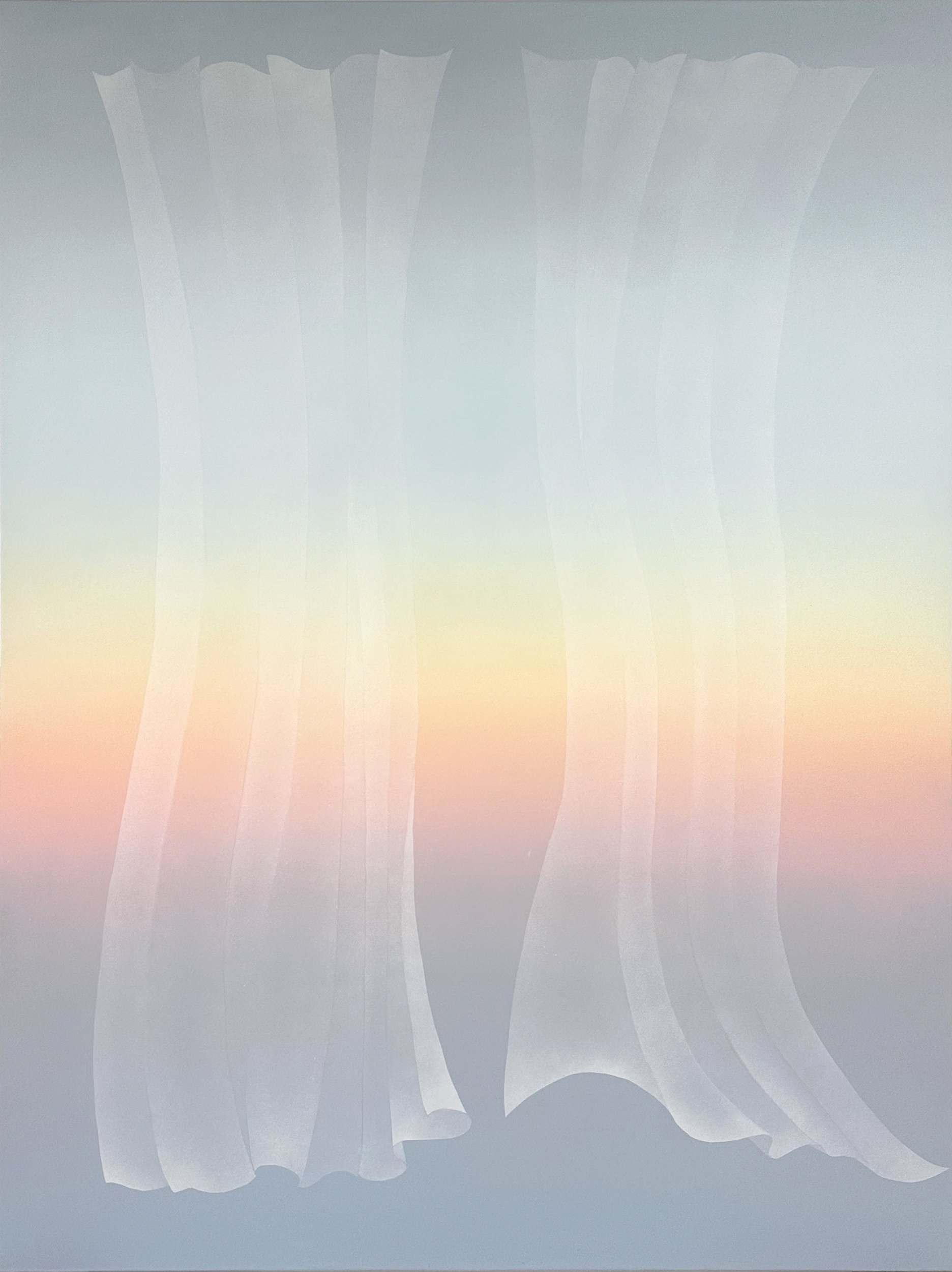
(L-R): F is for Freedom, 2025. Void and Us, 2025. Brain waves, 2025.
“I realised I had been saying things at full volume. As the colours came down, the work shifted to something closer to a murmur.”
Some of your more recent works on canvas depict tranquil, almost dreamlike scenes — liminal spaces painted in soft sunset tones. What draws you to these imagined environments, and what are you hoping to evoke through them? What role does emptiness play in these works?
From that big deep in the studio, coming out of a very long series where I began almost every artwork from a black point, I started to explore what would become the Sunrise-Sunset series. In the beginning the spaces were more abstract, just opening, and the colours were intense, almost loud. As the series evolved, the palette began to soften. Pastels. Quieter hues. I realised I had been saying things at full volume. As the colours came down, the work shifted to something closer to a murmur.
What draws me to these spaces is the blurring. Sunrise and sunset are moments where reality and something dreamlike touch. I began to recreate those moments inside my own art, inviting in the primal instinctive feeling of renewal, to break the limitations of these spaces, for hope. Leaving room for the person looking. The emptiness is an invitation.
Seems the world has increasingly grown into a loud functional ignorance surrounding us toward the things that really matter. That noise started to weigh heavily on me. I had to find refuge in the canvas, in the colour, in that amorous moment creating. In the subconscious happiness of stepping on grass, a good hug, a slow kiss. Not the frantic rush. These places became my own grounding space. Open to share.
Spaces that blur the boundaries between today and the impossible, they slow the noise. They offer, even for just one minute, a breeze feeling of safety. Or perhaps just make you question what safety means, in this change of an era. Lately I have been adding lil cues of my bittersweet humour into the work, as a soft disturbance of this gentle practice. That lil voice that still says: question everything, and then smiles.
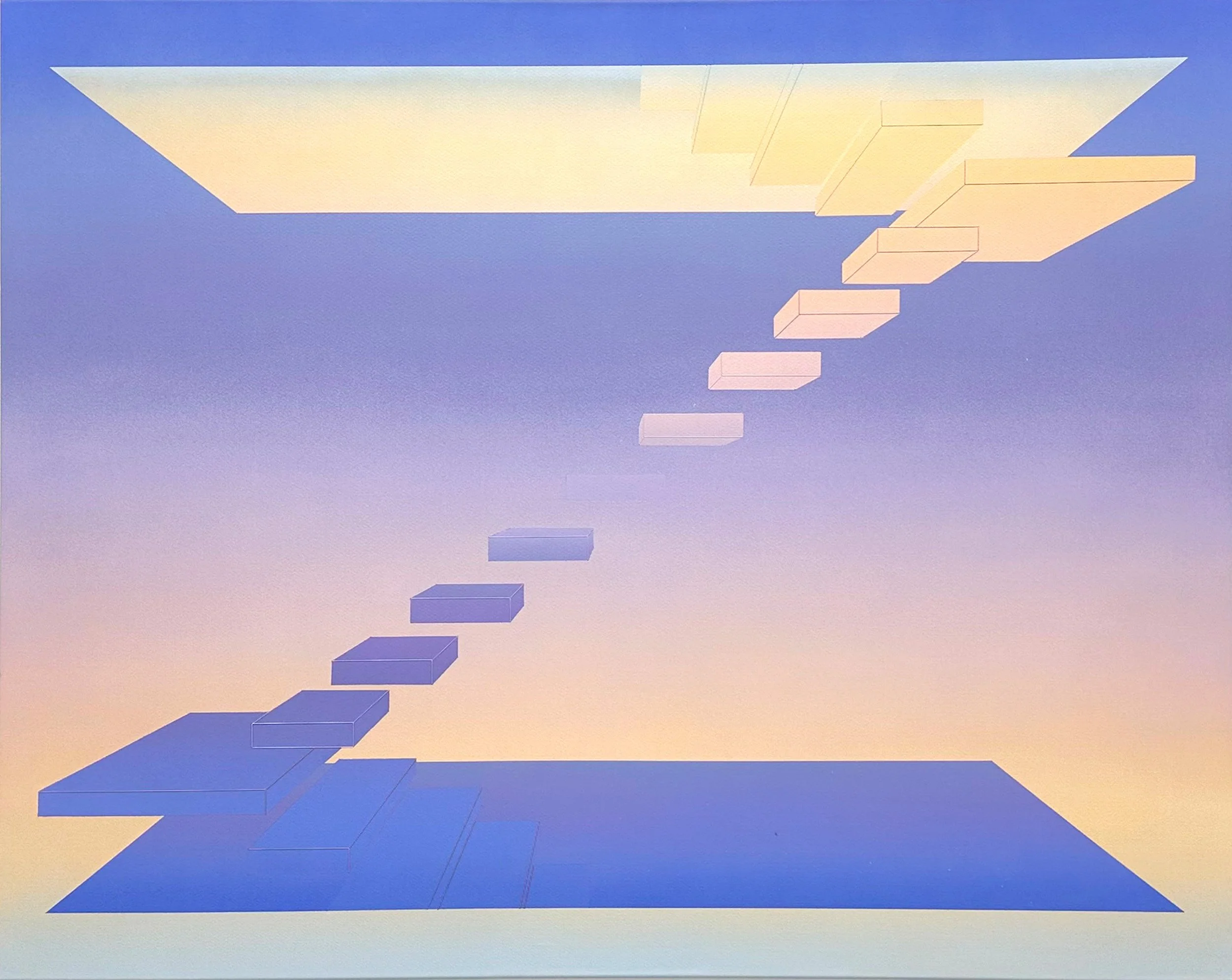
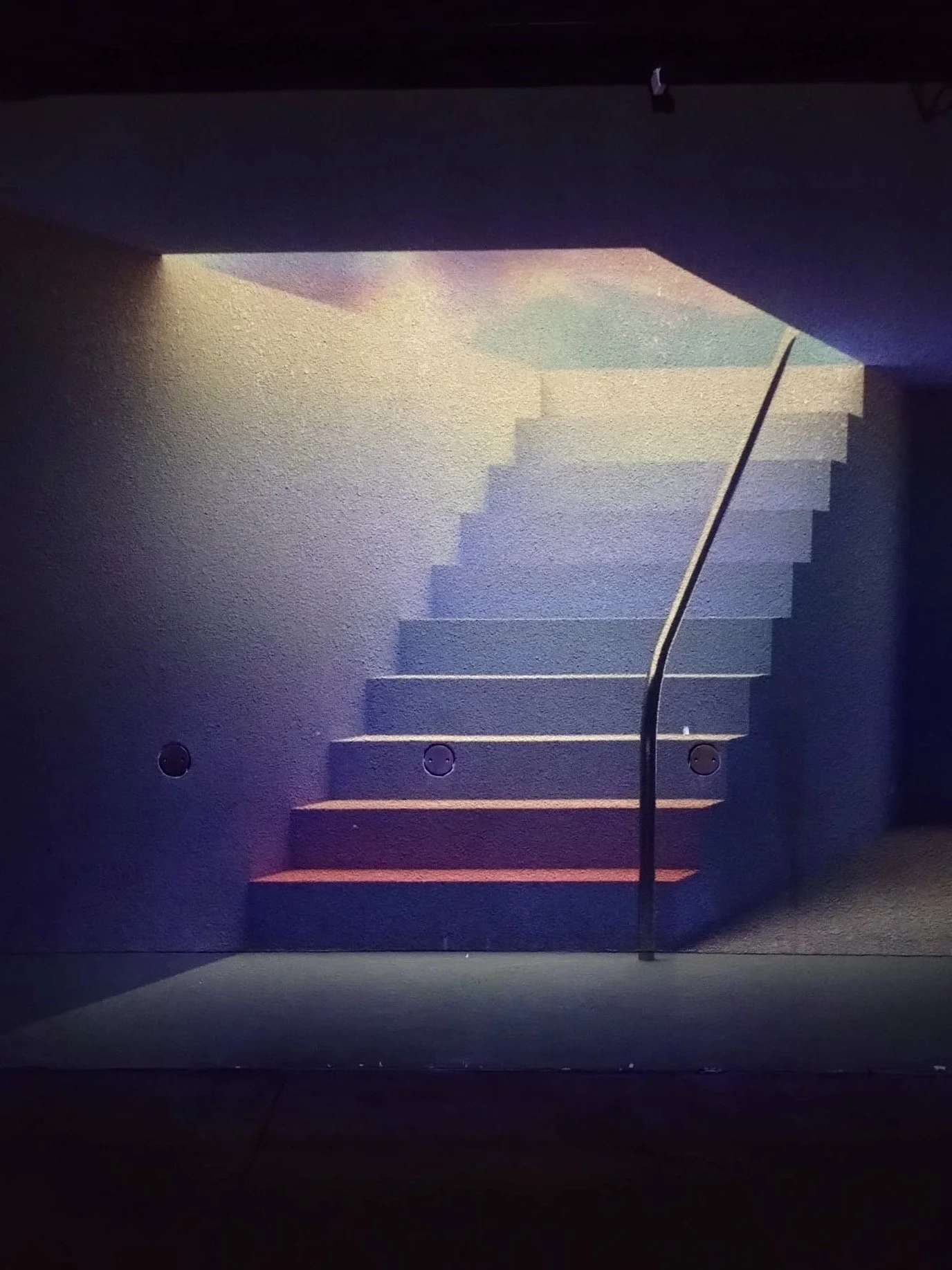
Treppe 4ever, 2026
What are you working on at the moment? Is there anything exciting coming up for you?
Last year I was fully immersed in a large artworks in the studio, in parallel to my first big scale lenticular project to be presented in Los Angeles. It's the first of its kind, it seems I created it all totally digital, but deeply rooted in textile logic and soon to be installed.
A five-floor building divided into thousands of horizontal lines, studied first on canvas, then translated into digital. From a distance the eye reads gradient, a trompe l'oeil. From close up, you see the lines. The logic of textile, translated into architecture, a digital textile would say.
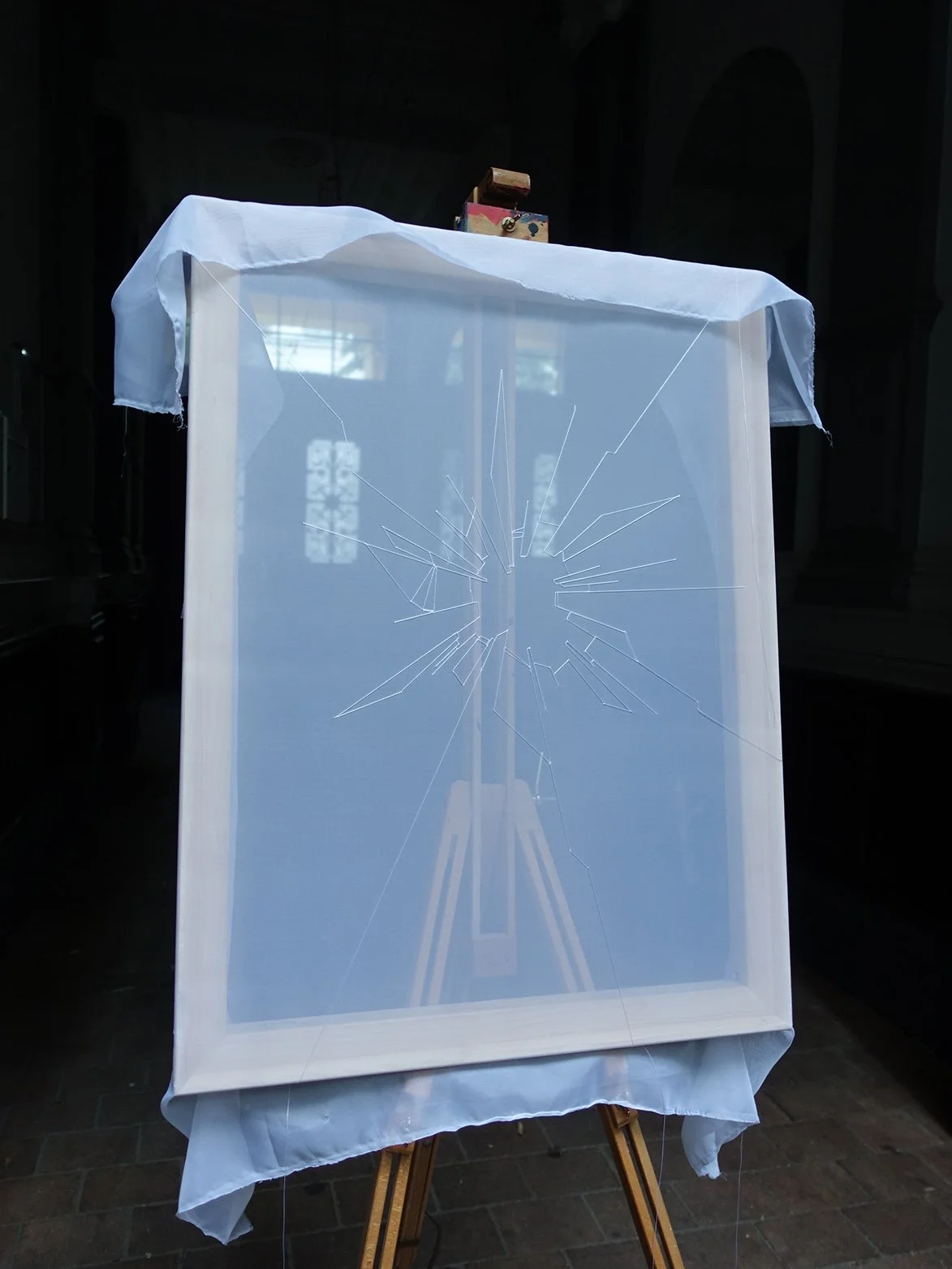
Now I am integrating these two studies, painting and textile, into new voile canvases and 2D pieces. Two languages, where textile keeps opening doors I haven't walked through yet. I still have a great deal more to explore, and that feeling of not yet knowing where a material will take me, is exactly where I want to be.
I have projects in Amsterdam at the moment, Berlin and other things aligning atm, just happy.
Thank you for asking. And thank you for giving me space to tell a little of what has happened in the last years since I have been in Berlin.
New Voices highlights emerging artists who showcase their unique perspectives and innovative techniques on ArtConnect. Applications are accepted on a rolling basis. If you would like to be featured in a personal interview on ArtConnect Magazine, read through the open call and apply here.