
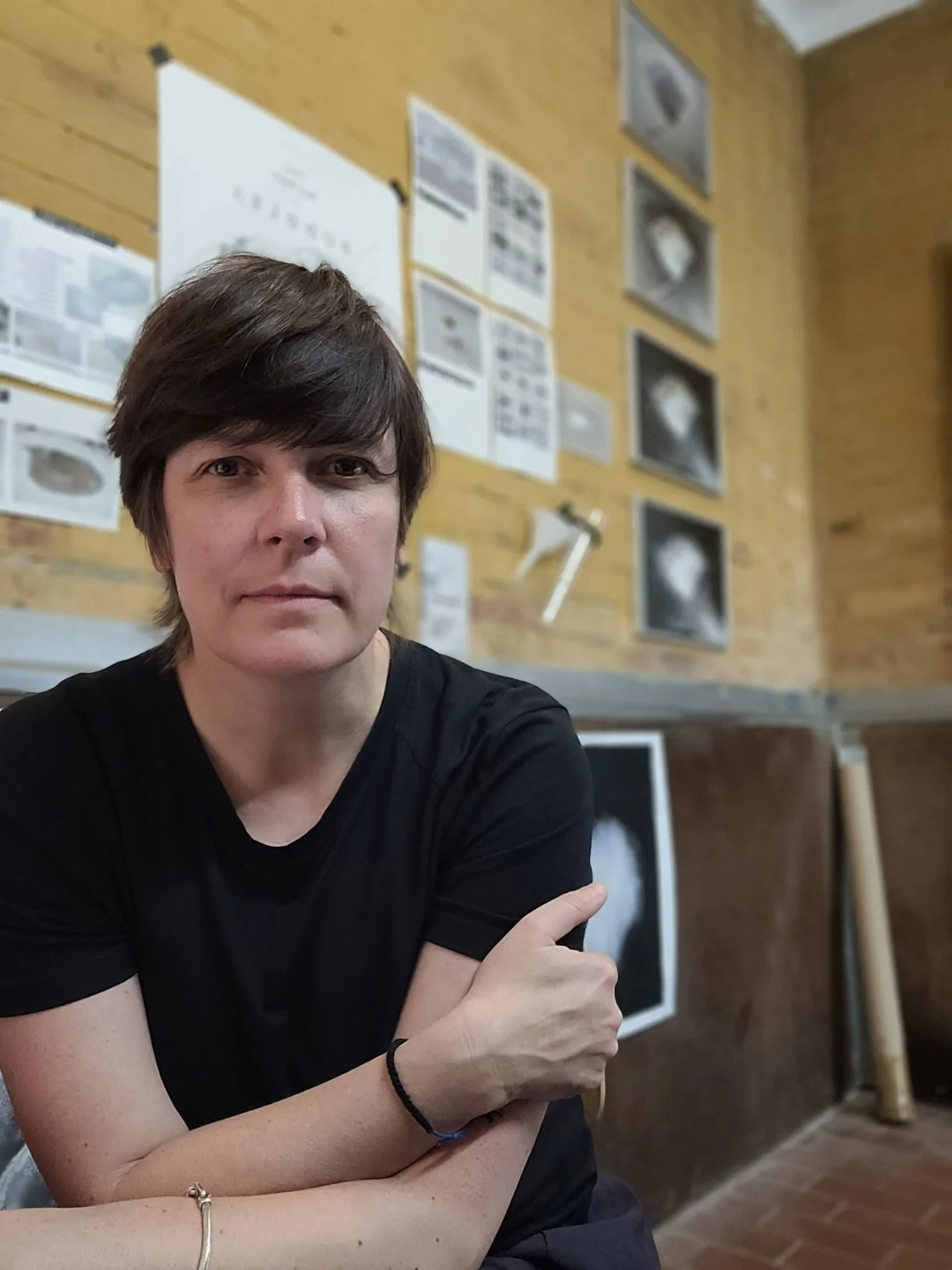
Mirja Busch
Interdisciplinary artist and researcher focusing on the ontology and perception of puddles in the urban landscape.
Mirja Busch is spotlighted in the New Voices series, which highlights artists who showcase their art on ArtConnect.
Berlin-based interdisciplinary artist Mirja Busch’s research focuses on the ontology and perception of puddles as anthropogenic background phenomena in the urban landscape. For over a decade, she has experimented with archiving, classification, language, and performative walks to make these ephemeral sites perceptible.
Busch studied Fine Arts at HBK Braunschweig and at Universidad de Chile. For several years, she co-directed a summer school for Land and Environmental Art in the Swiss Alps. Her work has been shown internationally, most recently at Musée de la Chasse et de la Nature, Paris; Humboldt Lab, Berlin; and the Flanders Architecture Institute, Antwerp.
Curious to gain more insight into her artistic approach, we asked Mirja a few questions about her practice.
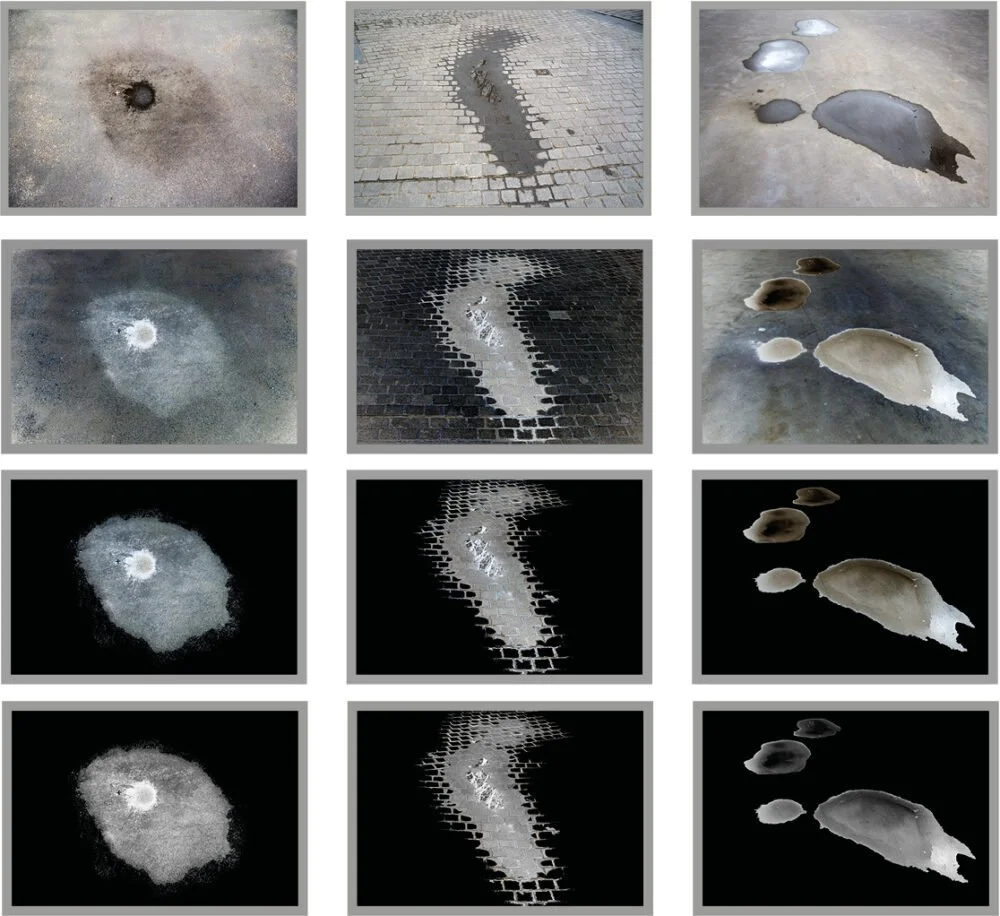
The Dissection of a Water Body, 2023. Copyright: Mirja Busch & VG Bild-Kunst.
You’ve been studying the ontology of puddles for over a decade. How did this fascination begin?
In 2010, I was based in London for several months, and it happened that there was a puddle right in front of the building where I lived. It was one of those puddles that seemed almost always there, even many days after the last rain. Its persistence fascinated me. Although this puddle had a kind of omnipresence, people didn't seem to notice it. The pavement was wide enough for them to pass by. There was no "conflict of use" because the puddle wasn't an obstacle. It wasn’t exactly ignored but existed in a strange in-between state of being there and not.
Like this, the puddle had created its own place—a place from which it was reflecting the life of the London street on its surface; like an apparently randomly placed, reflective surface in the urban space. The reflections created a strange overlap, as if a fragment of the city had been cut out and laid upside down on the ground. I was fascinated by this interweaving of perspectives: the ground and, at the same time, the buildings, the textures and the sky.
I started observing and documenting this particular puddle under different weather and light conditions. It was my first time doing a mini ethnography. Then I got interested in other puddles across the city, too, and how they shape the atmosphere of the urban spaces.
This encounter in 2010 was the beginning of an ongoing archive, the Puddle Archive, where I document puddles worldwide. Whenever I travel, I take my camera and hope for some rain. It started with a simple question, whether puddles in different cities look different. The answer is yes, they do—not the water accumulation itself, but in how puddles emerge as an interplay of city materiality, surface design and conditions, weather, ground, and the social choreographies they create. Looking through the Puddle Archive catalogue that I published in 2024, which has almost 2000 images, you'll see that different places have their own characteristic puddles.
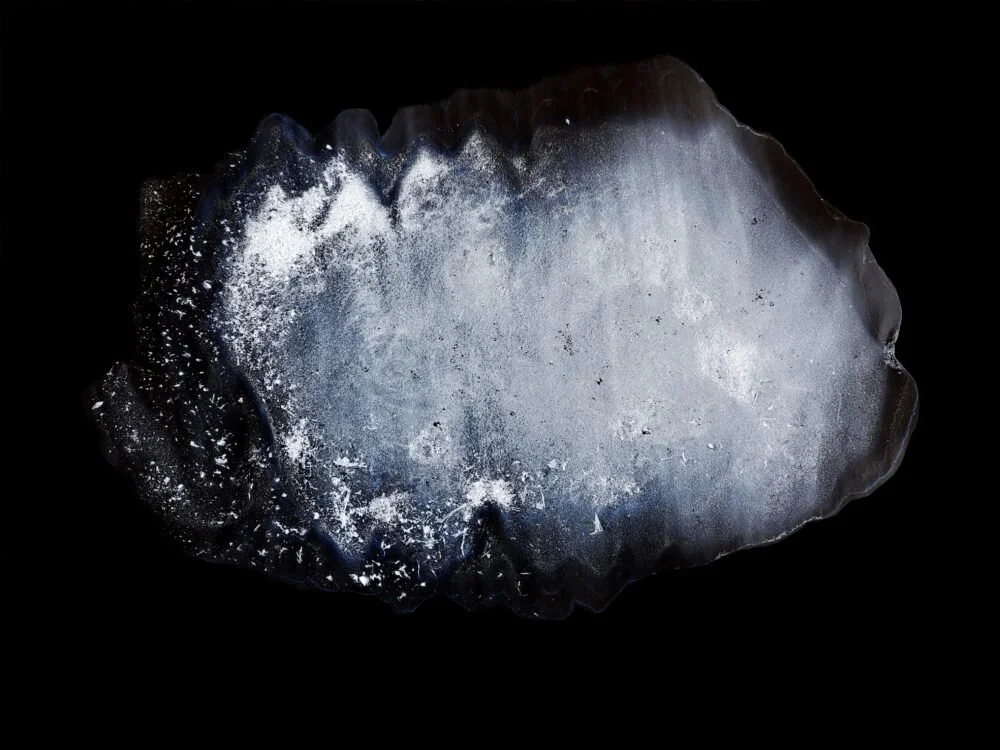
Puddle Scan, 2023. Copyright: Mirja Busch & VG Bild-Kunst.
In your work, puddles are understood as site-specific and embedded within their surroundings. What can puddles illuminate about the environments in which they emerge?
Even though it is quite obvious when you think about it, the realization that puddles are not random accumulations of water but a cyclic and recurring phenomenon that returns in the same place and with the same shape opened up a totally new perspective. I noticed they are neither random nor temporary. Like some animals they display a high site-fidelity. They come and go, are absent or present, but they do not appear at random locations. They have fixed places they inhabit and co-create. They are the hollow, groove, or hole in which they occur. They are literally embedded in their surroundings.
Consequently, they must be understood as hybrids. They exist in close relation to the depressions or holes they gather in. They’re an interplay of water and ground, and they depend on certain conditions: the sealed, compacted, or transformed grounds that allow water to stagnate. Porous surfaces won’t host puddles. They’re cyclical and they’re bound to the pulse of rain or city cleaning. In this way, they’re archives of past events.
“They (puddles) reveal textures, colors, patterns, defects, and irregularities, and provide historical perspectives: in Berlin, for example, puddles show how East and West parts of the city are still paved differently.”
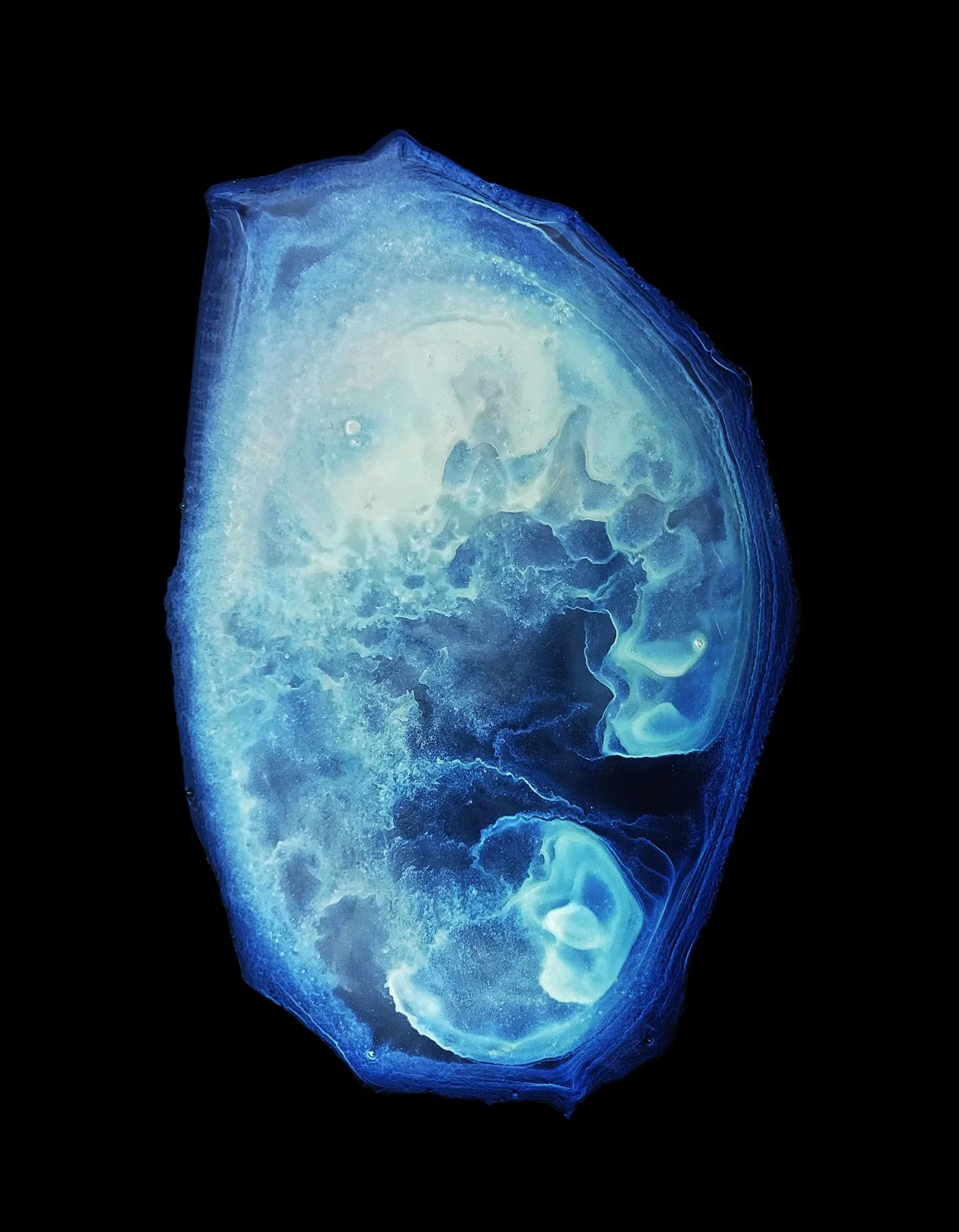
Puddle Scan, 2025. Copyright: Mirja Busch & VG Bild-Kunst.
Because of their site-entanglement, puddles serve as unique windows into their surroundings and function as observatories. Puddles illuminate their environments through several distinct layers. A puddle invites you to notice the ground and pavement. They reveal textures, colors, patterns, defects, and irregularities, and provide historical perspectives: in Berlin, for example, puddles show how East and West parts of the city are still paved differently. Documenting puddles thus also means documenting urban materiality and political history.
Looking closely at a puddle’s site, you notice the micro-topographic properties of surfaces — the landscape of depressions and elevations that influence the dynamics of puddle formation. The water in one puddle is always connected to the water of the entire area; during a rain event, rain covers the ground and the water flows through the whole place before it reaches a spot where it stagnates as a puddle. This means that puddles are not just composed of water but of all the materials they encounter on the ground, in their catchment area. They are cocktails of dust, pollution, and substances. Wind adds further material. Puddles can be seen as active collectors.
I have collected and archived puddle water, too, especially in Berlin. I wanted to find out about the puddle’s volumes and if they could also be distinguished by their water. The surprising differences in coloration revealed how puddles become a medium in which traces of places and specific human practices can be read. Similar to the photographic archive, the liquid archive asks whether the specificity of urban functions is reflected in puddle water. A collaboration with an eco-toxicologist and the analysis of puddle water samples from Antwerp showed how puddles in different city locations have very specific chemical fingerprints. These profiles do not only talk about the present use of a site but can also reveal information about the historic use. This information comes from the soil and sediments that dissolve in the water. A puddle harbours stories and can serve as a window into the past.
In the context of the climate crisis, puddles have evolved into “contact zones” or “sentinels” where planetary transformations become observable on a micro level. As anthropogenic companions, puddles thrive in human-created environments. They can serve as “magnifying glasses” for ecological changes. They illuminate the extreme conditions of non-human urban life. Puddles can be seen as storied micro-biomes and weather archives. They show how infrastructure, water cycles, and climate interact. They tell us about ecological balance, the presence of rain, or the lack of rain.
It is also interesting to understand puddles in their verticality. They are not just flat surfaces but “pillars” connecting the ground and the sky. They reveal the dynamic interface between the Earth and the atmosphere, showing how water infiltrates the ground to connect with groundwater or evaporates to contribute to cloud formation.
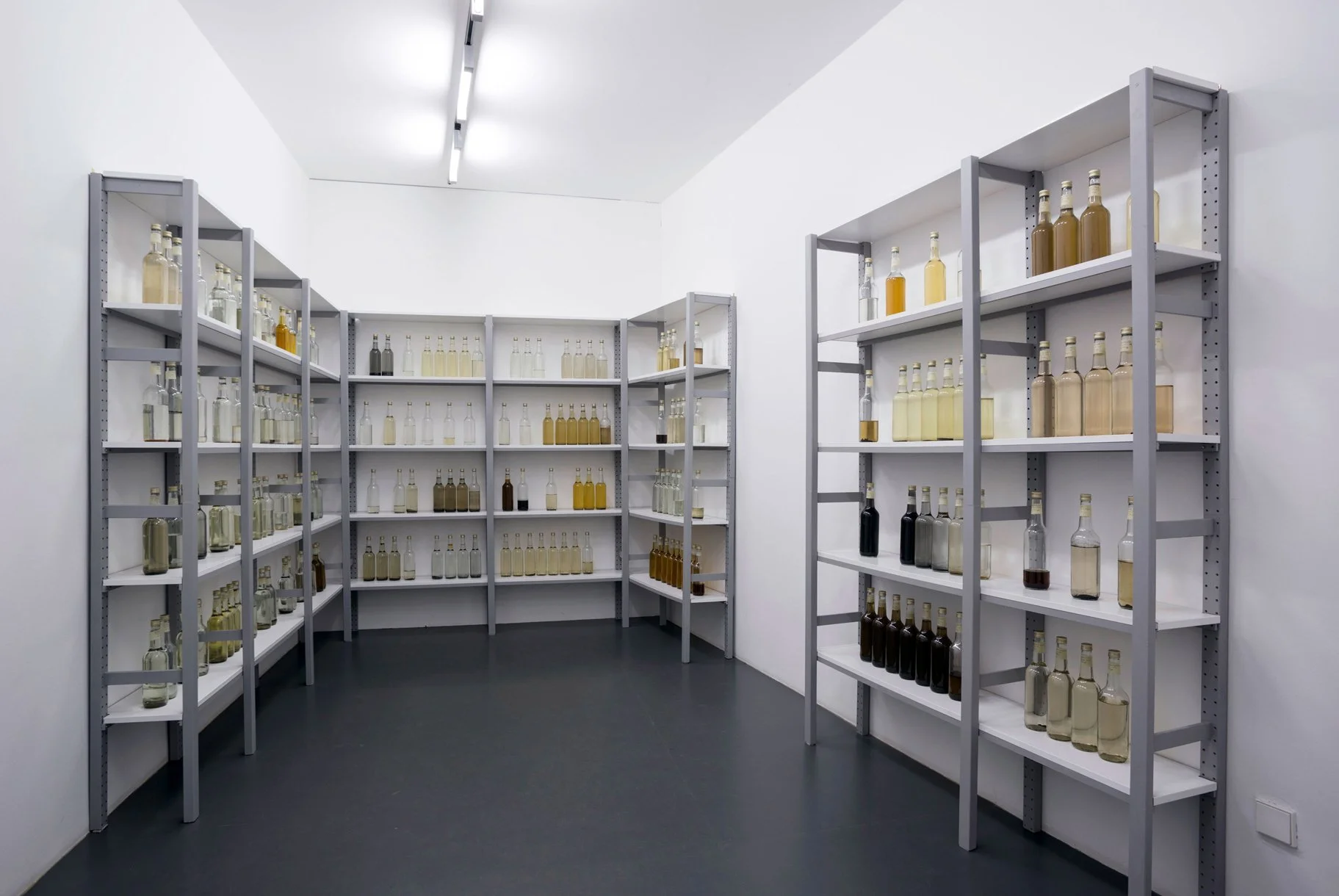
Pfützenarchiv | Puddle Archive, 2014-2024. Archive of puddle water samples. Copyright: Mirja Busch & VG Bild-Kunst. Image: Andreas Fux, cubus-m, Berlin, 2014.
Over time, you’ve archived puddles using different approaches. Could you walk us through your methodologies? How have they evolved?
During the years I have developed various modes of archiving and relating to puddles. It started with the photographic archive and collecting puddle water. It was a very poetic and aesthetic approach which I first summed up in an exhibition in 2014. After the show I continued the photographic archive but worked on other topics. I worked on Land and Environmental Art, was busy with co-directing a summer school in the Swiss Alps, had care work to do, and I was into another long-term project on distilling art theory books.
In 2019 I returned to the puddles. That year I was invited to co-write an academic article on puddles and sidewalks, to create an artistic walking tour in Kreuzberg, and to exhibit the liquid puddle archive again. During those five years the climate crisis had become much more present in everyday life. Berlin started to experience drought, and the archiving of puddle water suddenly was no longer only poetically observing urban places. It suddenly raised different and more drastic questions. The context had changed.
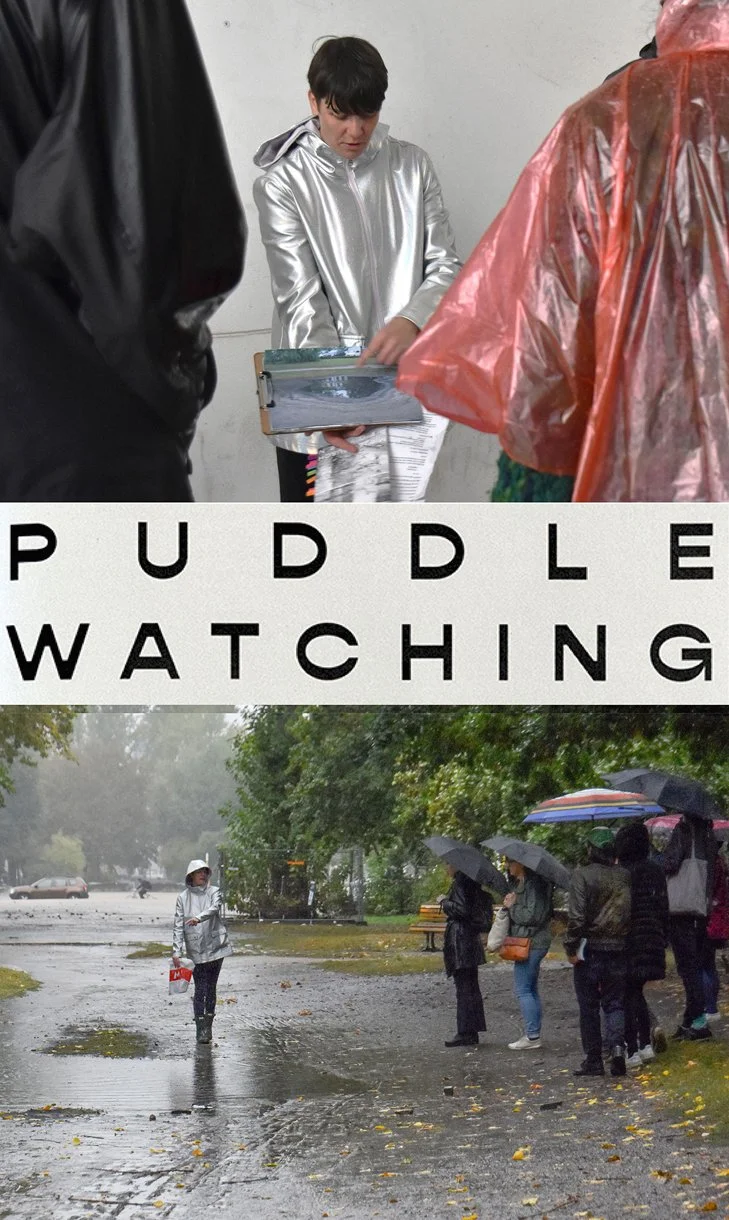
PUDDLE WATCHING, 2019–ongoing. Copyright: Mirja Busch & VG Bild-Kunst. Image: Julia Kawka. Moritzplatz, Berlin, 2019.
Especially through preparing the walking tour, new methods and research were triggered. One basic issue was language. To guide a tour and talk about a phenomenon you need words to describe it, to distinguish differences, to contextualize it.
Next to the fieldwork on the street – observing puddles in their natural habitats over extended periods to understand their embeddedness and behavioural patterns– I started to do a lot of off-site research. I was sure I would find information on puddles as water bodies in hydrology, in street engineering books, or in urban ecology. But surprisingly there was no such thing. Neither was there a differentiated language or a clear definition of the puddle. I developed my own terminology and classification system inspired by early cloud identification.
I started categorizing puddles into basic shapes—such as the Shield, Cloudlet, and Groove puddle e.g.—and identified structural components like the puddle aura, belly, evaporation rings, and sole. This process resulted in the essay: Puddle Watching, On the Nature and Behaviour of City Puddles, parallel to the walking tours. Artistic writing and conceptualizing became an important method to open the field toward a more scientific approach.
As the climate crisis brought more frequent droughts and extreme weather to Berlin, my methodology shifted toward a more speculative Puddle Forensics, focusing on the absent puddles during dry periods. This approach treats puddles as witnesses or sentinels of environmental change. Most recently, my work has been influenced by different art-and-science collaborations, which have been especially interesting in learning how scientific methods produce knowledge in comparison to what I do.
In general, my methods and approaches are very open. If you stick to the same topic over so many years, different methods and new approaches are crucial to create a development in your practice. And new layers and questions in my work come along with new methods and techniques. Currently I am very much into material experiments and digital scans.
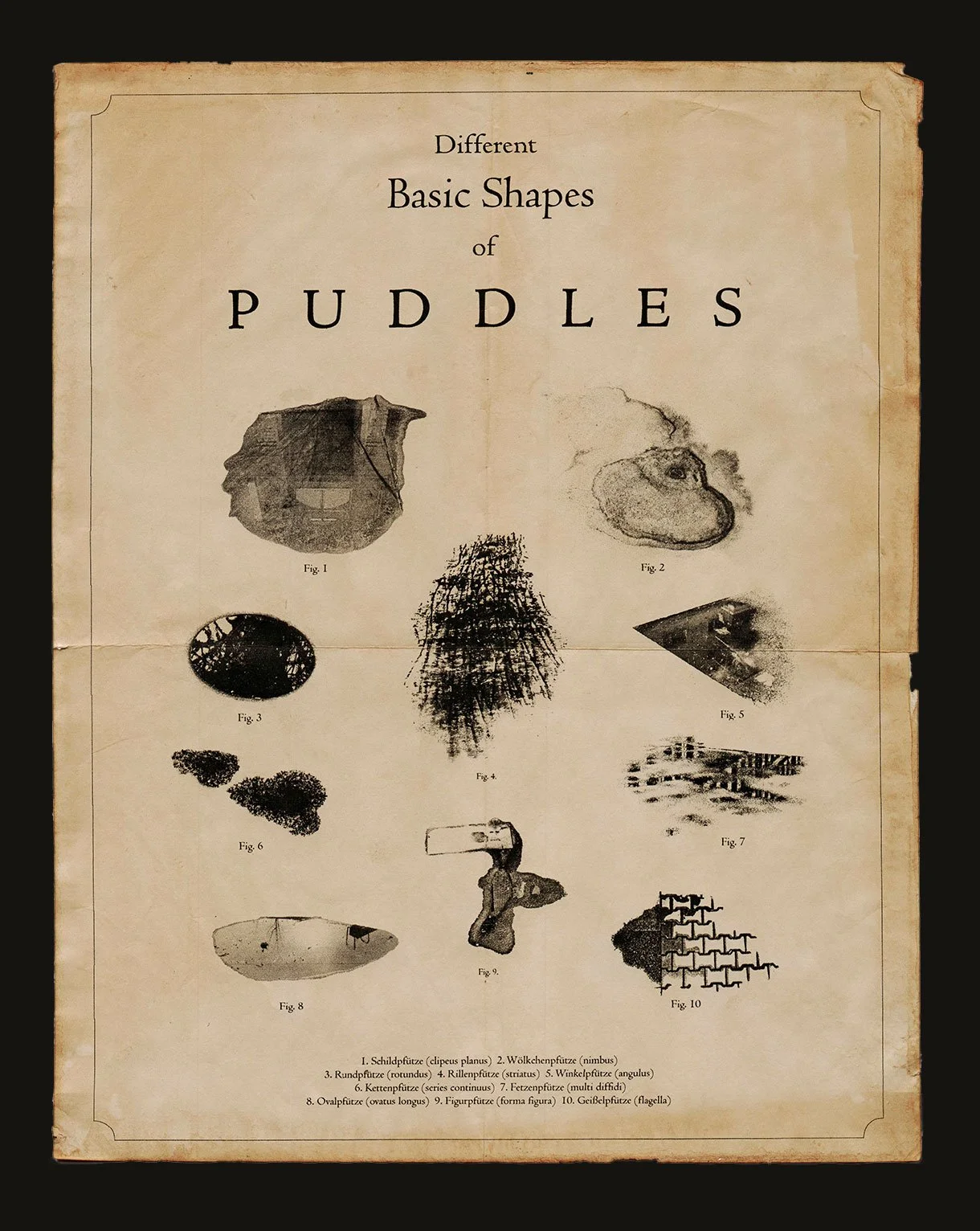
Basic Different Shapes of Puddles, 2021. Copyright: Mirja Busch & VG Bild-Kunst.
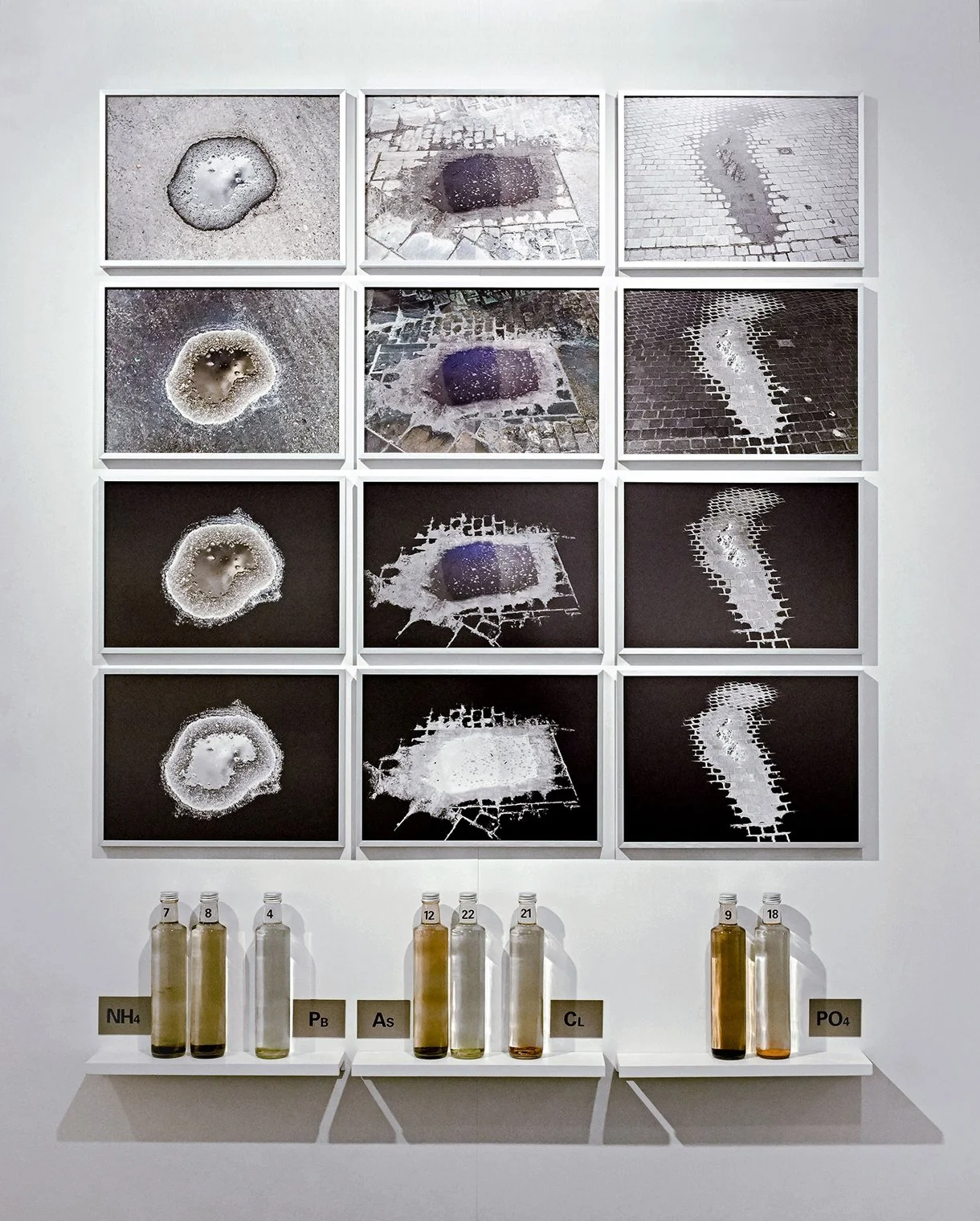
Heavy Metal Vibrations, or The Dissection of a Water Body, 2023. Detail. Copyright: Mirja Busch & VG Bild-Kunst. Flanders Architecture Institute, Antwerp, 2025.
Why do you think the puddle phenomenon is so often overlooked?
So far, puddles do not have much relevance to humans. In times of increasing droughts this might change. As temporary water reservoirs they might gain another importance. As most environmental phenomena they do not function as intentional objects of our experience or practice. Instead, they remain in the realm of the unseen and unspoken, acting as background phenomena that tend to resonate rather than demand active engagement. While puddles are omnipresent whenever it rains, they exist consistently on the edge of our awareness.
“…a puddle is not seen as a natural process or a site of interest, but rather as a damage, a defect, or an irritation.”
Other than for plants, microbes, insects, animals, or small kids, puddles do not have a function or relevance assigned to them. Our Euro-American modes of perception are still heavily influenced by the modernist urban landscape, which is built on the idea of a perfect, functional, and—most importantly—dry surface. While in the 19th century it was important to seal soils for hygienic reasons and to control unwanted waters, we are now on the edge of changing cities and climate adaptations. Within this modernist framework, a puddle is not seen as a natural process or a site of interest, but rather as a damage, a defect, or an irritation. Because they represent a failure of the intended “perfect” infrastructure, we might be conditioned to ignore them or see them only as unclean and something that needs to be fixed.
So, in many cases, puddles do not force themselves into our lives through necessity. As with my London “original” puddle, the pavement is often wide enough to simply pass by, meaning there is no conflict created. In a way it is in the nature of the puddle to be overlooked. If it would create a conflict, it would probably be seen as something else—as flooding, as structural damage, as an obstacle that has to be removed to guarantee infrastructural and mobility safety, and dry feet, of course. Cities are led by the idea of human comfort. This ignorance creates the puddle’s in-between mode of existence.
The limitation of our language is another reason why they are not acknowledged – in German but also other languages. I couldn’t find any language with differentiated names for different puddles. And unlike other environmental phenomena that have been categorized and named—such as clouds for example—puddles are often placed into a single, generic category. Without a nuanced terminology, it is difficult for the phenomenon to be recognized and discussed as a complex subject.
But it is also in their physical nature. Puddles are processes. As soon as they appear, they start to disappear. They evaporate, infiltrate and are constantly in flux. Their time of presence is short, and the periods of absence can be very long. If you recognize them as specific sites on the street, you will also recognize their places by the sediment accumulations they leave behind during their absence. Once they have slipped into your awareness, it becomes difficult to not notice them anymore.
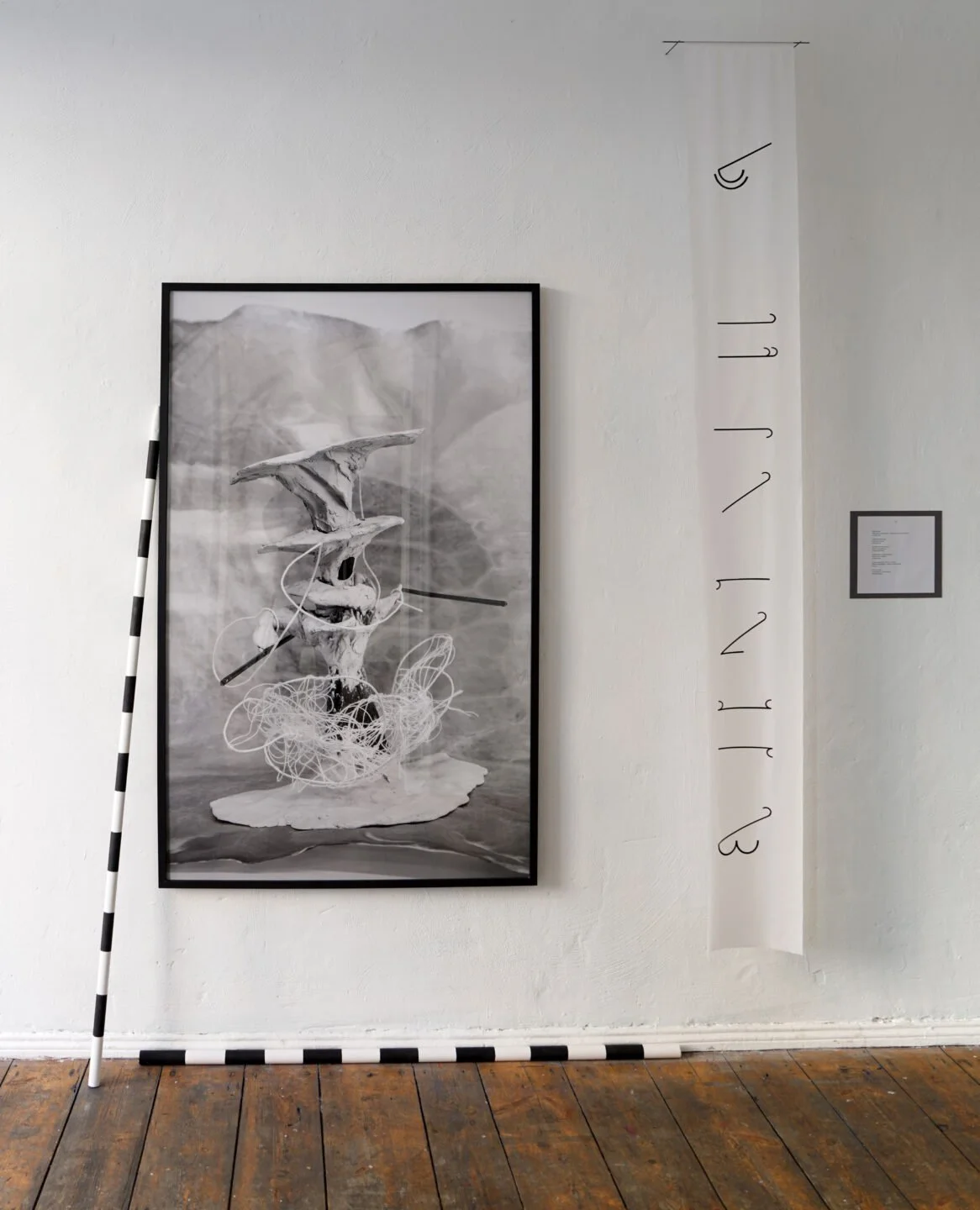
ZWISCHEN WETTER WESEN, 2025. Copyright: Mirja Busch & VG Bild-Kunst.
Images: Frank Freitag. Raum für drastische Maßnahmen, Berlin, 2025.
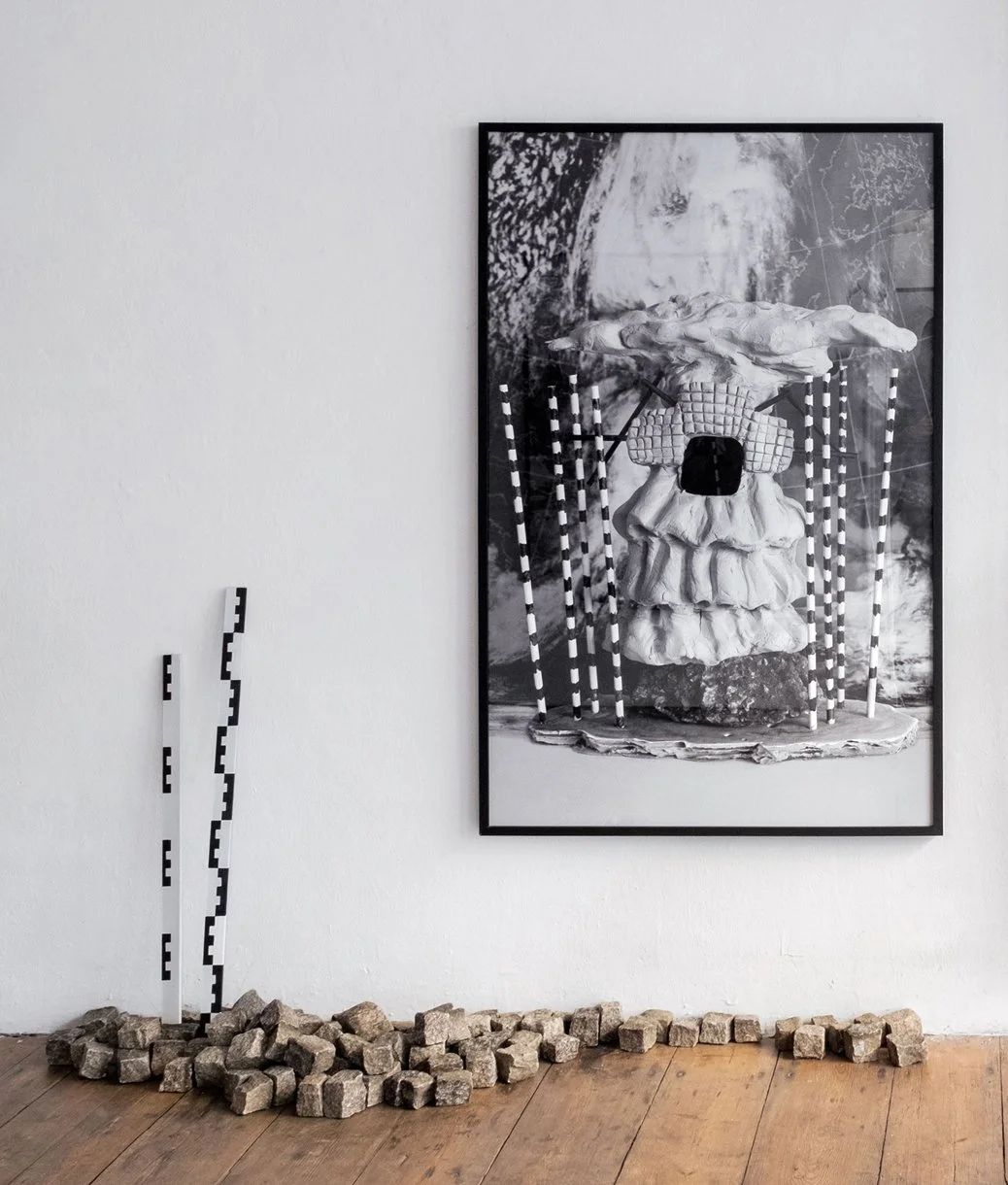
In 2025 you presented a photographic series entitled ZWISCHEN WETTER WESEN, which personified air pressure systems. What inspired this project?
The project ZWISCHEN WETTER WESEN (“Among Weather Beings”) initially started in 2020, during one of these moments when I was, again, waiting for puddles to reappear but there was no rain in sight. Following weather forecasts and apps is part of my practice. I wished for rain and read the forecast and checked weather archives and weather reports about past rain events. Interestingly, in meteorology, weather fronts are distinguished by forenames. It is Barbara, for example, who brings the rain, and sunny Xavier who blocks her and doesn’t want to leave the scene. Reading the reports, I couldn’t help thinking about the weather fronts as characters with their own agendas, like in mythologies and tales. Weather is narrated by these reports and sometimes these weather tales sound quite absurd.
To distinguish different weather fronts, they are given forenames. In the German-speaking area this is done in alphabetical order and people can participate. So I decided to get in touch with the meteorologists who are involved to name a weather front with a name related to rain, hoping to do my own magic and to create my own rain shower – and therefore my own puddles. The only letter available that year was a female name starting with X. After searching for names with rainy meanings, I found the name Xunav, which means light rain, drizzle, or mist. I suggested the name, it was accepted, and on December 4, 2020, the low-pressure area XUNAV was “born” above the Gulf of Genoa.
For several days I followed XUNAV’s actions and journey north through meteorological data, reports, and headlines. She caused rain in Italy, heavy snowfall in the Alps, but then, disappointingly, passed over Berlin without any precipitation. She headed further north and disappeared after some days without further action over Russia. My attempt to influence the Berlin weather failed, but it made me follow the atmosphere in a very careful way. I talked to meteorologists, applied for funding with the idea of creating a kind of screenplay and installation with these weather characters, and finally realized the project and exhibition in early 2025.
The exhibition made apparent that meteorology is not just about data; meteorology is to a great extent about storytelling. Weather reports are shaped by specific cultural meanings and often gendered in problematic ways. What happens if we gender the weather anyway? My aim with the exhibition was to challenge this storytelling and also to react to the gender-stereotypical descriptions in official weather reports. The exhibition approached air pressure systems as mystical, scientific, and changeable figures. “Weather Beings” like LAMBERT, XUNAV, or BERND, were presented as large figurative portraits and combined with sculptural objects and short texts with novella-like elements, so that the weather becomes not just a backdrop, but the protagonist. The series of “Weather Beings” was combined with banners of meteorological symbols and interrupted by another photographic series,“Klimageister”, capturing uncanny light reflections from rainy Times Square.
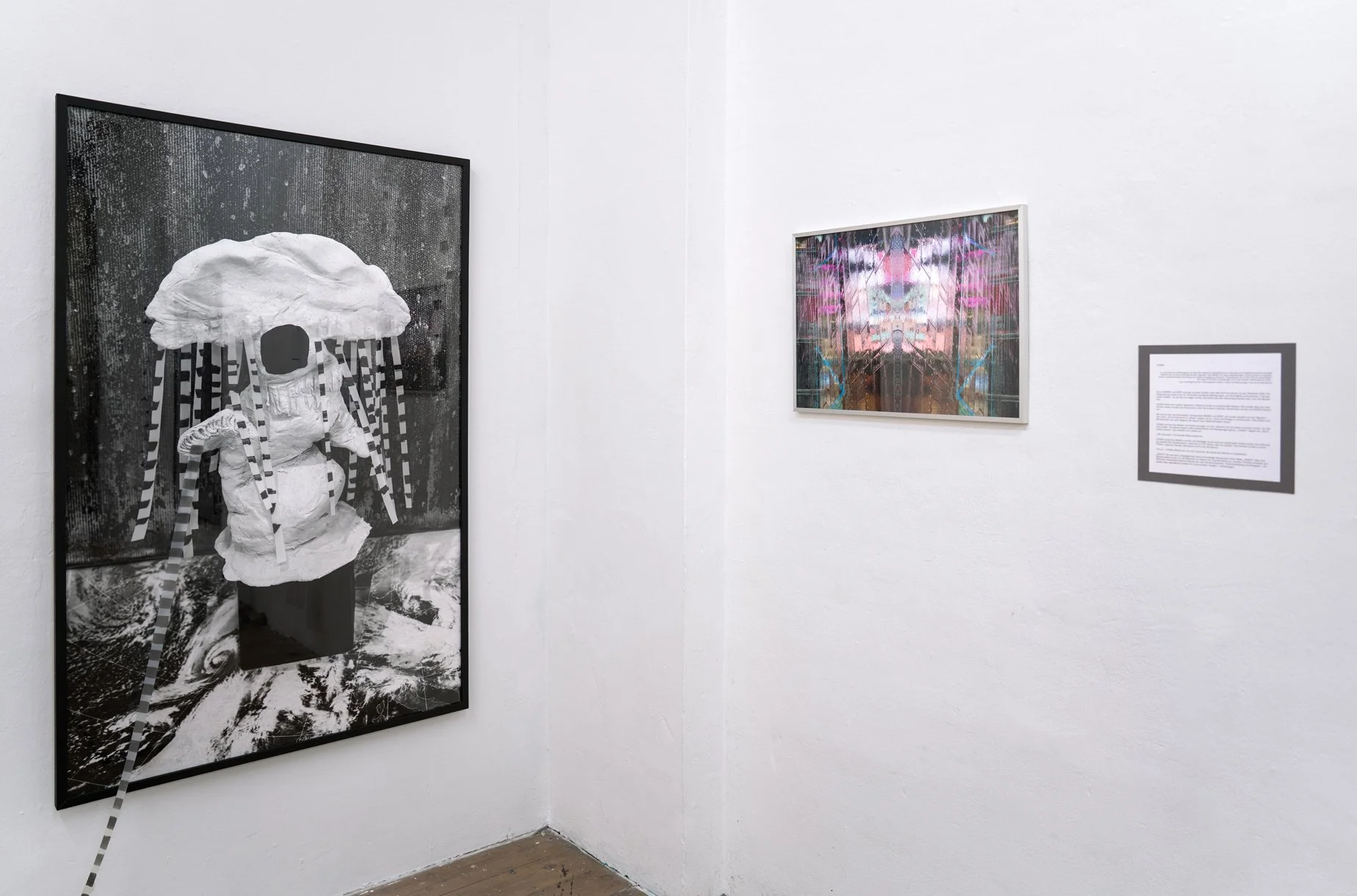
ZWISCHEN WETTER WESEN, 2025. Copyright: Mirja Busch & VG Bild-Kunst. Raum für drastische Maßnahmen, Berlin, 2025.
This project invites viewers to develop empathy towards weather, blurring the boundaries between science, art, and personal experience. What’s gained when these disparate worlds collide?
What happens when something collides? It swirls, it might fall into pieces, it rearranges, merges, deforms; something new appears.
I think when science and art collide, there should be a synergy that expands the boundaries of both fields, allowing them to uncover new things — like narratives that were previously invisible. We might have different methods and maybe different obstacles, but we seek something very similar: to challenge how we perceive and tell stories about the world. But this only works if we can connect it with everyday experiences and stories. The highly visible but often abstract discourse surrounding the climate — such as planetary crisis, protection, and adaptation — needs mediation. It needs more than disastrous storytelling. Producing new knowledge, new modes of relating, and new forms of visibility is critical. This is how intersecting art and science can really influence and transform our perspectives, make us aware, and make us care.
In my practice, opening up new spaces for engaging with the weather or with puddles invites moving toward a more eco-centric, multi-species view. This shift also involves a form of empowerment, as we move from being observers of a distant “spectacle” to becoming participants in a shared urban ecology and a shared planetary crisis. Puddles are city dwellers just as we are. Co-habiting and co-existing with puddles and the ecologies they sustain requires multiple knowledges, perspectives, and involvement. In this way, the collision of science, art, and personal experience works when it transforms relationships between knowledge and feeling, observation and responsibility, and the human and the other-than-human.
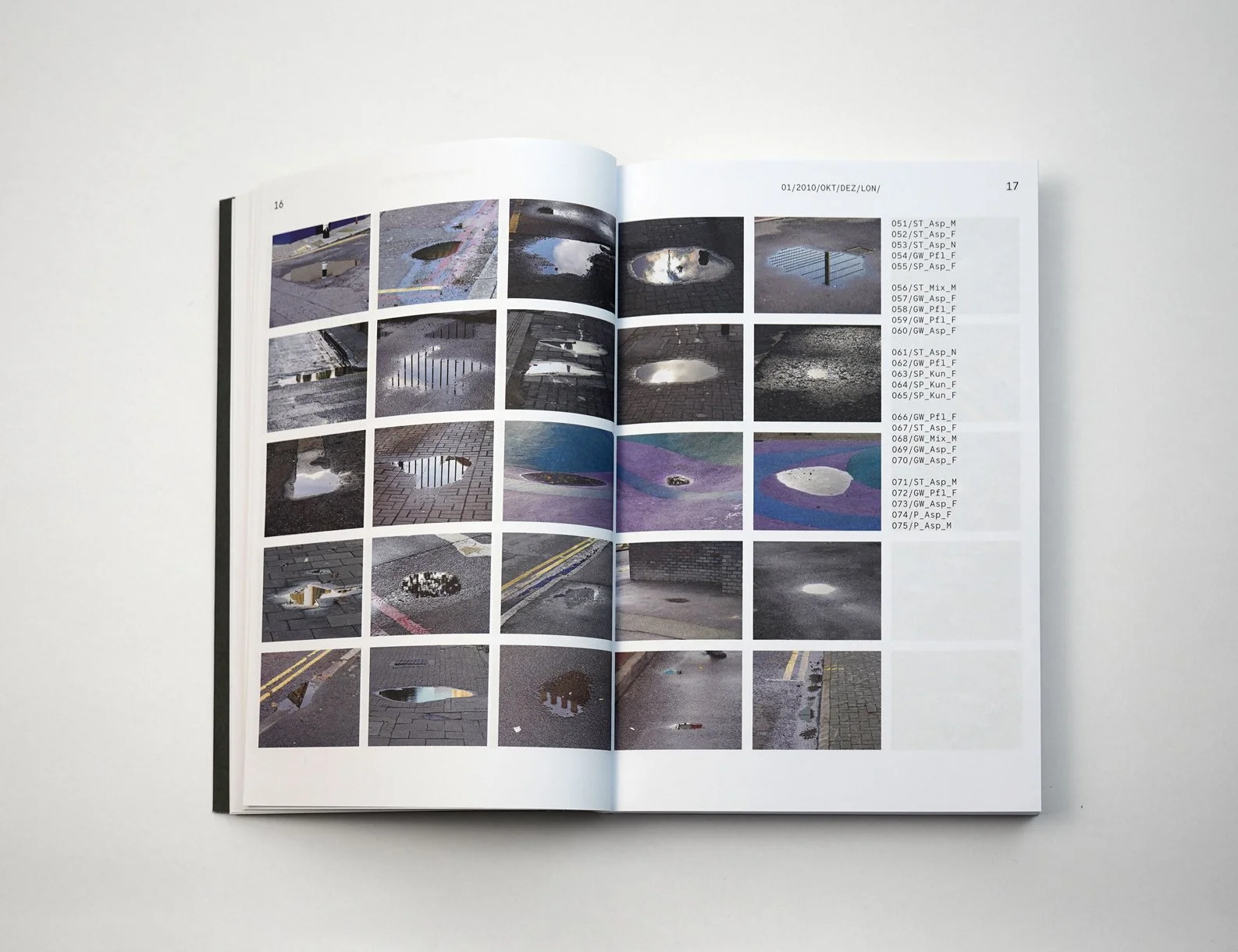
PFÜTZENARCHIV, Publication, 2024. Copyright: Mirja Busch & VG Bild-Kunst.
Through your practice you explore “planetary care.” What does this mean to you?
Planetary care is a big word, and I am not sure how my practice relates to it in detail. All I can say is that I started caring about puddles, I started caring about the weather, and through that, I started to care about the larger hydrological and meteorological processes in our environment. It was the puddle that offered me new access to these entangled ecologies. By caring about something small and seemingly trivial, I gained a new perspective and realised the gaps in our knowledge. Care is about awareness and about how we relate to others or to other-than-humans. When I become aware, I can develop empathy, and that triggers new forms of care. Awareness creates care, care creates involvement, involvement creates concern, and concern creates the disposition for action. In this way, awareness seems to be a very good starting point for change.
Planetary care, in this sense, means shifting our gaze toward the “unseen and unspoken” parts of the world: the puddle at the edge of a sidewalk, an unnoticed plant colony, a contaminated patch of soil. These sites are deeply entangled with larger systems of life, ecology, and climate. To care is to slow down, to notice, and to understand these entanglements. It is to dissolve the artificial separation between Nature and Culture. It is to move from being a passive observer to an active participant, acknowledging shared responsibility for water, soil, and the environment. This requires a mental shift. It is always good to question the “world as we know it” and to consider whether we were taught to see it in a certain way, potentially missing all the other layers in the background.
What are you working on at the moment?
I am currently writing a lot. I am working on an artistic manual or guidebook to a certain forest terrain; collaborating on arctic entities, melting processes, permafrost soils, and non-linguistic communication; and continuing to develop my Institute of Puddleology, where all my research comes together. I am also developing a speculative genealogy of Puddleology, exploring the beginnings of scientific disciplines in the 19th century, as well as gender roles and power structures.