
New Voices
Shinji Wakasa
Exploring thresholds between presence and absence, life and death, memory and material space.
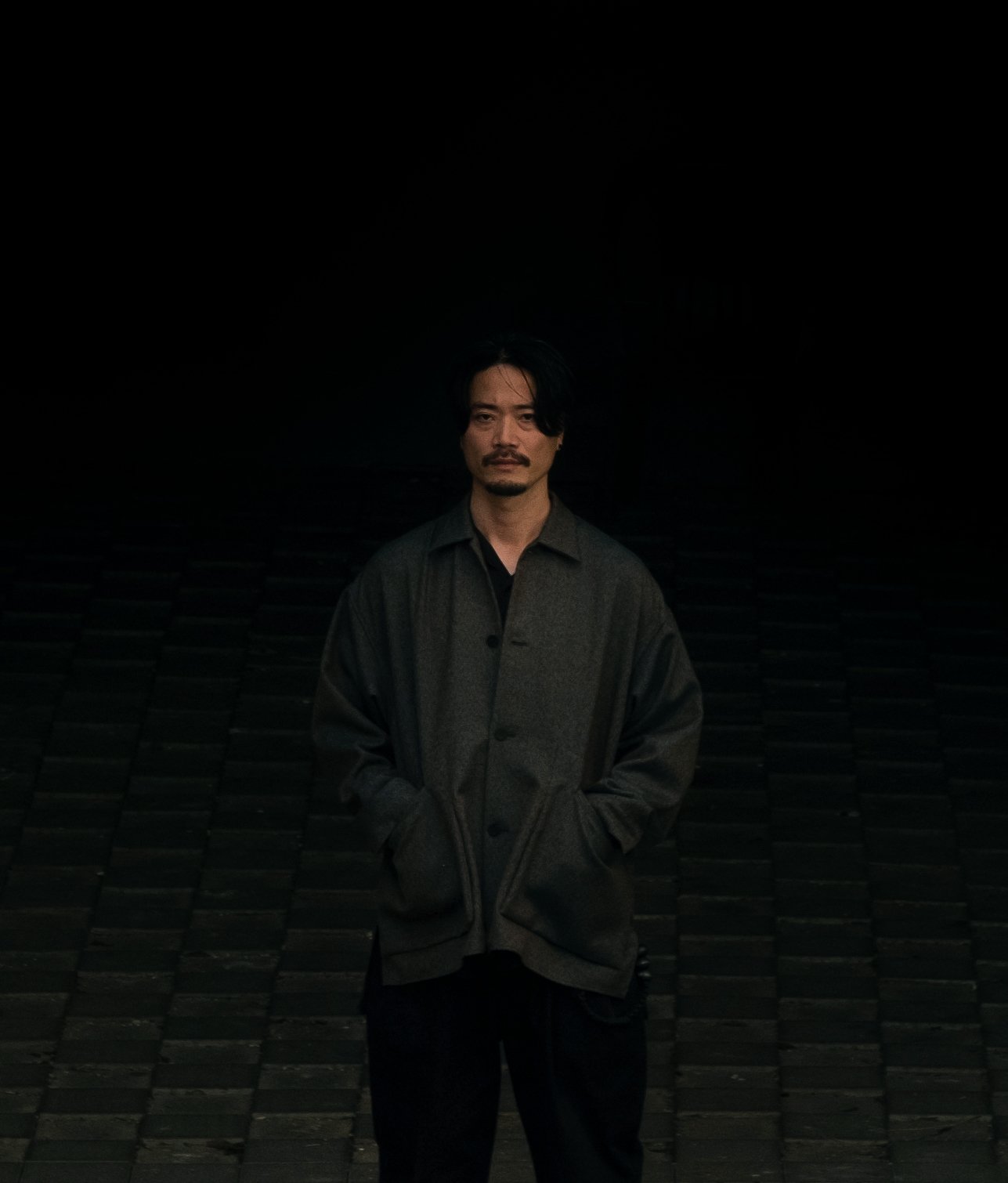
Shinji Wakasa is spotlighted in the New Voices series, which highlights emerging artists who showcase their art on ArtConnect.
Shinji Wakasa is a Japanese artist and composer working across sound, installation, moving image, and spatial practice. His recent work has developed from a personal experience of prolonged life support and the gradual loss of reciprocal communication with his mother, leading him to question how something inaccessible can nevertheless continue to act upon the body.
Working with multichannel sound, film, light, objects, and site-specific research, he explores thresholds between presence and absence, life and death, memory and material space. His current practice is expanding this inquiry toward wider social and historical structures, including war, occupation, borders, military infrastructure, and the ways their traces become absorbed into everyday life.
Curious to gain more insight into his artistic approach, we asked Shinji a few questions about his practice.
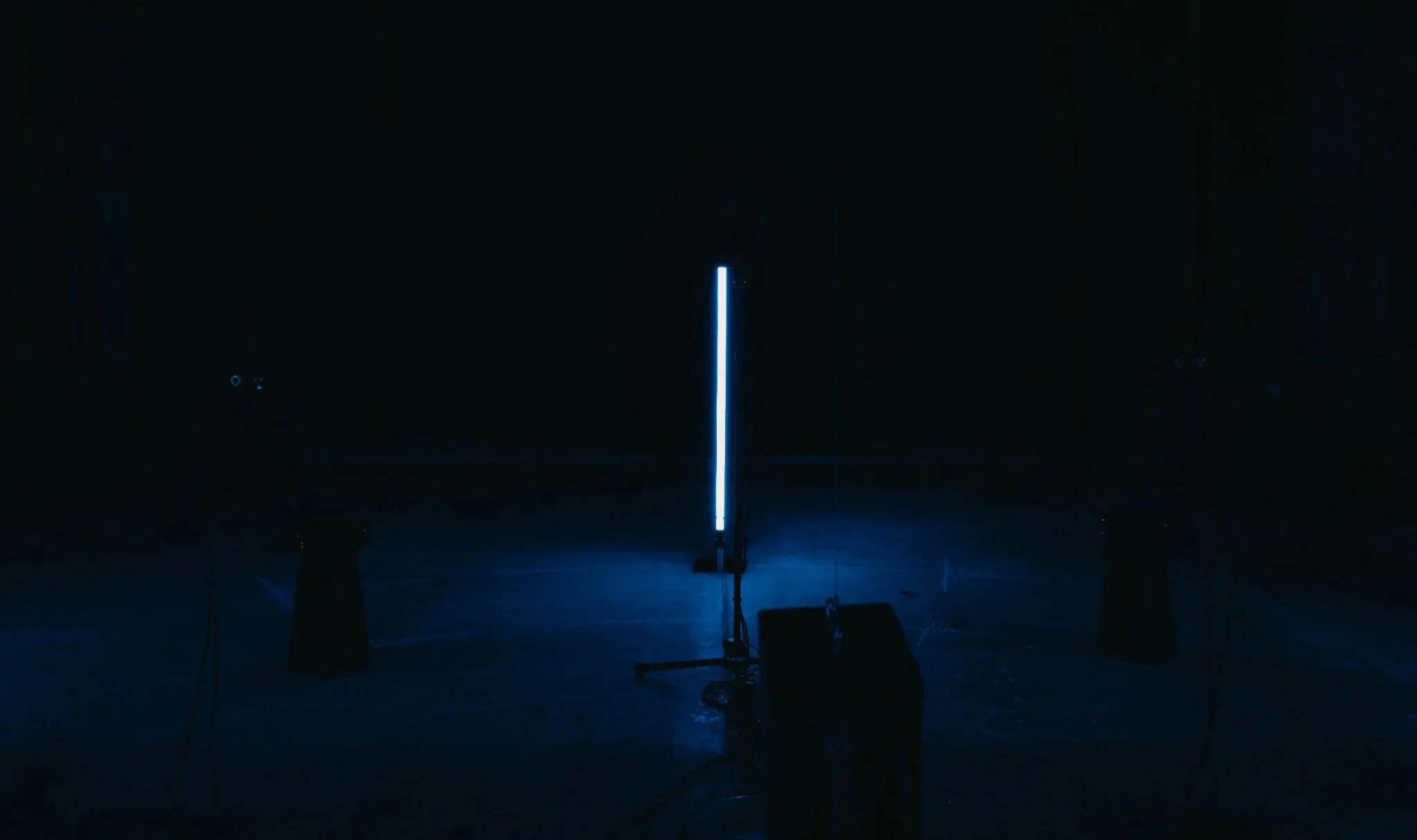
Corps-flower, 2024. Courtesy of Galeria Foco and Photodocumenta
How did you first get into working with sound and how has your relationship with the medium evolved over the years?
I first came to sound through composing music. For many years, I was primarily interested in how sounds could be organised over time—how one sound could relate to another and form a musical structure.
Gradually, however, my attention shifted away from sound as something contained within a composition. I became more interested in what happens around sound: how it occupies a space, how it reaches the body, how distance changes it, and how the listener’s position alters what is perceived.
This gradually changed the way I work. Rather than beginning with the question of what kind of music I want to make, I now often begin with a condition, a space, or a question. Sound remains central to my practice, but it increasingly exists alongside moving image, objects, light, documents, and architectural elements.
You often treat sound as something that can be physically experienced, rather than simply heard. Where does this distinction lie and how does this manifest in your work?
For me, the distinction is not simply between hearing a sound and feeling its vibration. I am interested in the fact that sound cannot be separated from the space and the body through which it is experienced.
A sound changes according to distance, architecture, movement, and the position of the listener. It can appear very close without having a visible source, or act on the body before we consciously identify what we are hearing. In that sense, sound is less an object than a relationship.
Multichannel systems allow me to work directly with this condition. I can distribute sound across a space, make it move, disappear, remain at the edge of perception, or create different acoustic situations depending on where someone is standing.
The work therefore does not exist entirely in the speakers or in the composition. It emerges through the encounter between sound, space, and body.
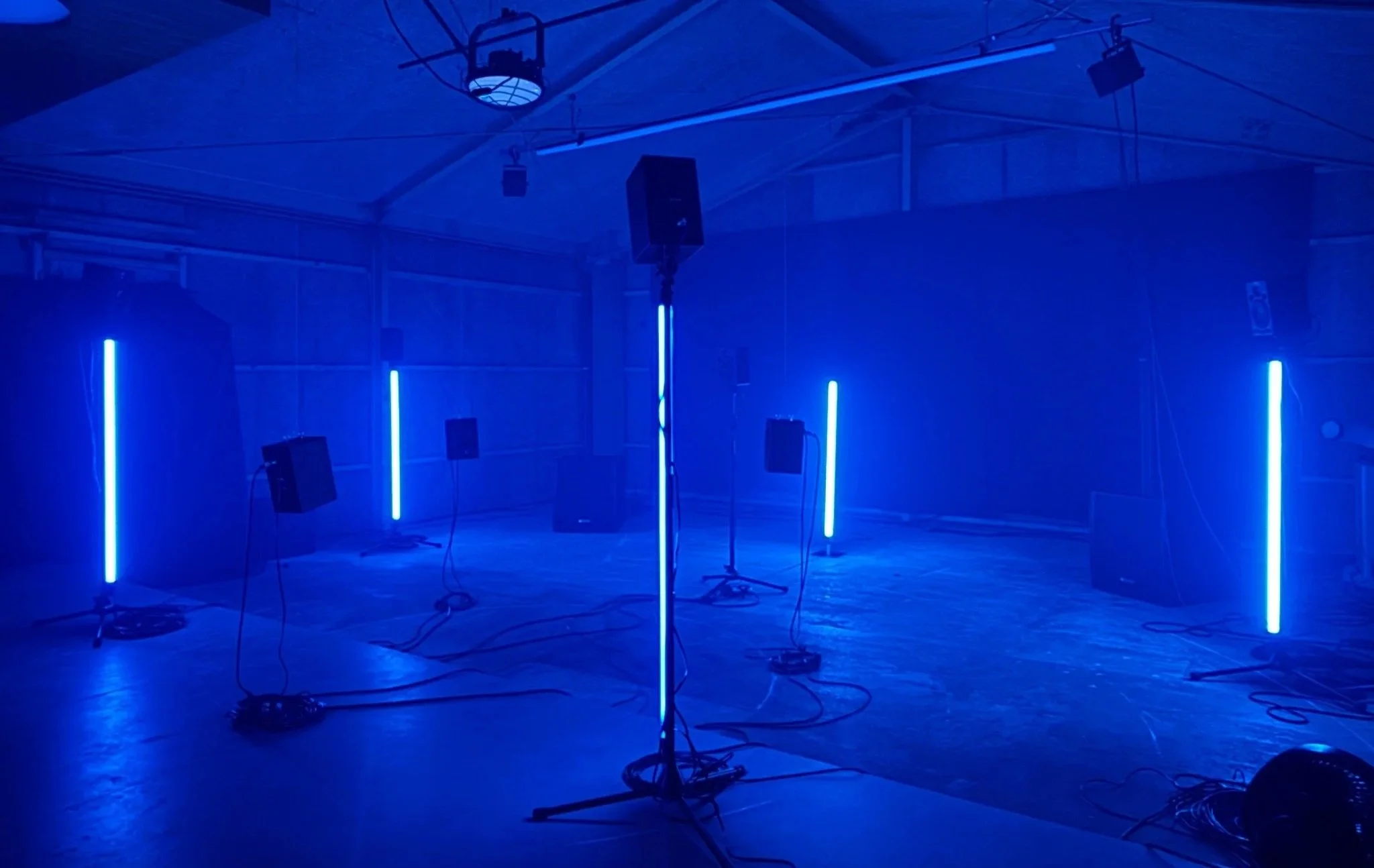
Pollinator, tired pollinator and drone, 2024. Courtesy of Galeria Foco and Photodocumenta
Your multichannel sound installation HAKUMEI 2.0 explores sound as a spatial and perceptual medium, designed to reshape the listener’s sense of space, time, and bodily presence. How does the work unfold over time and is it felt when moving through the work?
HAKUMEI 2.0 does not unfold as a linear narrative. I think of it more as a continuously changing spatial condition.
Sounds emerge from different positions, approach or recede, and sometimes become difficult to distinguish from the acoustic character of the space itself. There are moments of greater density and moments when very little seems to happen. This creates a sense of time that is slower and less goal oriented than in a conventional musical composition.
Movement is important because there is no single ideal listening position. What appears distant from one place may become very close from another, and relationships between sounds change as the listener moves.
I wanted the audience to become conscious not only of the sounds themselves, but also of their own position within the space—almost as if the act of listening makes the dimensions of the space temporarily visible.
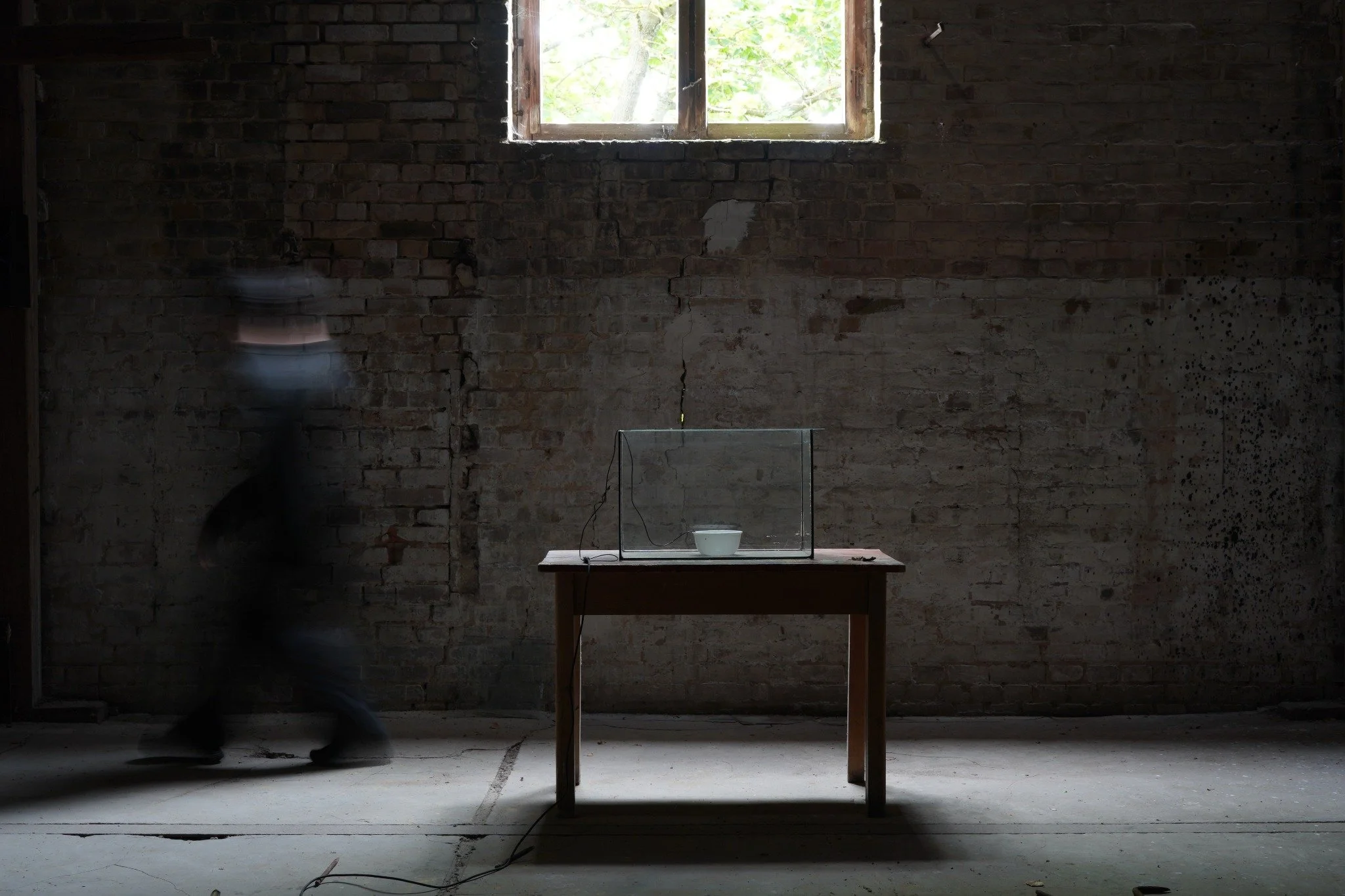
At the benining the wound, 2025. (Unfired piece). Courtesy of Pedro Pina CAM – Gulbenkian Foundation
The Caul is a multichannel sound installation built around the idea of the membrane as a sonic condition rather than an image. How did this work begin and how was it developed?
The Caul and Sus<caul>Pend belong to the same continuing line of work around the idea of a membrane. The practice developed through The Caul carried this idea forward, and I was also deeply affected by a line from Shuji Terayama: that life contains death within itself. I began thinking of life as something that holds death inside its own contour, preventing it from spilling out.
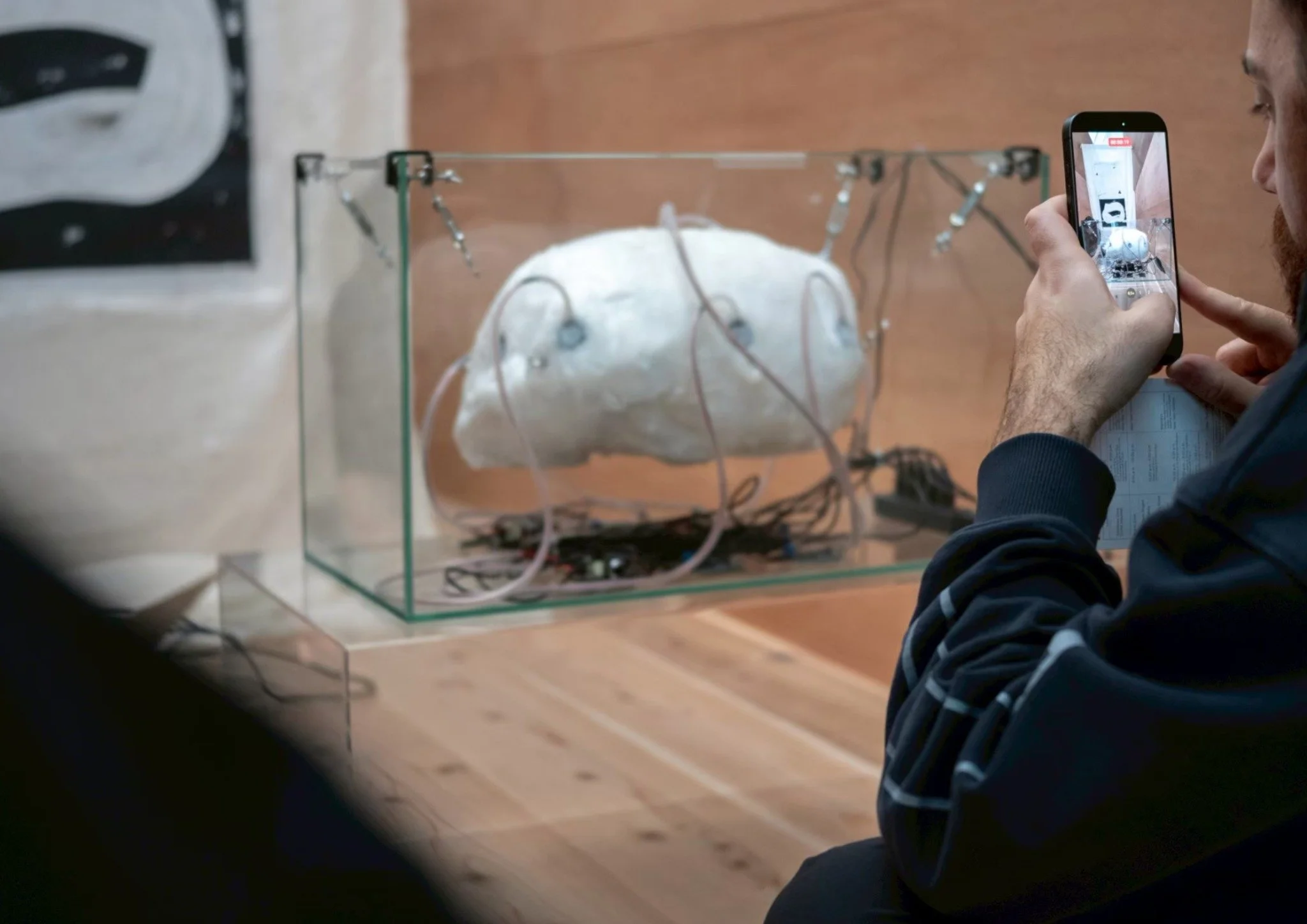
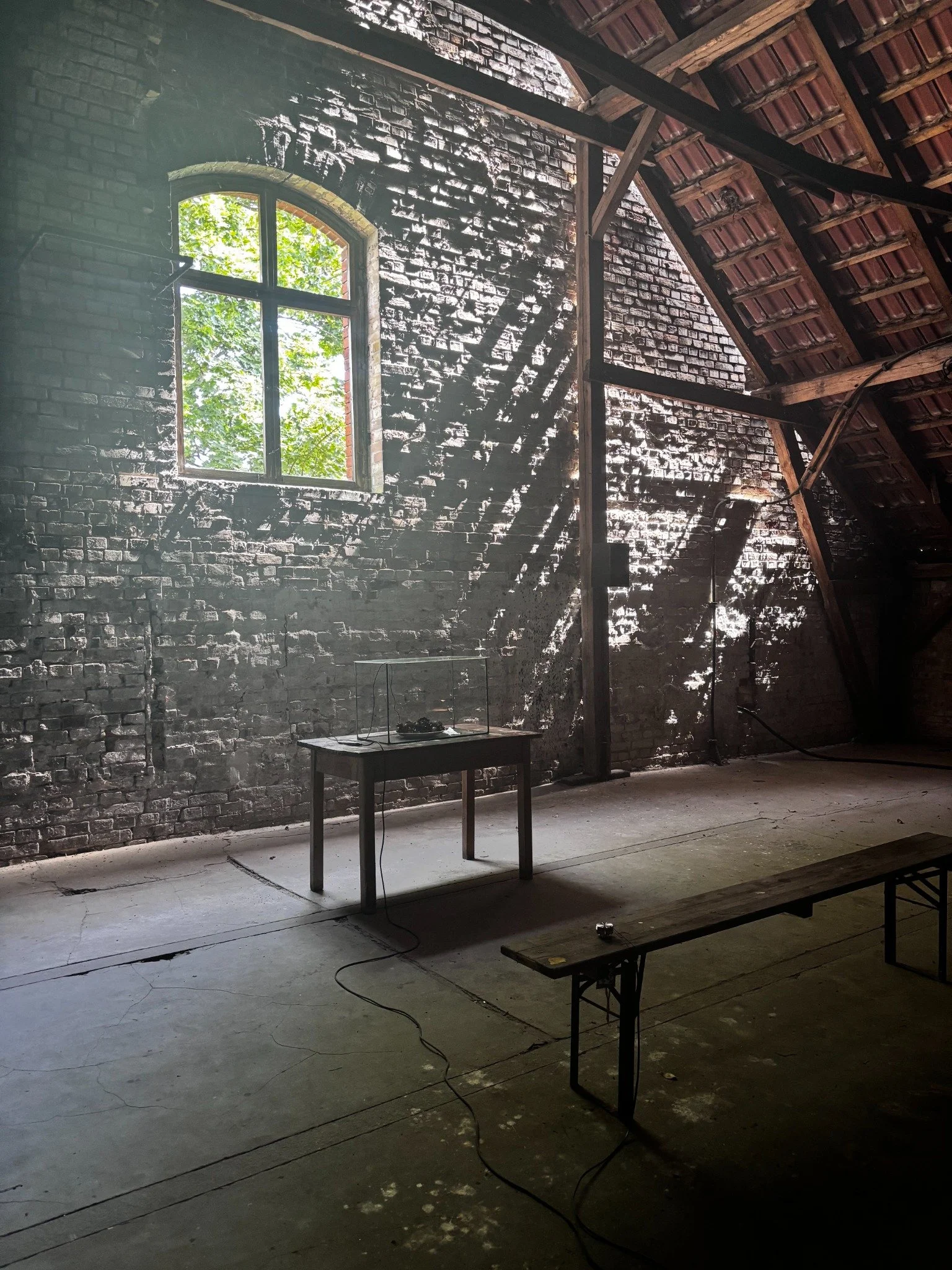
The membrane became a way of approaching this condition. It separates and contains, but it also allows pressure, vibration, and information to pass through. In The Caul, the glass tank became important for precisely this reason. Something inside it can be clearly seen, but cannot be directly touched. For me, this corresponds closely to our relationship with death: we know it is there, but while living we cannot fully enter or access it.
The 4.1-channel system in The Caul was simply a technical limitation; I had originally wanted to work with more channels. In Sus<caul>Pend, I pushed this spatial approach further by placing multichannel systems developed through HAKUMEI 2.0 and The Caul inside what I think of as a membrane of life.
I had originally imagined working with a large vinyl membrane, but glass became more significant because of its strange duality: it is physically present while almost disappearing visually. It is a semi-material boundary that, together with sound, can shift the perceptual dimension of something that remains untouchable. The word “caul” also carries the image of an amniotic membrane.
In Sus<caul>Pend, a white blob-like form is suspended inside the tank. I did not want it to represent a particular organism. I wanted it to remain ambiguous—something that appears organic without actually being alive. This is also why I deliberately avoid using organic materials. The form is artificial, imitating something living. That artificiality is important because my experience of my mother’s prolonged life support confronted me with a state of life being maintained through technological systems rather than simply following a natural biological course.
The act of suspension is central to the work. The object is literally suspended, but so are sound, life, death, and communication. They remain inside the glass without resolving into one condition or another. For me, the work is less about representing these things than about holding them in a state where their boundaries become unstable
“Sound can reach and affect the body without becoming fully visible or graspable. It can indicate the presence of something we cannot touch, and it can remain after its source has disappeared.”
Courtesy of Pedro Pina
A recurring idea in your work is the relationship between presence and absence. What does this mean to you, and how do you explore it through sound?
This question became much more concrete for me through my mother’s prolonged life support. During that period, her body remained physically present, while reciprocal communication gradually became impossible. I found myself confronting a strange condition in which presence and absence could no longer be clearly separated.
That experience changed the way I think about sound. Sound can reach and affect the body without becoming fully visible or graspable. It can indicate the presence of something we cannot touch, and it can remain after its source has disappeared.
In that sense, sound became a way for me to think through a broader question: what happens when something inaccessible continues to act upon us?
I am now beginning to understand this question beyond the personal sphere. Historical events, political systems, borders, and military infrastructures can also become partially invisible while continuing to structure everyday life. What began for me as a question of bodily presence and loss is therefore gradually expanding into a way of thinking about how absent or obscured forces continue to shape the present.
Many of your works invite the audience to listen differently. What kind of experience do you hope people take away from your installations?
I do not really want to determine what someone should feel or understand when encountering my work. I am more interested in changing the conditions of perception themselves.
A sound receding, a sound approaching. An extremely quiet sound pressing close against the eardrum; silence heard within a roar. The distance between two things. One’s own body within a space. Or something that appears not to be there, yet is acting upon the situation.
My work deals with the perception of situations and sensations themselves as attention shifts toward such things, and as those situations and sensations change and transform.
If, after leaving the installation, the surrounding world sounds or looks slightly different, I could say that one of my aims has been achieved.
What are you working on at the moment?
I am currently at a transitional point in my practice. For many years, sound itself was at the centre of my work, but I am increasingly interested in what lies beyond the medium: the historical, political, and material conditions through which perception is produced.
I am developing a new body of research between Yokosuka and Berlin. Yokosuka, where I have lived for many years, is shaped by the close coexistence of civilian life and large-scale military infrastructure. In Berlin, I have been researching sites where war, division, violence, and political systems remain inscribed in architecture and urban space.
What interests me is not simply historical memory, but the moment when these structures become ordinary—when something that once had the power to disturb or question the present becomes absorbed into the landscape and ceases to be noticed.
This research extends a question that began in a much more intimate context: how can something that is no longer directly accessible still exert force upon us?
I am now trying to connect that question to wider social structures. Formally, this is also pushing my practice beyond sound alone, toward moving image, objects, archival material, and notation, and toward installations in which these elements operate together in space.
New Voices highlights emerging artists who showcase their unique perspectives and innovative techniques on ArtConnect. Applications are accepted on a rolling basis. If you would like to be featured in a personal interview on ArtConnect Magazine, read through the open call and apply here.