
Siya Kumar
Looking into the overlooked
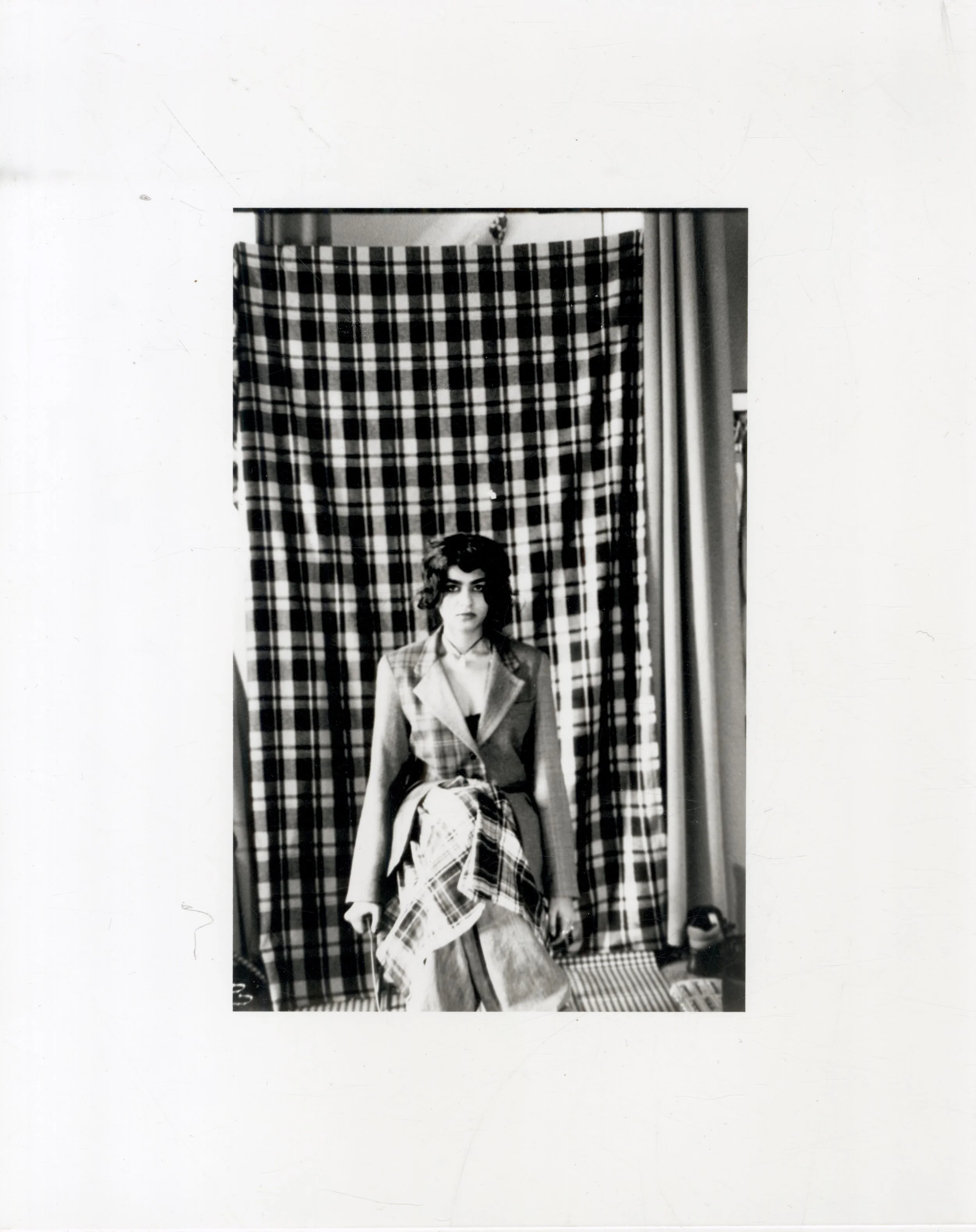
Siya Kumar is spotlighted in the New Voices series, which highlights emerging artists who showcase their art on ArtConnect.
Brooklyn-based visual artist Siya Kumar’s work explores ritual and her studio is a temple. Inspired by rock worship in India, she views the painting process as a collaboration between her and her materials, asking them what they desire to be at every step of the process — and having hushed conversations with her materials. She is fascinated with rooms, ceiling fans, locks, boxes, jars, vases, dishes and mirrors and the secrets that they have to share. She views a space and its inhabitants as keys to and reflections of one another.
Siya graduated from the Rhode Island School of Design (RISD) in 2025 with a BFA in Painting. Her recent exhibitions include Designated Smoking Area at Woods Gerry Gallery, Providence, RI; The Last Picture Show at Memorial Hall, Providence RI; and Boston-Wide at Harvard Gallery, Boston, MA. She was a recipient of the Florence Leif Award for excellence in painting.
Curious to gain more insight into their artistic approach, we asked Siya a few questions about her practice.
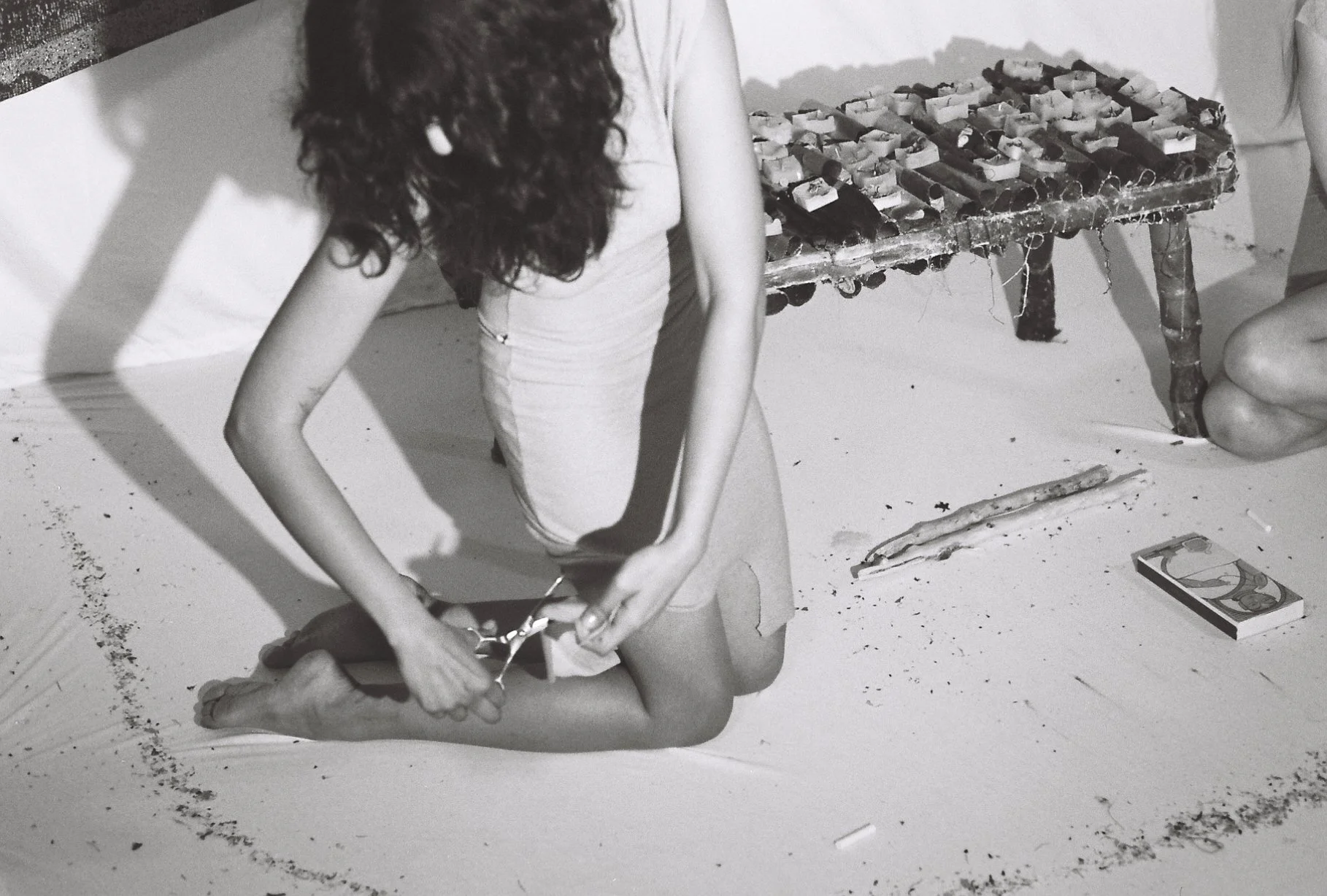
Photo from Look, The Lights Came On. Photo by Isabel Clulow
Your practice traverses painting, object-making, and performance. How do you decide which medium a work takes form in? Has that decision-making shifted over time?
At first, my practice was driven by curiosity. I felt an itch to make — paintings, films, clothes, objects — anything that could help me understand what beauty and memorialisation mean to me. That impulse toward experimentation came from wanting to test how different materials could hold meaning, and how form changes perception.
Spending time in Lincoln Woods in Providence shifted this instinct into something more attentive. Building a relationship to rocks, trees, and soil made me more aware of material as something with a presence, that holds memory and behaviour. I became drawn to organic growth and the aging of harder, constructed forms — what I think of as “eco-brutalism.” This also shaped my palette: chromatic greys, cherry wood stains, and unbleached fabric, coexisting with more structural elements like cement, metal and glass.
Over time, I’ve come to feel that materials have their own voices. I might describe my approach as animist, which is the belief that all the elements of the earth, including rocks, rivers, wind, rooms, or vases, have an essence that is specific to them. In that way, I feel like the piece tells me what it wants to be and I try to listen to the best of my abilities. I listen to the way that things fold, resist, absorb and break or to the way that loose threads want to fall and try to allow the work to show me how it would like to rest.
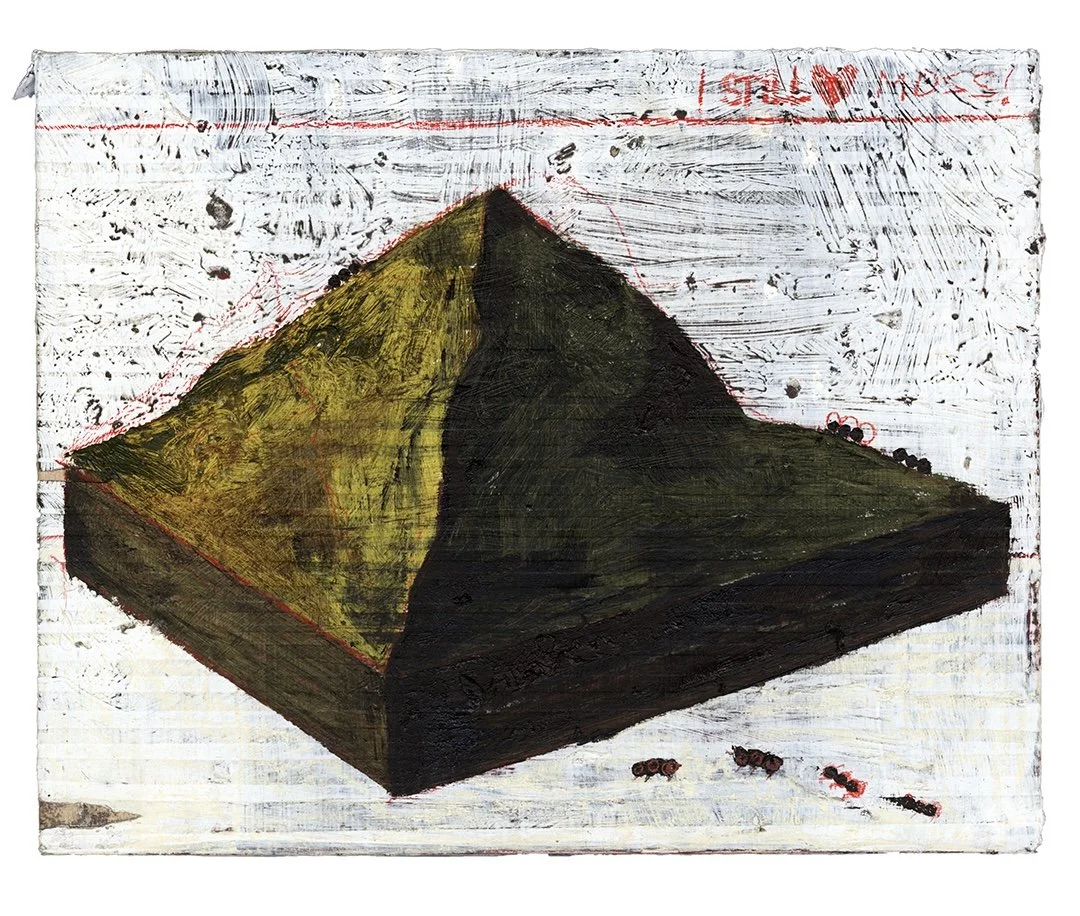
Still <3 Moss, 2024
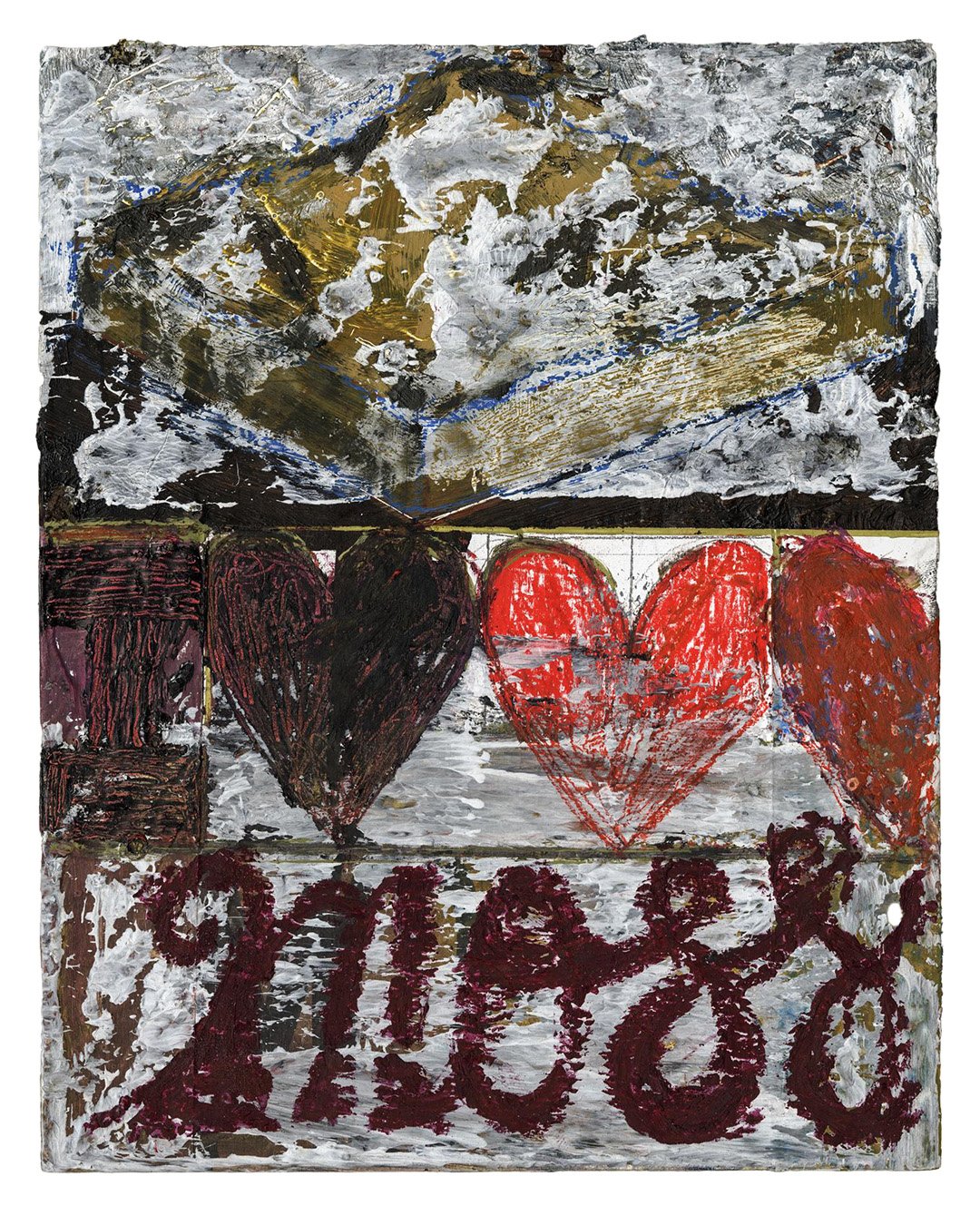
<3 Moss, 2024
Moss consistently reappears as a point of reference in your work. What draws you to this particular living organism? How did this fascination begin?
The fascination began when I looked into a piece of moss and saw that it was an ecosystem, home, and network for a whole world that I didn’t know or understand. I had this moment where I saw all of these ants and bugs crawling through it, and they moved in a specific way and communicated in a specific way. It was a while system that I wasn’t aware of. It felt like the way that humans live in cities was echoed in moss. There were subway systems and maps.
It feels like a labyrinth, a living network that holds time within its layers. It grows, decays, and regenerates all at once, recording its own history. You can hold it in your hand or see it spread across a surface, and still not fully understand what’s happening inside it. That unknowability is important to me.
I’m drawn to the idea that it operates through forms of communication we don’t fully perceive, that exists outside of language. This connects to my broader interest in intangible systems, intuition, and non-linguistic, abstract forms of communication. I think that there’s an intimacy in knowing rather than saying.
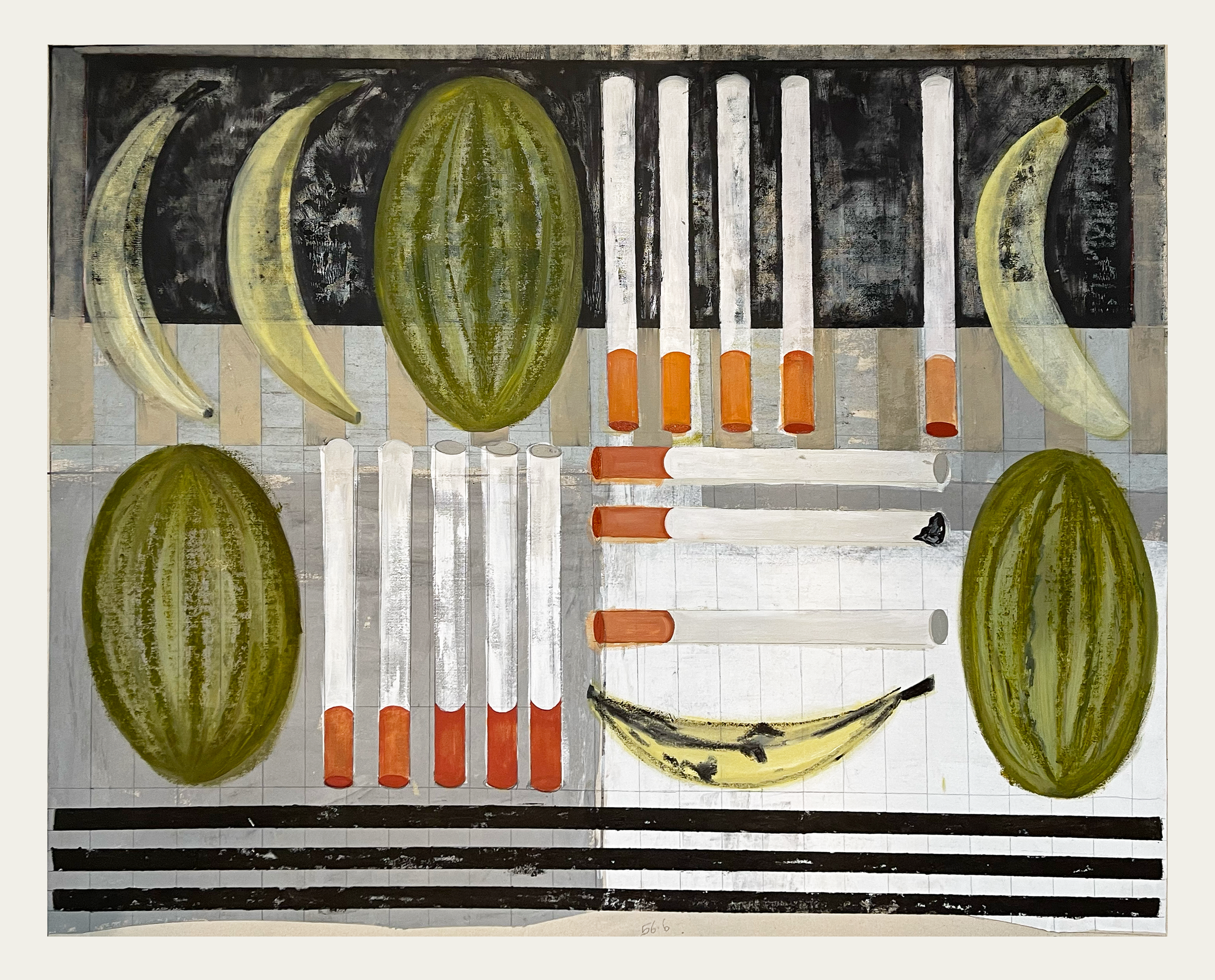
Bachelor Pad Painting, 2024
Alongside moss, you mention an interest in dust, windows, and staircases. How do these elements enter your work? What do they have in common for you?
I’m drawn to elements that are usually overlooked, like dust, windows, or staircases, because they quietly structure how we live without demanding attention.
Dust, for me, is proof of existence. It accumulates over time, marking presence, use, and neglect. It’s unintentional and uncurated, but it holds a record of living. Windows and staircases function as threshold; points of transition between spaces, states, and perspectives.
What connects them is that they exist within the fabric of the everyday in the same way moss does. They carry information without announcing it. I view all of these elements as sacred, but also as elements that might tell me a funny story or large truth.
I think I’ve always wanted the earth, objects, the wind, tables, closets, drawers, clothes, or mountains to tell me what they know. I used to feel frustrated that they wouldn’t give me definitive answers. Over time, I’ve come to understand that those answers don’t really exist, at least not in a clear, linguistic way, and I’ve found a lot of joy in that.
There’s something deeply romantic, but also bittersweet, in paying attention to these elements, recognising that meaning often lives in what we overlook or in the ways in which we unconsciously choose to live. By bringing them into my work, I’m not trying to monumentalise them, but to build a dialogue where we might find more understanding in one another.
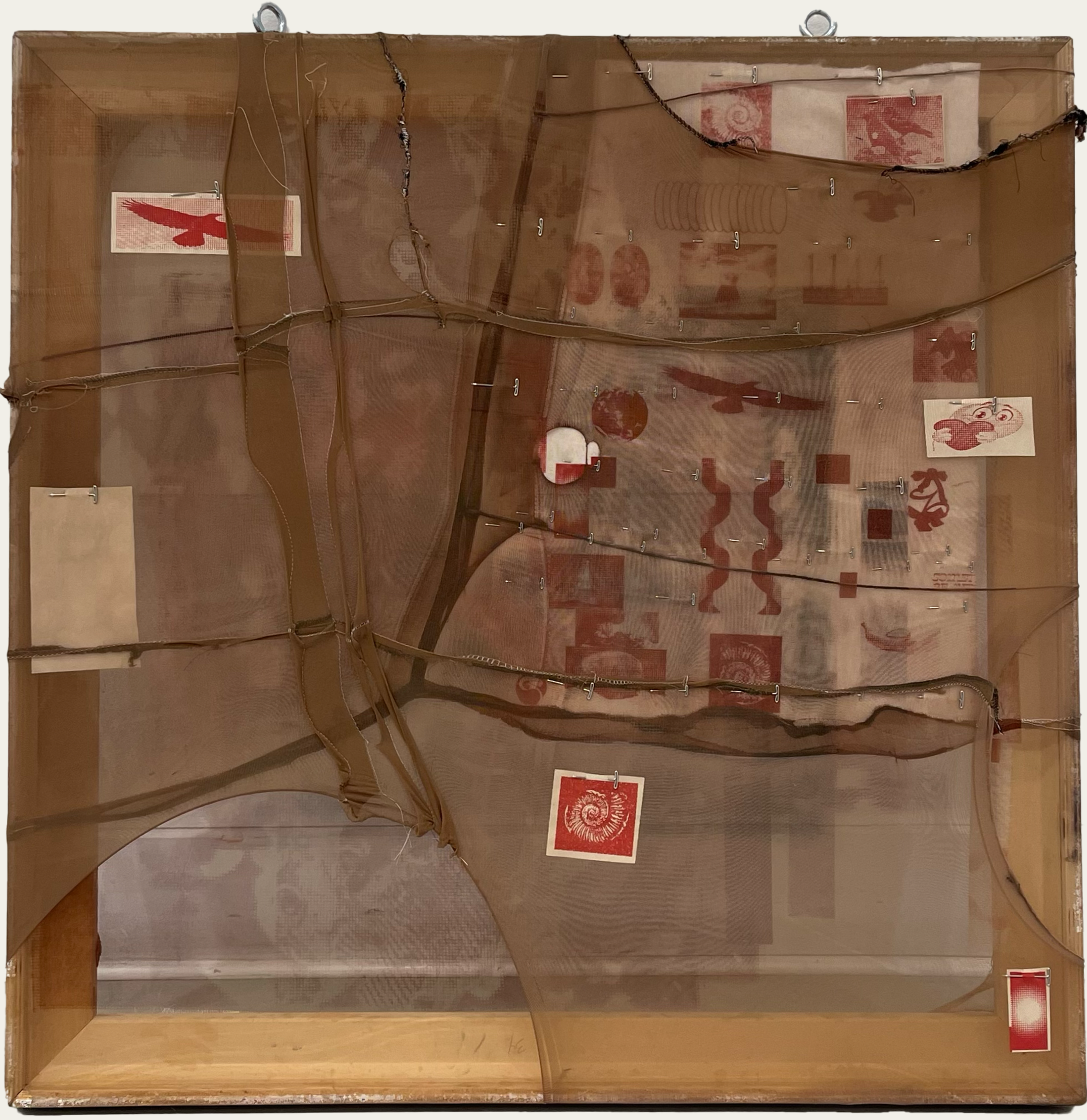
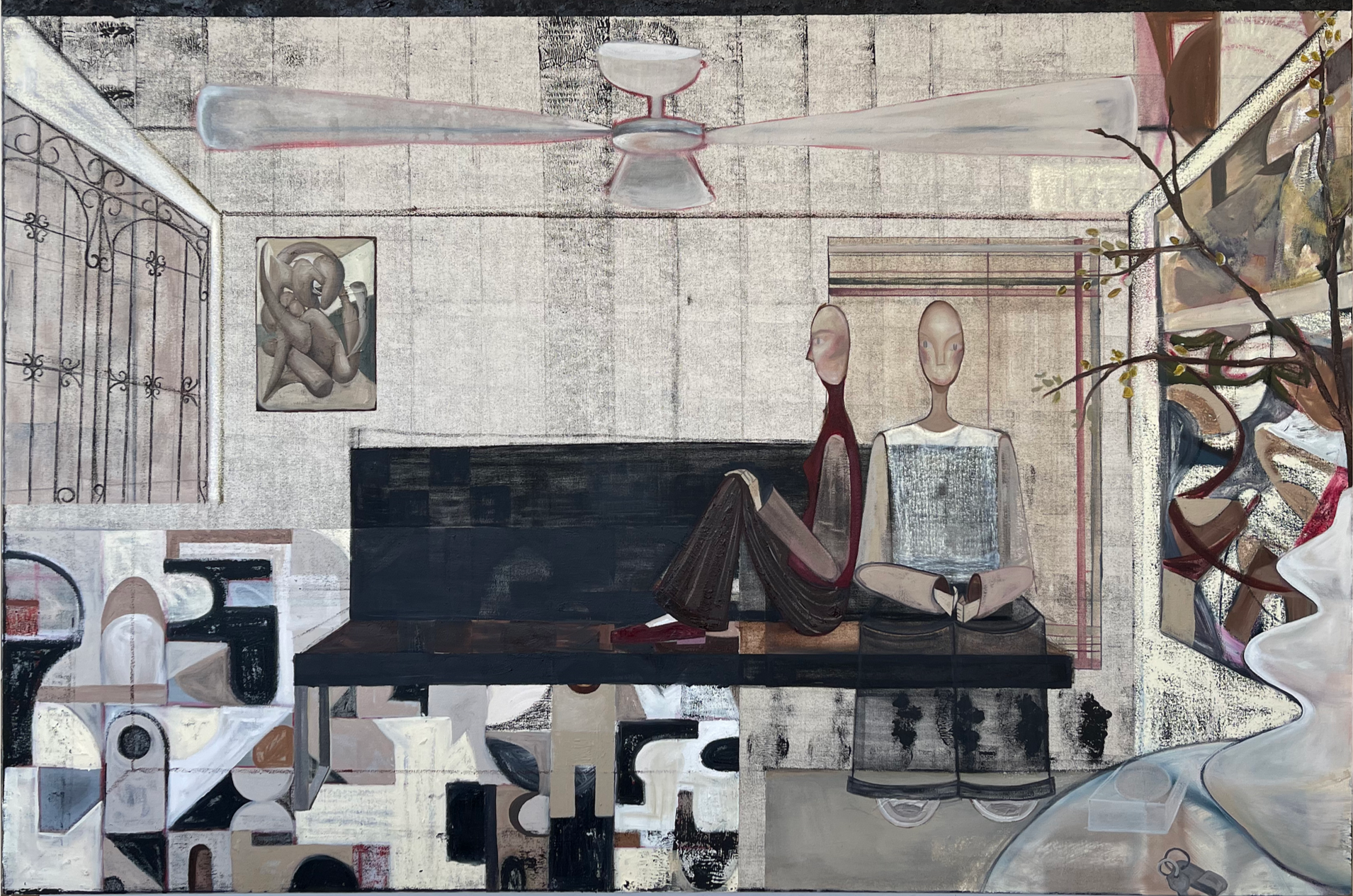
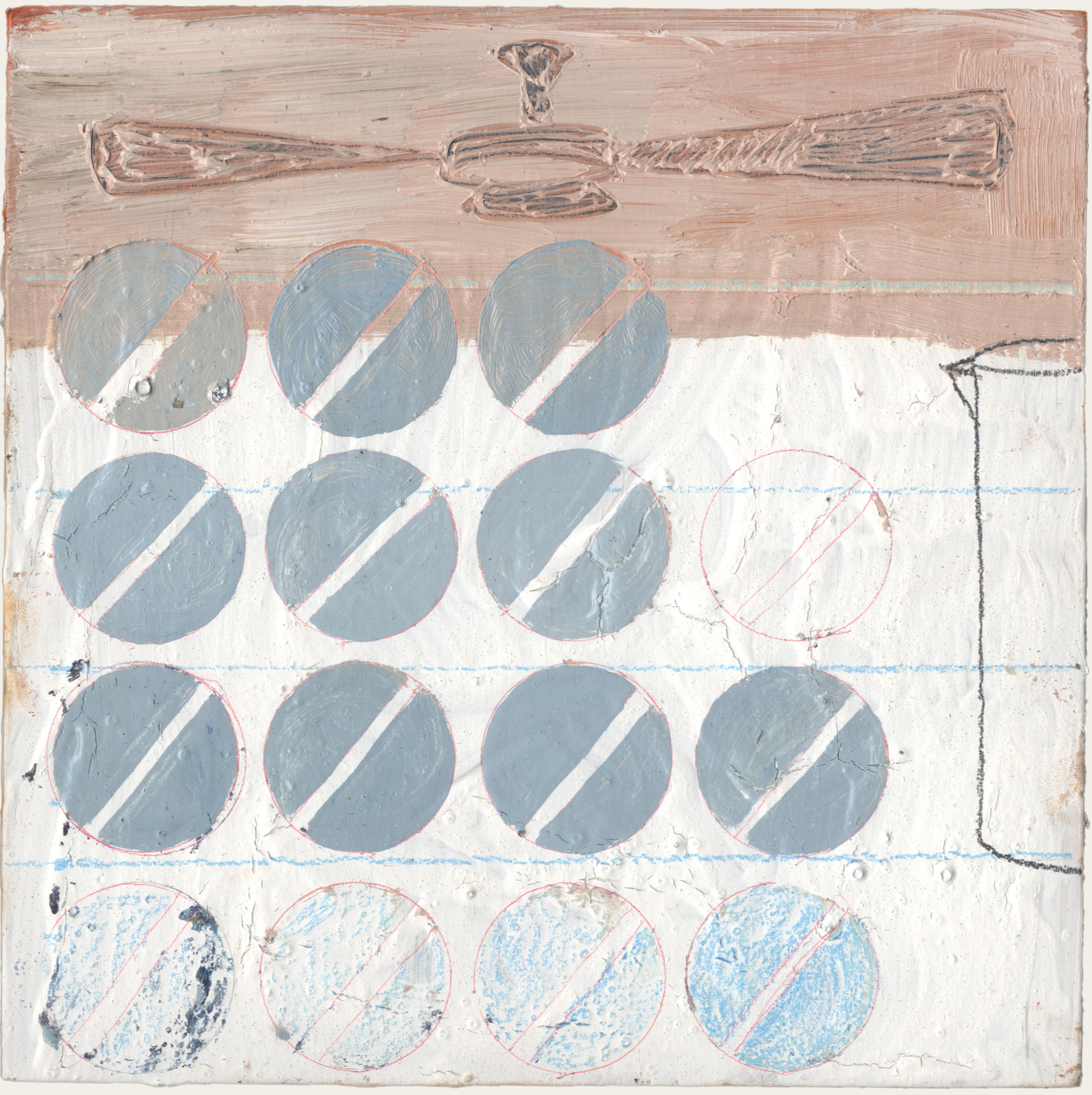
From left to right: Skin Piece, 2023. Wtf is a (Bau)Haus?, 2024. Pillgrl & Fanboi, 2023.
You’ve described your works as ever-changing maps of internal logics. What sculpts these internal systems, and how do they manifest as you work?
I don’t believe in singular or fixed systems of meaning. Each work begins from something I accept as true in the moment, but as I work, that truth shifts, contradicts itself, and expands.
These internal logics are shaped through a combination of intuition, material interaction, and lived experience. They don’t resolve into a clear conclusion, but instead, they build through layering, where fragments accumulate over time. Images, gestures, and references are stacked, obscured, and reintroduced, creating surfaces that behave like palimpsests, holding traces of what came before even as new forms emerge.
I go through a process of embedding easter eggs of my childhood home and pivotal moments of my life, such as locks, bananas, ceiling fans, wrought iron window grills or ellipses, that serve as entry points to moments, intimacies and desires. In doing so there are intimacies as well as aloofness. These symbols unfold within the structure of loopy grids, which serves to catalogue, frame, fracture, and distort. I stack objects and then collapse them into images. This allows multiple perspectives and temporalities to exist simultaneously, rather than being fixed in a single viewpoint. The grid becomes a way to hold this complexity. It acts as both a framework and a disruption—cataloguing, fracturing, and reorganising information while never fully stabilising it. The work becomes a map to itself, charting both what is seen and what resists being known.
“Refusing resolution allows the work to stay alive, to keep generating questions rather than closing them down.”
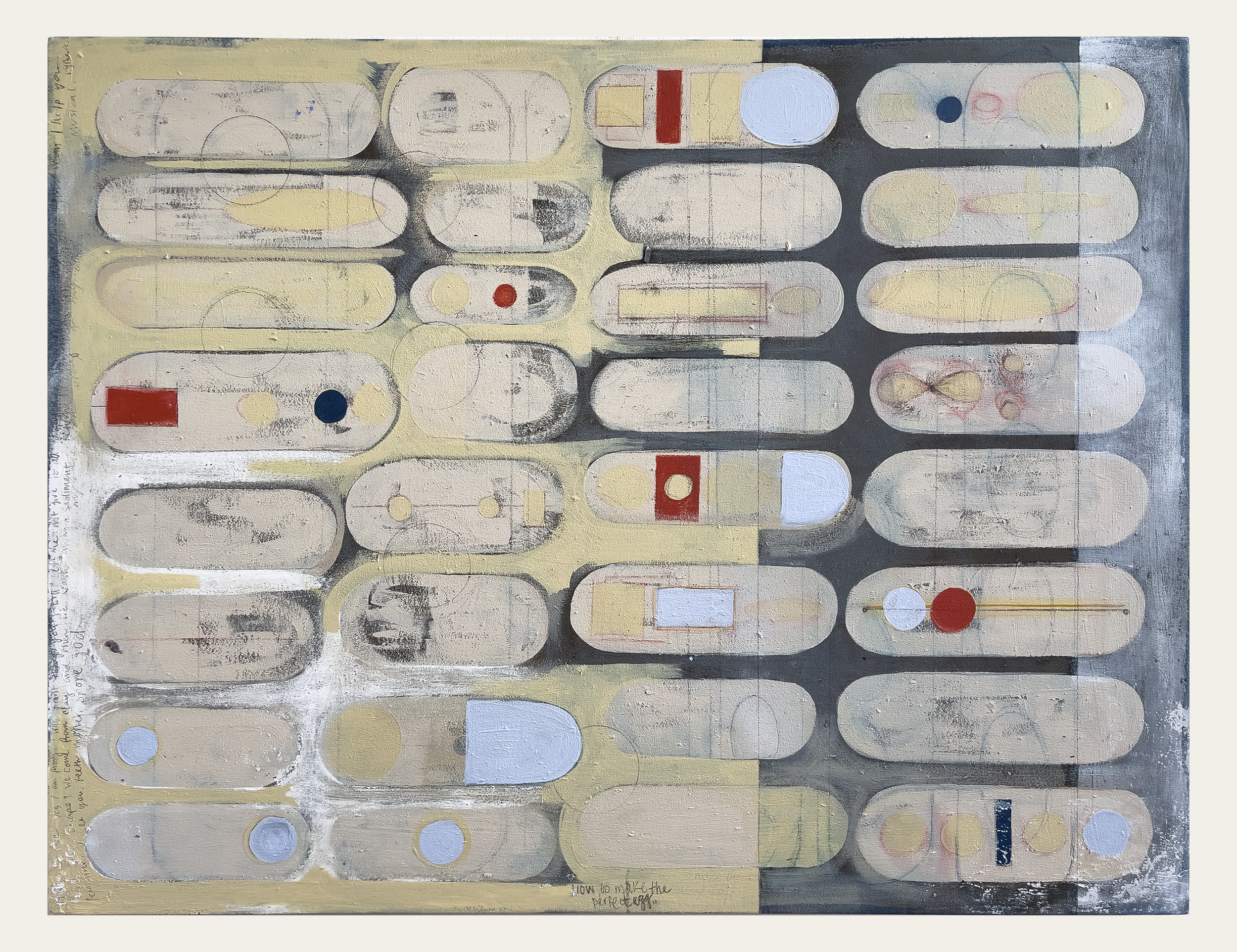
How to Make an Egg (Lifespans), 2025
A sense of negotiation and agility shapes your practice, with each piece generating its own questions and propositions. What draws you to this open-endedness, and what feels at stake in refusing resolution?
I’m not interested in resolution or definitive answers. I think that resolution, or the expectation of a single, concrete meaning, is limiting. I care much more about the grey area — the understanding that there is never just one perspective, but many coexisting at once. That multiplicity feels essential, not only as a reflection of the world we live in, but also as a condition for discovery, curiosity, and tolerance.
I used to feel frustrated by the fact that objects, environments, or experiences wouldn’t reveal something clear or final. But over time, I’ve come to understand that this lack of clarity is actually where meaning resides. It exists in layers, contradictions, and partial understandings rather than fixed conclusions.
My work reflects that. It operates more like a portal or labyrinth than a statement, something a viewer can enter, move through, and interpret differently each time. I’m interested in creating spaces where multiple meanings can coexist without needing to resolve into one.
In that sense, the work is less about defining a world and more about tending to one. One that is porous, shifting, and unresolved. Refusing resolution allows the work to stay alive, to keep generating questions rather than closing them down.
Are you working on anything in particular at the moment? Is there anything exciting coming up for you soon?
Yes, always! I’m working on a new series of paintings that explore the relationship between bodies and “the thing,” which I define as an intangible essence that provokes a feeling of truth or alignment.
Lately, sound has been the clearest way I access this feeling. I’m interested in how rhythm, frequency, and resonance might be translated into painting — how something invisible can take on a visual and material form.
I’m also moving into a new studio, which will allow me to work at a larger scale and expand my sewn fabric paintings. These works are becoming more physical, built through layering, stitching, staining, and assembling, almost like sites of construction and destruction at once.
See more of Siya Kumar’s work
New Voices highlights emerging artists who showcase their unique perspectives and innovative techniques on ArtConnect. Applications are accepted on a rolling basis. If you would like to be featured in a personal interview on ArtConnect Magazine, read through the open call and apply here.