
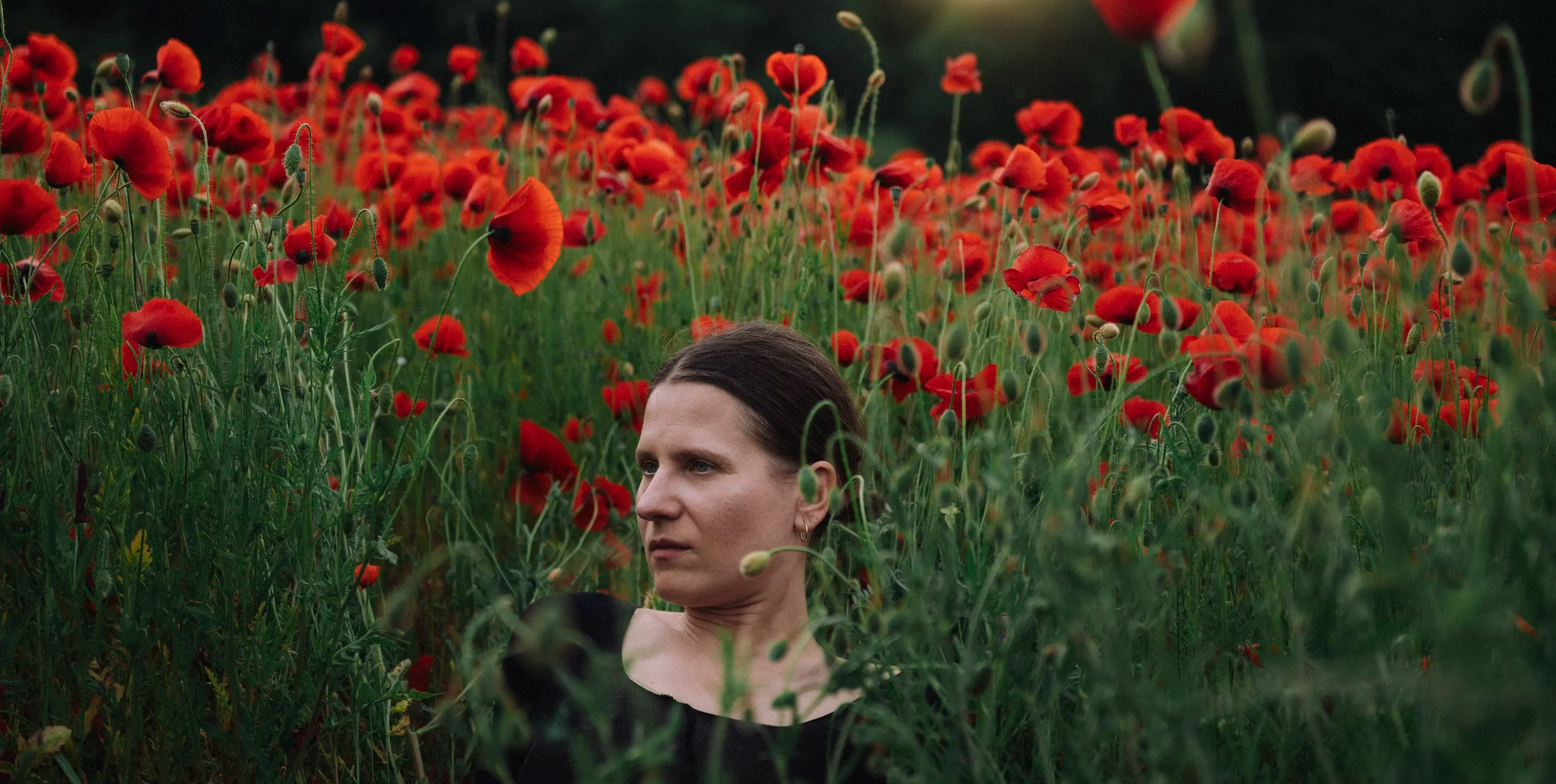
Victoria Alexandrova
Unearthing memory through objects
Victoria Alexandrova is spotlighted in the New Voices series, which highlights emerging artists who showcase their art on ArtConnect.
Victoria Alexandrova is a multimedia artist based in Berlin and Brandenburg, working across film, sound, photography, installation, and other visual arts. Drawing inspiration directly from the environments around her, she develops works that examine how land, memory, and human history continuously shape one another.
Born (1982) in Kamchatka, Russia, Victoria led a nomadic life that took her through Argentina (1998) and Finland (2004) before eventually finding her artistic home in Berlin and Northern Brandenburg (2015).
Curious to gain more insight into his artistic approach, we asked Victoria a few questions about her practice.
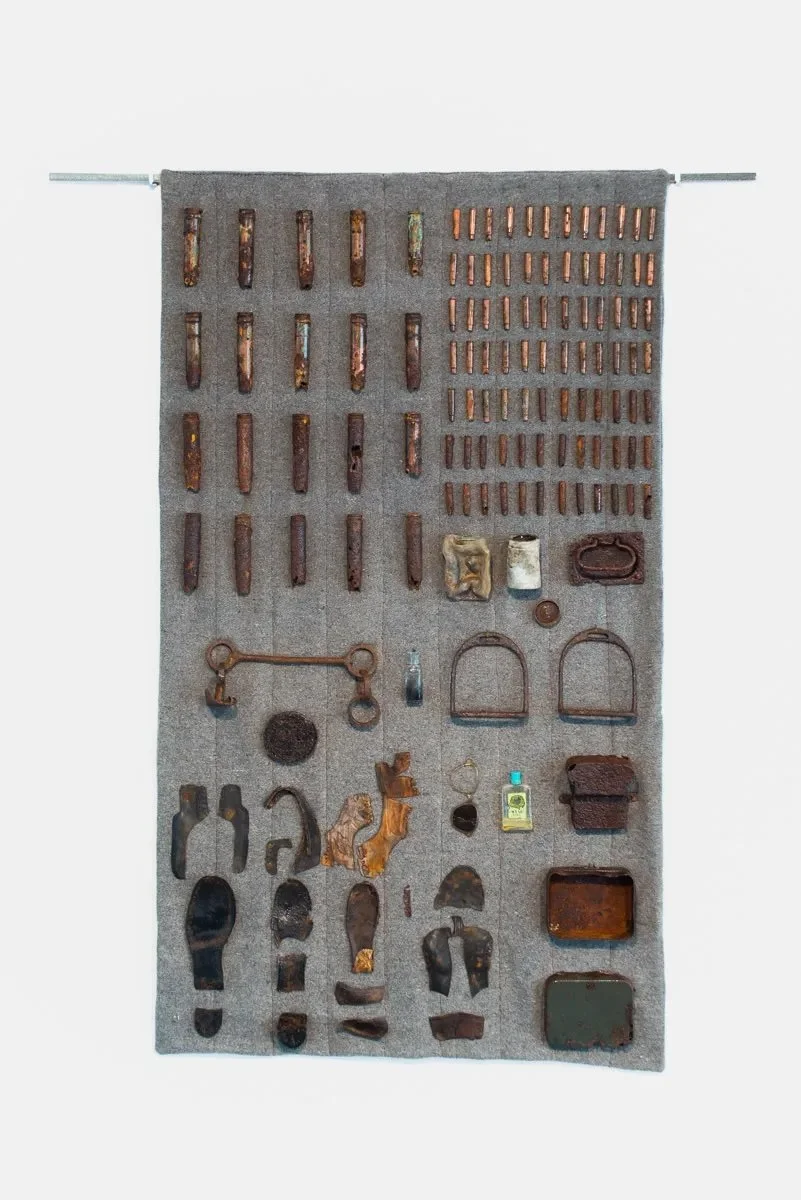
Ordnung! Part IV, 2019
Your practice is very interdisciplinary, spanning painting, illustration, photography, sculpture, installation, and more. What usually comes first for you: a material or a concept?
My latest projects were works in series, so the concept comes first, then I try to use different media to express it through different haptic/visual angles.
Self-portraiture recurs throughout your work. What continues to draw you back to your own image as material?
That would be my impatience. If I get inspiration, I need to start working on it immediately, and I am the closest model I have.
For your project Ordnung!, you recovered and documented discarded artefacts found in the Barnim Nature Park north of Lobetal — objects that carry physical traces of recent German history. When did you first begin noticing these objects? Do you remember the first thing you found that piqued your interest?
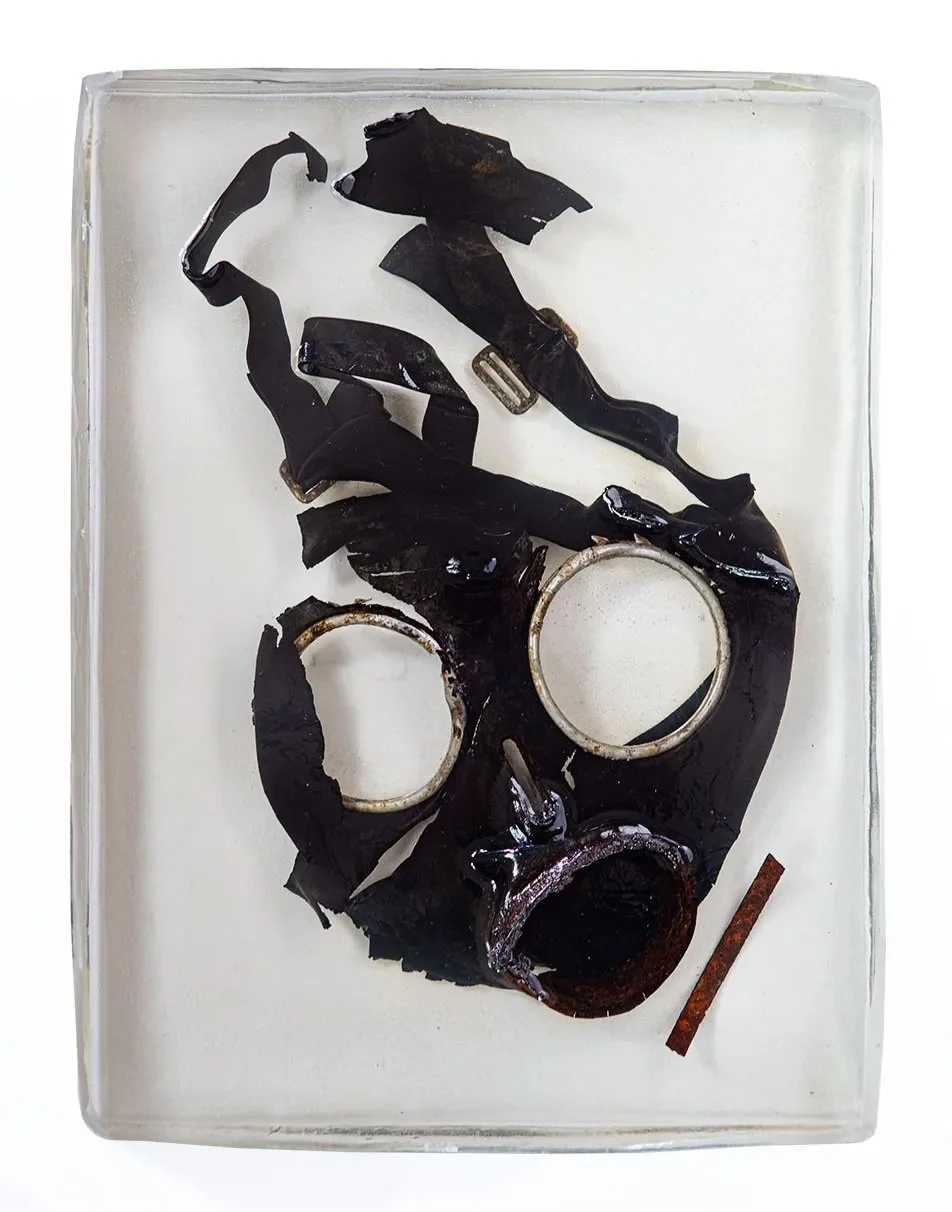
I love spending time in nature, picking up mushrooms, and observing the landscape from top to bottom, which trains your eyes to see things that might be undetectable for a careless gaze. I remember when I first saw some white glistening shards sticking here and there on the forest floor. By combing through them, I realised those were broken dishes. At first, I thought it might be an illegal dumping of dishes from a bankrupt hotel or restaurant because they all looked the same. And I was already getting wound up about trash dumped in the woods. It was only when I saw the imprinted swastika stamps on the back of one of the shards that it revealed itself as something more than just a fly-tipping site.
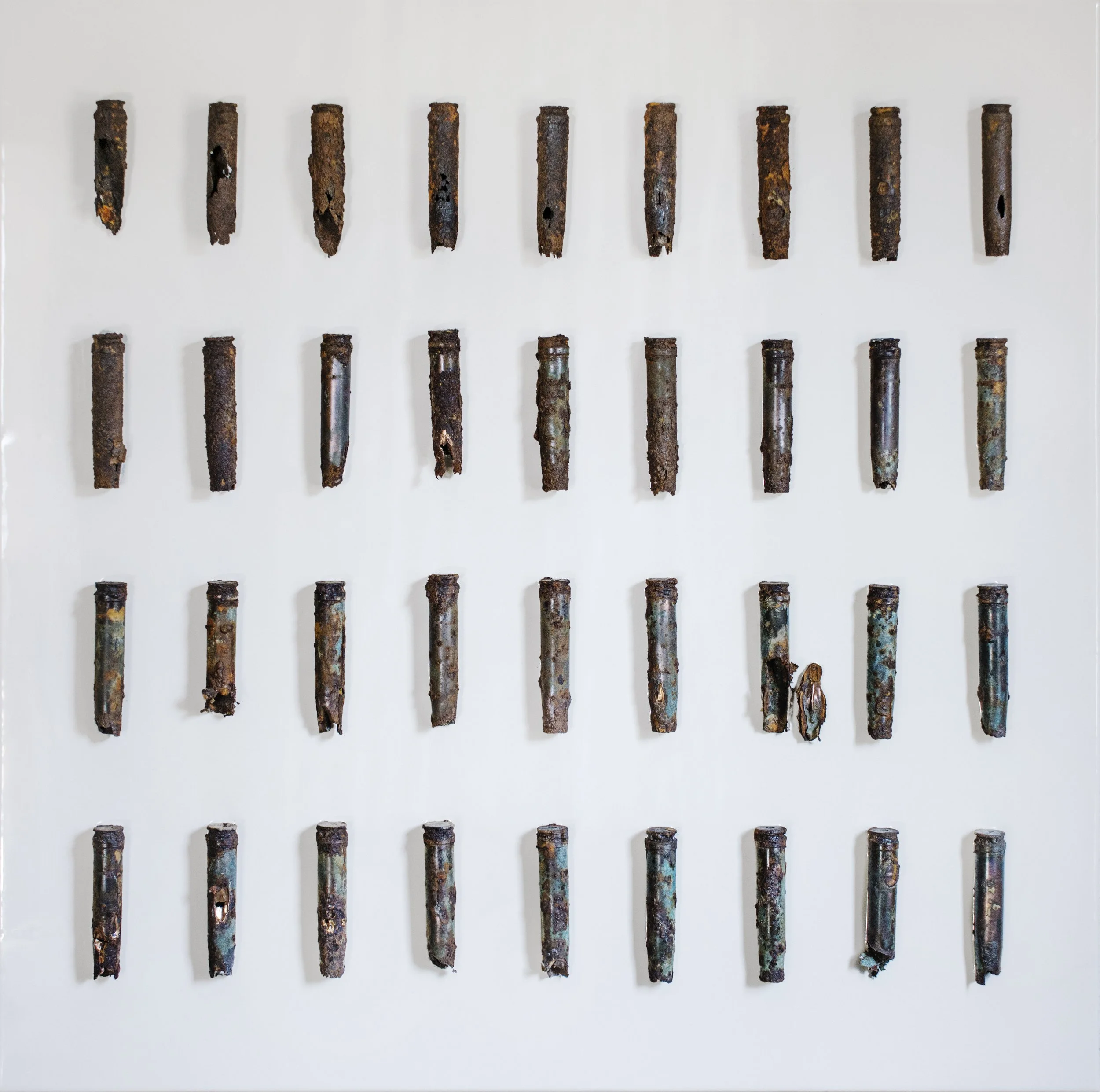
Ordnung! Part I, 2018
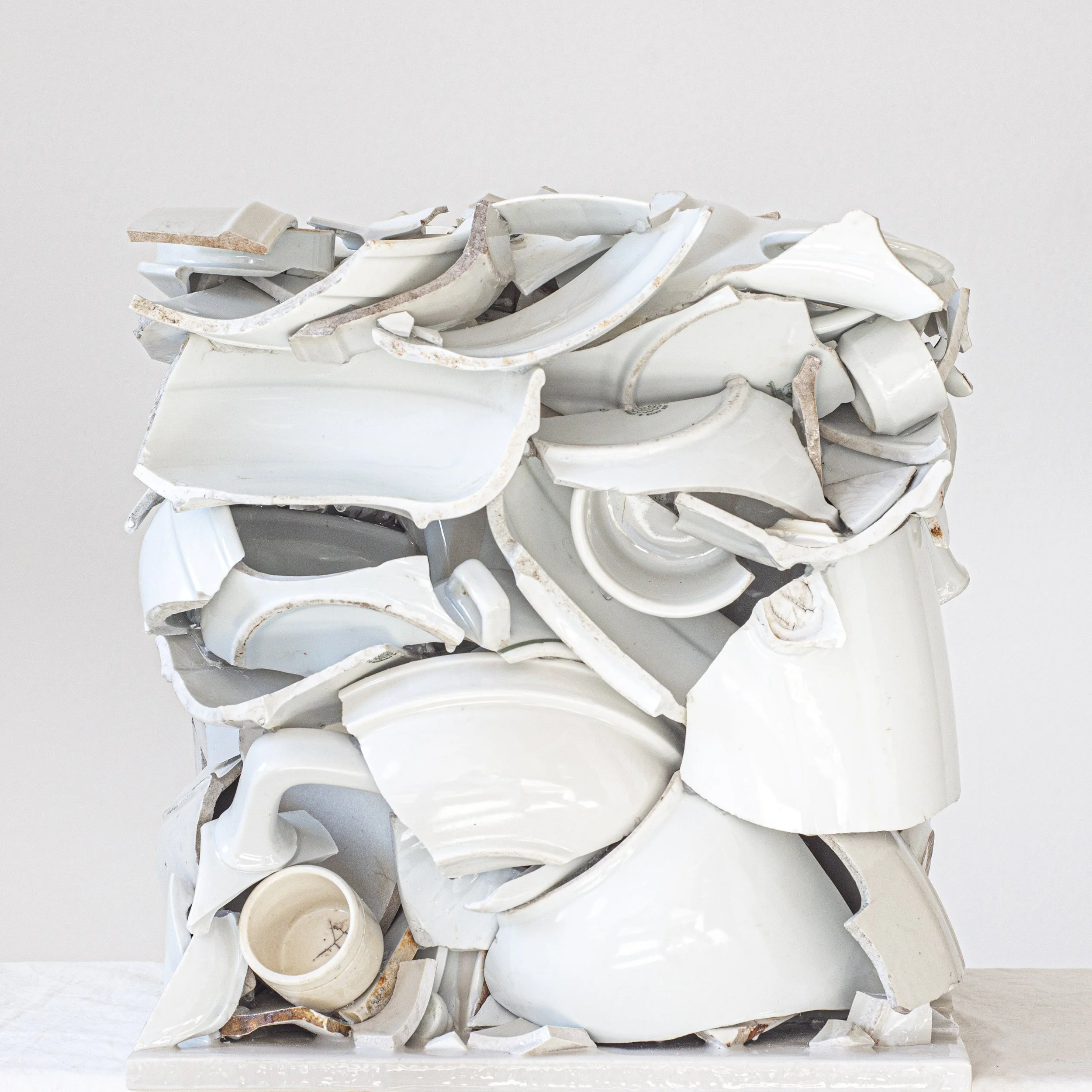
Ordnung! Part II, 2018
“Things we collect don’t have to be beautiful, but they can be worthy for the storytelling.”
What compelled you to start working with these found materials in your practice?
I like to quote Ursula K. Le Guin to describe what compels me to collect these broken objects:
”If it is a human thing to do to put something you want, because it’s useful, edible, or beautiful, into a bag, or a basket, or a bit of rolled bark or leaf, or a net woven of your own hair, or what have you, and then take it home with you, home being another, larger kind of pouch or bag, a container for people, and then later on you take it out and eat it or share it or store it up for winter in a solider container or put it in the medicine bundle or the shrine or the museum, the holy place, the area that contains what is sacred, and then the next day you probably do much the same again—if to do that is human, if that’s what it takes, then I am a human being after all. Fully, freely, gladly, for the first time.”
Things we collect don’t have to be beautiful, but they can be worthy for the storytelling.
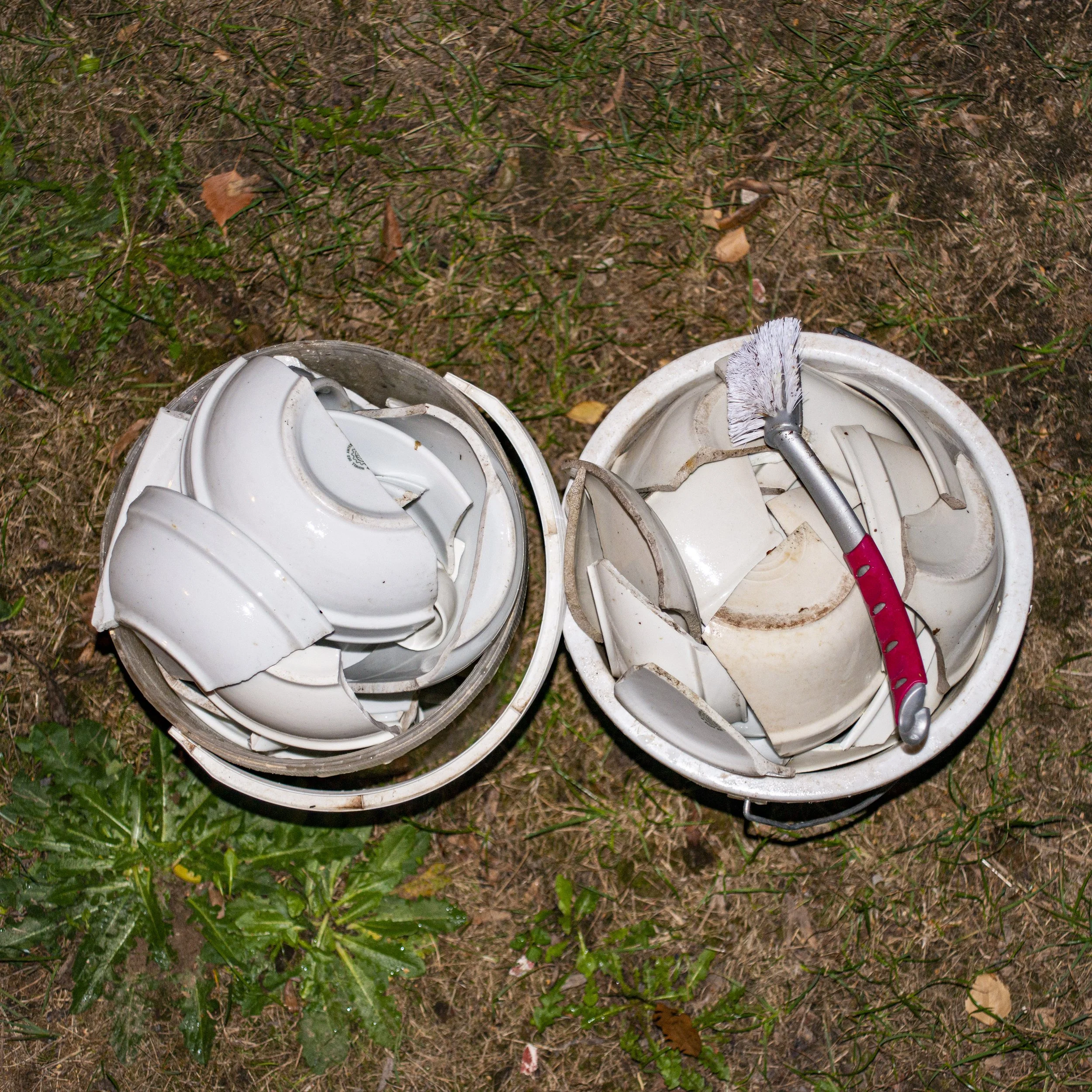
Ordnung! Part II (in progress)
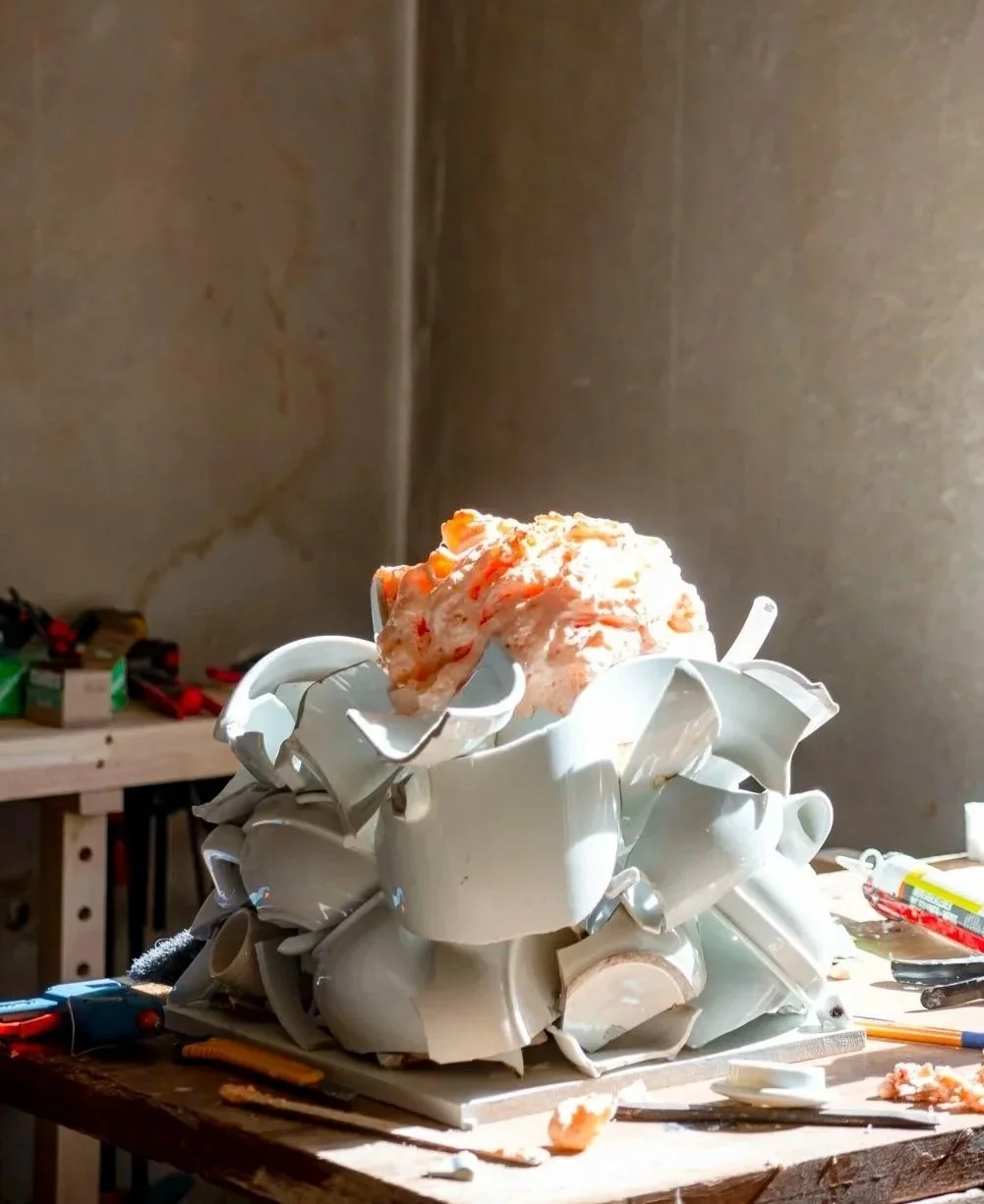
Ordnung! Part II (construction)
These objects undergo what you describe as a process of cleansing and reconstruction. What does this process look like in practice?
First of all, it’s observing and researching what exactly I’ve found. Sometimes rusted markings need to be scrubbed to be readable. Later comes the arrangement part, and I don’t want to assemble sometimes fragile and dirty materials without giving them a proper wash, polishing and stabilisation. While undergoing this cleansing, the objects come back to the present realm by shedding the cover that time in the earth gave them.
Many of the materials you collected may have otherwise faded further into the forest floor. By giving new life and context to these objects, how do you want viewers to perceive them — as remnants, evidence, or something else entirely?
By having objects displayed in an arranged composition, I want to give them a tangible existence. That’s why I don’t mind people touching them. For example, when I was handling the bullet shells done in forced labour camps by women, it felt a bit more real, more than watching a documentary or reading a history book. And I feel like we are dealing with recent history as we are dealing with ancient Rome – as if society has evolved so much since then, but it has not. It hasn’t even been 100 years, and we already feel like it could never happen in our lifetime.
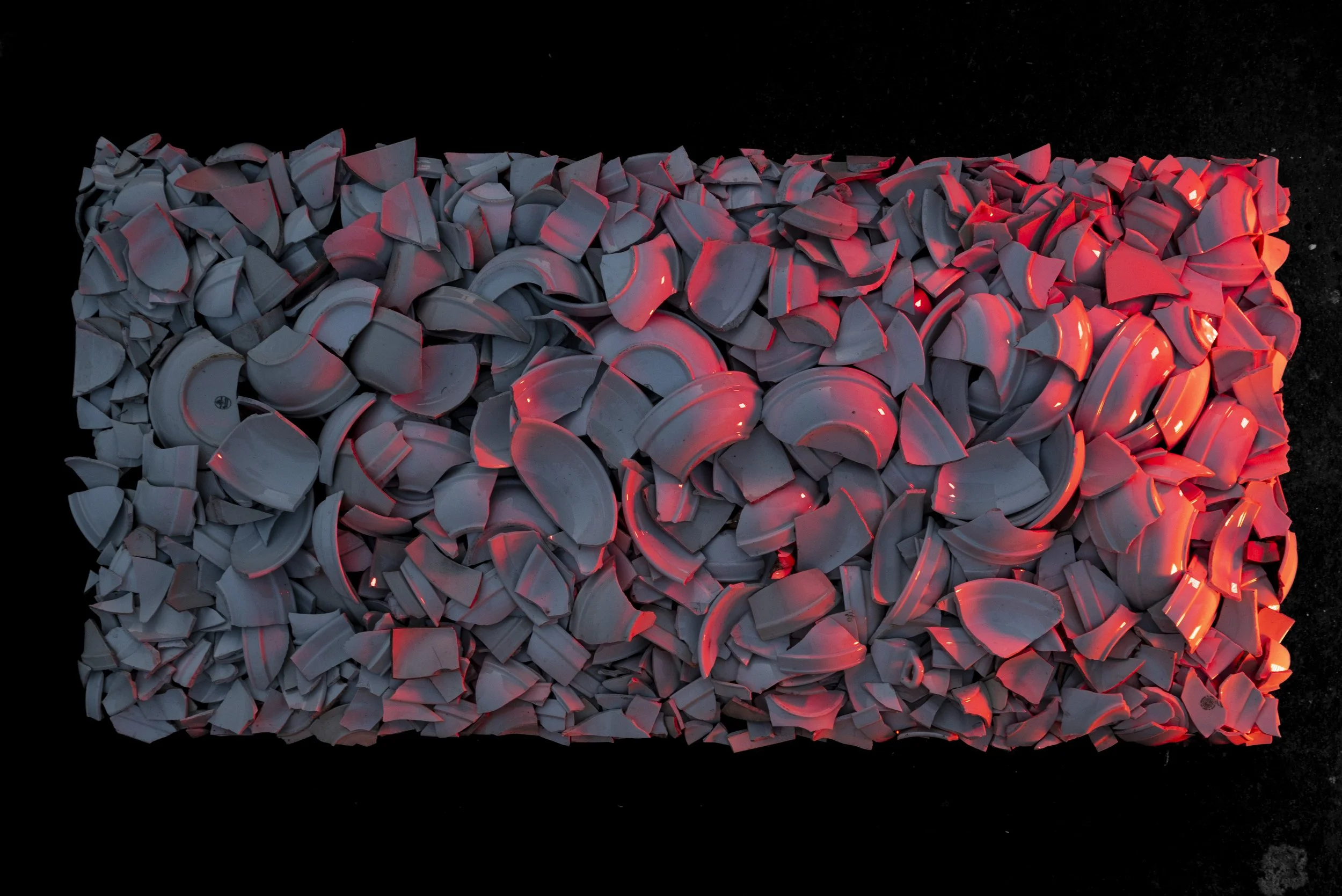
Ordnung! (installation view), 2025
Finally, what are you currently working on, and is there anything exciting coming up that you can share with us?
Right now, I am finishing a new series called “Carnivore.” Once again, I found my inspiration on my walks in the forest, and once again, I brought stuff back to the studio. For this project, I assemble organic remnants — animal bones, tufts of fur and feathers, and a crow's regurgitated “gift” left on my windowsill. I created a silicone cast of my abdomen marked by a tick bite. These materials reflect on meat consumption and the entanglement with other beings: what it means to live among, to be nourished by other bodies and feed others with our own bodies.
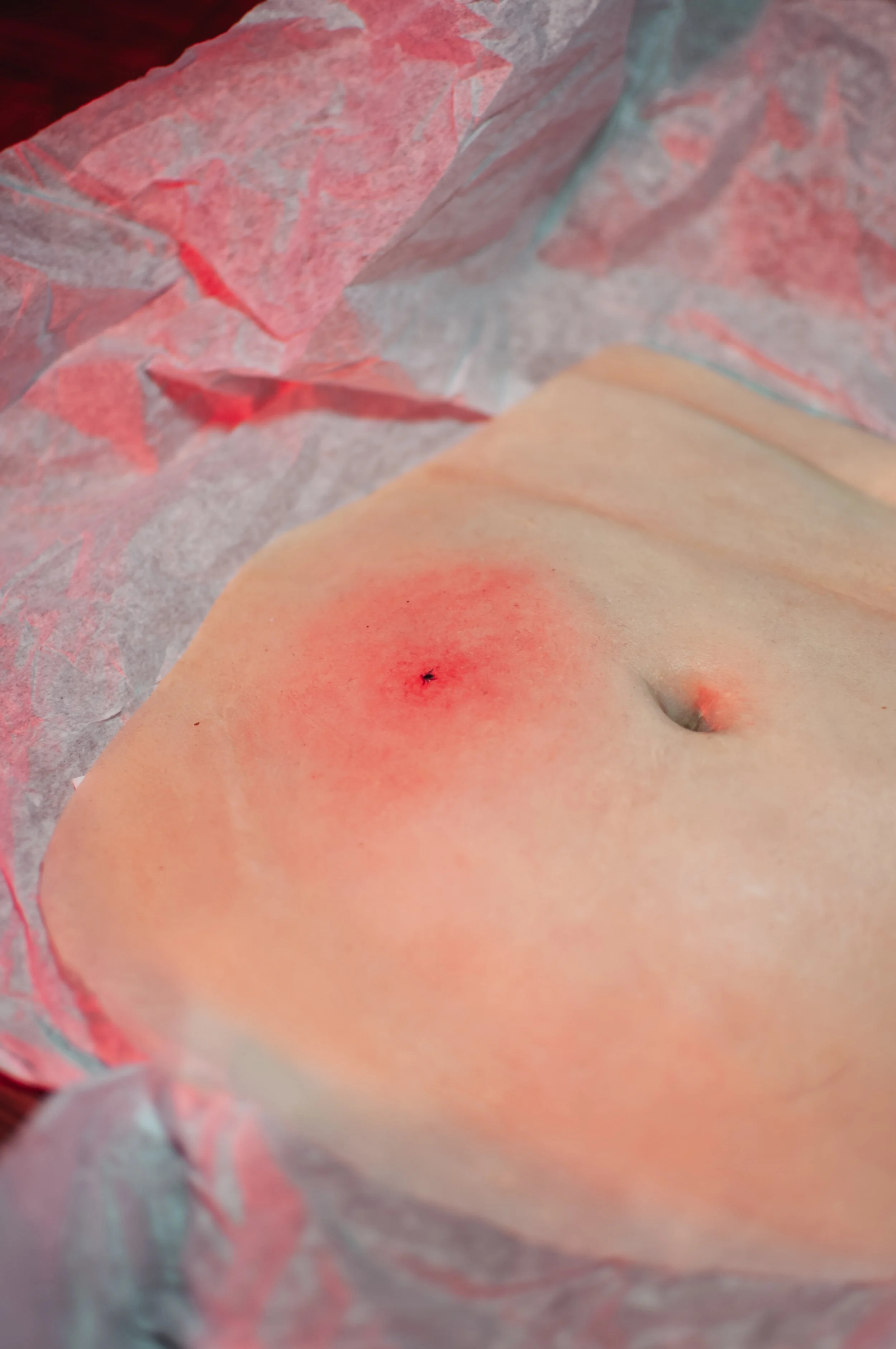
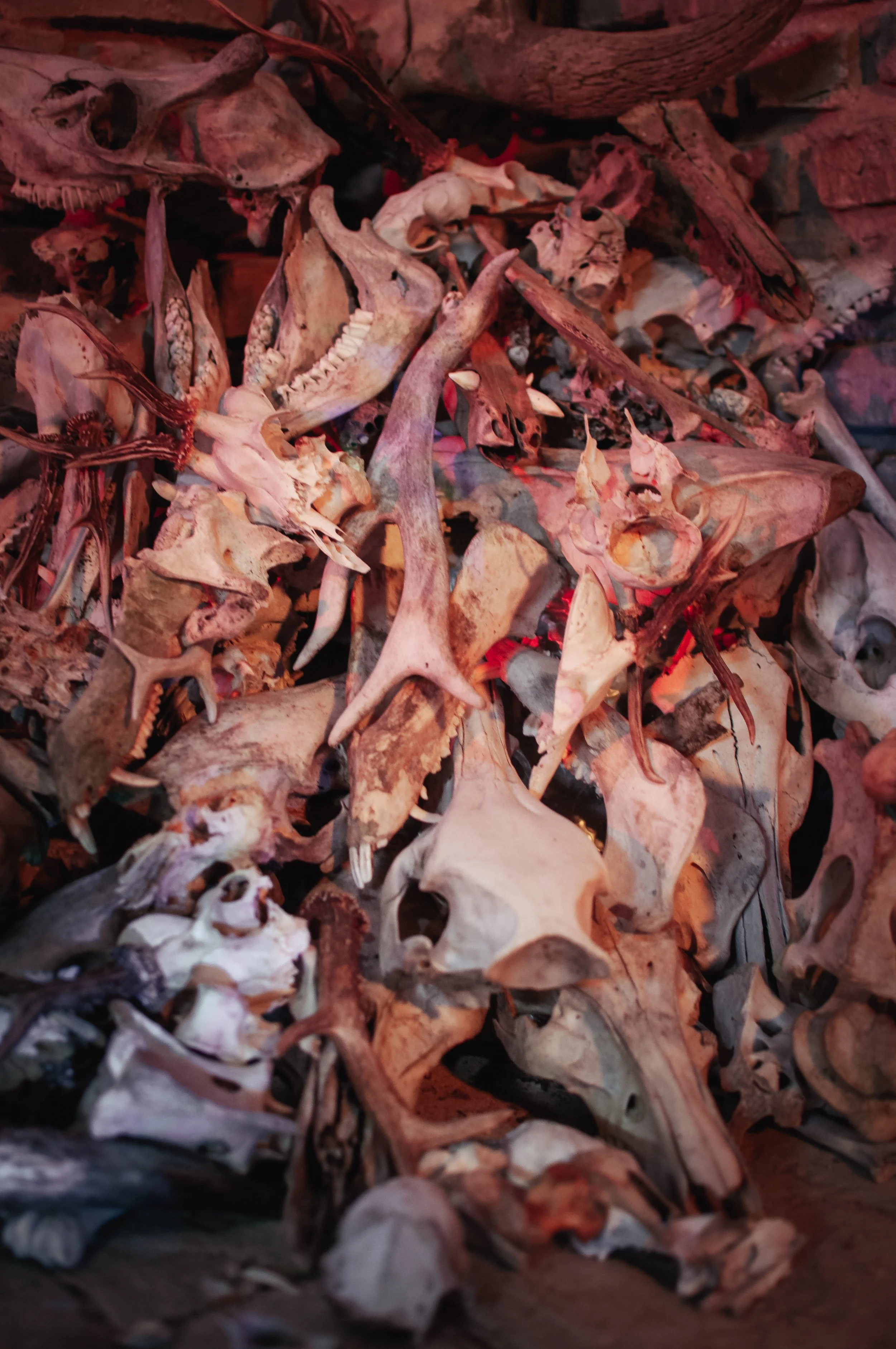
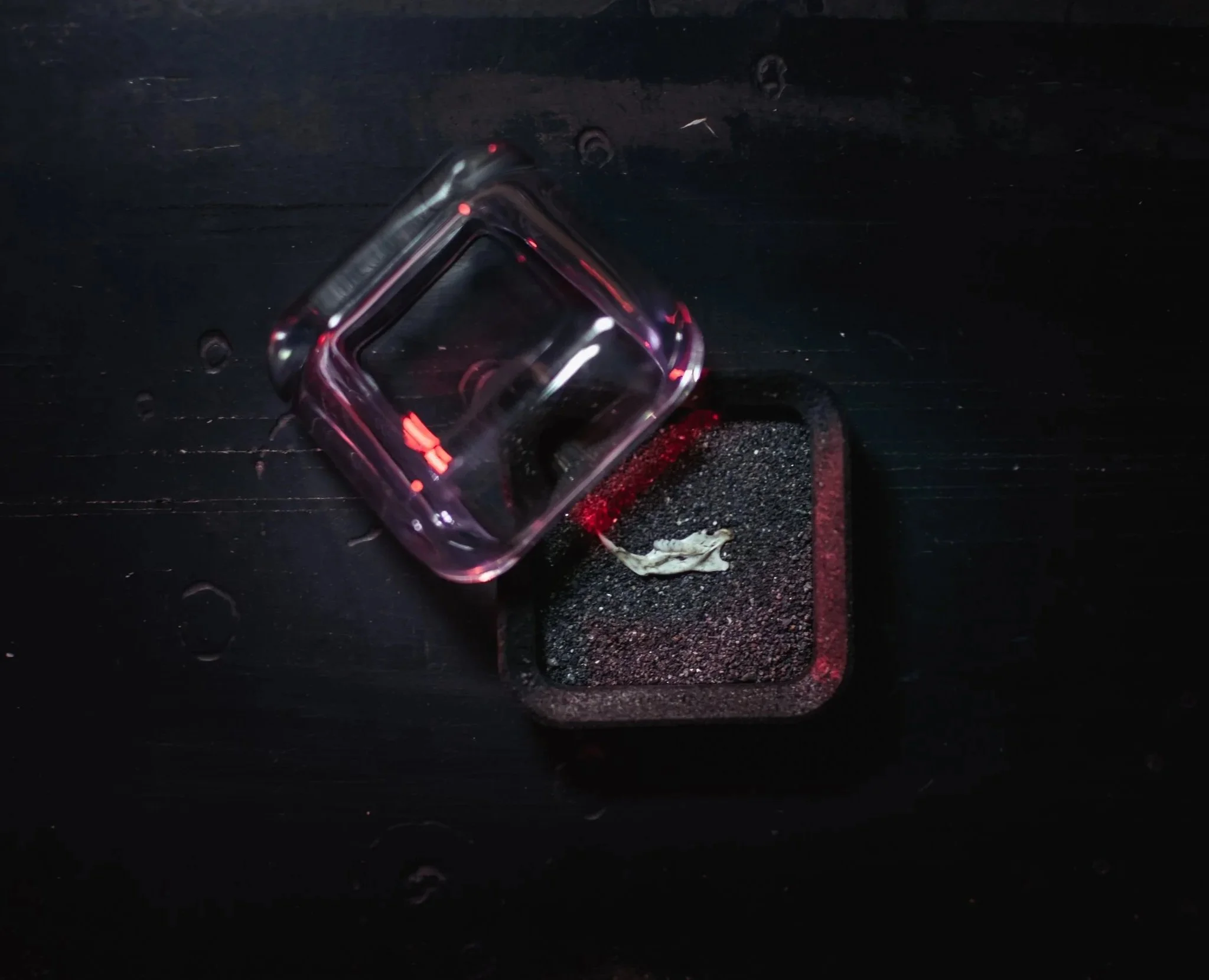
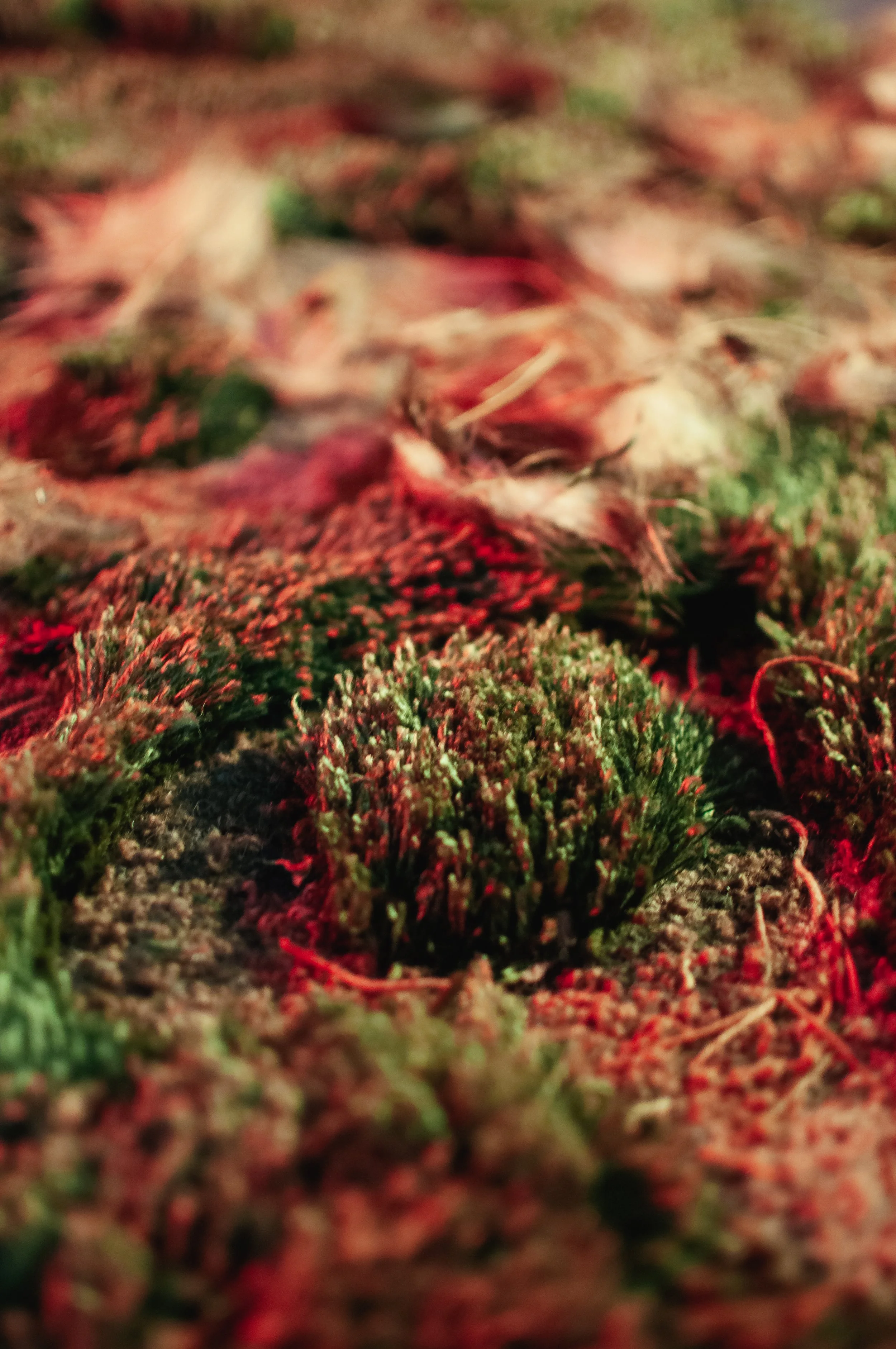
Carnivore! (installation views) 2026.
See more of Victoria Alexandrova’s work
New Voices highlights emerging artists who showcase their unique perspectives and innovative techniques on ArtConnect. Applications are accepted on a rolling basis. If you would like to be featured in a personal interview on ArtConnect Magazine, read through the open call and apply here.