
Vilma Leino
On humour, horror and performance in self-portraiture
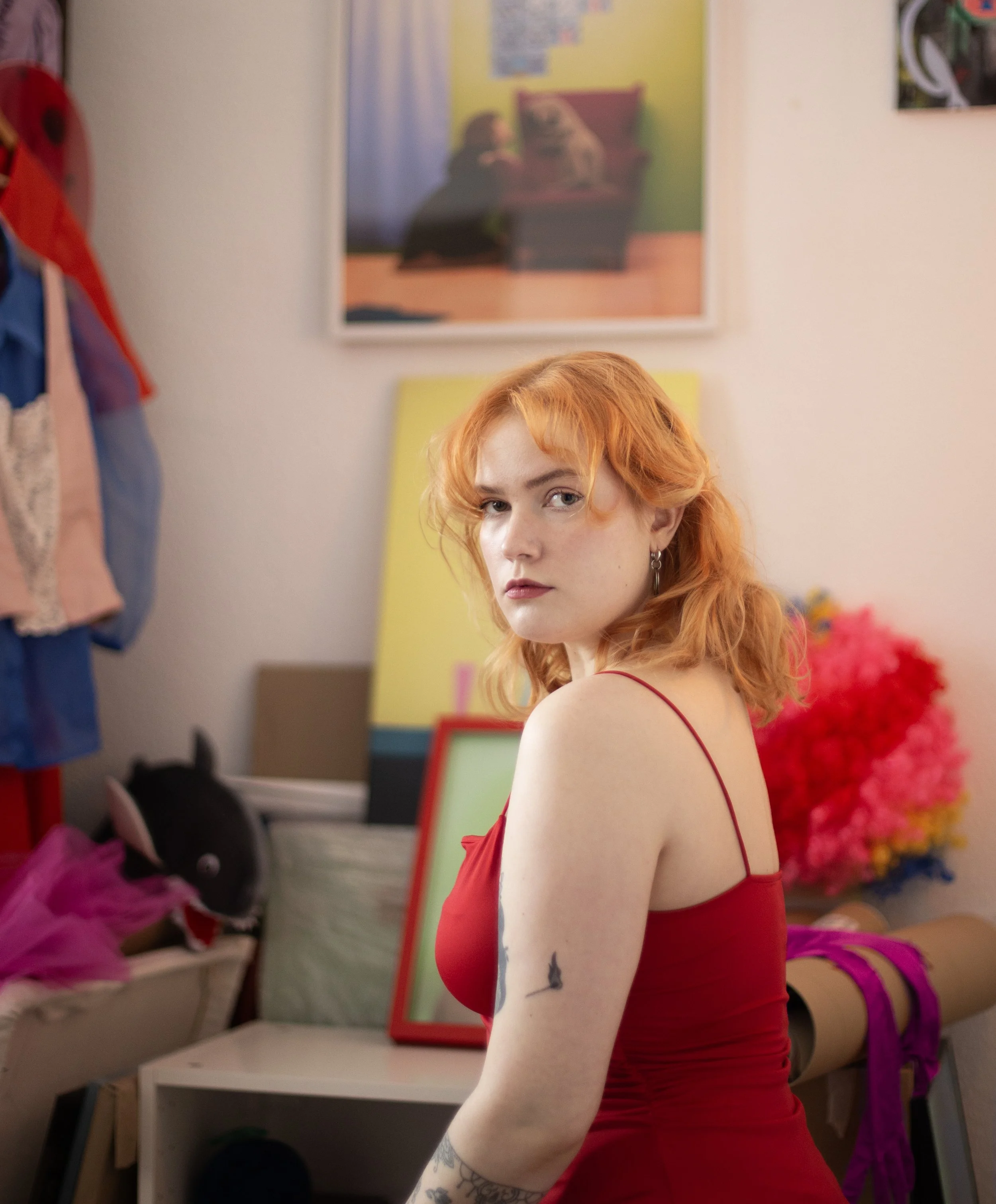
Vilma Leino is spotlighted in the New Voices series, which highlights emerging artists who showcase their art on ArtConnect.
Finland-born, Berlin-based photographer Vilma Leino focuses on self-portraiture, which she uses to ponder solitude and challenging psychological stages. In her work, she creates female characters with untold stories, experimenting with strong colour schemes, performance, and the human body in her portrayal. Her photographs often balance beauty and horror, using humour to counter darker thematic explorations. Her photographs are a one-woman show, where being in control and the fear of losing it are in a constant dialogue, forming a story about personal growth, where fears are forming into strength.
Curious to gain more insight into their artistic approach, we asked Vilma a few questions about her practice.
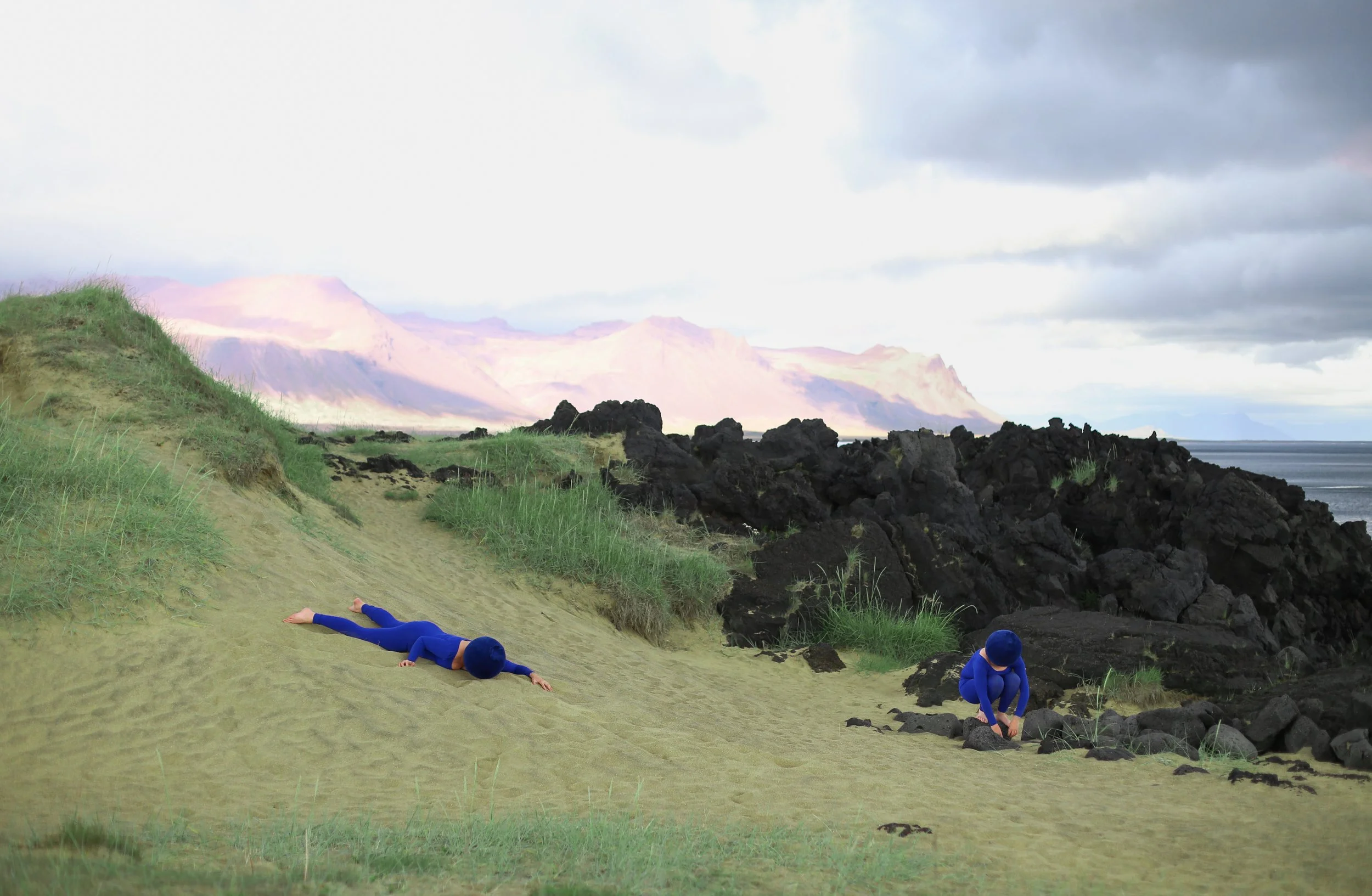
The Last Blueberries, 2023
Your work centres on self-portraiture, what draws you to your own body and image as a primary subject?
In the beginning, when I started working primarily with self-portraits, I saw it as a way to get to know myself, to gain deep access to identity-focused questions and to learn how to be with oneself. I have been working mainly with self-portraits for more than five years now, and my view on why I do them has changed quite a bit. At first, it felt like a way to seek, and to become comfortable within one’s body and mind.
Recently, it has been quite the opposite. I want to distance myself as much as possible from the human form in my photographs, which I think is why I have been building more creature-like figures that tend to be faceless. I see self-portraiture as a way to depict mental health, disconnection, emotional worlds, and society. I see my body as a vessel I use to portray conceptual meanings in a dreamlike, surreal scenery, where the human form appears, but instead of portraying personality, it focuses on experiences, fears, and memories. I find a certain ease in self-portraiture, and the feeling of being unseen is very tempting to me. When I create, the work is fully for my eyes, and it brings me comfort and a sense of freedom. Within me, there is a performer, and for now, performing for an empty audience within four walls has been the way to let it out.
I enjoy the high contrasts that come from working with self-portraits. During the creation of the photograph, it tends to be quite hectic, an absolute chaos, even. And after that, in the finished photograph, there is a sense of harmony and stillness. The storm, followed by calm.
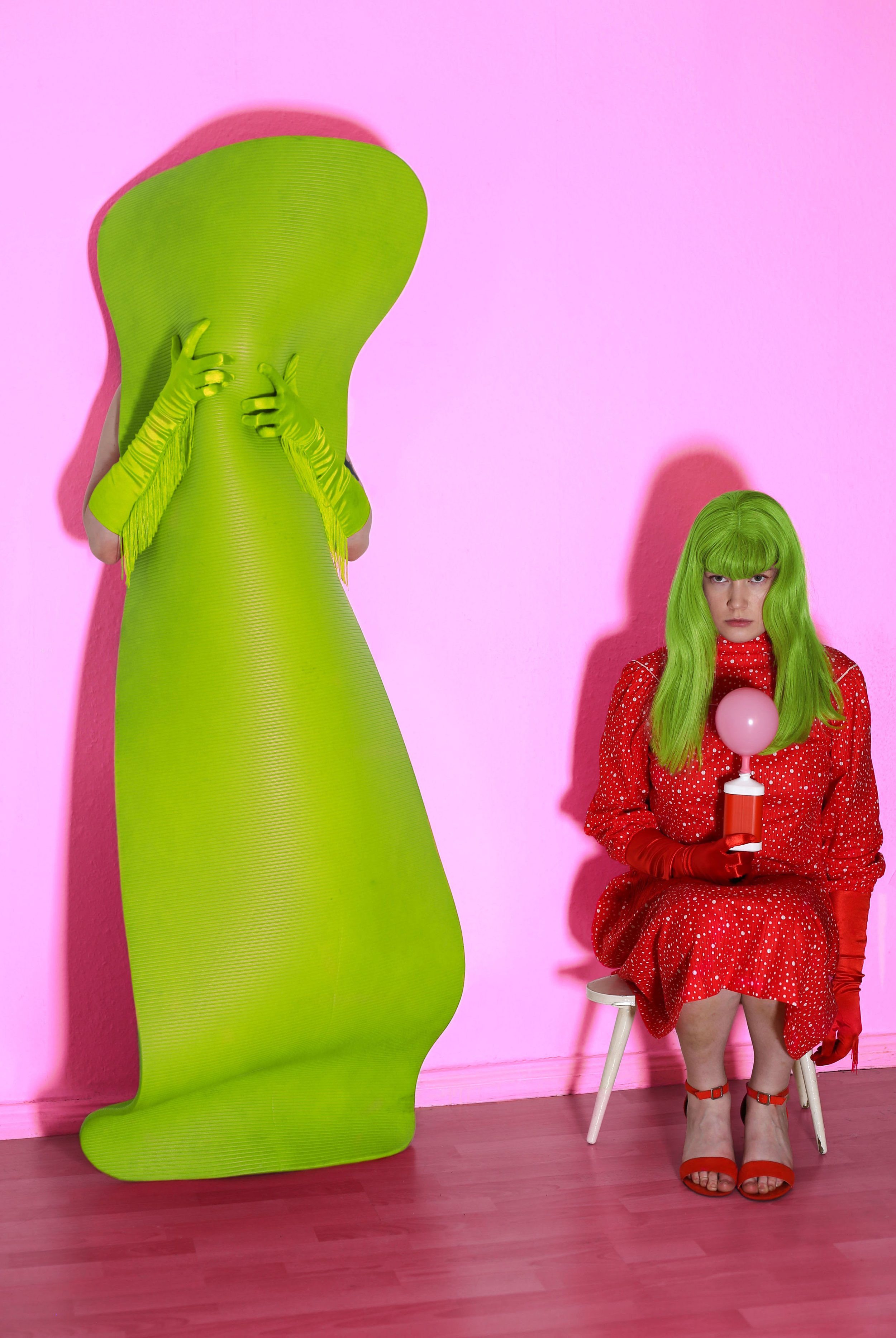
Fear Of The Balloon, 2022
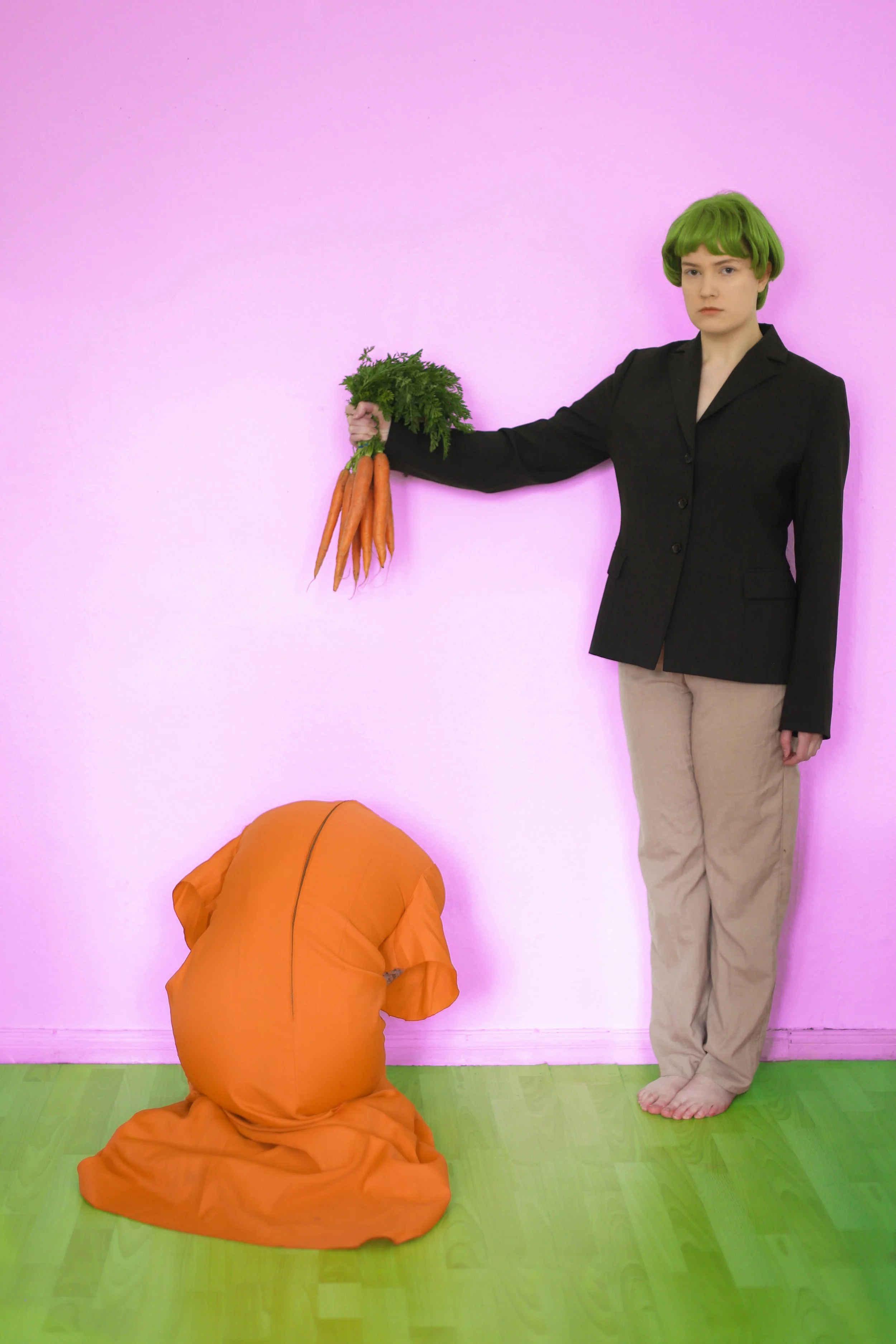
Execution Of The Carrot Queen, 2022
You’ve described your photographs as a “one-woman shows”, could you expand on this idea?
Photography as a medium, and the worlds I build out of daily objects in my photographs, are a comfort zone for me, a place to go when I need to feel soothed. I see all of my characters as female, and one of my methods of working is to use the multi-portrait technique, which has become quite a common practice in my artwork.
Through one body, I portray multiple different characters by taking a specific number of photographs, usually three to five, and then combining them into one image using Photoshop. I always curate my costumes, build the sets, create the concept and storyline, and perform in the photographs, which makes me consider it a one-woman show.
“Within me, there is a performer, and for now, performing for an empty audience within four walls has been the way to let it out.”
Bright, contrasting colours are a defining element in your visual language. How do these heightened colour schemes function emotionally or conceptually in your work?
Throughout my career, I have heard many different theories about the use of colour in my visual language. I have often encountered the idea that pink and red in my work are viewed as being connected to anger, and that purple, which I tend to use frequently, is perceived as portraying frustration or silent fury. I personally think that the use of colour in my visual language is connected to habit, gut feeling, and obsession.
There is no single hidden emotional meaning behind it; however, I have noticed that I tend to use colour as a form of distraction. I work with themes that carry quite a lot of darkness, and I enjoy mixing that with a heightened, somewhat artificial colour palette. I enjoy high contrasts and combinations that don’t necessarily complement one another. My way of creating is a bit neurotic, and I feel deeply attached to the colour palettes I use. They speak to me in a way that makes sense, and I get the feeling of satisfaction when the contrasting colours clash with each other in a way that is perfect to me.
The colours I use are also connected to my daily life. I enjoy setting creative rules for myself in a game-like way. For example, some days I buy only red and green groceries, or I choose to photograph only blue elements. I like to challenge and restrict the way I see colour in simple ways.
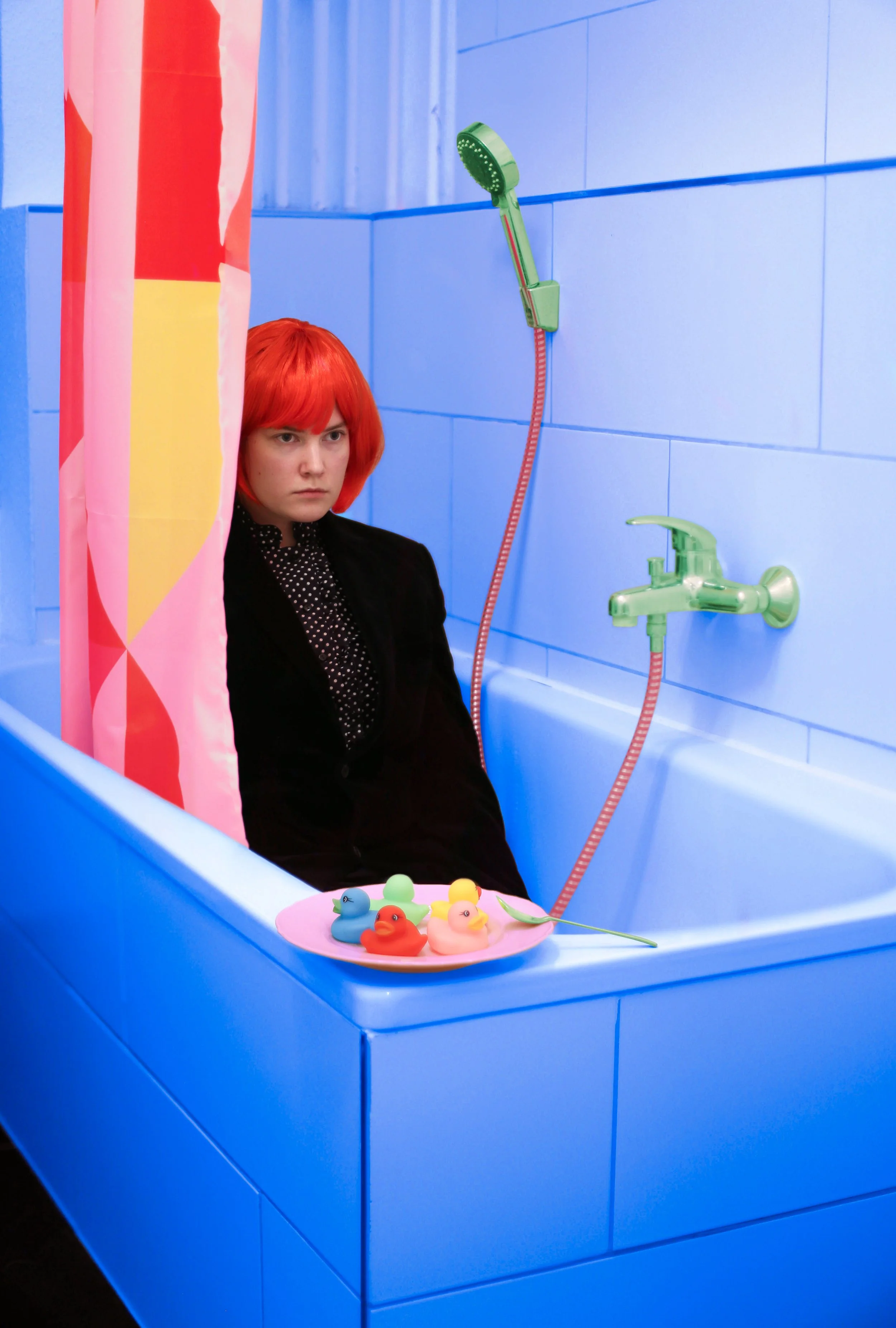
Eat a Duck, 2023
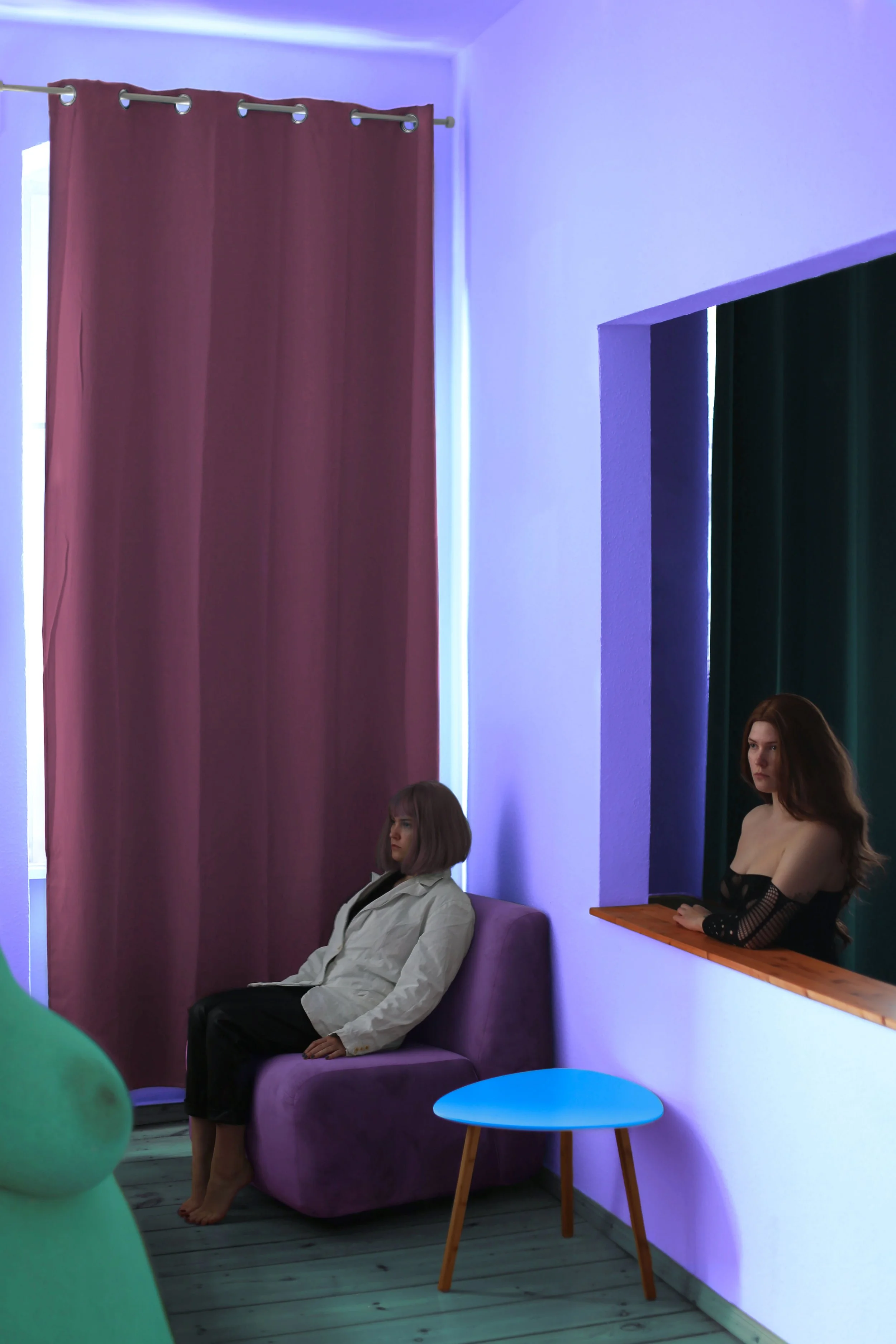
The Ones Who Despise Daylight, 2023
Allusions to horror are often threaded throughout your images. Have you always been drawn to this genre, how did it become intertwined in your practice?
I connect to the way discomfort is portrayed in horror: when everything seems normal, and then suddenly everything shifts, forming a realm where the focus is usually on escape. My photographs, especially those set in indoor environments, focus on moments in which the character senses that something peculiar is coming. The image lingers on coping with the intensity and stillness of waiting for that certain something to happen.
Horror combined with humour is a recurring element in my artwork. I use it to portray anger in a playful way and to emphasize the importance of exploring negative emotions. I think that growing up without really knowing where to place my anger, or how to express it, has strongly influenced why I am so drawn to horror and why I find it a comfortable way to tell stories.
Aesthetically, your works take shape in staged theatrical scenes. How important is performance in your practice, and do you see yourself as playing a character within these scenes?
Because of the theatrical nature of my artworks, I tend to think of them more as performances than as photography. I have created a set of rules for myself, limitations that can be quite masochistic. I enjoy making the moment of taking the photograph as difficult as possible. I use the camera’s inbuilt ten-second timer, and sometimes I don’t look at the images during or after taking them. This time limitation creates a situation in which I need to rush, and sometimes run, in order to be in the frame when the shutter clicks, and the possibility of a failed image is quite high. I find it interesting to challenge digital photography as a medium.
Often, the moment of creation means more to me than the photograph itself. For this reason, I have a large archive, yet I only publish a very small part of my work. It could be thought of as a diary, or even as a daily habit or performative practice.
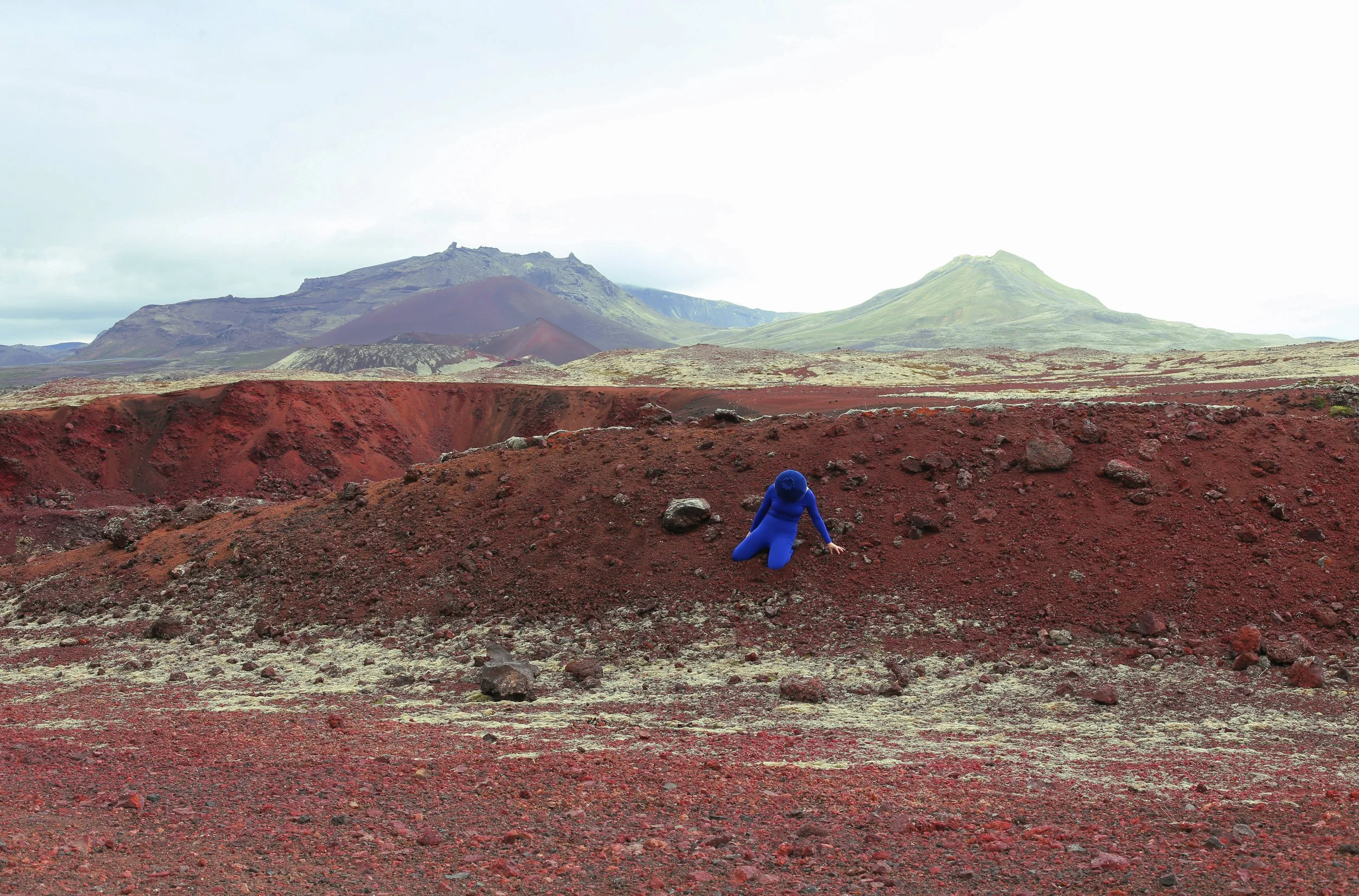
Blueberry Fields Forever, 2023
In the self-portrait series Blueberry Fields, you embody blueberries facing a fictional extinction. What inspired this narrative, and how does adopting a non-human role shift your relationship to self-portraiture, vulnerability, or empathy?
The inspiration for Blueberry Fields emerges from fear-based insecurities around connecting with others, which personally led to an experience of emotional isolation and withdrawal. Throughout that experience, what remained was a childlike curiosity that seemed to be fighting against the fear of connection. The idea of portraying a series in which blueberries exist within a fictional extension comes from a deep need for community, and from observing how the act of seeking it changes when an individual does not feel capable of, or deserving of, the company of others.
Adopting a non-human role made me constantly reflect on how important and vital symbioses are for plants and species. It made me feel a sense of jealousy toward symbiotic relationships that function so naturally, and it led me to realize how much human communities still have to learn from other species and from plants.
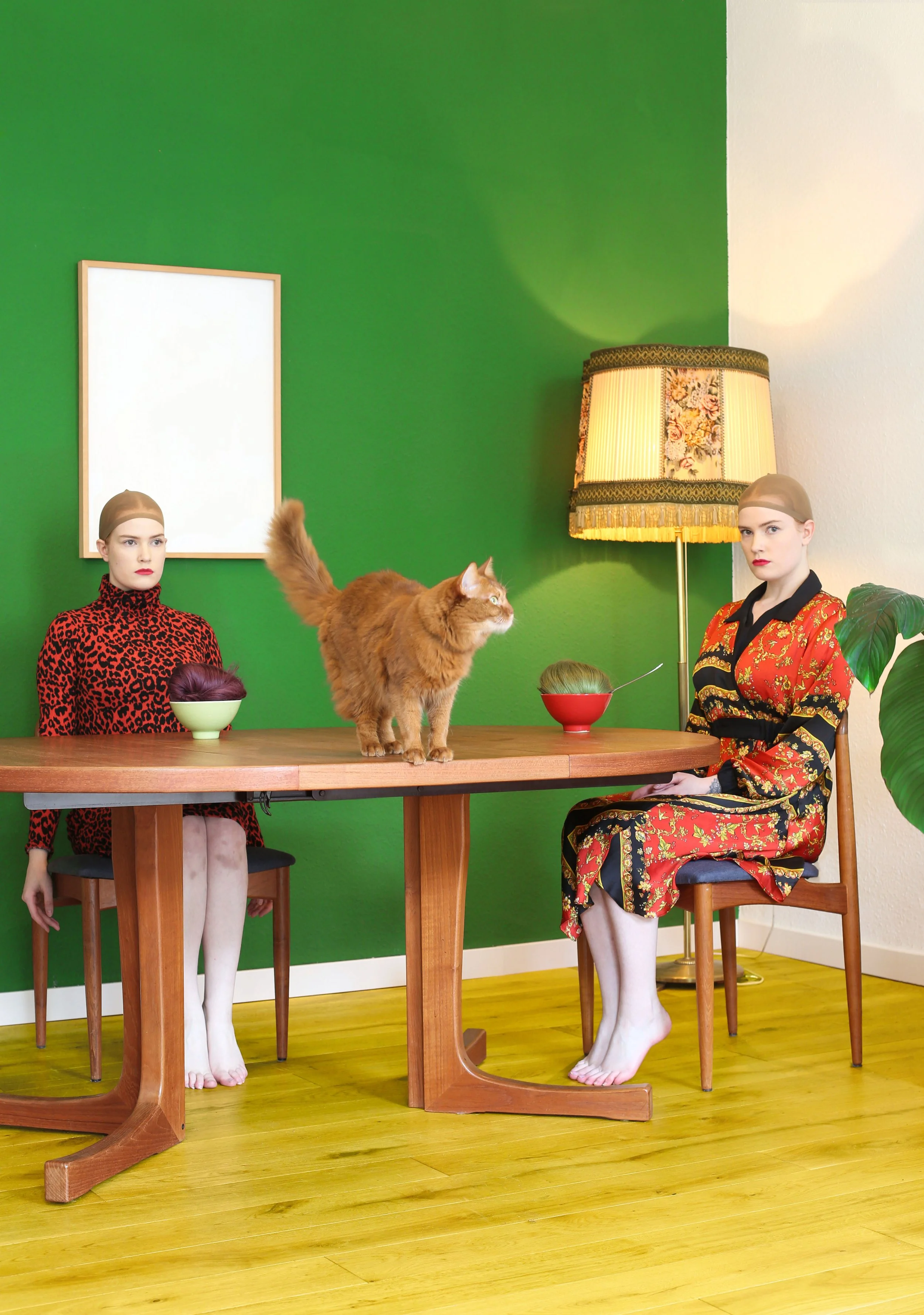
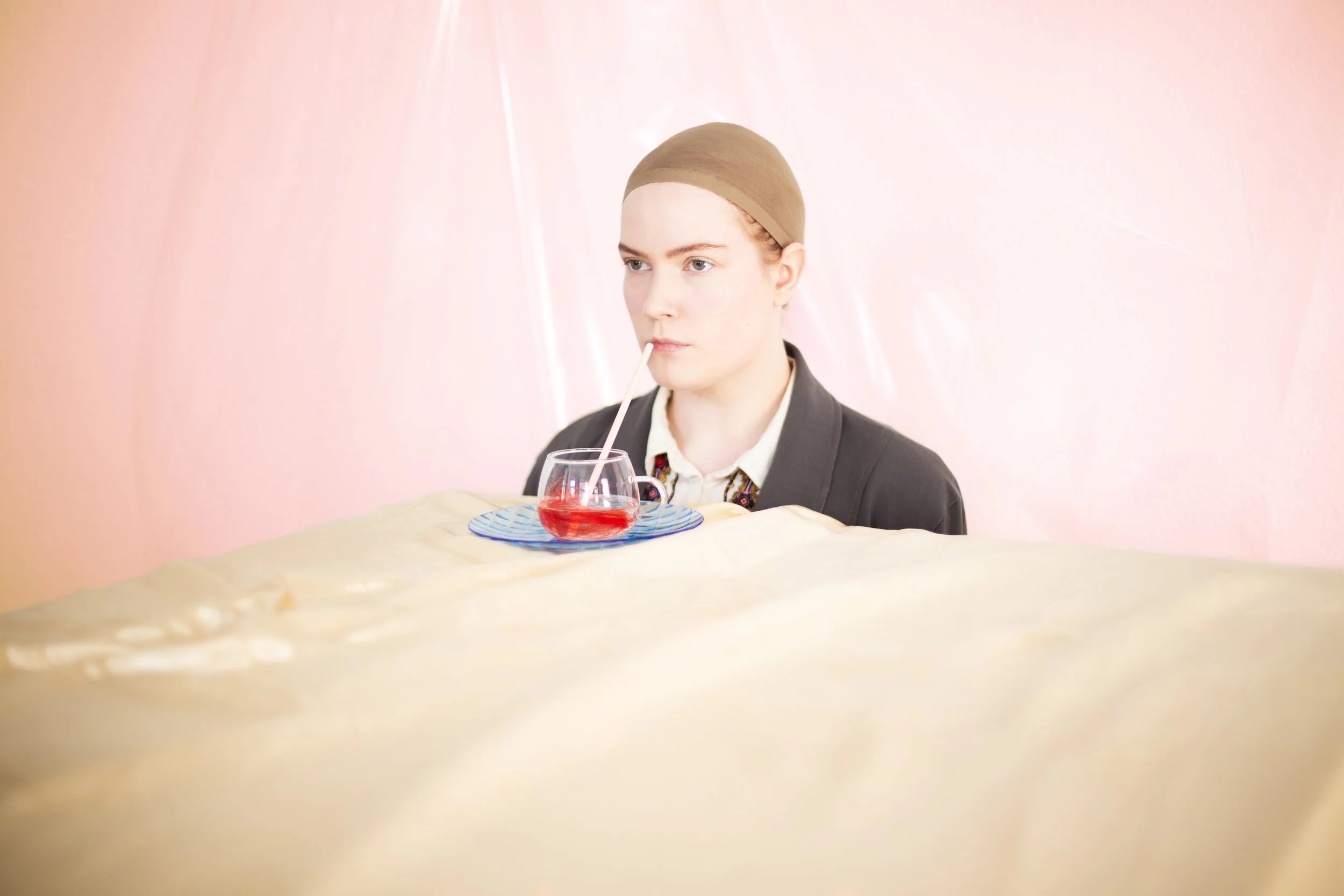
Hair In My Dish, 2021
Hair In My Drink, 2026
In your series Hair In The Dish, the mundanity of everyday life is disrupted by the unsettling omnipresence of hair, creating a quietly hellish atmosphere. What does hair symbolise for you, and how did you arrive at it as a central motif?
In my series Hair In The Dish, hair is often presented as a replacement for something meant for human consumption, such as food. Hair appears in places within a domestic environment where it does not usually belong. At the beginning of the series in 2020, I started using hair in these kinds of settings to portray the globus sensation and anxiety responses that make me physically feel as though there is a ball of hair in my throat.
Hair In The Dish is the only series I have continued for more than five years. It is still ongoing, and what hair symbolizes for me has evolved throughout the years. Through this series, I began collecting hair from willing friends and strangers. Whenever someone decided to cut their hair, I received it and used it to build props for photographs, frames, and small-scale installations. I now have a collection of hair in my home.
The themes surrounding Hair In The Dish are intense and deeply personal to me. Behind every photograph, there is a story, a memory connected to struggles with mental health, drawn from my own daily experiences. The newest photograph, which emerged from a creative boost after being selected for this article, draws inspiration from a personal performance in which I attempted to drink hair out of curiosity, in order to find out whether a human body is capable of doing so. I have been working with this series for so long that it felt like the right thing to do, to have the actual physical experience of trying to swallow hair.
“I find it important to create art that does not take itself too seriously, but instead comes from a playful, spontaneous idea.”
Viewers are met with both humour and absurdity when encountering our work. What does embracing satire unlock for you?
I find humour to be a very valuable part of my artwork. I think I have a quiet and slightly odd sense of humour. I enjoy portraying very literal things and taking a satirical approach to the obvious. Amusement is one of the best compliments I can receive for my work, a crooked smile on a viewer’s face when looking at one of my satirical pieces.
I find it important to create art that does not take itself too seriously, but instead comes from a playful, spontaneous idea, rather than from questioning whether what I am portraying is deep or clever enough. I find the slight discomfort and clumsiness of life something worth seeking out and celebrating, and I continue to be drawn to showcasing human imperfections in a humorous way.
See more of Vilma Leino’s work
New Voices highlights emerging artists who showcase their unique perspectives and innovative techniques on ArtConnect. Applications are accepted on a rolling basis. If you would like to be featured in a personal interview on ArtConnect Magazine, read through the open call and apply here.