
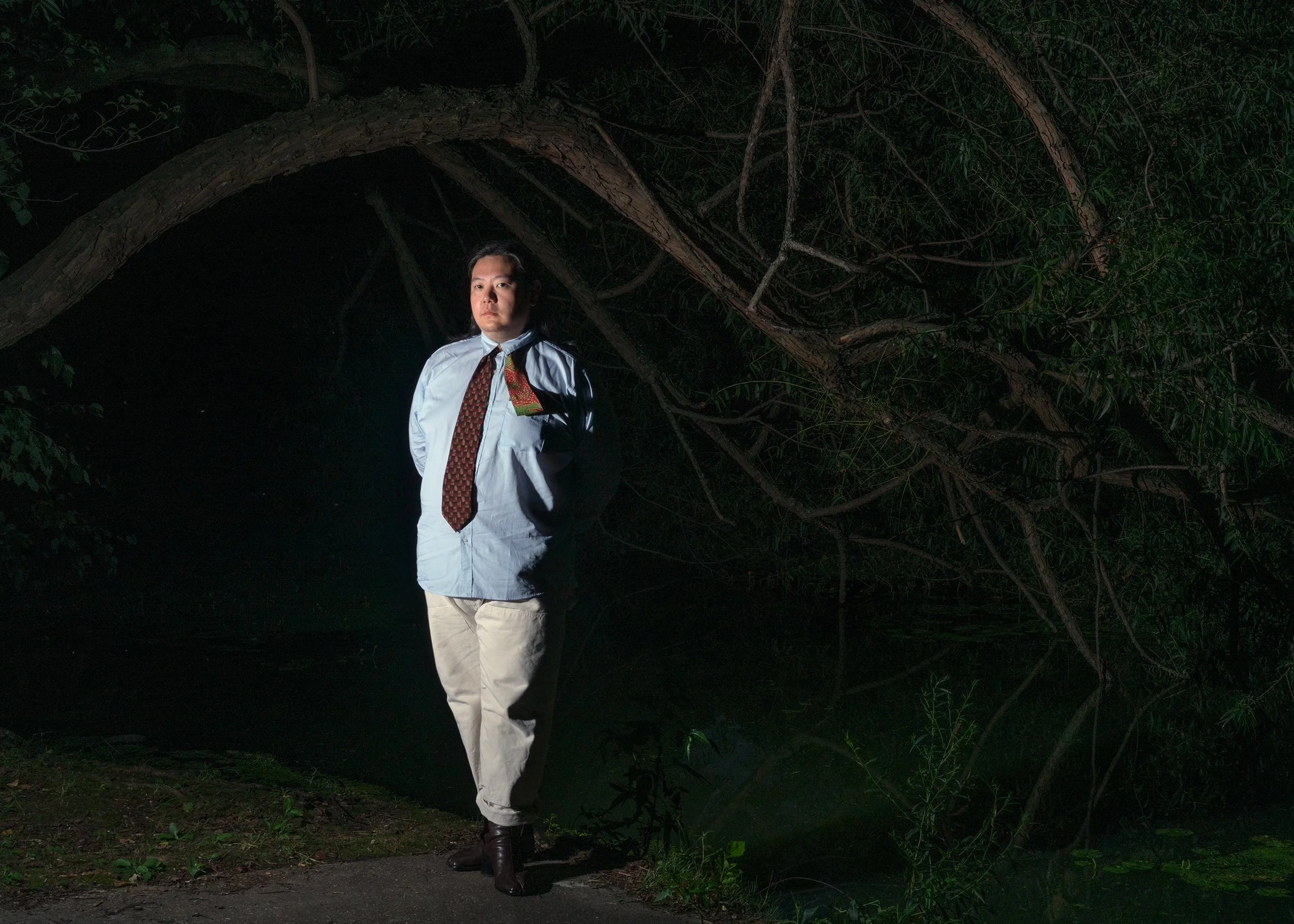
wei
On articulating the experience of Otherness
wei is spotlighted in the New Voices series, which highlights emerging artists who showcase their art on ArtConnect.
wei’s practice articulates the experience of Otherness through print media, objects, video, sound, and movement, mobilizing these forms as both material and conceptual sites of inquiry. Engaging with the intertwined cartographies of Queerness and Foreignness, their work examines the “betwixt and between” as a condition situated within homogenous temporalities and fleeting instances of togetherness.
Through this lens, wei traces and reframes imprints—both corporeal and intangible—by situating individual subjectivity in relation to collective presence, revealing the boundaries between self, other, and the spaces they inhabit.
Curious to gain more insight into their artistic approach, we asked wei a few questions about their practice.
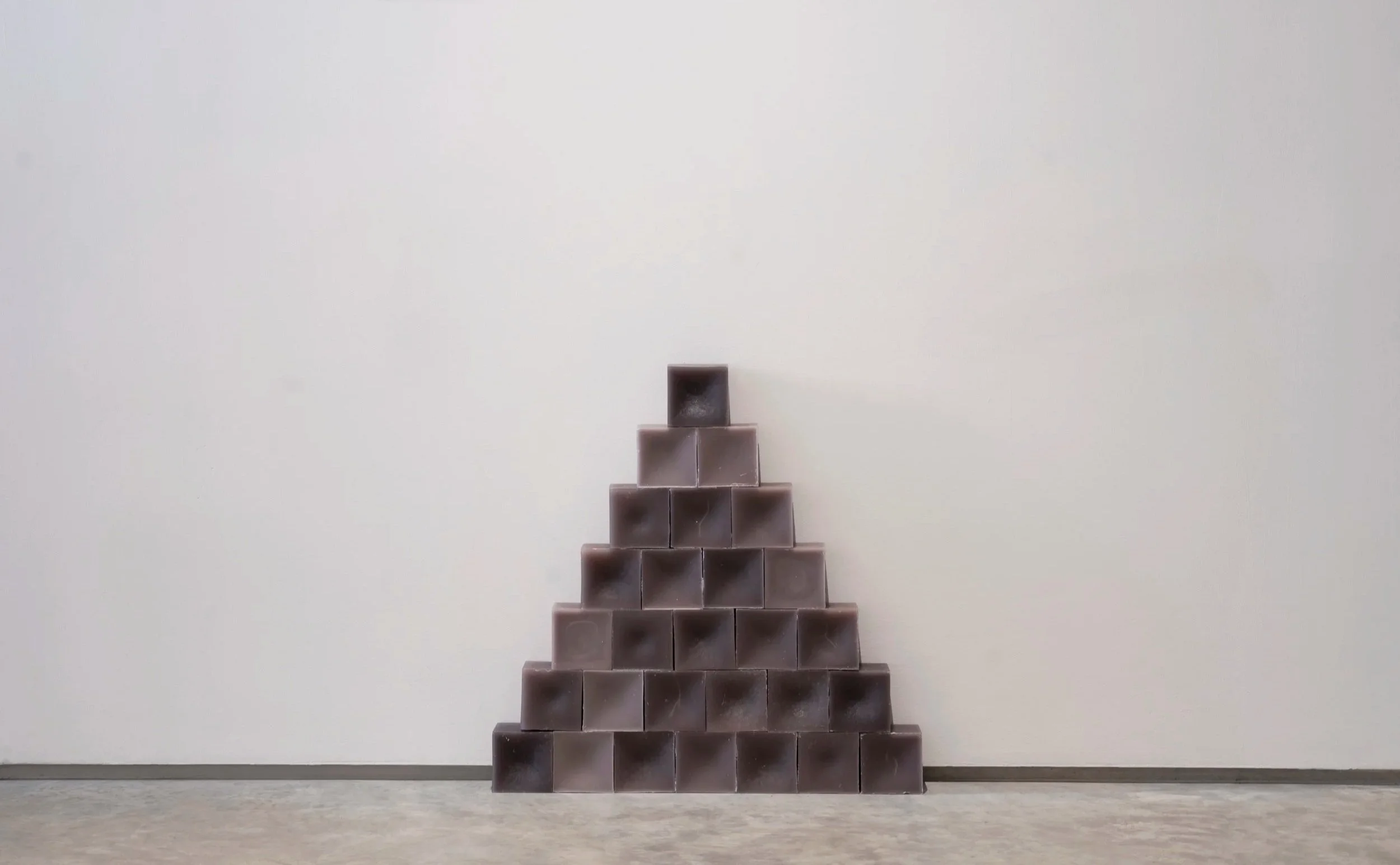
5'11'', 2025
The intent to "render the experience of Otherness" informs your practice. How do you seek to render this experience and who do you imagine it is for?
The experience of Otherness can be extremely universal and lonely, but never alone. The “betwixt and between” or “inbetweeness” carved out by queer and foreign identities within rigid, homogenous timelines is the render I am pursuing in my work. I imagine this meeting ground for people who recognize themselves within these in-between spaces, as well as those encountering forms of Otherness that may be unfamiliar.
You describe "mapping Queerness and Foreignness" as central to your research. Could you expand on these ideas and how they take shape in your practice?
I think of Queerness and Foreignness as conditions that disrupt fixed ideas of identity, belonging, and linear time. Both can produce a sense of being “out of place.” I am interested in how this displacement can also become a productive space. My “maps” are not necessarily geographic; they trace social, emotional, corporeal, and temporal relationships between people, histories, and systems of power.
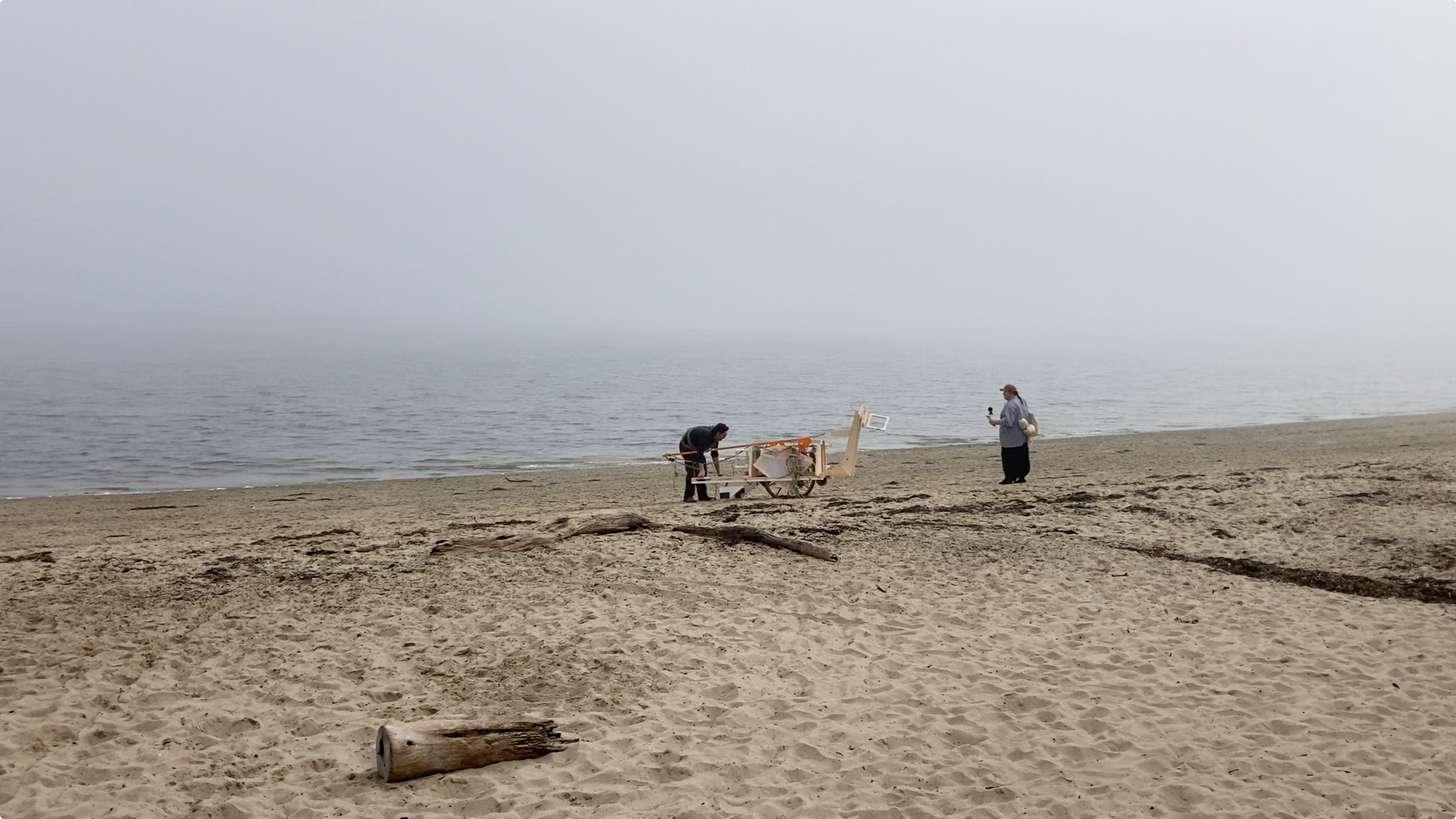
Your work spans print media, objects, video, sound, design and movement. How do these different mediums inform one another in your practice?
I see these mediums as different ways of thinking, sensing, and relating rather than separate disciplines. I came from a printmaking background where I was exposed to the nature of process and material ingenuity. My chosen materials all shared the same character of “solidness” that translates to a body where it can decade over time. These translations reflect my interest in queer and transnational experience, where identities are continually translated and negotiated.
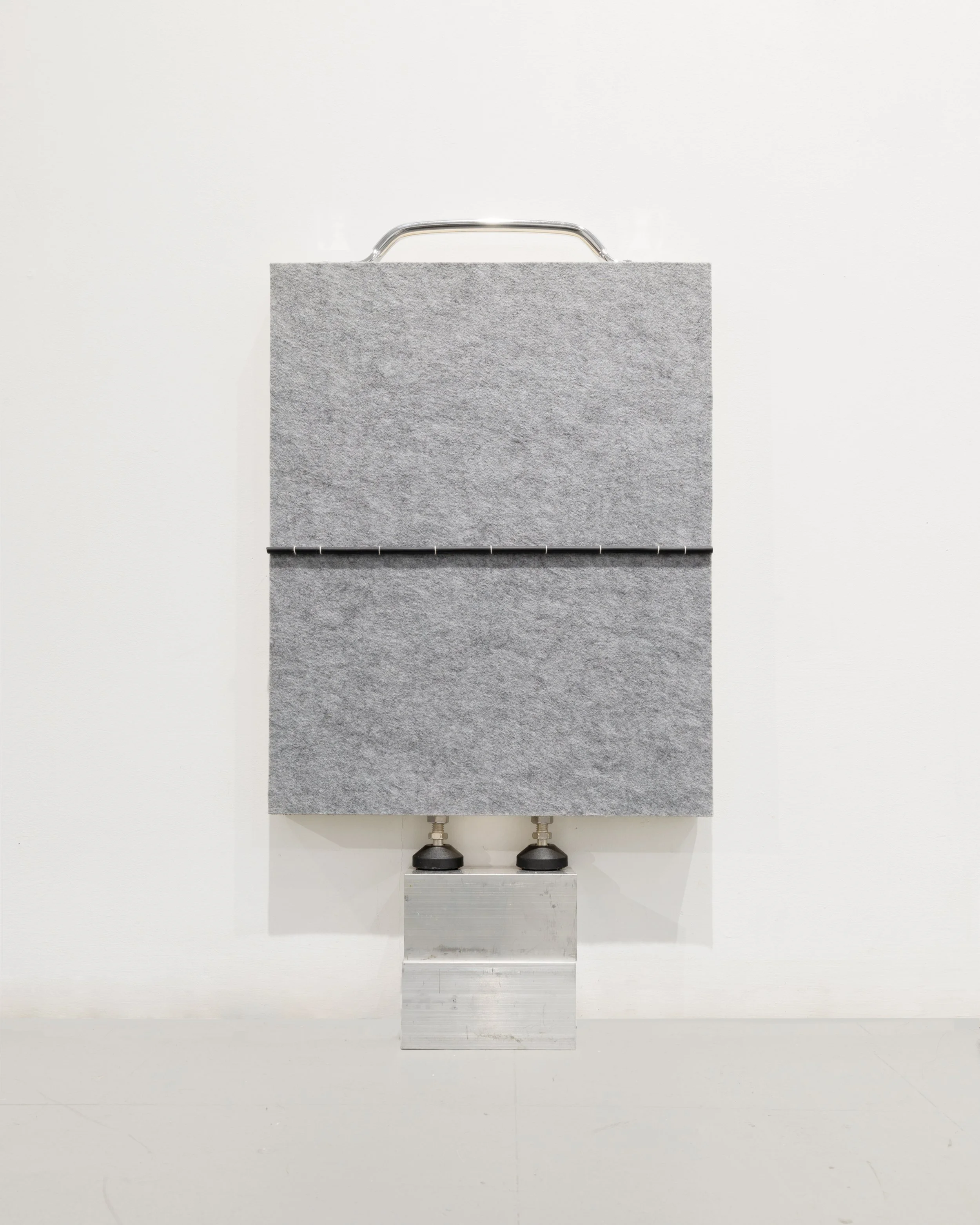
Untitled (Panel & Panel) 2, 2024
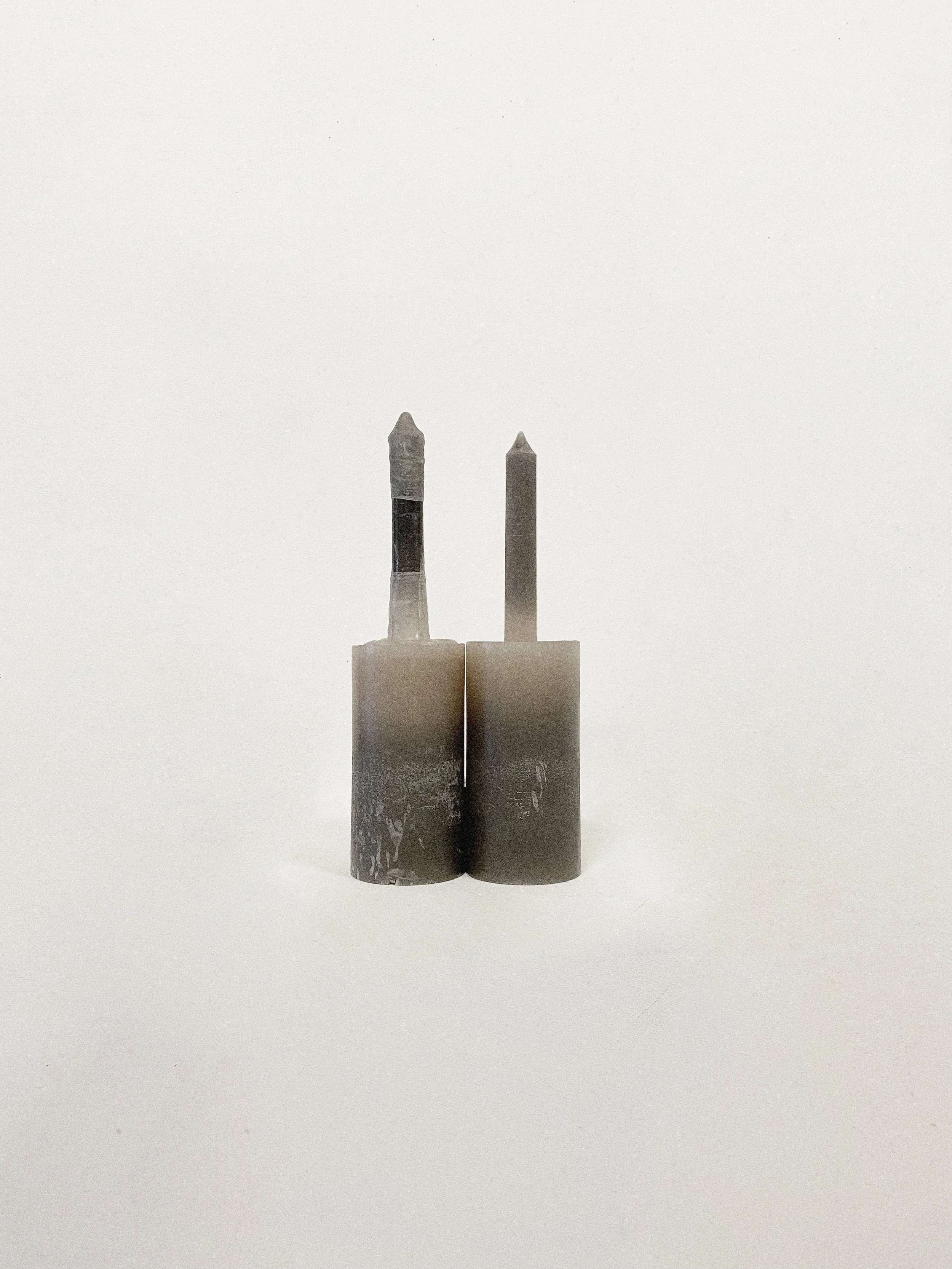
twins are never the same, 2023
Felt and wax appear in several of your recent installations. What draws you to these materials and what possibilities do they offer?
I am drawn to materials that hold a tension between presence and disappearance. Felt and wax are corporeal and vulnerable; they register touch, pressure, temperature, and transformation. Felt and wax are corporeal and vulnerable. Wax is particularly important because of its relationship to casting and reproduction. It can define a mold and capture an impression while ultimately disappearing during the manufacturing process.
I am interested in this secondary role—the material that makes another object possible but does not survive in the final form. This becomes a way to think about bodies and identities that are essential to a system while being rendered invisible within it. It also connects to my interest in authenticity across generations of the Asian diaspora, where cultural forms are continually transmitted, translated, and transformed.
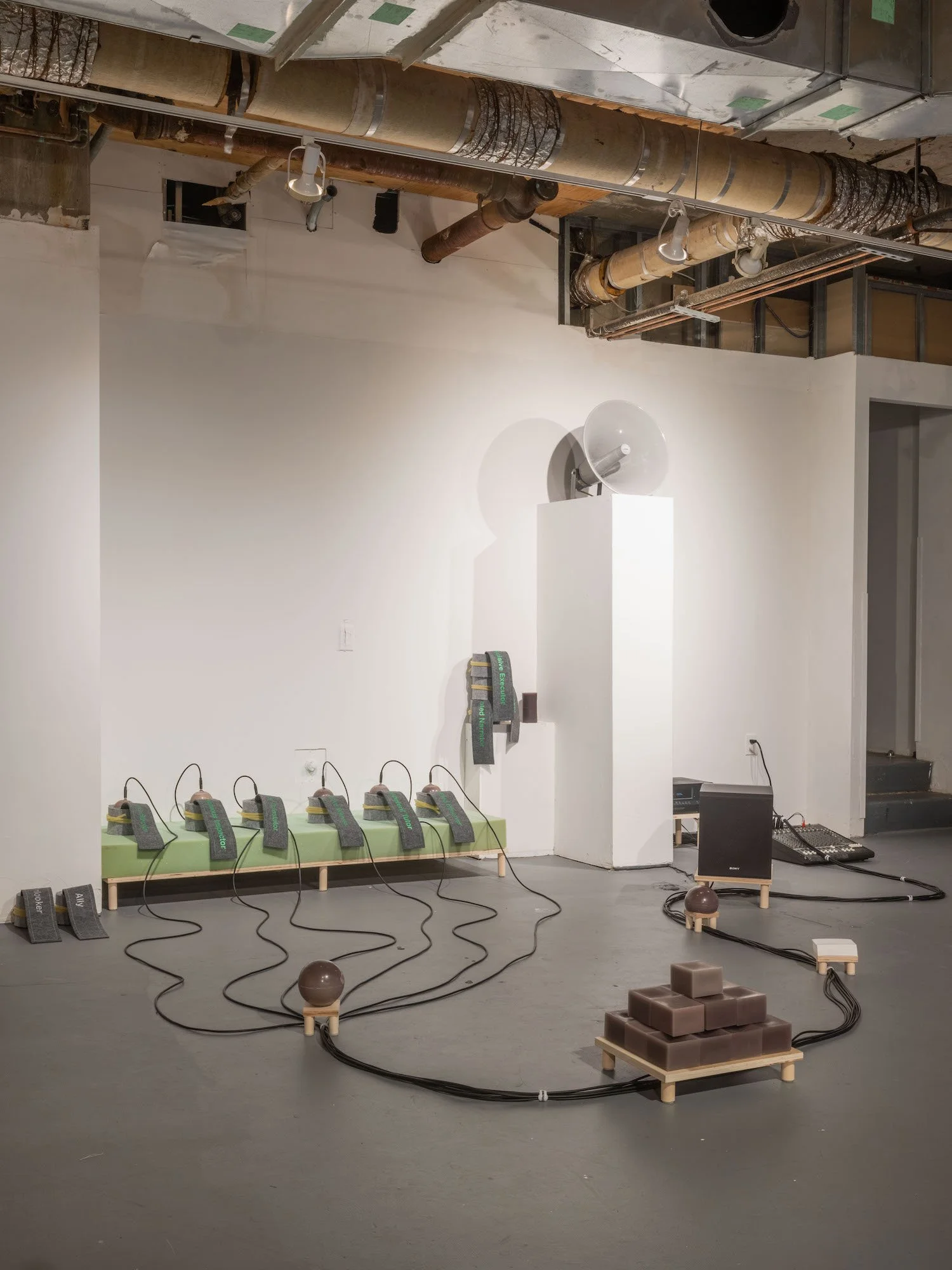
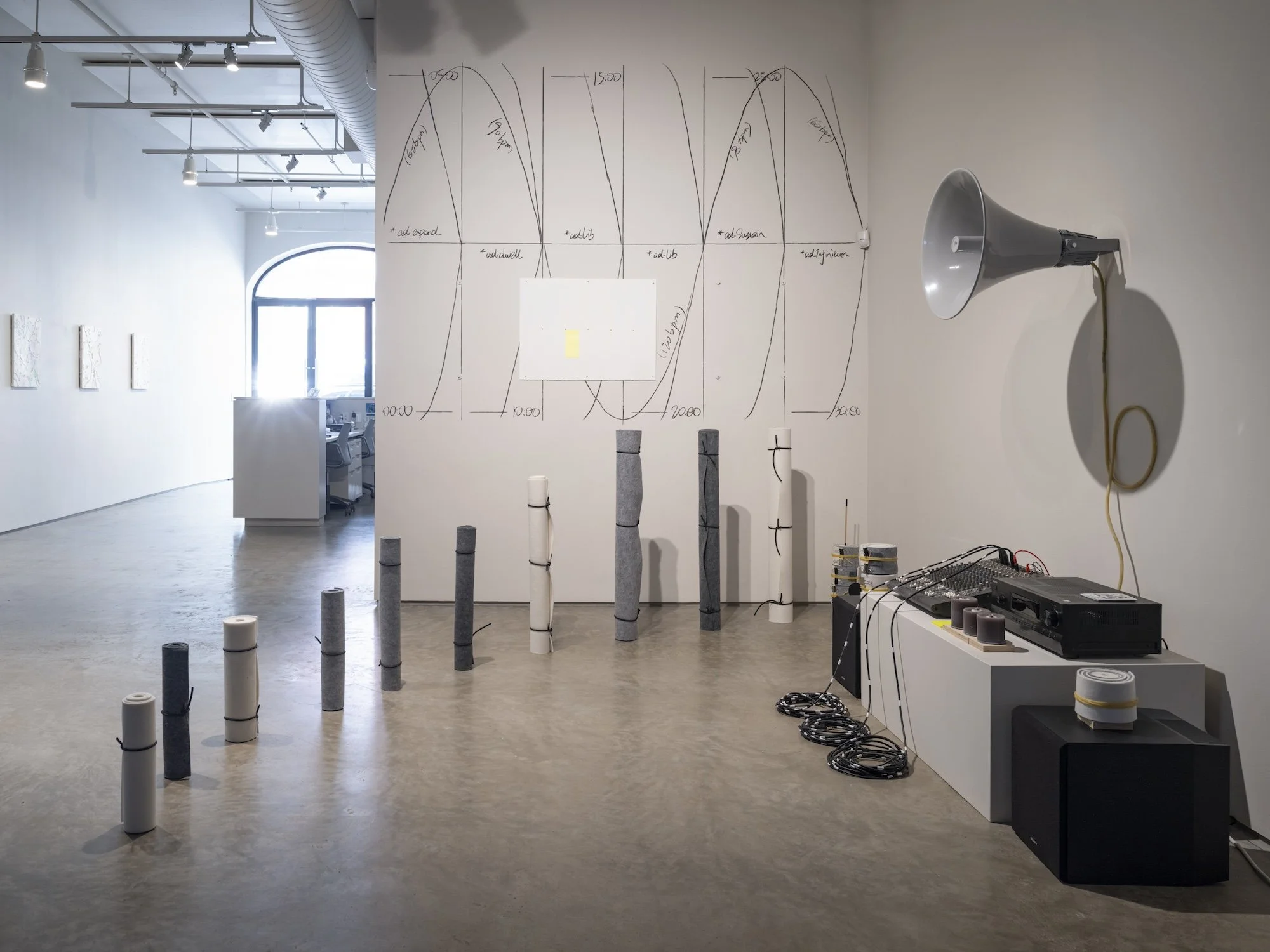
ensemble series, 2024.
Can you tell us more about your ongoing ‘ensemble’ series. What ideas is it exploring and how has it developed over time?
The ongoing ensemble series explores what happens when bodies, voices, objects, and histories are brought into temporary relation. I use “ensemble” both as a performance structure and a way of thinking about collective negotiation, rather than privileging a single author, body, or narrative.
The use and exploration of sound is omnipresent throughout many of your recent works. What draws you to this mode of expression?
I am drawn to sound because it moves through and around the body without necessarily defining or containing a space. It allows me to work with things that are difficult to make visible, such as memory, absence, proximity, and collective presence.
What are you working on right now?
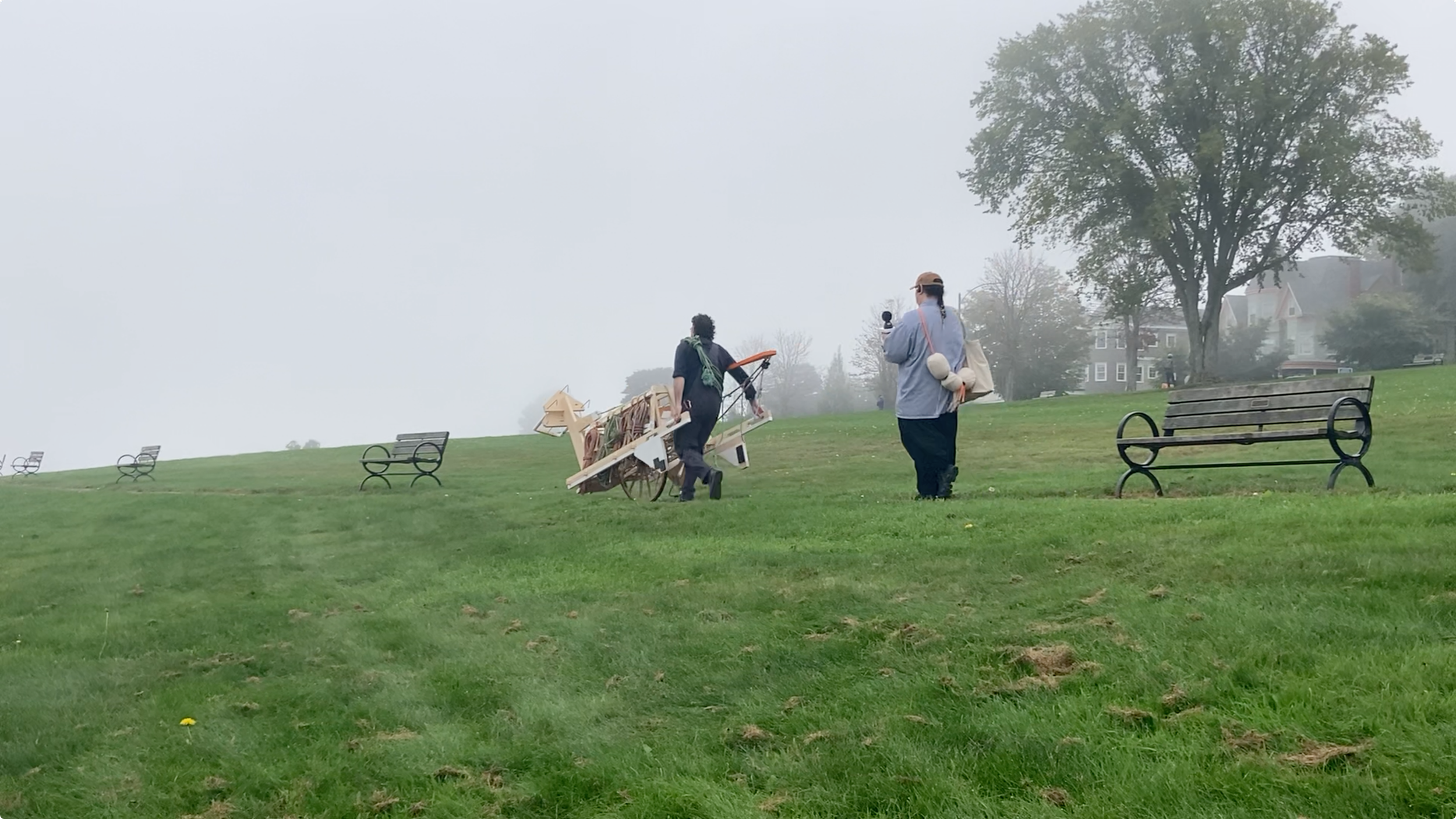
I am continuously working on my ensemble series with new iterations of choir and choreography. I am also reconnecting with traditional printmaking as I am developing a few prints at the moment
New Voices highlights emerging artists who showcase their unique perspectives and innovative techniques on ArtConnect. Applications are accepted on a rolling basis. If you would like to be featured in a personal interview on ArtConnect Magazine, read through the open call and apply here.